
1 Samuel 28:7
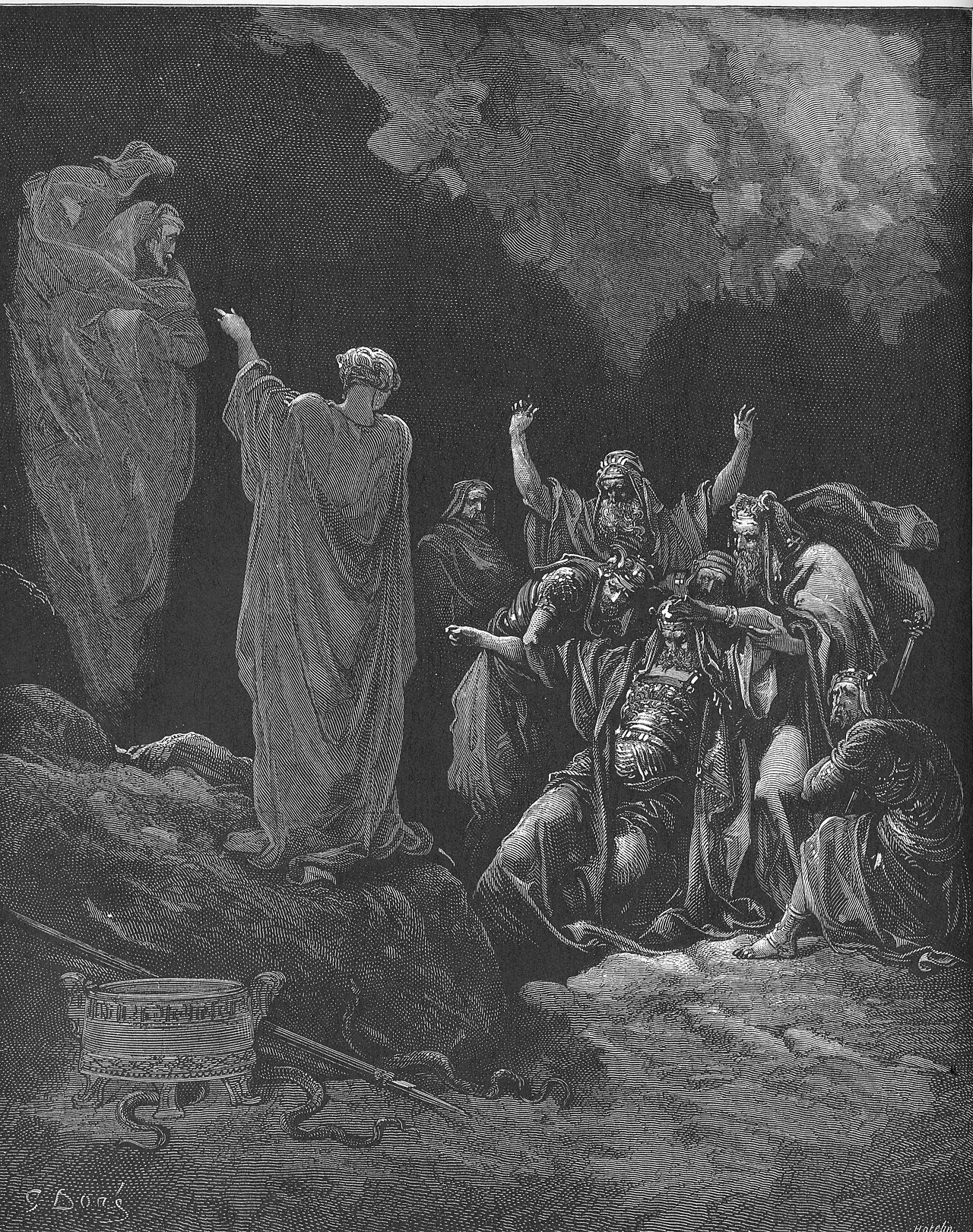
in 1 Samuel 28Then Saul said to his servants, “Find me a woman who is a medium, so I can go and consult her.” “There is a medium at Endor,” his servants replied.
BSB
The same verse in ASV and KJV ▾
ASV
Then said Saul unto his servants, Seek me a woman that hath a familiar spirit, that I may go to her, and inquire of her. And his servants said to him, Behold, there is a woman that hath a familiar spirit at En-dor.
KJV
Then said Saul unto his servants, Seek me a woman that hath a familiar spirit, that I may go to her, and enquire of her. And his servants said to him, Behold, there is a woman that hath a familiar spirit at En–dor.
⋯
This verse in 1 Samuel 28
Commentary
9 notes on this verseA commentator
Albert Barnes1798–1870
Notes, Explanatory and Practical, on the Old and New Testaments (1832-1869)
Enquire - A different word from that in 1Sa 28:6, though nearly synonymous with it. It is more frequently applied to inquiry of a false god, as e. g. 2Ki 1:2; Isa 8:19; Isa 19:3. En-dor (see Jos 11:2 note) was seven or eight miles from the slopes of Gilboa, on the north of little Hermon, where the Philistines were encamped; so that Saul must have run great risks in going there.
This site's exposition
Seek me a woman
on 1 Samuel 28:7-8
Saul does not go himself first; he sends his servants to find what his own decree had made illegal to keep. Endor lay seven or eight miles from Gilboa on the far side of the Philistine camp, so reaching it by night meant passing near the very army Saul feared. He goes disguised, in another man's clothes, because he does not want the woman to know who is asking and suspects she would refuse a king the practice she might risk for a stranger.
The record, by era
The Medieval Church2 voices
And Saul said to his servants: Seek me a woman who has a familiar spirit, etc. Denied an answer by the Lord, Saul sought a woman with an unclean spirit, through whom he might inquire; and with the cessation of the prophets and the ceremonies …
And his servants said to her, etc. Correctly it is narrated that the woman with a familiar spirit, whom some call a ventriloquist, lived in Endor, which means in the fountain or eye of generation, so that the very place of her habitation bears witness …
The Puritans and the Awakening3 voices
He knew the heinousness of the sin of witchcraft, else he would not have cut off those that had familiar spirits; yet now he had recourse to that as an oracle which he had before condemned as an abomination. It is common for men to inveigh severely against those sins which they are in no temptation to, but afterwards to be themselves overcome by them.
Samuel appears, and foretells his defeat and death, ver. 12-19. Saul faints, and is with difficulty persuaded to take any sustenance, ver. 20-25. Commentary on Chapter XXVIII 2.
quarantine:anchor (2026-07-29) — cites-ver-20-anchored-7-11
When God answered him not, if he had humbled himself by repentance and persevered in seeking God, who knows but that at length he might have been entreated for him? but, since he can discern no comfort either from heaven or earth ( Isa. viii.
quarantine:debris (2026-07-29) — unbalanced-parens
2 more voices on this verse
The Puritans and the Awakening1 voice
Then said Saul unto his servants,....
The Nineteenth Century1 voice
Seek me a woman that hath a familiar spirit - Literally, Seek me a woman, בעלת אוב baalath ob, the mistress of the Obidiah or Pythonic spirit - one who had a familiar spirit, whom she could invoke when she pleased, and receive answers from him relative to futurity. Strange that a man, who had banished all such from the land, as dangerous to the state, as impostors and deceivers, should now have recourse to them as the only persons in whom he could safely put his confidence in the time in which Jehovah had refused to help him! At En-dor - This was a city in the valley of Jezreel, at the foot of Mount Gilboa, where the army of Saul had now encamped.
The words behind it
21 Hebrew wordsEvery Hebrew word of this verse in the order it stands, with what it means and the door to its own study. The last column counts the times a word stands in the whole Bible: the rarer the word, the more the places it appears belong together.
| Hebrew | Sound | Meaning | Word study | In the Bible |
|---|---|---|---|---|
| וַיֹּ֨אמֶר | vaiyomer | and he said | H559 → | 5305 times |
| שָׁא֜וּל | shaul | Saul | H7586 → | 402 times |
| לַעֲבָדָ֗יו | laavadav | to servants his | H5650 → | 799 times |
| בַּקְּשׁוּ־ | bakeshu- | seek | H1245 → | 225 times |
| לִי֙ | li | for <the> me | ||
| אֵ֣שֶׁת | ʾeshet | a woman | H802 → | 781 times |
| בַּעֲלַת־ | baalat- | [the] owner of | H1172 → | |
| א֔וֹב | ʾov | necromancy | H178 → | 17 times |
| וְאֵלְכָ֥ה | veelekhah | so let me go | H1980 → | 1546 times |
| אֵלֶ֖יהָ | ʾeleiha | to her | H413 → | 5510 times |
| וְאֶדְרְשָׁה־ | veedreshah- | so I may consult | H1875 → | |
| בָּ֑הּ | bah | <in> <the> her | ||
| וַיֹּאמְר֤וּ | vaiyomeru | and they said | H559 → | 5305 times |
| עֲבָדָיו֙ | ʾavadav | servants his | H5650 → | 799 times |
| אֵלָ֔יו | ʾelav | to him | H413 → | 5510 times |
| הִנֵּ֛ה | hineh | there! | H2009 → | 843 times |
| אֵ֥שֶׁת | ʾeshet | a woman of | H802 → | 781 times |
| בַּֽעֲלַת־ | baalat- | an owner of | H1172 → | |
| א֖וֹב | ʾov | necromancy | H178 → | 17 times |
| בְּעֵ֥ין | beein | [is] in En- | H5874 → | |
| דּֽוֹר׃ | dor | -dor | H5874 → |
וַיֹּ֨אמֶרand he said
vaiyomerH559 →5305 times
שָׁא֜וּלSaul
shaulH7586 →402 times
לַעֲבָדָ֗יוto servants his
laavadavH5650 →799 times
בַּקְּשׁוּ־seek
bakeshu-H1245 →225 times
לִי֙for <the> me
li
אֵ֣שֶׁתa woman
ʾeshetH802 →781 times
בַּעֲלַת־[the] owner of
baalat-H1172 →
א֔וֹבnecromancy
ʾovH178 →17 times
וְאֵלְכָ֥הso let me go
veelekhahH1980 →1546 times
אֵלֶ֖יהָto her
ʾeleihaH413 →5510 times
וְאֶדְרְשָׁה־so I may consult
veedreshah-H1875 →
בָּ֑הּ<in> <the> her
bah
וַיֹּאמְר֤וּand they said
vaiyomeruH559 →5305 times
עֲבָדָיו֙servants his
ʾavadavH5650 →799 times
אֵלָ֔יוto him
ʾelavH413 →5510 times
הִנֵּ֛הthere!
hinehH2009 →843 times
אֵ֥שֶׁתa woman of
ʾeshetH802 →781 times
בַּֽעֲלַת־an owner of
baalat-H1172 →
א֖וֹבnecromancy
ʾovH178 →17 times
בְּעֵ֥ין[is] in En-
beeinH5874 →
דּֽוֹר׃-dor
dorH5874 →
A shaded row is a word that stands 400 times or fewer in the Bible.
The walk
8 stopsEach card is a verse this one points to, and under it the verses that one points to in turn. Where several paths arrive at the same place, that place is listed first: the text keeps returning to it.
Through
1 Chronicles 10:13So Saul died for his unfaithfulness to the LORD, because he did not keep the word of the LORD and even consulted a medium for guidance,
it leads to
- Leviticus 19:31
You must not turn to mediums or spiritists; do not seek them out, or you will be defiled by them. I am the LORD your God.
Reached by 2 separate paths from here.
- Leviticus 20:6
Whoever turns to mediums or spiritists to prostitute himself with them, I will also set My face against that person and cut him off from his people.
- 1 Samuel 15:23
For rebellion is like the sin of divination, and arrogance is like the wickedness of idolatry. Because you have rejected the word of the LORD, He has rejected you as king.”
- Deuteronomy 18:10–14
Let no one be found among you who sacrifices his son or daughter in the fire, practices divination or conjury, interprets omens, practices sorcery,
- Leviticus 19:31
Through
Acts 16:16One day as we were going to the place of prayer, we were met by a slave girl with a spirit of divination, who earned a large income for her masters by fortune-telling.
it leads to
- Isaiah 8:19
When men tell you to consult the spirits of the dead and the spiritists who whisper and mutter, shouldn’t a people consult their God instead? Why consult the dead on behalf of the living?
Reached by 2 separate paths from here.
- Deuteronomy 18:9–11
When you enter the land that the LORD your God is giving you, do not imitate the detestable ways of the nations there.
- 1 Chronicles 10:13
So Saul died for his unfaithfulness to the LORD, because he did not keep the word of the LORD and even consulted a medium for guidance,
- 1 Timothy 6:10
For the love of money is the root of all kinds of evil. By craving it, some have wandered away from the faith and pierced themselves with many sorrows.
- Isaiah 8:19
Where this verse is studied
On this page
Studies1
About 1 Samuel
Who and where
1 name in this verse with a page on the site.
This page draws on Adam Clarke, Commentary on the Bible; Albert Barnes, Notes, Explanatory and Practical, on the Old and New Testaments (1832-1869); Albert Barnes, Notes on the Old Testament; Bede, Commentary on Samuel; John Gill, Exposition of the Old Testament (1748-1763); John Wesley, Explanatory Notes upon the Old Testament and Matthew Henry, Commentary on the Whole Bible.