
1 Samuel 28:22
in 1 Samuel 28Now please listen to your servant and let me set a morsel of bread before you so you may eat and have the strength to go on your way.”
BSB
The same verse in ASV and KJV ▾
ASV
Now therefore, I pray thee, hearken thou also unto the voice of thy handmaid, and let me set a morsel of bread before thee; and eat, that thou mayest have strength, when thou goest on thy way.
KJV
Now therefore, I pray thee, hearken thou also unto the voice of thine handmaid, and let me set a morsel of bread before thee; and eat, that thou mayest have strength, when thou goest on thy way.
⋯
This verse in 1 Samuel 28
Commentary
5 notes on this verseShe had a fat calf at hand (and the word signifies one that was made use of in treading out the corn, and therefore could the worse be spared); this she prepared for his entertainment,
This site's exposition
I took my life in my hands and did as you told me
on 1 Samuel 28:21-25
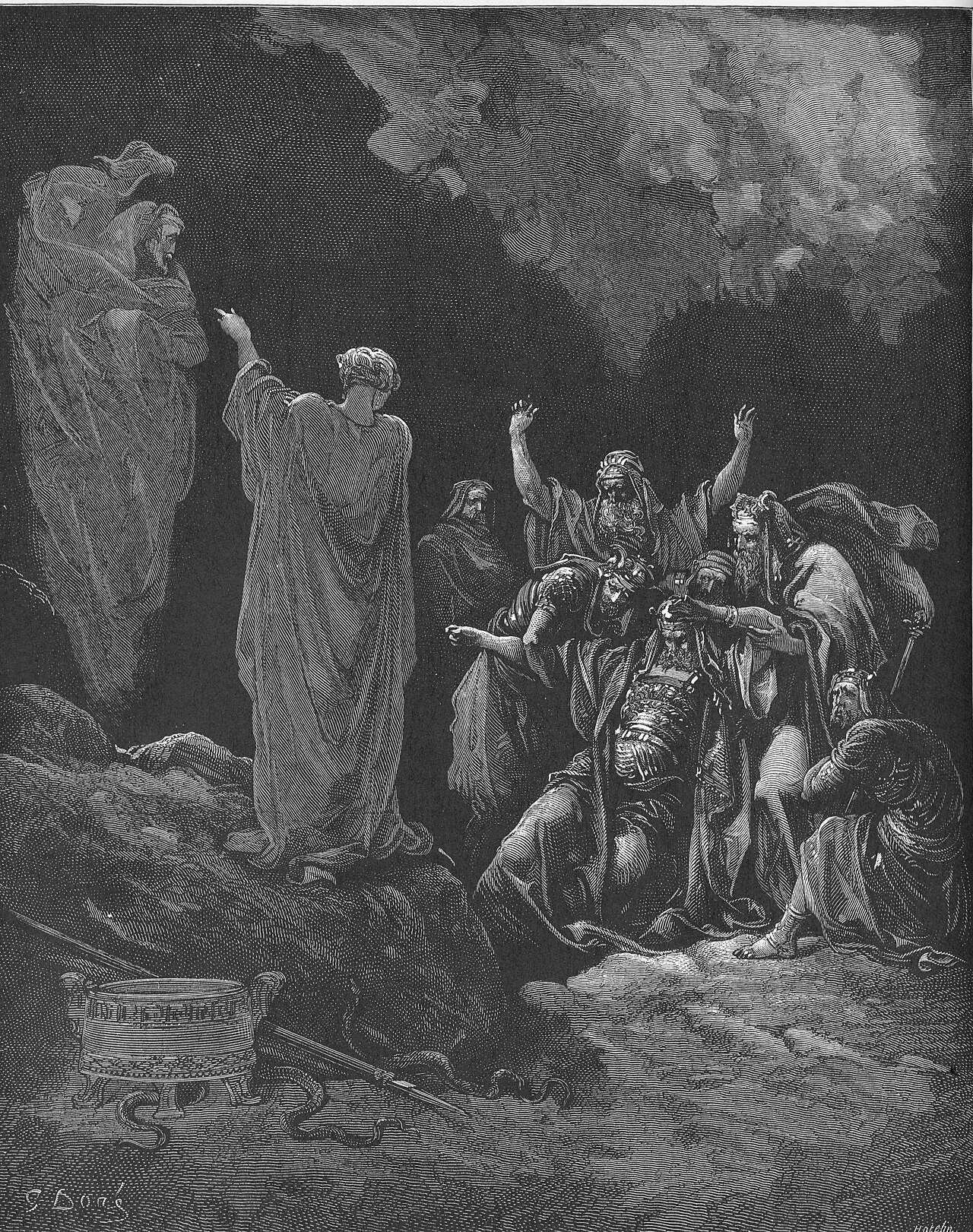
The woman whose craft Saul's law had outlawed is the one who feeds him. She slaughters a fattened calf, and Henry recalls that Josephus praised her kindness to a guest who could do nothing for her. The chapter ends in darkness, with Saul and his servants leaving that night.
This site's exposition
let me set a morsel of bread
The woman asks Saul to listen to her as she had obeyed him in verse 21. Matthew Henry notes that the calf she then killed was likely one used for treading out grain, and so hard to spare. Her small offer of bread becomes a full meal.
The record, by era
The Puritans and the Awakening2 voices
2 And David said to Achish, Surely thou shalt know what thy servant can do. And Achish said to David, Therefore will I make thee keeper of mine head for ever. 3 Now Samuel was dead, and all Israel had lamented him, and buried him in Ramah, even in his own city.
quarantine:scripture (2026-07-29) — verbatim-scripture
Now therefore, I pray thee, hearken thou also unto the voice of thine handmaid,....
The words behind it
18 Hebrew wordsEvery Hebrew word of this verse in the order it stands, with what it means and the door to its own study. The last column counts the times a word stands in the whole Bible: the rarer the word, the more the places it appears belong together.
| Hebrew | Sound | Meaning | Word study | In the Bible |
|---|---|---|---|---|
| וְעַתָּ֗ה | veatah | and now | H6258 → | 433 times |
| שְׁמַֽע־ | shema'- | listen | H8085 → | 1159 times |
| נָ֤א | na' | please | H4994 → | 404 times |
| גַם־ | gam- | also | H1571 → | 769 times |
| אַתָּה֙ | ʾatah | you | H859 → | 1094 times |
| בְּק֣וֹל | bekol | to [the] voice of | H6963 → | 506 times |
| שִׁפְחָתֶ֔ךָ | shifchatekha | maidservant your | H8198 → | 63 times |
| וְאָשִׂ֧מָה | veasimah | so let me set | H7760 → | 584 times |
| לְפָנֶ֛יךָ | lefaneikha | <to> before you | H6440 → | 2123 times |
| פַּת־ | pat- | a piece of | H6595 → | |
| לֶ֖חֶם | lechem | bread | H3899 → | 298 times |
| וֶאֱכ֑וֹל | veekhol | and eat | H398 → | 810 times |
| וִיהִ֤י | vihi | so may it be | H1961 → | 3559 times |
| בְךָ֙ | vekha | in <the> you | ||
| כֹּ֔חַ | koach | strength | H3581 → | 126 times |
| כִּ֥י | ki | for | H3588 → | 4482 times |
| תֵלֵ֖ךְ | telekh | you will go | H1980 → | 1546 times |
| בַּדָּֽרֶךְ׃ | badarekh | on the way | H1870 → | 707 times |
וְעַתָּ֗הand now
veatahH6258 →433 times
שְׁמַֽע־listen
shema'-H8085 →1159 times
נָ֤אplease
na'H4994 →404 times
גַם־also
gam-H1571 →769 times
אַתָּה֙you
ʾatahH859 →1094 times
בְּק֣וֹלto [the] voice of
bekolH6963 →506 times
שִׁפְחָתֶ֔ךָmaidservant your
shifchatekhaH8198 →63 times
וְאָשִׂ֧מָהso let me set
veasimahH7760 →584 times
לְפָנֶ֛יךָ<to> before you
lefaneikhaH6440 →2123 times
פַּת־a piece of
pat-H6595 →
לֶ֖חֶםbread
lechemH3899 →298 times
וֶאֱכ֑וֹלand eat
veekholH398 →810 times
וִיהִ֤יso may it be
vihiH1961 →3559 times
בְךָ֙in <the> you
vekha
כֹּ֔חַstrength
koachH3581 →126 times
כִּ֥יfor
kiH3588 →4482 times
תֵלֵ֖ךְyou will go
telekhH1980 →1546 times
בַּדָּֽרֶךְ׃on the way
badarekhH1870 →707 times
A shaded row is a word that stands 400 times or fewer in the Bible.
Where this verse is studied
About 1 Samuel
This page draws on Adam Clarke, Commentary on the Bible; John Gill, Exposition of the Old Testament (1748-1763) and Matthew Henry, Commentary on the Whole Bible.