
1 Samuel 18:6
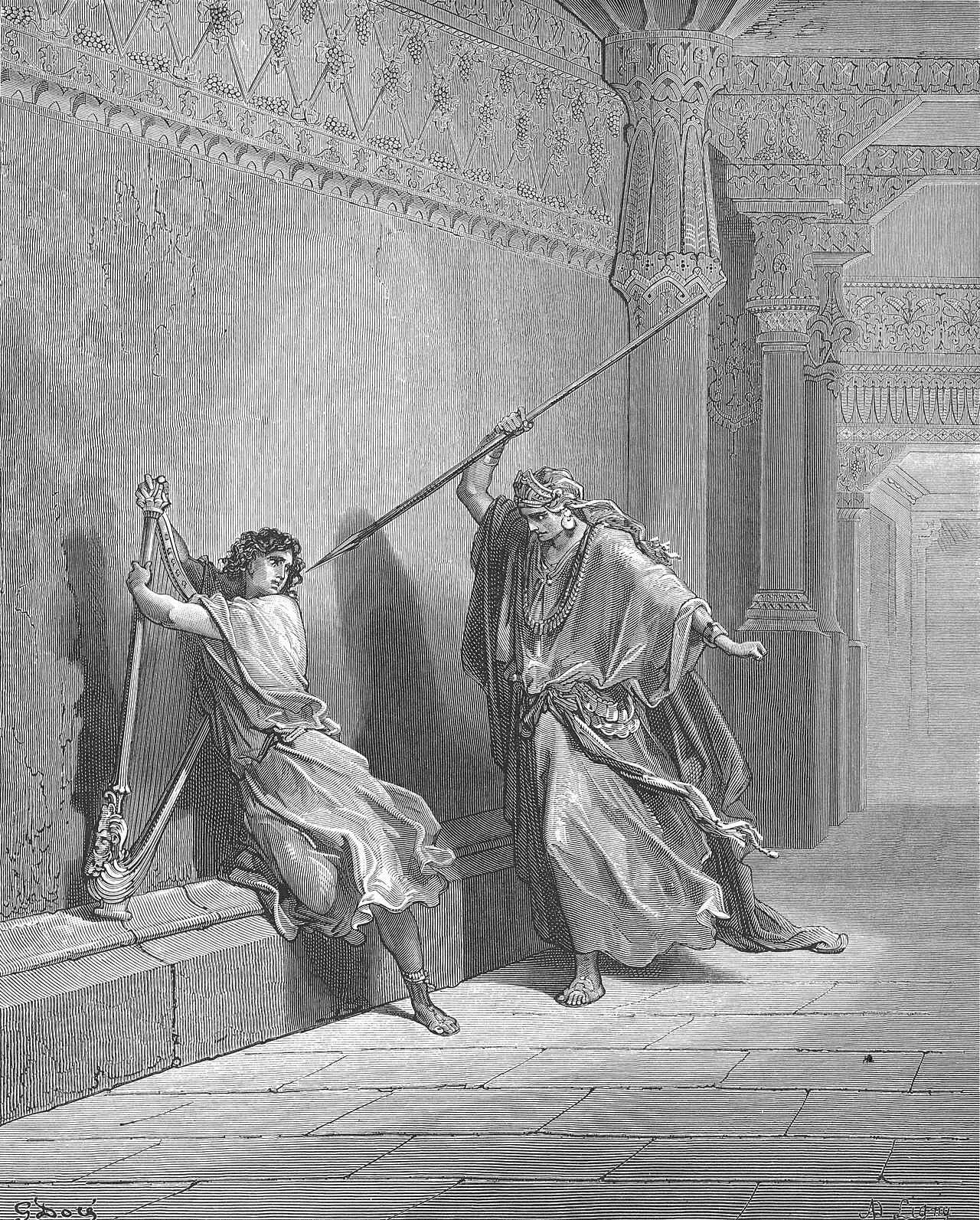
in 1 Samuel 18As the troops were returning home after David had killed the Philistine, the women came out of all the cities of Israel to meet King Saul with singing and dancing, with joyful songs, and with tambourines and other instruments.
BSB
The same verse in ASV and KJV ▾
ASV
And it came to pass as they came, when David returned from the slaughter of the Philistine, that the women came out of all the cities of Israel, singing and dancing, to meet king Saul, with timbrels, with joy, and with instruments of music.
KJV
And it came to pass as they came, when David was returned from the slaughter of the Philistine, that the women came out of all cities of Israel, singing and dancing, to meet king Saul, with tabrets, with joy, and with instruments of musick.
⋯
This verse in 1 Samuel 18
Commentary
8 notes on this verseWhen David was returned - This verse connects well with the 54th verse of the preceding chapter; and carries on the narration without any break or interruption. See the notes on 1Sa 17:
This site's exposition
the women came out of all the cities of Israel to meet King Saul with singing and dancing
on 1 Samuel 18:6-7
The women's refrain, "Saul has slain his thousands, and David his tens of thousands," is Hebrew parallelism raising the second line for effect, the pattern of such songs rather than a tally. Saul hears the count, not the poetry, and it becomes the seed of everything that follows. The line lodges so deep in Israel's memory that the Philistines quote it back at 21:11 and 29:5.
The record, by era
The Medieval Church1 voice
When David returned after striking down the Philistine, etc., the Lord, having returned after defeating the ancient enemy through His suffering and appearing in the glory of resurrection to His chosen ones, the glory of this triumph having been spread throughout Judea, the lowly souls, …
The Puritans and the Awakening3 voices
), and they had got a song, it seems, which they sang in their dances (made by some poet or other, that was a great admirer of David's bravery, and was more just than wise, in giving his achievements in the late action the preference before Saul's), the burden of which was, Saul had slain his thousands, and David his ten thousands.
quarantine:debris (2026-07-29) — leading-punctuation+unbalanced-parens
And it came to pass, as they came,....
The allays of his triumphs. This is the vanity that accompanies even a right work, that "for it a man is envied," Eccl. iv. He hated him, and sought to kill him himself,
The Nineteenth Century1 voice
A commentator
Jamieson, Fausset & Brown1802–1910
Commentary Critical and Explanatory on the Whole Bible (1871)
The Hebrew women, therefore, were merely paying the customary gratulations to David as the deliverer of their country, but they committed a great indiscretion by praising a subject at the expense of their sovereign.
1 more voice on this verse
The Nineteenth Century1 voice
A commentator
Albert Barnes1798–1870
Notes, Explanatory and Practical, on the Old and New Testaments (1832-1869)
proposed
The Philistine - Rather as in the margin. The allusion is not to Goliath, but to one of the expeditions referred to in 1Sa 18:5. Singing and dancing - Women used to dance to the sound of the timbrel, and to sing as they danced and played. (instruments of music The word means, an instrument like the triangle, or with three cords.
The words behind it
20 Hebrew wordsEvery Hebrew word of this verse in the order it stands, with what it means and the door to its own study. The last column counts the times a word stands in the whole Bible: the rarer the word, the more the places it appears belong together.
| Hebrew | Sound | Meaning | Word study | In the Bible |
|---|---|---|---|---|
| וַיְהִ֣י | vayhi | and it was | H1961 → | 3559 times |
| בְּבוֹאָ֗ם | bevoam | when came they | H935 → | 2568 times |
| בְּשׁ֤וּב | beshuv | when returned | H7725 → | 1056 times |
| דָּוִד֙ | david | David | H1732 → | 999 times |
| מֵהַכּ֣וֹת | mehakot | from striking down | H5221 → | 499 times |
| אֶת־ | ʾet- | <obj.> | H853 → | 10935 times |
| הַפְּלִשְׁתִּ֔י | hapelishti | the Philistine | H6430 → | 287 times |
| וַתֵּצֶ֨אנָה | vatetzenah | and they came out | H3318 → | 1067 times |
| הַנָּשִׁ֜ים | hanashim | the women | H802 → | 781 times |
| מִכָּל־ | mikol | from all | H3605 → | 5413 times |
| עָרֵ֤י | ʾarei | [the] cities of | H5892 → | 1090 times |
| יִשְׂרָאֵל֙ | yisrael | Israel | H3478 → | 2507 times |
| לָשִׁ֣יר | lashor | to sing | H7891 → | |
| וְהַמְּחֹל֔וֹת | vehamecholot | and the dancing | H4246 → | 8 times |
| לִקְרַ֖את | likrat | to meet | H7122 → | 139 times |
| שָׁא֣וּל | shaul | Saul | H7586 → | 402 times |
| הַמֶּ֑לֶךְ | hamelekh | the king | H4428 → | 2525 times |
| בְּתֻפִּ֥ים | betupim | with tambourines | H8596 → | |
| בְּשִׂמְחָ֖ה | besimchah | with joy | H8057 → | |
| וּבְשָׁלִשִֽׁים׃ | uveshalishim | and with three-stringed instruments | H7991 → |
וַיְהִ֣יand it was
vayhiH1961 →3559 times
בְּבוֹאָ֗םwhen came they
bevoamH935 →2568 times
בְּשׁ֤וּבwhen returned
beshuvH7725 →1056 times
דָּוִד֙David
davidH1732 →999 times
מֵהַכּ֣וֹתfrom striking down
mehakotH5221 →499 times
אֶת־<obj.>
ʾet-H853 →10935 times
הַפְּלִשְׁתִּ֔יthe Philistine
hapelishtiH6430 →287 times
וַתֵּצֶ֨אנָהand they came out
vatetzenahH3318 →1067 times
הַנָּשִׁ֜יםthe women
hanashimH802 →781 times
מִכָּל־from all
mikolH3605 →5413 times
עָרֵ֤י[the] cities of
ʾareiH5892 →1090 times
יִשְׂרָאֵל֙Israel
yisraelH3478 →2507 times
לָשִׁ֣ירto sing
lashorH7891 →
וְהַמְּחֹל֔וֹתand the dancing
vehamecholotH4246 →8 times
לִקְרַ֖אתto meet
likratH7122 →139 times
שָׁא֣וּלSaul
shaulH7586 →402 times
הַמֶּ֑לֶךְthe king
hamelekhH4428 →2525 times
בְּתֻפִּ֥יםwith tambourines
betupimH8596 →
בְּשִׂמְחָ֖הwith joy
besimchahH8057 →
וּבְשָׁלִשִֽׁים׃and with three-stringed instruments
uveshalishimH7991 →
A shaded row is a word that stands 400 times or fewer in the Bible.
The walk
8 stopsEach card is a verse this one points to, and under it the verses that one points to in turn. Where several paths arrive at the same place, that place is listed first: the text keeps returning to it.
Through
Exodus 15:20Then Miriam the prophetess, Aaron’s sister, took a tambourine in her hand, and all the women followed her with tambourines and dancing.
it leads to
- Psalms 150:4
Praise Him with tambourine and dancing; praise Him with strings and flute.
Reached by 2 separate paths from here.
- Judges 11:34
And when Jephthah returned home to Mizpah, there was his daughter coming out to meet him with tambourines and dancing! She was his only child; he had no son or daughter besides her.
Reached by 2 separate paths from here.
- Psalms 68:25
The singers lead the way, the musicians follow after, among the maidens playing tambourines.
- Psalms 149:3
Let them praise His name with dancing, and make music to Him with tambourine and harp.
- Micah 6:4
For I brought you up from the land of Egypt and redeemed you from the house of slavery. I sent Moses before you, as well as Aaron and Miriam.
- Psalms 150:4
Through
Judges 11:34And when Jephthah returned home to Mizpah, there was his daughter coming out to meet him with tambourines and dancing! She was his only child; he had no son or daughter besides her.
it leads to
- Exodus 15:20
Then Miriam the prophetess, Aaron’s sister, took a tambourine in her hand, and all the women followed her with tambourines and dancing.
Reached by 2 separate paths from here.
- Jeremiah 31:4
Again I will build you, and you will be rebuilt, O Virgin Israel. Again you will take up your tambourines and go out in joyful dancing.
- Exodus 15:20
Through
Psalms 68:25The singers lead the way, the musicians follow after, among the maidens playing tambourines.
it leads to
- 1 Chronicles 13:8
David and all the Israelites were celebrating before God with all their might, with songs and on harps and lyres, with tambourines, cymbals, and trumpets.
- 1 Chronicles 13:8
Where this verse is studied
On this page
About 1 Samuel
Who and where
2 names in this verse with a page on the site.
- PersonUnited MonarchyDavidSecond king of united Israel, shepherd-turned-monarch, ancestor of the Messiah, and traditional author of many Psalms.
- PersonUnited monarchySaulIsrael's first king, head and shoulders above the people; began in humility, ended in rejection — sparing what God devoted, consul…
This page draws on Adam Clarke, Commentary on the Bible; Albert Barnes, Notes, Explanatory and Practical, on the Old and New Testaments (1832-1869); Bede, Commentary on Samuel; Jamieson, Fausset & Brown, Commentary Critical and Explanatory on the Whole Bible; John Gill, Exposition of the Old Testament (1748-1763) and Matthew Henry, Commentary on the Whole Bible.