
1 Kings 17:24
in 1 Kings 17Then the woman said to Elijah, “Now I know that you are a man of God and that the word of the LORD from your mouth is truth.”
BSB
The same verse in ASV and KJV ▾
ASV
And the woman said to Elijah, Now I know that thou art a man of God, and that the word of Jehovah in thy mouth is truth.
KJV
And the woman said to Elijah, Now by this I know that thou art a man of God, and that the word of the Lord in thy mouth is truth.
⋯
This verse in 1 Kings 17
Commentary
5 notes on this verseThe word of the Lord in thy mouth is truth - Three grand effects were produced by this temporary affliction: 1. The woman was led to examine her heart, and try her ways; 2. The power of God became highly manifest in the resurrection of the child; 3. She was convinced that the word of the Lord was truth, and that not one syllable of it could fall to the ground. Through a little suffering all this good was obtained. The subject in the fourth verse of this chapter deserves a more particular consideration.
This site's exposition
the soul of the child came into him again
on 1 Kings 17:22-24
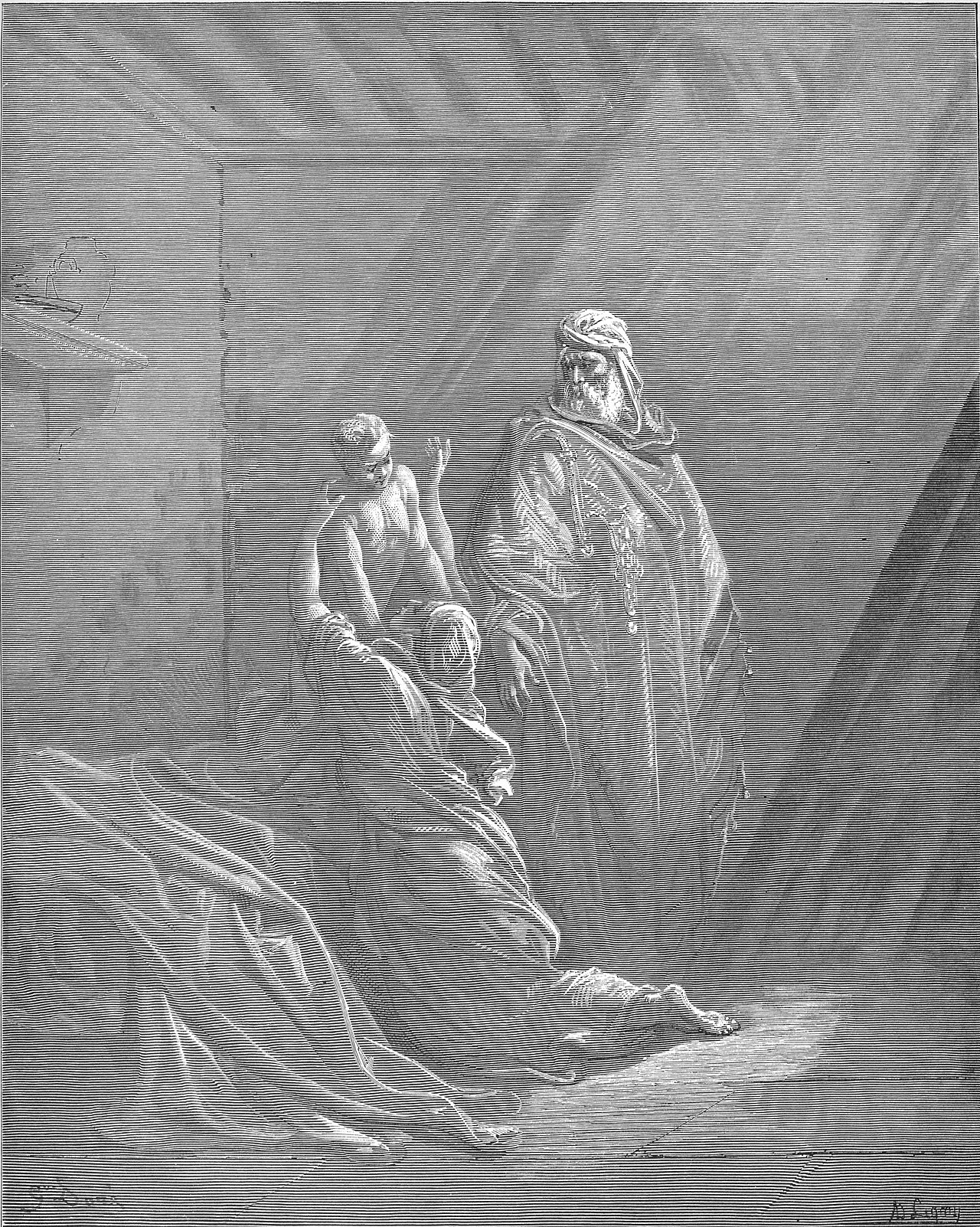
The Lord hears, and the child's soul returns to him. Gill calls this the first instance in Scripture of anyone being raised from the dead, and notes that pagan literature's own tales of revived men are its later, lesser copy. Elijah carries the boy down and hands him to his mother with the plainest possible proof, see, thy son liveth, and her confession closes the chapter where it opened: now by this I know that thou art a man of God, and that the word of the Lord in thy mouth is truth, the same word that shut heaven at verse 1 now proven true over a single household.
This site's exposition
you are a man of God
Adam Clarke counts three results of the death and return of the boy: the widow searched her own heart, the power of God was shown, and she was convinced of the word of the LORD. At verse 18 she had called Elijah a man of God in fear. Now she says it in faith.
The record, by era
The Puritans and the Awakening2 voices
And the woman said to Elijah, now by this I know that thou art a man of God,....
Thus his story begins with judgments and miracles, designed to awaken that stupid generation that had to deeply corrupted themselves. 1 And Elijah the Tishbite, who was of the inhabitants of Gilead, said unto Ahab, As the L ORD God of Israel liveth, before whom I stand, there shall not be dew nor rain these years, but according to my word.
The words behind it
15 Hebrew wordsEvery Hebrew word of this verse in the order it stands, with what it means and the door to its own study. The last column counts the times a word stands in the whole Bible: the rarer the word, the more the places it appears belong together.
| Hebrew | Sound | Meaning | Word study | In the Bible |
|---|---|---|---|---|
| וַתֹּ֤אמֶר | vatomer | and she said | H559 → | 5305 times |
| הָֽאִשָּׁה֙ | haishah | the woman | H802 → | 781 times |
| אֶל־ | ʾel- | to | H413 → | 5510 times |
| אֵ֣לִיָּ֔הוּ | ʾeliyahu | Elijah | H452 → | 71 times |
| עַתָּה֙ | ʾatah | now | H6258 → | 433 times |
| זֶ֣ה | zeh | this | H2088 → | 1180 times |
| יָדַ֔עְתִּי | yada'ti | I know | H3045 → | 945 times |
| כִּ֛י | ki | that | H3588 → | 4482 times |
| אִ֥ישׁ | ʾish | [are] a man of | H376 → | 1663 times |
| אֱלֹהִ֖ים | ʾelohim | God | H430 → | 2601 times |
| אָ֑תָּה | ʾatah | you | H859 → | 1094 times |
| וּדְבַר־ | udevar- | and [the] word of | H1697 → | 1440 times |
| יְהוָ֥ה | yahweh | Yahweh | H3068 → | 6520 times |
| בְּפִ֖יךָ | befikha | in mouth your | H6310 → | 498 times |
| אֱמֶֽת׃ פ | ʾemet | [is] truth | H571 → | 127 times |
וַתֹּ֤אמֶרand she said
vatomerH559 →5305 times
הָֽאִשָּׁה֙the woman
haishahH802 →781 times
אֶל־to
ʾel-H413 →5510 times
אֵ֣לִיָּ֔הוּElijah
ʾeliyahuH452 →71 times
עַתָּה֙now
ʾatahH6258 →433 times
זֶ֣הthis
zehH2088 →1180 times
יָדַ֔עְתִּיI know
yada'tiH3045 →945 times
כִּ֛יthat
kiH3588 →4482 times
אִ֥ישׁ[are] a man of
ʾishH376 →1663 times
אֱלֹהִ֖יםGod
ʾelohimH430 →2601 times
אָ֑תָּהyou
ʾatahH859 →1094 times
וּדְבַר־and [the] word of
udevar-H1697 →1440 times
יְהוָ֥הYahweh
yahwehH3068 →6520 times
בְּפִ֖יךָin mouth your
befikhaH6310 →498 times
אֱמֶֽת׃ פ[is] truth
ʾemetH571 →127 times
A shaded row is a word that stands 400 times or fewer in the Bible.
The walk
8 stopsEach card is a verse this one points to, and under it the verses that one points to in turn. Where several paths arrive at the same place, that place is listed first: the text keeps returning to it.
Through
John 2:11Jesus performed this, the first of His signs, at Cana in Galilee. He thus revealed His glory, and His disciples believed in Him.
it leads to
- John 20:30–31
Jesus performed many other signs in the presence of His disciples, which are not written in this book.
- John 1:14
The Word became flesh and made His dwelling among us. We have seen His glory, the glory of the one and only Son from the Father, full of grace and truth.
- John 3:2
He came to Jesus at night and said, “Rabbi, we know that You are a teacher who has come from God. For no one could perform the signs You are doing if God were…
- John 6:2
A large crowd followed Him because they saw the signs He was performing on the sick.
- John 20:30–31
Through
John 3:2He came to Jesus at night and said, “Rabbi, we know that You are a teacher who has come from God. For no one could perform the signs You are doing if God were…
it leads to
- John 5:36
But I have testimony more substantial than that of John. For the works that the Father has given Me to accomplish—the very works I am doing—testify about Me that the Father has sent Me.
- Acts 10:38
how God anointed Jesus of Nazareth with the Holy Spirit and with power, and how Jesus went around doing good and healing all who were oppressed by the devil, because God was with Him.
- Acts 2:22
Men of Israel, listen to this message: Jesus of Nazareth was a man certified by God to you by miracles, wonders, and signs, which God did among you through Him, as you yourselves know.
- John 5:36
Through
1 John 2:21I have not written to you because you lack knowledge of the truth, but because you have it, and because no lie comes from the truth.
it leads to
- 2 Peter 1:12
Therefore I will always remind you of these things, even though you know them and are established in the truth you now have.
- 2 Peter 1:12
Where this verse is studied
On this page
Studies1
About 1 Kings
Who and where
1 name in this verse with a page on the site.
This page draws on Adam Clarke, Commentary on the Bible; John Gill, Exposition of the Old Testament; John Gill, Exposition of the Old Testament (1748-1763) and Matthew Henry, Commentary on the Whole Bible.