
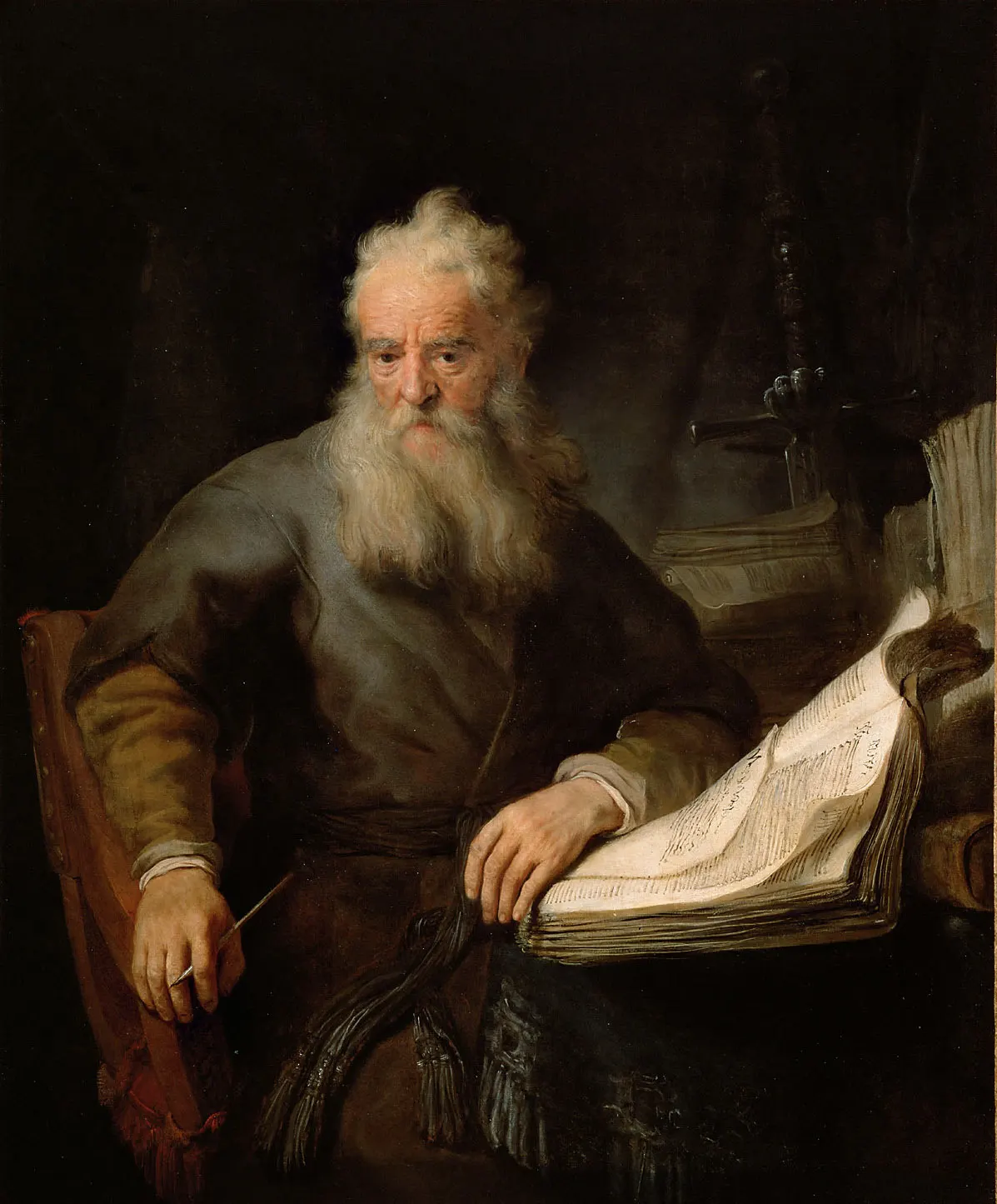
Philemonchapter 1
25 verses · Paul · AD 60 to 62 · Paul's letters
to Apphia our sister, to Archippus our fellow soldier, and to the church that meets at your house:
Introduction
Paul, Paul's letters, Philemon Overview.
Paul wrote this short letter as a prisoner, to a believer who owned slaves in Colossae, a town in the Lycus valley of what is now western Turkey. It went home with the man it concerns, a slave who had left his master and met Paul in captivity. It was read aloud to the church that met in the owner's house. It is the most personal of Paul's letters, and it asks one favor of one man. Listen for the words heart, brother and partner, and for the care Paul takes to ask where he could command. Read it as the gospel at work inside a single household.
Context
- Who
- One slave owner, his household, and the congregation who would hear the letter read aloud
- What
- A personal letter in which Paul asks Philemon to receive Onesimus, his runaway slave and now a believer, as a beloved brother.
- Where
- Written from Paul's imprisonment, most likely in Rome, to the church that met in Philemon's house at Colossae in Phrygia.
- When
- About AD 60 to 62 on the traditional dating, sent at the same time as Colossians and by the same messengers.
- Why
- To reconcile a wronged master and his returning slave as brothers in Christ, with Paul taking any debt on himself.
Historical context
A runaway slave was in mortal danger. Roman law treated flight as theft, the slave had stolen himself, and owners advertised for the missing, hired slave-catchers, and could punish a recovered runaway by branding the forehead, chaining him to a mill, or worse. Harboring someone else's runaway was itself a crime.
Show the rest of the historical context, 3 more paragraphs
There was one recognized escape route, and it shapes this whole letter. A frightened slave could seek out a friend of his master and ask him to intercede, which counted as seeking mediation rather than fleeing. Roman letters of exactly this kind survive; the younger Pliny wrote one for a freedman who had angered his patron, asking him to take the man back without punishment.
The letter is written to a household, not to a private man. Philemon's house was large enough to host the church, so the whole congregation would hear this read, which meant the request could not be quietly ignored.
Paul's line about charging any loss to his own account uses the language of a business note, and he signs it in his own hand. That is a formal promissory statement, legally recognizable, written by a man in chains.
Significance
For the first hearers, the astonishing thing was the request itself: receive him as you would receive me. Onesimus was returning to a man who had every legal right to have him flogged, carrying a letter that asked for a brother's welcome instead.
Show the rest of the significance, 1 more paragraph
Paul never demands that Philemon free him, and he never argues the institution. He does something more awkward for a slave owner, he calls the property a beloved brother in front of the whole church and says he would rather have kept him, then leaves the decision, pointedly, to Philemon.
The heads below are this chapter's scenes. The numbered points under each are its verses.
Refreshing the Hearts of the Saints
Philemon 1:1-3
a prisoner of Christ Jesus: Paul opens as a prisoner of Christ Jesus and omits the title apostle. This letter asks rather than commands. The greeting takes in Archippus, charged at Colossians 4:17, and the church that meets at your house, so the whole assembly hears the appeal.
Philemon 1:1
“Paul has not used "prisoner of Jesus Christ" in any other epistle as a part of his name, though he has used it in Ephesians and in Philippians as a form of proclamation. Thus, I think it of more importance that he says he is a prisoner of Jesus Christ than an apostle. Indeed, the apostles gloried that they were worthy to suffer abuse for the name of Jesus Christ. Indeed, their chains carried an automatic authority.”
Jerome · written before 420 · Commentary on Philemonpatristic
3 more voices on this verseWhat preachers and commentators have said about this verse, in their own words.
Philemon 1:1
“Paul, a prisoner of Jesus Christ,.... Not made a prisoner by Christ, though he was apprehended, laid hold on, and detained by Christ as a prisoner of hope, at his conversion; but this is not intended here: but he was a prisoner at Rome for the sake of Christ, on account of professing him, and preaching in his name; his bonds were for the sake of the Gospel of Christ; and therefore they are in this epistle called the bonds of the Gospel.”
Philemon 1:1
“A prisoner of Jesus Christ. In the same sense in which he elsewhere calls himself an Apostle of Christ, or a minister of Christ, he now calls himself "a prisoner of Christ;" because the chains by which he was bound on account of the gospel, were the ornaments or badges of that embassy which he exercised for Christ.”
John Calvin · Commentaries (1554)reformed
Philemon 1:1
“This single epistle infinitely transcends all the wisdom of the world. And it gives us a specimen how Christians ought to treat of secular affairs from higher principles. Paul a prisoner of Christ - To whom, as such, Philemon could deny nothing.”
John Wesley · Explanatory Notes upon the New Testament (1755)evangelical
the church that meets at your house: Apphia is greeted as a sister, and Chrysostom takes her to be the wife of Philemon. Barnes thinks Archippus may have been their son. The appeal will be heard by the whole house and the church that meets in it.
Philemon 1:2
“Also to Apphia, the sister, not having anything false or imaginary in herself, and to Archippus, a fellow soldier whom I believe, along with Paul and Timothy, stood as a victorious opponent for Christ's name against adversaries and for this reason is now called a fellow soldier because he triumphed in the same battle and war. It is also written to the church that is in his house. But this [is] uncertain, whether [it refers to] the church which is in the house of Archippus, or [that] which is in the house of Philemon.”
Jerome · written before 420 · Commentary on Philemonpatristic
2 more voices on this verse
Philemon 1:2
“Archippus--a minister of the Colossian Church (Col 4:17). fellow soldier-- (2Ti 2:3). church in thy house--In the absence of a regular church building, the houses of particular saints were used for that purpose. Observe Paul's tact in associating with Philemon those associated by kindred or Christian brotherhood with his house, and not going beyond it.”
Jamieson, Fausset & Brown · Commentary Critical and Explanatory on the Whole Bible (1871)reformed
Philemon 1:2
“It is also possible, that Archippus attended and shared in some contests which Paul maintained; and, indeed, this is the very word that Paul makes use of, whenever he mentions persecutions. And to the Church which is in thy house.”
John Calvin · Commentaries (1554)reformed
Grace and peace: Chrysostom hears in the word grace a reminder of how much God had already forgiven Philemon. A forgiven man is about to be asked to forgive. The greeting prepares the ground for the request about Onesimus.
Philemon 1:3
“But the expression, "Grace be to you, and peace from God the Father, and from the Lord Jesus Christ," is still written to many by two, and in almost all the Epistles, its beginning is the same, so that grace and peace may be invoked upon them from God the Father and Christ the Lord. From which it is shown that there is one nature of the Son and the Father, since the Son can do what the Father can, and it is said that the Father can do what the Son can.”
Jerome · written before 420 · Commentary on Philemonpatristic
2 more voices on this verse
Philemon 1:3
“From God our Father and the Lord Jesus Christ. The Holy Spirit also is understood, though not named; for all acts towards the creatures of the whole Trinity: from the Father, who is our Father in Christ, the first in order of acting as of subsisting; and from Christ, his favour and good-will as God, and the fruits of it through him as Mediator, God-man.”
Matthew Henry · Commentary on the Whole Bible (1707-1721)puritan
Philemon 1:3
“Grace to you and peace, from God,.... Which is the same form of salutation used in the other epistles; See Gill on Rom 1:7 for though this epistle is but a very small one, yet it is introduced in the same form as the larger epistles are; and has an inscription in the former verse, a salutation in this, and a preface in the three following.”
Philemon 1:4-7
remembering you in my prayers: The thanksgiving records Philemon's love for all the saints: he has refreshed the hearts of the saints. The Greek splanchna, hearts, returns for Onesimus at verse 12 and for Paul at verse 20. Philemon is asked for what he is known for.
Philemon 1:4
“This, now not as Paul and Timothy, to Philemon and others; but as Paul alone, speaks only to Philemon: "I give thanks," he says, "always to my God, making mention of thee in my prayers." It is said ambiguously, whether he always gives thanks to his God, or whether he always mentions him in his prayers. And both can be understood. For whoever commands others to give thanks to God in all things, cannot be restricted by any difficulties to himself not to give thanks to God always.”
Jerome · written before 420 · Commentary on Philemonpatristic
1 more voice on this verse
Philemon 1:4
“It deserves attention, that he at the same time prays for that very thing for which he "gives thanks." Even the most perfect, so long as they live in the world, never have so good ground for congratulation as not to need prayers, that God may grant to them, not only to persevere till the end, but likewise to make progress from day to day.”
John Calvin · Commentaries (1554)reformed
your love for all the saints: Barnes suggests Paul heard of this love from Onesimus himself. Jamieson, Fausset and Brown hold that Philemon had met Paul away from Colossae and come to faith through him, which verse 19 assumes. A love for all the saints must now reach one more.
Philemon 1:5
“Hearing of thy love and faith - Either by Onesimus, who, after his conversion, would be disposed to state all that he knew that was favorable of Philemon, or hearing it by some other persons who had come from Colosse to Rome. The faith which is mentioned here refers to the Lord Jesus; the love, to the saints. The order in the Greek is indeed the same as in our version, but it is not unusual by synthesis, or uniting two or more things together, to arrange words in that manner.”
2 more voices on this verse
Philemon 1:5
“Hearing of thy love and faith. This praise, which he bestows on Philemon, includes briefly the whole perfection of a Christian man.”
John Calvin · Commentaries (1554)reformed
Philemon 1:5
“Now Colosse, Philemon's place of residence, he had never yet seen. Yet Phm 19 here implies that Philemon was his convert. Philemon, doubtless, was converted at Ephesus, or in some other place where he met Paul. love and faith--The theological order is first faith then love, the fruit of faith.”
Jamieson, Fausset & Brown · Commentary Critical and Explanatory on the Whole Bible (1871)reformed
your partnership in the faith: Adam Clarke notes that the word for partnership often means generous giving to the poor. Jamieson, Fausset and Brown read the prayer as a faith that works by love. Paul wants it seen in deeds.
Philemon 1:6
“One who has equal charity and faith toward God or His saints, ought also to have an equal share in the communication of His faith, so that as he believes and loves, he may also consummate his love and faith by his works. He says, "Let it become clear in knowing all good"; or as is better had in Greek, "effective"; for it can be properly translated "effective" or "operative"; so that we may not only believe that faith and charity towards God and His saints are sufficient for us, but also that what we believe is accomplished by action.”
Jerome · written before 420 · Commentary on Philemonpatristic
1 more voice on this verse
Philemon 1:6
“In short, that thy faith may by acts be proved to be "a faith which worketh by love." in Christ Jesus--rather as Greek, "unto Christ Jesus," that is, to the glory of Christ Jesus.”
Jamieson, Fausset & Brown · Commentary Critical and Explanatory on the Whole Bible (1871)reformed
refreshed the hearts of the saints: Philemon refreshed the hearts of the saints by keeping an open house, and Adam Clarke reads it as kindness to poor believers. Paul sets the word brother last in the sentence. Jamieson, Fausset and Brown read that as a way to win a warm hearing for the appeal that follows.
Philemon 1:7
"For we have had great joy and consolation in your love, because the hearts of the saints have been refreshed through you, brother." He emphasizes and teaches more fully why he said, "I give thanks to my God always remembering you in my prayers." It was worthy indeed to give thanks to God for the love of Philemon, who had refreshed the internal affection of the heart and the deep recesses of the saints by receiving them. And this is the apostolic idiom; to always call it "hearts," wanting to show the fullness of love in the mind.
Jerome · written before 420 · Commentary on Philemonpatristic
2 more voices on this verse
Philemon 1:7
“For we have great joy and consolation in thy love - In thy love toward Christians. The word here rendered “joy” (χάριν charin), properly means grace. A large number of manuscripts, however, instead of this word, have χαρὰν charan, Charan, joy. See Wetstein. This reading has been adopted by Griesbach, Tittman, and Hahn. Because the bowels of the saints are refreshed by thee, brother - For your kindness to them. The word “bowels” here probably means minds, hearts, for it is used in the Scriptures to denote the affections.”
Philemon 1:7
“For--a reason for the prayer, Phm 4-6. we have--Greek, "we had." joy and consolation--joined in 2Co 7:4. saints are refreshed by thee--His house was open to them. brother--put last, to conciliate his favorable attention to the request which follows.”
Jamieson, Fausset & Brown · Commentary Critical and Explanatory on the Whole Bible (1871)reformed
No Longer a Slave, but a Beloved Brother
Philemon 1:8-9
I am bold enough to order you: In Christ Paul is bold enough to order you to do what is proper. He prefers to appeal on the basis of love. He calls himself aged, the Greek presbutes, one letter from presbeutes, ambassador, and a prisoner of Christ Jesus as well.
Philemon 1:8
“Wherefore, though I might be much bold - It would be better to read: Wherefore, although I have much authority through Christ, to command thee to do what is proper; yet, on account of my love to thee, I entreat thee.”
Adam Clarke · Commentary on the Bible (1810-1826)evangelical
2 more voices on this verse
Philemon 1:8
“The apostles had under Christ great power in the church over the ordinary ministers, as well as the members of it, for edification; they might require of them what was fit, and were therein to be obeyed, which Philemon should consider. This was a matter within the compass of the apostle's power to require, though he would not in this instance act up to it.”
Matthew Henry · Commentary on the Whole Bible (1707-1721)puritan
Philemon 1:8
“Wherefore--Because of my love to thee, I prefer to "beseech," rather than "enjoin," or authoritatively command. I might . . . enjoin--in virtue of the obligation to obedience which Philemon lay under to Paul, as having been converted through his instrumentality. in Christ--the element in which his boldness has place.”
Jamieson, Fausset & Brown · Commentary Critical and Explanatory on the Whole Bible (1871)reformed
Paul, am now aged: Adam Clarke reckons Paul was near fifty-six, yet counts him aged because he died some four years later. Matthew Henry holds that the appeal of an aged apostle, a prisoner for the gospel, should be received with love. Paul appeals as one aged and in chains.
Philemon 1:9
“Yet for love’s sake - For the love which you bear me, and for the common cause. I rather beseech thee - Rather than command thee. Being such an one as Paul the aged - πρεσβυτης presbutēs - an old man. We have no means of ascertaining the exact age of Paul at this time, and I do not recollect that he ever alludes to his age, though he often does to his infirmities, in any place except here.”
2 more voices on this verse
Philemon 1:9
“He is called younger still, who had not yet reached the mature age of the white-haired faith, who had not yet grown into a perfect man, into that full measure of the age of the fullness of Christ (Eph. IV, 13). Finally, he is only called young there (Acts VII, 57), where he was keeping the garments of those stoning Stephen. And for this reason, he desired Philemon to be like him not in his youth but in his old age, as he wrote: I beg you even more, now that I am old like Paul (Philem. 9).”
Ambrose of Milan · written before 397 · On Joseph the Patriarchpatristic
Philemon 1:9
“With what endearment, in the next verse, does he call Onesimus his son, before he names his name! And as soon as he had mentioned it, with what fine address does he just touch on his former faults, and instantly pass on to the happy change that was now made upon him! So disposing Philemon to attend to his request, and the motives wherewith he was going to enforce it.”
John Wesley · Explanatory Notes upon the New Testament (1755)evangelical
Philemon 1:10-12
I appeal to you for my child Onesimus: In the Greek the name Onesimus comes last, after my child, whose father I became while I was in chains. The name means profitable. Paul plays on it: he was useless to you, but now he has become useful both to you and to me.
Philemon 1:10
“I beseech thee for my son Onesimus - It is evident from this that Onesimus was converted by St. Paul while he was prisoner at Rome, and perhaps not long before he wrote this epistle.”
Adam Clarke · Commentary on the Bible (1810-1826)evangelical
3 more voices on this verse
Philemon 1:10
“In wishing to obtain what he asks for, he now asserts that he is pleading not for Philemon's slave, but for his own son. And regarding that son whom he has begotten in the chains of the gospel, that is, which he endured for the sake of Christ's gospel.”
Jerome · written before 420 · Commentary on Philemonpatristic
Philemon 1:10
“14 , Many brethren, waxing confident by my bonds, are much more bold to speak the word of the Lord without fear. When God's servants are bound, yet his word and Spirit are not bound; spiritual children may then be born to them.”
Matthew Henry · Commentary on the Whole Bible (1707-1721)puritan
Philemon 1:10
“I beseech thee--emphatically repeated from Phm 9. In the Greek, the name "Onesimus" is skilfully put last, he puts first a favorable description of him before he mentions the name that had fallen into so bad repute with Philemon.”
Jamieson, Fausset & Brown · Commentary Critical and Explanatory on the Whole Bible (1871)reformed
useful both to you and to me: Paul admits Onesimus was useless before Philemon can say it. Chrysostom notes that Paul adds and to me, so Paul himself stands behind the promise that Onesimus is now useful. Barnes says useless may mean idle, in the wrong, or gone.
Philemon 1:11
“Which in time past was to thee unprofitable - Either because he was indolent; because he had wronged him (compare the notes at Phm 1:18), or because he had run away from him. It is possible that there may be an allusion here to the meaning of the name “Onesimus,” which denotes “profitable” (from ὀνίνημι oninēmi, future ὀνήσω onēsō, to be useful, to be profitable, to help), and that Paul means to say that he had hitherto not well answered to the meaning of his own name, but that now he would be found to do so.”
2 more voices on this verse
Philemon 1:11
“Which in time past was to thee unprofitable,.... Yea, injurious and hurtful; one that was an eye servant, that loitered away his time, and set an ill example to fellow servants; and not only so, but embezzled his master's goods, and robbed him, and run away from him.”
Philemon 1:11
“Now profitable - None should be expected to be a good servant before he is a good man. He manifestly alludes to his name, Onesimus, which signifies profitable.”
John Wesley · Explanatory Notes upon the New Testament (1755)evangelical
I am sending back to you: Paul sends Onesimus back in person with this letter. Chrysostom observes that a master grows angriest when someone appeals for a slave who is absent, so sending him back softens Philemon. Adam Clarke holds that Paul was bound to send him back, and love sent his heart with him.
Philemon 1:12
“Whom I have sent again - The Christian religion never cancels any civil relations; a slave, on being converted, and becoming a free man of Christ, has no right to claim, on that ground, emancipation from the service of his master. Justice, therefore, required St. Paul to send back Onesimus to his master, and conscience obliged Onesimus to agree in the propriety of the measure; but love to the servant induced the apostle to write this conciliating letter to the master.”
Adam Clarke · Commentary on the Bible (1810-1826)evangelical
2 more voices on this verse
Philemon 1:12
“And what he says: "But you accept him, that is, my heart," this is what I said a little earlier, that "heart" signifies the internal affection of the heart and the full willingness from the soul, when everything that is in us is received from the one asking. But otherwise, all children are the parents' hearts.”
Jerome · written before 420 · Commentary on Philemonpatristic
Philemon 1:12
“Receive him, that is, my own bowels - Whom I love as my own soul. Such is the natural affection of a father in Christ toward his spiritual children.”
John Wesley · Explanatory Notes upon the New Testament (1755)evangelical
Philemon 1:13-16
I would have liked to keep him with me: Paul would keep Onesimus only with Philemon's consent. Perhaps he was separated from you for a while, so that you might have him back for good. He returns no longer as a slave, but better than a slave, as a beloved brother.
Philemon 1:13
“And at the same time we admire the magnanimity of the apostle and his fervent mind in Christ. He is held in prison, is bound in chains, is oppressed by the filth of his body, by separation from his loved ones, is cramped by penal darkness, and yet he feels no wrong, he is not tortured by pain, he knows nothing else but to think about the Gospel of Christ. He knew the slave, he knew the fugitive, he knew that he had been converted to the faith of Christ by a kidnapper.”
Jerome · written before 420 · Commentary on Philemonpatristic
3 more voices on this verse
Philemon 1:13
“Whom I would have retained with me, that in thy stead - “That he might render me the service which I know you would if you were here.” The Greek is: “for thee” ὑπὲρ σοῦ huper sou; that is, what he should do for Paul might be regarded as done by Philemon himself. He might have ministered unto me - He might have rendered me assistance (διακονῇ diakonē); to wit, in such a way as one who was in bonds would need.”
Philemon 1:13
“Observe, Good deeds are most acceptable to God and man when done with most freedom. And Paul herein, notwithstanding his apostolical power, would show what regard he had to civil rights, which Christianity does by no means supersede or weaken, but rather confirm and strengthen.”
Matthew Henry · Commentary on the Whole Bible (1707-1721)puritan
Philemon 1:13
“I would have retained--different Greek from the "would," Phm 14, "I could have wished," "I was minded" here; but "I was not willing," Phm 14. in thy stead--that he might supply in your place all the services to me which you, if you were here, would render in virtue of the love you bear to me (Phm 19). bonds of the gospel--my bonds endured for the Gospel's sake (Phm 9).”
Jamieson, Fausset & Brown · Commentary Critical and Explanatory on the Whole Bible (1871)reformed
by your own free will: Had Paul kept Onesimus, Philemon would have had no chance to give his consent, as Jamieson, Fausset and Brown observe. Jerome and Augustine drew a wider lesson from the verse. Both read it as God seeking goodness given by free will, apart from compulsion.
Philemon 1:14
“That thy benefit should not be as it were of necessity - If the apostle had kept Onesimus in his service, and written to Philemon to forgive him and permit him to stay, to this it is probable he would have agreed; but the benefit thus conceded might have lost much of its real worth by the consideration that, had he been at Colosse, Philemon would not have sent him to Rome; but, being there and in the apostle’s service, he could not with propriety order him home: thus the benefit to the apostle would have appeared to have been…”
Adam Clarke · Commentary on the Bible (1810-1826)evangelical
separated from you for a while: Paul says Onesimus was separated, a gentle word for a slave who ran away, as Jamieson, Fausset and Brown note. Barnes points out that the Greek says for an hour, set against having him back for good. Jerome sees God turning an evil act to good.
Philemon 1:15
“Sometimes the occasion of evil becomes the occasion of good, and God turns evil human plans to an upright end.… If indeed [Onesimus] had not fled his master, he never would have come to Rome where Paul was in prison in chains. If he had not seen Paul in chains, he would not have received faith in Christ. If he had not had faith in Christ, he never would have become Paul's son, so that he might be sent for the work of the gospel.… Paul says "perhaps" cautiously, hesitantly, with trepidation and not with certainty.”
Jerome · written before 420 · Commentary on Philemonpatristic
2 more voices on this verse
Philemon 1:15
“For perhaps he therefore departed for a season - Perhaps on this account, or for this reason - διὰ τοῦτο dia touto - he left you for a little time. Greek, “for an hour” - πρὸς ὥραν pros hōran. The meaning is, that it was possible that this was permitted in the Providence of God in order that Onesimus might be brought under the influence of the gospel, and be far more serviceable to Philemon as a Christian, than he could have been in his former relation to him.”
Philemon 1:15
“So Joseph in Ge 45:5. departed--literally, "was parted from thee"; a softening term for "ran away," to mitigate Philemon's wrath. receive him--Greek, "have him for thyself in full possession" (see on Php 4:18). The same Greek as in Mt 6:2. for ever--in this life and in that to come (compare Ex 21:6).”
Jamieson, Fausset & Brown · Commentary Critical and Explanatory on the Whole Bible (1871)reformed
both in person and in the Lord: The phrase at the close names two ties. Jamieson, Fausset and Brown read it as a slave in the house who is now a beloved brother in the Lord. Chrysostom called slave and free mere names beside the freedom Onesimus found in Christ.
Philemon 1:16
“No longer as a mere servant or slave (though still he is that), but above a servant, so that thou shalt derive from him not merely the services of a slave, but higher benefits: a servant "in the flesh," he is a brother "in the Lord." beloved, specially to me--who am his spiritual father, and who have experienced his faithful attentions.”
Jamieson, Fausset & Brown · Commentary Critical and Explanatory on the Whole Bible (1871)reformed
1 more voice on this verse
Philemon 1:16
“Not now as a servant? - Do not receive him merely as thy slave, nor treat him according to that condition; but as a brother - as a genuine Christian, and particularly dear to me. Both in the flesh and in the Lord? - There is no reason to believe that Onesimus was of the kindred of Philemon; and we must take the term flesh, here, as referring to the right which Philemon had in him.”
Adam Clarke · Commentary on the Bible (1810-1826)evangelical
Charge It to My Account
Philemon 1:17-19
receive him as you would receive me: Paul puts himself in Onesimus's place: receive him as you would receive me, and if he owes you anything, charge it to my account. Verse 19 signs the pledge, I will repay it. Paul adds that you owe me your very self.
Philemon 1:17
"If therefore you have me as a partner, receive him as you would me." Philemon desired to have Paul as a partner, and believing in Christ, he truly wanted to make such progress as to become like Paul, so that he could share his chains with him. Let us consider how much praise Onesimus is given here, how much he is said to have profited: since he must be received in such a way as the Apostle, and so should desire his fellowship, as belonging to Paul.
Jerome · written before 420 · Commentary on Philemonpatristic
2 more voices on this verse
Philemon 1:17
“If there count me therefore a partner - The word rendered “partner” (κοινωνὸς koinōnos, means “a partaker, a companion.” The idea in the word is that of having something in common (κοινὸς koinos) with any one - as common principles; common attachments; a common interest in an enterprise; common hopes.”
Philemon 1:17
“Answer, Onesimus being now penitent, it was doubtless to encourage him, and to support him against the fears he might have in returning to a master whom he had so much abused and wronged, to keep him from sinking into despondency and dejection, and encourage him to his duty.”
Matthew Henry · Commentary on the Whole Bible (1707-1721)puritan
charge it to my account: Paul writes if, and Adam Clarke reads the clause as a possible case, since Paul was unsure Onesimus owed anything. Jamieson, Fausset and Brown think Onesimus had confessed some wrong to Paul. Either way Paul takes the debt on his own account.
Philemon 1:18
“But if anyone has wronged you, or owes you anything, charge that to me. As an imitator of his master, and having Christ speaking in him, he ought to do the things which Christ did according to his ability. For if he bore our weaknesses and suffered our wounds, the Apostle rightly opposes himself on behalf of Onesimus and promises what he owed.”
Jerome · written before 420 · Commentary on Philemonpatristic
2 more voices on this verse
Philemon 1:18
“If he hath wronged thee, or oweth thee aught - Had the apostle been assured that Onesimus had robbed his master, he certainly would not have spoken in this hypothetical way; he only puts a possible case: If he have wronged thee, or owe thee aught, place all to my account; I will discharge all he owes thee.”
Adam Clarke · Commentary on the Bible (1810-1826)evangelical
Philemon 1:18
“Greek, "But it (thou art not inclined to 'receive him' because) he hath wronged thee"; a milder term than "robbed thee." Onesimus seems to have confessed some such act to Paul. put that on mine account--I am ready to make good the loss to thee if required.”
Jamieson, Fausset & Brown · Commentary Critical and Explanatory on the Whole Bible (1871)reformed
write this with my own hand: Paul usually wrote only the last lines of a letter with his own hand, as 2 Thessalonians 3:17 shows. Adam Clarke and Barnes think he wrote all of this one himself. Philemon owed Paul his very self.
Philemon 1:19
“I, Paul, have written this with my own hand. I will repay it, not to mention that you owe me your very self." What he says is this: "Whatever Onesimus may have wronged you, I will repay. I, Paul, write this with my own hand. I will not remind you that you owe me your very self. But I say this as speaking to a stranger. Moreover, if I should regain my right due to the message of Christ, which I have preached to you, and you have become a Christian, you owe yourself to me.”
Jerome · written before 420 · Commentary on Philemonpatristic
3 more voices on this verse
Philemon 1:19
“I Paul have written it with mine own hand - It has been inferred from this, that Paul wrote this entire Epistle with his own hand, though this was contrary to his usual practice; compare the Rom 16:22 note; 1Co 16:21 note; Gal 6:11 note. He undoubtedly meant to refer to this as a mark of special favor toward Philemon, and as furnishing security that he would certainly be bound for what he had promised. I will repay it - I will be security for it.”
Philemon 1:19
“I will repay it - If thou requirest it. Not to say, that then owest me thyself - It cannot be expressed, how great our obligation is to those who have gained our souls to Christ.”
John Wesley · Explanatory Notes upon the New Testament (1755)evangelical
Philemon 1:19
“For to my instrumentality thou owest thy salvation. So the debt which "he oweth thee" being transferred upon me (I making myself responsible for it) is cancelled.”
Jamieson, Fausset & Brown · Commentary Critical and Explanatory on the Whole Bible (1871)reformed
Philemon 1:20-22
let me have some benefit from you: Paul asks Philemon to refresh his heart, the verb verse 7 used of what Philemon did for the saints. Paul writes knowing that you will do even more than I ask, and asks for a guest room. He will see the answer in person.
Philemon 1:20
“Yea, brother - It is even so, that thou art thus indebted to me. Let me have joy of thee, in forgiving Onesimus, and receiving him into thy favor. In the words εγε σου οναιμην, which we should translate, let me have Profit of thee, there is an evident paronomasia, or play on the name of Onesimus. See on Phm 1:2 (note), Phm 1:11 (note). Refresh my bowels - Gratify the earnest longing of my soul in this. I ask neither thy money nor goods; I ask what will enrich, not impoverish, thee to give.”
Adam Clarke · Commentary on the Bible (1810-1826)evangelical
you will do even more than I ask: Paul writes confident of the obedience of Philemon, and Chrysostom notes that such confidence makes a refusal hard. A man trusted to do more than is asked will shrink from doing less. Barnes reads the more as receiving Onesimus with kindness.
Philemon 1:21
"Confident in your obedience, I have written to you, knowing that you will do even more than I say." Whoever presumes of him whom he is about to ask, prejudices himself in a certain manner, that it may not be lawful for him to deny what he is asked. Moreover, if he who asks knows that he will be asked for more than he has asked, he seeks smaller things, that he may have the voluntary compliance of the person asked, and a greater reward in return.
Jerome · written before 420 · Commentary on Philemonpatristic
1 more voice on this verse
Philemon 1:21
“Having confidence in thy obedience - That you would comply with all my expressed desires. I wrote unto thee - “I have written to you;” to wit, in this Epistle. Knowing that thou wilt also do more than I say - In all the respects which he had mentioned - in receiving Onesimus, and in his kind treatment of him. He had asked a great favor of him, but he knew that he would go even beyond what he had asked.”
through your prayers: The your of this verse is plural, so the whole church in the house of Philemon prays for Paul, as Jamieson, Fausset and Brown note. They find the same hope in Philippians 2:24, from the same imprisonment. Matthew Henry urges prayer for ministers in danger.
Philemon 1:22
“But withal prepare me also a lodging - Does not the apostle mention this as conferring an obligation on Philemon? I will begin to repay thee by taking up my abode at thy house, as soon as I shall be enlarged from prison. But some think he wished Philemon to hire him a house, that he might have a lodging of his own when he returned to Colosse. For I trust that through your prayers - It is very likely that this epistle was written a short time before the liberation of the apostle from his first imprisonment at Rome.”
Adam Clarke · Commentary on the Bible (1810-1826)evangelical
3 more voices on this verse
Philemon 1:22
"But at the same time prepare a lodging for me." I do not think that the Apostle was so rich, and occupied with such great burdens, that he needed a prepared lodging, and that he would not be content with a single cell, a house of small size for his body's limited capacity, but rather to do what he was asked while he was being waited for by Philemon.
Jerome · written before 420 · Commentary on Philemonpatristic
Philemon 1:22
“But yet, [3.] Trust must be with the use of means, prayer especially, though no other should be at hand; this hath unlocked heaven and opened prison-doors. The fervent effectual prayer of the righteous availeth much. [4.] Prayer of people for ministers, especially when they are in distress and danger, is their great duty; ministers need and request it.”
Matthew Henry · Commentary on the Whole Bible (1707-1721)puritan
Philemon 1:22
“This prospect of Paul's visiting Colosse would tend to secure a kindly reception for Onesimus, as Paul would know in person how he had been treated. your . . . you--referring to Philemon, Apphia, Archippus, and the Church in Philemon's house. The same expectation is expressed by him, Php 2:23, 24, written in the same imprisonment.”
Jamieson, Fausset & Brown · Commentary Critical and Explanatory on the Whole Bible (1871)reformed
Philemon 1:23-25
Epaphras, my fellow prisoner in Christ Jesus: The greetings name the Colossian circle: Epaphras, my fellow prisoner in Christ Jesus, then Mark, Aristarchus, Demas, and Luke. They also send greetings at Colossians 4:10 to 14. Colossians 4:9 sends Onesimus with that letter.
Philemon 1:23
“There salute thee Epaphras - The same persons who are here mentioned as greeting Philemon, are mentioned in the close of the Epistle to the Colossians - furnishing a high degree of evidence that Philemon resided at Colosse. Epaphras was a member of the church there; the notes at Col 4:12. My fellow-prisoner in Christ Jesus - In the cause of Christ; Notes, Phm 1:1. The circumstance of his being a prisoner is not mentioned in the parallel place in the Epistle to the Colossians, but nothing is more probable.”
2 more voices on this verse
Philemon 1:23
“Our dear fellow-servant (said St. Paul), and for you a faithful minister of Christ ( Col. i. 12, 13 ), A servant of Christ, always labouring for you in prayers.”
Matthew Henry · Commentary on the Whole Bible (1707-1721)puritan
Philemon 1:23
“However, he is not mentioned as a prisoner in Col 4:12, so that "fellow prisoner" here may mean merely one who was a faithful companion to Paul in his imprisonment, and by his society put himself in the position of a prisoner.”
Jamieson, Fausset & Brown · Commentary Critical and Explanatory on the Whole Bible (1871)reformed
Mark, Aristarchus, Demas, and Luke: Adam Clarke takes Mark to be John Mark of Acts 12:12 and Aristarchus to be the Macedonian of Acts 19:29. Chrysostom notes that Demas later deserted Paul while Luke stayed, as 2 Timothy 4:10 and 11 record. The list holds a warning beside a comfort.
with your spirit: The your is plural, so the last blessing of grace reaches the whole church in the house of Philemon, as Adam Clarke notes. The letter opened with grace in verse 3 and closes with it. Chrysostom reads the close as a prayer the church must live up to.
Philemon 1:25
"The grace of our Lord Jesus Christ be with your spirit." As the people of Israel are numbered according to their tribes (Num. 1:2) from the better part of the head of man, so indeed in the whole man, and in every part of the saints, there is the grace of our Lord Jesus Christ. But from the greater and better part, that is, from the spirit, it is said by synecdoche for the whole man: "The grace of our Lord Jesus Christ be with your spirit."
Jerome · written before 420 · Commentary on Philemonpatristic
1 more voice on this verse
Philemon 1:25
“The grace of our Lord Jesus Christ ... - Notes, 2Ti 4:22. The subscription to the Epistle is of no authority, but in this case is undoubtedly correct. Compare the remarks at the close of 1 Corinthians, and Titus. Remarks On Philemon Having now passed through with the exposition of this Epistle, it may be proper to copy, for comparison with it, one of the most beautiful specimens of epistolary composition to be found in profane literature, an epistle of Pliny, written on a similar occasion, and having a strong resemblance to this.”
How this psalm is built
The form: A personal letter of appeal, in which an apostle who could command chooses to ask, as Chrysostom classes it.
The patterns in this chapter
| Device | What it does | Where to see it |
|---|---|---|
| The name Onesimus, useful | Onesimus means useful, and Paul plays on the name twice. In verse 11 the slave who was useless is now useful to Philemon and to Paul. In verse 20 Paul asks for some benefit from Philemon, and Adam Clarke reads the Greek verb there as an evident play on the name of Onesimus.Adam Clarke, Commentary on the Bible, 1832, on Philemon 11 and 20. | Philemon 1:10, Philemon 1:11, Philemon 1:20 |
| The heart, three times | The Berean text names the heart three times: the hearts of the saints that Philemon refreshed in verse 7, Onesimus as Paul's very heart in verse 12, and Paul's own heart in verse 20. The Greek word is the one for the inner parts, which Albert Barnes calls the seat of the affections. Verse 20 asks Philemon to do for Paul what verse 7 says he has done for all the saints.Albert Barnes, Notes, Explanatory and Practical, on the Old and New Testaments, on Philemon 20. | Philemon 1:7, Philemon 1:12, Philemon 1:20 |
| One man addressed, a whole house listening | The body of the letter speaks to Philemon alone. The greeting of verse 3 and the closing lines of verses 22 and 25 turn to the plural, so the whole church in the house hears the request. Jamieson, Fausset and Brown name Philemon, Apphia, Archippus and the church as the you of verse 22. Adam Clarke reads the plural of verse 25 the same way.Jamieson, Fausset & Brown, Commentary Critical and Explanatory on the Whole Bible, on Philemon 22. | Philemon 1:2, Philemon 1:3, Philemon 1:22, Philemon 1:25 |
The structure
9 more paragraphs on the patterns
The letter runs in four movements. Verses 1 to 3 greet Philemon, his household and the church in his house. Verses 4 to 7 give thanks for his faith and his love for the saints. Verses 8 to 22 make the appeal: Paul names Onesimus, sends him back, asks that he be received as a brother, and takes his debt on himself. Verses 23 to 25 carry the greetings of Paul's companions and the closing grace. The word partner joins the thanksgiving to the appeal, from the partnership in the faith of verse 6 to the partner of verse 17.
Was Onesimus a slave?
Most readers take Onesimus to be a slave who ran from his master. John Chrysostom calls him a good-for-nothing runaway who found baptism at Paul's feet (On Lazarus and the Rich Man, Sermon 6), and Jamieson, Fausset and Brown read the word separated in verse 15 as a softened term for ran away (Commentary Critical and Explanatory, on verse 15). Albert Barnes holds that the Greek word in verse 16 denotes a servant of any kind and cannot prove that Onesimus was a slave, and that Paul sent him back at his own request (Notes, Explanatory and Practical, on verses 12 and 16). The objection to Barnes is that verse 16 sets slave against brother, and the letter asks for a change in how Onesimus is held.
Did Paul ask for his freedom?
The letter leaves the word freedom unsaid. Adam Clarke records that some read verse 21 as a hint that Philemon should set Onesimus free (Commentary on the Bible, 1832, on verse 21). Clarke himself holds, on verse 12, that conversion did not cancel the civil tie, so justice sent Onesimus back to his master. Chrysostom calls slave and free mere names beside the freedom Onesimus found in Christ (On Lazarus and the Rich Man, Sermon 6). Paul wrote in Galatians 3:28 that in Christ there is neither slave nor free, and the question of what that asks of a household is the ground of the whole debate.
Where it stands among the letters
Philemon stands last among the thirteen letters that bear Paul's name, after Titus and before Hebrews. It belongs with Colossians, written in the same imprisonment and carried by the same messengers. Colossians 4:9 names Onesimus as a faithful and beloved brother who is one of you, and Colossians 4:17 gives Archippus a charge. The companions of verses 23 and 24 appear again in Colossians 4:10 to 14.
Where to go deeper
The man the letter concerns has his own page at /person/onesimus. The question the letter raises has its own page at /featured/the-bible-and-slavery. The debt charged to Paul's account in verse 18 is taken up at /featured/imputation, the pardon Philemon is asked to give at /featured/forgiveness, and the brothers made one again at /featured/reconciliation. The play on the name Onesimus stands with the other wordplays of Scripture at /featured/wordplay.
Keep studying
Studies7
Sources for this chapter
The summary
Jamieson, Fausset & Brown, Commentary Critical and Explanatory; John Calvin, Commentaries; John Wesley, Explanatory Notes Upon the New Testament and Matthew Henry, Complete Commentary.
The form and classifications
Adam Clarke, Commentary on the Bible, 1832, on Philemon 17; John Chrysostom, Homilies on Philemon, Homily 2, on Philemon 8 and 9 and Thomas Aquinas, Commentary on Philemon, on Philemon 1.
The exposition
Adam Clarke, Commentary on the Bible; Albert Barnes; Augustine of Hippo, Grace and Free Will 2.4; J. B. Lightfoot, Saint Paul's Epistles to the Colossians and to Philemon; Jamieson, Fausset & Brown, Commentary Critical and Explanatory on the Whole Bible; Jerome, Commentary on Philemon; John Chrysostom; John Gill, Exposition of the New Testament; John Wesley, Explanatory Notes upon the New Testament; Martin Luther, Preface to the Epistle to Philemon and Matthew Henry, Commentary on the Whole Bible.