
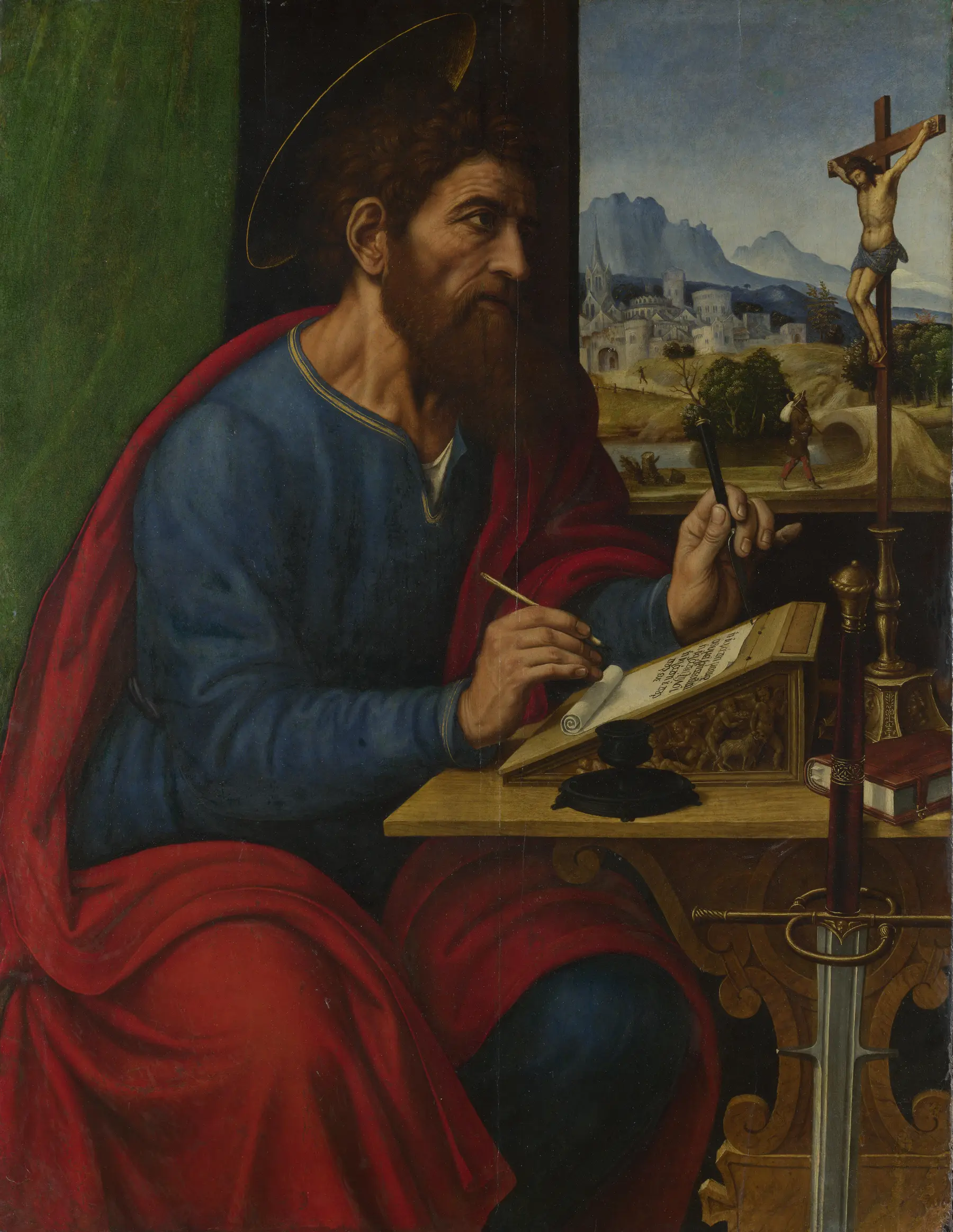
1 Timothychapter 5
25 verses · Paul, by tradition · AD 63 to 65 · Paul's letters
Do not entertain an accusation against an elder, except on the testimony of two or three witnesses.
Introduction
Paul, by tradition, Paul's letters, 1 Timothy Overview.
Paul now gives Timothy rules for the church's family life. He treats the congregation as a household, with older and younger members to be spoken to as parents and siblings. The first hearers had no public welfare, and a widow without family could be left with nothing. The chapter reads in part like the rules of a relief fund and in part like a court procedure. Listen for how often duty begins at home before it reaches the church. Listen also for the balance between honour and accountability for elders. Read it as the practical care of a church that took its poor seriously.
Context
- Who
- A congregation running what amounted to the only welfare system its members had
- What
- Instructions for how Timothy should treat church members, rules for the church's list of widows, and guidance on paying, accusing and appointing elders.
- Where
- The church at Ephesus, which kept a list of widows it supported.
- When
- About AD 62 to 64, after Paul's first imprisonment in Rome.
- Why
- To make sure the church cared for those truly without support, that families bore their own duty first, and that elders were both honoured and held to account.
Historical context
A widow without a son was in serious danger. There was no state pension, a woman's property rights were limited, and her options narrowed to remarriage, family support, dependence on charity, or worse. Jewish communities had long organized relief funds, and the church inherited the practice.
Show the rest of the historical context, 3 more paragraphs
So the church kept an actual roll. This chapter is the administration of it: an age line at sixty, a record of service, and a rule that families support their own first so the fund can reach women who truly have no one. It is a budget document as much as a moral one.
The younger-widow instruction reflects the same world. Roman law under Augustus actually pressed widows to remarry, and a young woman on a permanent charity list with time on her hands and access to every house in the network was a problem waiting to happen.
The rules about elders are courtroom rules. Two or three witnesses is the standard of Deuteronomy, and applying it to a church leader protected him from a single malicious accuser while making a proven charge public. The advice about a little wine is medical: water supplies were unreliable, and wine was the ordinary remedy for a bad stomach.
Significance
The first hearers included the widows themselves. The chapter tells them the church will not abandon them, and tells their grown children that shifting the cost onto the congregation is a denial of the faith.
Show the rest of the significance, 1 more paragraph
For elders, the double message is plain: the ones who work hard at teaching deserve to be paid, and the ones who sin get named in front of everyone. Honor and accountability arrive together.
The heads below are this chapter's scenes. The numbered points under each are its verses.
Treat the Church as Family; Provide for Your Own
Do not rebuke an older man: Timothy is to appeal to an older man as to a father, and the verb behind rebuke, epiplesso, names a blow with words. Every relation in the church follows the household pattern, with absolute purity toward younger women as sisters.
1 Timothy 5:1
“Rebuke not an elder - The word “elder” here is not used in the sense in which it often is, to denote an officer of the church, a presbyter, but in its proper and usual sense, to denote an aged man. This is evident, because the apostle immediately mentions in contradistinction from the elder, “the younger men,” where it cannot be supposed that he refers to them as officers. The command to treat the “elder” as a “father,” also shows the same thing.”
1 more voice on this verseWhat preachers and commentators have said about this verse, in their own words.
1 Timothy 5:1
“The preacher of Almighty God, Paul the apostle, says, "Rebuke not an elder" (1 Tim. v. 1). But this rule of his is to be observed in cases where the fault of an elder does not draw through his example the hearts of the younger into ruin. But, when an elder sets an example to the young for their ruin, he is to be smitten with severe rebuke. For it is written, "Ye are all a snare to the young" (Isai. xlii. 22). And again the prophet says, "The sinner being an hundred years old is accursed" (Isai. lxv. 20).”
Gregory the Dialogist · written before 604 · Register of Epistles, Book 9, Epistle 1patristic
1 Timothy 5:2
“The elder women as mothers,.... When they offend in any point, they are to be reasoned, and argued, and pleaded with, as children should with their mothers; see Hos 2:2 and are to be considered as mothers in Israel, and to be treated with great tenderness and respect. The younger as sisters; using the freedom as a brother may with a sister; and considering them as sisters in Christ, and in a way becoming the relation, tell them their faults freely and privately, but with all purity: in such manner as to preserve chastity in looks, in words, and actions.”
Honor the widows who are truly widows: , and honor carries both respect and support. Where a widow has children or grandchildren, the family's duty comes first. That order is pleasing in the sight of God.
1 Timothy 5:3
So, then, a widow is not only marked off by bodily abstinence but is distinguished by virtue. It is not I who give this command but the apostle. I am not the only person to do them honor, but the teacher of the Gentiles did so first, when he said, "Honor widows that are widows indeed. But if any widow has children or nephews, let her first learn to govern her own house and to take care of her parents."
Ambrose of Milan · written before 397 · Concerning Widows 2.7patristic
1 more voice on this verse
1 Timothy 5:3
“Those really desolate; not like those (1Ti 5:4) having children or relations answerable for their support, nor like those (in 1Ti 5:6) "who live in pleasure"; but such as, from their earthly desolation as to friends, are most likely to trust wholly in God, persevere in continual prayers, and carry out the religious duties assigned to Church widows (1Ti 5:5).”
Jamieson, Fausset & Brown · Commentary Critical and Explanatory on the Whole Bible (1871)reformed
1 Timothy 5:4
“But if any widow have children or nephews - This shows that widows indeed are those that have neither children nor nephews, i.e. no relatives that either will or can help them, or no near relatives alive. Let them learn first to show piety at home - Let these children and nephews provide for their aged or helpless parents or relatives, and not burden the Church with them while they are able to support them. And to requite their parents - Και αμοιβας αποδιδοναι τοις προγονοις· Let them learn to give benefit for benefit.”
Adam Clarke · Commentary on the Bible (1810-1826)evangelical
1 more voice on this verse
1 Timothy 5:4
“She has a claim on her own children, prior to her claim on the Church; let them fulfil this prior claim which she has on them, by sustaining her and not burdening the Church. parents--Greek, (living) "progenitors," that is, their mother or grandmother, as the case may be.”
Jamieson, Fausset & Brown · Commentary Critical and Explanatory on the Whole Bible (1871)reformed
The widow who is truly in need and left all alone: The widow who is truly in need puts her hope in God and prays night and day, as Anna does at Luke 2:37. Against her stands she who lives for pleasure, spatalao, self-indulgence, and she is dead even while she is still alive.
1 Timothy 5:5
“And you, O widow, find those who will pray for you. If as a true widow and desolate you hope in God, continue constant in supplications. Persist in prayers. Treat your body as dying daily, that by dying you may live again. Avoid pleasures, that you, too, being sick, may be healed.”
Ambrose of Milan · written before 397 · Concerning Widows 9.56patristic
1 more voice on this verse
1 Timothy 5:5
“A widow indeed, and desolate - The word rendered “desolate” means “solitary, alone.” It does not necessarily imply the idea of discomfort which we attach to the word desolate. The sense is, that she had no children or other descendants; none on whom she could depend for support. Trusteth in God - She has no one else to look to but God. She has no earthly reliance, and, destitute of husband, children, and property, she feels her dependence, and steadily looks to God for consolation and support.”
1 Timothy 5:6
“It is difficult, or rather impossible, when we are swimming in luxury or pleasure, not to think of what we are doing. And it is an idle pretense which some put forward that they can take their fill of pleasure with their faith and purity and mental uprightness unimpaired. It is a violation of nature to revel in pleasure, and the apostle gives a caution against this very thing when he says, "She that gives herself to pleasure is dead while she lives." The bodily senses are like horses madly racing, but the soul like a charioteer holds the reins.”
Jerome · written before 420 · Against Jovinian 2.9-10patristic
1 more voice on this verse
1 Timothy 5:6
“But she that liveth in pleasure - Ἡ δε σπαταλωσα· She that liveth delicately - voluptuously indulging herself with dainties; it does not indicate grossly criminal pleasures; but simply means one who indulges herself in good eating and drinking, pampering her body at the expense of her mind. The word is used in reference to what we term petted and spoiled children; and a remarkable passage, is produced by Kypke, from an epistle of Theanus to Eubulus, found in Opusc. Myth.”
Adam Clarke · Commentary on the Bible (1810-1826)evangelical
1 Timothy 5:7-8
Give these instructions to the believers: Verse 8 makes the charge household law: whoever does not provide for his own household has denied the faith. The charge protects widows by binding their families first.
1 Timothy 5:7
“And these things give in charge - Announce, or declare these things, to wit, particularly respecting the duty of children to their widowed mothers, and the proper duty of those who are widows.”
3 more voices on this verse
1 Timothy 5:7
“And these things give in charge,.... Concerning rebuking persons of a different age and sex, and concerning the maintenance of widows; and particularly that children provide for their parents when helpless; and that widows trust in God, and give themselves to prayer and supplication, and not live in sin: that they may be blameless; before men, and in the view of the world, and not be chargeable with any notorious crime; though none are without blame in themselves, and before God, but as considered in Christ Jesus.”
1 Timothy 5:7
"These things give in charge, that they may be blameless." He does not leave it to their choice. Command them, he says, not to be luxurious, assuming it to be confessedly an evil, as not holding it lawful or admissible for the luxurious to partake of the Holy Mysteries. "These things command," he says, "that they may be blameless." Thus you see it is reckoned among sins. For if it were a matter of choice, though it were left undone, we might still be blameless.
John Chrysostom · written before 407 · Homily on 1 Timothy 13patristic
1 Timothy 5:7
“That they may be blameless - Charge the whole Church to attend to these things, that they may be blameless. The words are not spoken of the widows only, but of the Church or its officers; it cannot be restricted to the widows, for the adjective ανεπιληπτοι is both of the masculine and feminine gender.”
Adam Clarke · Commentary on the Bible (1810-1826)evangelical
worse than an unbeliever: Jamieson, Fausset and Brown note that nature teaches even unbelievers to care for their own. So a Christian who neglects his family falls below them.
1 Timothy 5:8
"Faith does not set aside natural duties, but strengthens them" [BENGEL]. worse than an infidel--because even an infidel (or unbeliever) is taught by nature to provide for his own relatives, and generally recognizes the duty; the Christian who does not so, is worse (Mt 5:46, 47).
Jamieson, Fausset & Brown · Commentary Critical and Explanatory on the Whole Bible (1871)reformed
2 more voices on this verse
1 Timothy 5:8
The apostle in his first Epistle to Timothy: "But if any take not care of his own, and especially of those of his own household, he denies the faith, and is worse than an infidel."
Cyprian · written before 258 · Treatise XII Three Books of Testimonies Against the Jewspatristic
1 Timothy 5:8
“For his own - Mother and grandmother, being desolate widows. Denied the faith - Which does not destroy, but perfect, natural duties. What has this to do with heaping up money for our children, for which it is often so impertinently alleged?”
John Wesley · Explanatory Notes upon the New Testament (1755)evangelical
Enrolling Widows, and the Young Ones Sent Home
1 Timothy 5:9-10
A widow should be enrolled: The widow roll asks that she be the wife of one man, the same fidelity asked of the overseer at 3:2. She must be well known for good deeds, and enrollment recognizes a record already made.
1 Timothy 5:9
“It is not that old age alone makes the widow. Rather the virtues of the widow may become the duties of old age. For she certainly is the more prone to virtue who represses the heat of youth and the impetuous ardor of youthful age, coveting neither the tenderness of a husband nor the abundant delights of children. She rises above one who, now worn out in body, cold in age, of ripe years, can neither grow warm with pleasures nor hope for offspring.”
Ambrose of Milan · written before 397 · Concerning Widows 2.9patristic
3 more voices on this verse
1 Timothy 5:9
“For the restriction to widows above sixty would then be needless and harsh, since many widows might be in need of help at a much earlier age; as also the rule that the widow must not have been twice married, especially since he himself, below (1Ti 5:14) enjoins the younger widows to marry again; as also that she must have brought up children.”
Jamieson, Fausset & Brown · Commentary Critical and Explanatory on the Whole Bible (1871)reformed
1 Timothy 5:9
“Let not a widow be chosen - Into the number of deaconesses, who attended sick women or travelling preachers. Under threescore - Afterwards they were admitted at forty, if they were eminent for holiness. Having been the wife of one husband - That is, having lived in lawful marriage, whether with one or more persons successively.”
John Wesley · Explanatory Notes upon the New Testament (1755)evangelical
1 Timothy 5:9
“Let not a widow be taken into the number - Margin, “chosen.” The margin expresses the sense of the Greek more accurately, but the meaning is not materially different. Paul does not here specify into what “number” the widow is to be “taken,” or for what purpose she is to be “chosen,” but he speaks of this as a thing that was well understood. There can be no doubt, however, what he means.”
washing the feet of the saints: Clarke notes that Gentiles often abandoned unwanted infants, so raising children was itself a mark of godliness. Washing a guest's feet was a servant's task. Origen observes that the church examined an enrolled widow on this humble service among her good works.
1 Timothy 5:10
“It is possible, however, that even one who is a saint needs the washing of feet, since even the widow who is enrolled into ecclesiastical honor is examined, along with her other good works, also about this, "If she has washed the feet of saints."... Consequently, the faithful are obliged to do this in whatever station of life they happen to be, whether bishops and presbyters, who seem to be in ecclesiastical prominence, or even those in other positions of honor in the world.”
Origen of Alexandria · written before 253 · Commentary on John 32.131-33patristic
1 more voice on this verse
1 Timothy 5:10
“Well reported of for good works - Numbers being able to bear testimony, as the word implies, that she has not only avoided all sin, but that she has walked according to the testimony of God. Brought up children - It was customary among the Gentiles to expose their children, when so poor that they were not able to provide for them. Pious and humane people took these up; and fed, clothed, and educated them. The words brought up may refer to the children of others, who were educated in the Christian faith by pious Christian women.”
Adam Clarke · Commentary on the Bible (1810-1826)evangelical
refuse to enroll younger widows: Timothy is to refuse to enroll younger widows, since they will want to marry and break a pledge tied to the roll. They incur judgment for setting aside their first faith, read either as a broken pledge or a lapse of devotion.
1 Timothy 5:11
That all widows that are approved are to be held in honour. In the first Epistle of Paul to Timothy: "Honour widows which are truly widows. But the widow that is wanton, is dead while she liveth." And again: "But the younger widows pass by: for when they shall be wanton in Christ, they wish to marry; having judgment, because they have cast off their first faith."
Cyprian · written before 258 · Treatise XII Three Books of Testimonies Against the Jewspatristic
2 more voices on this verse
1 Timothy 5:11
“But the younger widows refuse - That is, in respect to the matter under discussion. Do not admit them into the class of widows referred to. It cannot mean that he was to reject them as members of the church, or not to treat them with respect and kindness. For when they have begun to wax wanton against Christ - There is probably a thought conveyed by these words to most minds which is by no means in the original, and which does injustice both to the apostle and to the “younger widows” referred to.”
1 Timothy 5:11
“For when they are waxed wanton against Christ - To whose more immediate service they had addicted themselves. They want to marry - And not with a single eye to the glory of God; and so withdraw themselves from that entire service of the church to which they were before engaged.”
John Wesley · Explanatory Notes upon the New Testament (1755)evangelical
1 Timothy 5:12
“The widow-presbyteresses, moreover, engaged to remain single, not as though single life were holier than married life (according to Rome's teaching), but because the interests of Christ's cause made it desirable (see on 1Ti 3:2). They had pledged "their first faith" to Christ as presbyteress widows; they now wish to transfer their faith to a husband (compare 1Co 7:32, 34).”
Jamieson, Fausset & Brown · Commentary Critical and Explanatory on the Whole Bible (1871)reformed
1 more voice on this verse
1 Timothy 5:12
“Having damnation - In the sense in which we use this word I am satisfied the apostle never intended it. It is likely that he refers here to some promise or engagement which they made when taken on the list already mentioned, and now they have the guilt of having violated that promise; this is the κριμα, or condemnation, of which the apostle speaks. They have cast off their first faith - By pledging their fidelity to a husband they have cast off their fidelity to Christ, as a married life and their previous engagement are incompatible.”
Adam Clarke · Commentary on the Bible (1810-1826)evangelical
1 Timothy 5:13
Paul speaks of idle persons and busybodies, whether virgins or widows, such as go from house to house calling on married women. They display an unblushing effrontery greater than that of a stage parasite. Cast them from you as you would the plague. For "evil communications corrupt good manners," and women like these care for nothing but their lowest appetites. They will often urge you, saying, "My dear creature, make the best of your advantages, and live while life is yours," and, "Surely you are not laying up money for your children."
Jerome · written before 420 · LETTERS 22.29patristic
1 more voice on this verse
1 Timothy 5:13
“Ac 19:19, "curious," the same Greek. Curiosity usually springs from idleness, which is itself the mother of garrulity [CALVIN]. speaking--not merely "saying." The subject-matter, as well as the form, is involved in the Greek word [ALFORD]. which they ought not-- (Tit 1:11).”
Jamieson, Fausset & Brown · Commentary Critical and Explanatory on the Whole Bible (1871)reformed
1 Timothy 5:14-15
I advise the younger widows to marry: Paul advises the younger widows to marry, have children, and manage their households, oikodespotein, rule the house. The counsel denies the adversary occasion for slander, and verse 15 names the danger: some have already turned aside to follow Satan.
1 Timothy 5:14
“I will therefore that the younger women marry - As the preceding discourse has been about the younger widows, and this is an inference from it; it is most evident that by the younger women the apostle means the young widows. These he considers unfit for the office of the female diaconate, and therefore wills them to marry, educate children, and give themselves wholly up to domestic affairs. Here the apostle, so far from forbidding second marriages, positively enjoins or at least recommends them. And what man of sense could have done otherwise in the cases he mentions?”
Adam Clarke · Commentary on the Bible (1810-1826)evangelical
2 more voices on this verse
1 Timothy 5:14
“I counsel therefore the younger women - Widows or virgins, such as are not disposed to live single. To marry, to bear children, to guide the family - Then will they have sufficient employment of their own.”
John Wesley · Explanatory Notes upon the New Testament (1755)evangelical
1 Timothy 5:14
"But again, writing to Timotheus, he 'wills the very young (women) to marry, bear children, act the housewife.'" He is (here) directing (his speech) to such as he denotes above-"very young widows," who, after being, "apprehended" in widowhood, and (subsequently) wooed for some length of time, after they have had Christ in their affections, "wish to marry, having judgment, because they have rescinded the first faith,"-that (faith), to wit, by which they were "found" in widowhood, and, after professing it, do not persevere.
Tertullian · written before 220 · On Monogamypatristic
turned aside to follow Satan: Jamieson, Fausset and Brown take the turning aside as the faults of verses 11 to 13 rather than a denial of the whole faith. Chrysostom notes that Paul had no quarrel with younger widows as such. He wanted none of them idle or unfaithful to a vow.
1 Timothy 5:15
“His reason is this: for some are already turned aside after Satan, i.e., some who have vowed chastity have looked back, avoiding their vow, and they walk after Satan by imitating him who apostatized from the angel's ranks.”
Thomas Aquinas · written before 1274 · Commentary on 1 Timothypatristic
1 more voice on this verse
1 Timothy 5:15
“For--For in the case of some this result has already ensued; "Some (widows) are already turned aside after Satan," the seducer (not by falling away from the faith in general, but) by such errors as are stigmatized in 1Ti 5:11-13, sexual passion, idleness, &c., and so have given occasion of reproach (1Ti 5:14).”
Jamieson, Fausset & Brown · Commentary Critical and Explanatory on the Whole Bible (1871)reformed
she must assist them: If any believing woman has dependent widows, she must assist them, widening the family duty of verses 3 and 4. She is not to allow the church to be burdened, so its funds are kept for the widows who are truly in need. Household and assembly divide the work.
1 Timothy 5:16
“But if it is praiseworthy to have one's soul free from this failing of greed, how much more glorious is it to gain the love of the people by liberality. This should be neither too freely shown to those who are unsuitable, nor too sparingly bestowed upon the needy.… There is also another kind of liberality which the apostle teaches, "If any believing woman has relatives who are widows, let her assist them. Let the church not be burdened so that it may assist those who are real widows." Useful, then, is liberality of this sort.”
Ambrose of Milan · written before 397 · On the Duties of the Clergy 2.15.68, 72-73patristic
1 more voice on this verse
1 Timothy 5:16
“If any man or woman that believeth - If any Christian man or woman have poor widows, which are their relatives, let them relieve them - provide them with the necessaries of life, and not burden the Church with their maintenance, that the funds may be spared for the support of those widows who were employed in its service, teaching children, visiting the sick, etc., etc.”
Adam Clarke · Commentary on the Bible (1810-1826)evangelical
Double Honor, Public Rebuke, and No Hasty Hands
1 Timothy 5:17-18
Elders who lead effectively: are worthy of double honor, a word covering respect and pay. Paul grounds the pay in Deuteronomy 25:4 and in the Lord's saying at Luke 10:7, and calls both Scripture.
1 Timothy 5:17
“The transition from the widow presbyteresses (1Ti 5:9) to the presbyters here, is natural. rule well--literally, "preside well," with wisdom, ability, and loving faithfulness, over the flock assigned to them. be counted worthy of double honour--that is, the honor which is expressed by gifts (1Ti 5:3, 18) and otherwise.”
Jamieson, Fausset & Brown · Commentary Critical and Explanatory on the Whole Bible (1871)reformed
1 more voice on this verse
1 Timothy 5:17
“Let the elders that rule well - Greek, πρεσβύτεροι presbuteroi, Presbyters. The apostle had given full instructions respecting bishops 1Ti 3:1-7; deacons 1Ti 3:8-13; widows 1Ti 5:3-16; and he here proceeds to prescribe the duty of the church toward those who sustain the office of elder.”
Paul quotes Deuteronomy 25:4 and then a saying of Jesus found in Luke 10:7, calling both Scripture. Luke's Gospel was likely known by then, as Jamieson, Fausset and Brown note.
1 Timothy 5:18
“The Scripture saith, Thou shalt not muzzle the ox - This is a manifest proof that by τιμη, honor, in the preceding verse, the apostle means salary or wages: “Let the elders that rule well be accounted worthy of double honor,” a larger salary than any of the official widows mentioned before, for “the laborer is worthy of his hire.” The maintenance of every man in the Church should be in proportion to his own labor, and the necessities of his family. He that does no work should have no wages.”
Adam Clarke · Commentary on the Bible (1810-1826)evangelical
2 more voices on this verse
1 Timothy 5:18
And the same law commands "not to muzzle the ox which treadeth out the corn: for the labourer must be reckoned worthy of his food."
Clement of Alexandria · written before 215 · The Stromata Book 2patristic
1 Timothy 5:18
“The Gospel according to Luke was probably in circulation then about eight or nine years. However, it is possible "Scripture saith" applies only to the passage quoted from De 25:4; and then his quotation will be that of a common proverb, quoted also by the Lord, which commends itself to the approval of all, and is approved by the Lord and His apostle.”
Jamieson, Fausset & Brown · Commentary Critical and Explanatory on the Whole Bible (1871)reformed
Cross references
1 Timothy 5:18
- QuotingDeuteronomy 25:4“Do not muzzle an ox while it is treading out the grain.”
'Thou shalt not muzzle the ox' ('the scripture saith')
1 Timothy 5:19-20
Do not entertain an accusation against an elder: An accusation against an elder needs the testimony of two or three witnesses, the rule of Deuteronomy 19:15 that protected any defendant in Israel. Verse 20 balances the protection: those who persist in sin are rebuked in front of everyone.
1 Timothy 5:19
“But Timothy's entertaining an accusation against anyone is a different case, where the object was not judicially to punish, but to admonish: here he might ordinarily entertain it without the need of two or three witnesses; but not in the case of an elder, since the more earnest an elder was to convince gainsayers (Tit 1:9), the more exposed would he be to vexatious and false accusations.”
Jamieson, Fausset & Brown · Commentary Critical and Explanatory on the Whole Bible (1871)reformed
3 more voices on this verse
1 Timothy 5:19
“Against an elder receive not an accusation,.... A charge of any crime: but before two or three witnesses; good sufficient ones, who are capable of well attesting the fact: a charge against a pastor of a church is not to be easily received; it should not be listened to privately, unless it clearly appears by such a number of witnesses; nor should it be brought publicly before the church, until it is privately and previously proved, by a sufficient number of credible witnesses, that it is really fact.”
1 Timothy 5:19
“When a man is advanced in years, you must not be too ready to believe evil of him. His past life is itself a defense, and so also is his rank as an elder. Still, since we are human and sometimes in spite of the ripeness of our years fall into the sins of youth, if I do wrong and you wish to correct me, accuse me openly of my fault. Do not backbite me secretly.”
Jerome · written before 420 · LETTERS 125.19patristic
1 Timothy 5:19
“Against an elder - The word “elder” here seems to be used in the sense in which it is in the previous verse as relating to “office,” and not in the sense of an aged man, as in 1Ti 5:1. The connection demands this interpretation. Receive not an accusation - He was not to regard such a charge as well founded unless sustained by two or three witnesses.”
rebuked in front of everyone: Jamieson, Fausset and Brown apply the rule to elders and members alike who keep on sinning. A public rebuke warns the whole church, as Matthew Henry notes.
1 Timothy 5:20
“Them that sin rebuke before all - That is, before the members of the Church; which was the custom of the Jews in their synagogues. But, if the words refer to the elders alone, then the transgressing elder is to be reproved before his fellows, and be tried by them. That others also may fear - This is the grand object of Church censures, to reclaim the transgressors, and to give warning to others.”
Adam Clarke · Commentary on the Bible (1810-1826)evangelical
1 more voice on this verse
1 Timothy 5:20
A feigned kindness to the wicked is a betrayal of the truth, an act of treachery to the community and a means of habituating oneself to indifference to evil.… "Them that sin, reprove before all," says the apostle, and he immediately adds the reason, saying, "that the rest also may have fear."
Basil of Caesarea · written before 379 · The Long Rules, Q.28.Rpatristic
1 Timothy 5:21-22
I solemnly charge you before God: The charge is sworn before God and Christ Jesus and the elect angels, the unseen witnesses of the church's discipline. Its content is impartiality, to do nothing out of partiality.
1 Timothy 5:21
“I charge thee before God - compare Luk 16:28; Act 2:20. The word rendered “charge” means, properly, to call to witness; then to affirm with solemn attestations; and then to admonish solemnly, to urge upon earnestly. It is a word which implies that the subject is of great importance. Paul gives this charge as in the presence of God, of the Redeemer, and of the elect angels, and wishes to secure that sense of its solemnity which must arise from the presence of such holy witnesses.”
1 more voice on this verse
1 Timothy 5:21
“I charge thee before God - Referring to the last judgment, in which we shall stand before God and Christ, with his elect, that is, holy, angels, who are the witnesses of our conversation.”
John Wesley · Explanatory Notes upon the New Testament (1755)evangelical
laying on of hands: Wesley and Clarke read the laying on of hands as appointing men to church office. Haste makes the one who appoints share the blame. Matthew Henry adds a second reading, the hasty restoring of those under church discipline.
1 Timothy 5:22
“A caution against the rash ordination of ministers, or absolution of those who have been under church-censures: Lay hands suddenly on no man. Those who are rash, either in the one case or the other, will make themselves partakers in other men's sins. We must keep ourselves pure, if we will be pure; the grace of God makes and keeps us pure, but it is by our own endeavours.”
Matthew Henry · Commentary on the Whole Bible (1707-1721)puritan
3 more voices on this verse
1 Timothy 5:22
“Lay hands suddenly on no man - Do not hastily appoint any person to the sacred ministry: let the person be well proved before he receives the imposition of hands. Some understand this of laying hands on the sick. Neither be partaker of other men’s sins - It is a sin for any improper person to thrust himself into the sacred office; and he partakes of that sin who introduces, helps him forward, or sanctions him in it. O, what an account will rash, undiscerning, and prejudiced bishops, presbyters, and others, have to render to God for their ordinations!”
Adam Clarke · Commentary on the Bible (1810-1826)evangelical
1 Timothy 5:22
“Lay hands suddenly on no man - That is, appoint no man to church offices without full trial and examination; else thou wilt be accessary to, and accountable for, his misbehaviour in his office. Keep thy self pure - From the blood of all men.”
John Wesley · Explanatory Notes upon the New Testament (1755)evangelical
1 Timothy 5:22
“WE have all abundant reason to look at home and see about our own sins. Nothing can be more absurd than for a man to take his hoe and weed everybody else's garden—and leave all the thorns and thistles to flourish on his own plot.”
Charles Spurgeon · written before 1892 · The Metropolitan Tabernacle Pulpit, Sermon No. 3055: “Accomplices in Sin” (lightly modernized text, CCEL edition)Particular Baptist
use a little wine instead: Stop drinking only water and use a little wine instead answers Timothy's own health, because of his stomach and frequent ailments. It is a personal prescription for a young pastor, likely prompted by the asceticism of 4:3.
1 Timothy 5:23
And is not temperance in harmony with nature and that divine law which in the beginning of all things gave the springs for drink and the fruits of trees for food? After the flood, the just man found wine a source of temptation to him. Let us, then, use the natural food of temperance, and would that we all could do so! But, because not all are strong, the apostle therefore says, "Use a little wine for your frequent infirmities."
Ambrose of Milan · written before 397 · Letters 63.27patristic
3 more voices on this verse
1 Timothy 5:23
“Drink no longer water,.... Though it was commendable in him to keep under his body, as the apostle did, by abstemious living, and not pamper the flesh and encourage the lusts of it, and so preserve purity and chastity; yet it was proper that he should take care of his health, that it was not impaired by too much severity, and so he be incapable of doing the work of the Lord.”
1 Timothy 5:23
“Drink no longer water - There has been much difficulty felt in regard to the connection which this advice has with what precedes and what follows. Many have considered the difficulty to be so great that they have supposed that this verse has been displaced, and that it should be introduced in some other connection.”
1 Timothy 5:23
“So ELLICOTT and WIESINGER. ALFORD thus: Timothy was of a feeble frame (see on 1Co 16:10, 11), and prone to timidity in his duties as overseer where vigorous action was needed; hence Paul exhorts him to take all proper means to raise his bodily condition above these infirmities.”
Jamieson, Fausset & Brown · Commentary Critical and Explanatory on the Whole Bible (1871)reformed
1 Timothy 5:24-25
The sins of some men are obvious: , while others do not surface until later, which is why verse 22 urges care in ordination. Good deeds run the same two ways, and character is read over time.
1 Timothy 5:24
“Some men's sins are open before hand,.... Some men are such open and notorious sinners, that there is no need of any inquiry about them, or any examination of them; or any witnesses to be called to their character, in order to pass judgment concerning them; they even prevent and supersede any formal process about them. With such persons, the apostle intimates, Timothy could have no difficulty upon him, what to do with them; should they be proposed for the ministry, he would know at once what to do with them; namely, reject them.”
2 more voices on this verse
1 Timothy 5:24
“Both alike "cannot be hid"; the former class in the case of bad and good are manifest already; the latter class in the case of both are not manifest now, but shall be so at the final judgment. going before to judgment--as heralds; crying sins which accuse their perpetrator.”
Jamieson, Fausset & Brown · Commentary Critical and Explanatory on the Whole Bible (1871)reformed
1 Timothy 5:24
“Some men’s sins are open beforehand - In appointing men to sacred offices in the Church, among the candidates Timothy would find, 1. Some of whom he knew nothing, but only that they professed Christianity; let such be tried before they are appointed. 2. Some of whose faith and piety he had the fullest knowledge, and whose usefulness in the Church was well known. 3. Some whose lives were not at all or but partially reformed, who were still unchanged in their hearts, and unholy in their lives.”
Adam Clarke · Commentary on the Bible (1810-1826)evangelical
good deeds are obvious: Jerome explains the pairing with verse 24: some sins are plain at once while others come to light only later. Good deeds follow the same pattern.
1 Timothy 5:25
“The words mean this: Certain persons sin so deliberately and flagrantly that you no sooner see them than you know them at once to be sinners. But the defects of others are so cunningly concealed that we only learn them from subsequent information. Similarly the good deeds of some people are public property, while those of others we come to know only through long intimacy with them.”
Jerome · written before 420 · LETTERS 54.8patristic
1 more voice on this verse
1 Timothy 5:25
“Likewise also the good works of some are manifest beforehand - The character of some people is clear, and accurately understood. There can be no doubt, from their works, that they are good people. We need not wait for the day of judgment to determine that, but may treat them here as good men, and introduce them to offices which only good men can fill. The idea here is that their character may be so certain and undoubted that there need be no hesitation in setting them apart to the office of the ministry.”
How this psalm is built
The form: Rules for the church as a household: its members, its list of widows and its elders, as 10 classes it.
The patterns in this chapter
| Device | What it does | Where to see it |
|---|---|---|
| The widow's record | Verses 9 and 10 set the terms for enrolling a widow: an age of sixty, faithfulness in marriage and a record of good deeds, named one by one. The site's published exposition of verses 9 and 10 calls the list the church's first structured order of care.This site's published exposition of 1 Timothy 5:9 to 10, The exposition_notes row on 1 Timothy 5:9 to 10, citing John Gill, Exposition of the New Testament, and Jamieson, Fausset and Brown, Commentary Critical and Explanatory on the Whole Bible. | 1 Timothy 5:9, 1 Timothy 5:10 |
How this chapter is built
1 more paragraph on the patterns
Verses 1 and 2 set the family pattern for how Timothy treats every member. Verses 3 to 16 give the rules for widows: who is a widow indeed, the family's duty, the list and its terms, and counsel for younger widows. Verses 17 to 25 turn to elders, their pay, charges against them, public rebuke, and care in appointing them.
Keep studying
Sources for this chapter
The summary
Jamieson, Fausset & Brown, Commentary Critical and Explanatory; John Calvin, Commentaries; John Wesley, Explanatory Notes Upon the New Testament and Matthew Henry, Complete Commentary.
The form and classifications
This site's published exposition of 1 Timothy 5:9 to 10, The exposition_notes row on 1 Timothy 5:9 to 10, citing John Gill, Exposition of the New Testament, and Jamieson, Fausset and Brown, Commentary Critical and Explanatory on the Whole Bible.
The exposition
Adam Clarke, Commentary on the Bible; Albert Barnes, Notes on the New Testament; Basil of Caesarea, THE LONG RULES, Q.28.R; Jamieson, Fausset & Brown, Commentary Critical and Explanatory on the Whole Bible; Jerome, LETTERS 54.8; John Chrysostom, Homily on 1 Timothy 15; John Gill, Exposition of the New Testament; John Wesley, Explanatory Notes upon the New Testament; Matthew Henry, Commentary on the Whole Bible; Origen of Alexandria, COMMENTARY ON JOHN 32.131-33 and Theophylact of Ohrid, Commentary on 1 Timothy.