
1 Timothy 5:12
in 1 Timothy 5and thus will incur judgment because they are setting aside their first faith.
BSB
The same verse in ASV and KJV ▾
ASV
having condemnation, because they have rejected their first pledge.
KJV
Having damnation, because they have cast off their first faith.
⋯
This verse in 1 Timothy 5
Commentary
12 notes on this verseHaving damnation - In the sense in which we use this word I am satisfied the apostle never intended it. It is likely that he refers here to some promise or engagement which they made when taken on the list already mentioned, and now they have the guilt of having violated that promise; this is the κριμα, or condemnation, of which the apostle speaks. They have cast off their first faith - By pledging their fidelity to a husband they have cast off their fidelity to Christ, as a married life and their previous engagement are incompatible.
This site's exposition
refuse to enroll younger widows
on 1 Timothy 5:11-13
Timothy is to refuse to enroll younger widows, since they will want to marry and break a pledge tied to the roll. They incur judgment for setting aside their first faith, read either as a broken pledge or a lapse of devotion.
The record, by era
The Church Fathers4 voices
But refuse younger widows; for when they have indulged themselves against Christ, they desire to marry, having condemnation because they have cast off their first faith. But refuse younger widows. Therefore, when the struggle becomes greater among virgins, nowhere does it seem to express the …
The apostle mentions evil, unmarried women who are gossipers and busybodies and says that this vice springs from idleness. "And further," he says, "being idle, they learn to go about from house to house, and are not only idle, but gossipers as well as busybodies, mentioning things they ought not." He had previously said of these, "But refuse younger widows, for when they have wantonly turned away from Christ, they wish to marry and are to be condemned because they have broken their first pledge," that is, they did not persevere in what they had first vowed. However, he does not say "They marry" but "They wish to marry," for it is not the love of their noble vow which prevents many of them from marrying but fear of outright indecency. This itself springs from pride by which human displeasure is more dreaded than the divine displeasure.
"Having condemnation, because they have cast off their first faith." By faith he means, fidelity to their covenant. As if he had said, They have been false to Christ, they have dishonored Him, and transgressed His covenant.
The apostle, in concluding his discussion of marriage and virginity, is careful to observe a right balance in discriminating between them. Turning neither to the right hand nor to the left, he keeps to the King's highway and thus fulfills the injunction, "Be not righteous overmuch." … Do we not clearly show by this language what is typified in the Holy Scriptures by the terms right and left, and also what we take to be the meaning of the words "Be not righteous overmuch"?
The Medieval Church1 voice
By "faith" the apostle means a vow. They broke, he says, their covenant with Christ, and for that they are subject to condemnation.
5 more voices on this verse
The Medieval Church1 voice
Then when he says, having damnation, he answers a tacit question. For someone might ask: wherein is the evil if they do marry? For you yourself say: a woman does not sin if she marry (1 Cor 7:36). Therefore, he says: having damnation, because they …
The Puritans and the Awakening2 voices
When we first receive power to believe, does not the Spirit of God generally point out what are the most excellent things; and at the same time, give us an holy resolution to walk in the highest degree of Christian severity? And how unwise are we ever to sink into anything below it!
And withal they learn to be idle,....
The Nineteenth Century2 voices
A commentator
Jamieson, Fausset & Brown1802–1910
Commentary Critical and Explanatory on the Whole Bible (1871)
The widow-presbyteresses, moreover, engaged to remain single, not as though single life were holier than married life (according to Rome's teaching), but because the interests of Christ's cause made it desirable (see on 1Ti 3:2). They had pledged "their first faith" to Christ as presbyteress widows; they now wish to transfer their faith to a husband (compare 1Co 7:32, 34).
A commentator
Albert Barnes1798–1870
Notes, Explanatory and Practical, on the Old and New Testaments (1832-1869)
proposed
Having damnation - Or, rather, having “condemnation;” or incurring guilt. This does not mean of necessity that they would lose their souls; see the phrase explained in the notes on 1Co 11:29. The meaning is, that they would contract guilt, if they had been admitted among this class of persons, and then married again. The apostle does not say that that would be wrong in itself (compare notes on 1Ti 5:14), or that they would be absolutely prohibited from it, but that injury would be done if they were admitted among those who were “widows indeed” - who were supported by the church, and who were entrusted with a certain degree of care over the more youthful females - and then should leave that situation. It might give occasion for scandal it might break in upon the arrangements; it would show that there was a relaxing of the faith, and of the deadness to the world, which they were supposed to have; and it was better that they should be married 1Ti 5:14, without having been thus admitted. Because they have cast off their first faith - This does not mean that they would lose all their religion, or wholly fall away, but that this would show that they had not the strong faith, the deadness to the world, the simple dependence on God 1Ti 5:5, and the desire which they had to be weaned from worldly cares and influences, which they once had. When they became widows, all their earthly hopes seemed to be blasted. They were then dead to the world, and felt their sole dependence on God. But if, under the influence of these strong emotions, they were admitted to the “class of widows” in the church, there was no certainty that they would continue in this state of mind. Time would do much to modify their grief. […]
The words behind it
7 Greek wordsEvery Greek word of this verse in the order it stands, with what it means and the door to its own study. The last column counts the times a word stands in the whole Bible: the rarer the word, the more the places it appears belong together.
| Greek | Sound | Meaning | Word study | In the Bible |
|---|---|---|---|---|
| ἔχουσαι | echousai | incurring | G2192 → | 707 times |
| κρίμα, | krima | judgment | G2917 → | |
| ὅτι | hoti | because | G3754 → | 1292 times |
| τὴν | ten | the | G3588 → | 19766 times |
| πρώτην | proten | first | G4413 → | 152 times |
| πίστιν | pistin | faith | G4102 → | 242 times |
| ἠθέτησαν· | ethetesan | they have cast off; | G114 → |
ἔχουσαιincurring
echousaiG2192 →707 times
κρίμα,judgment
krimaG2917 →
ὅτιbecause
hotiG3754 →1292 times
τὴνthe
tenG3588 →19766 times
πρώτηνfirst
protenG4413 →152 times
πίστινfaith
pistinG4102 →242 times
ἠθέτησαν·they have cast off;
ethetesanG114 →
A shaded row is a word that stands 400 times or fewer in the Bible.
The walk
8 stopsEach card is a verse this one points to, and under it the verses that one points to in turn. Where several paths arrive at the same place, that place is listed first: the text keeps returning to it.
Through
Galatians 1:6I am amazed how quickly you are deserting the One who called you by the grace of Christ and are turning to a different gospel—
it leads to
- 2 Corinthians 11:4
For if someone comes and proclaims a Jesus other than the One we proclaimed, or if you receive a different spirit than the One you received, or a different gospel than the one you…
- Galatians 5:7–8
You were running so well. Who has obstructed you from obeying the truth?
- Isaiah 29:13
Therefore the Lord said: “These people draw near to Me with their mouths and honor Me with their lips, but their hearts are far from Me. Their worship of Me is but rules taught…
- 2 Corinthians 11:4
Through
James 3:1Not many of you should become teachers, my brothers, because you know that we who teach will be judged more strictly.
it leads to
- 1 Timothy 1:7
They want to be teachers of the law, but they do not understand what they are saying or that which they so confidently assert.
- Luke 12:47–48
That servant who knows his master’s will but does not get ready or follow his instructions will be beaten with many blows.
- 1 Peter 5:3
not lording it over those entrusted to you, but being examples to the flock.
- 1 Corinthians 12:28
And in the church God has appointed first of all apostles, second prophets, third teachers, then workers of miracles, and those with gifts of healing, helping, administration, and various tongues.
- 1 Timothy 1:7
Through
1 Peter 4:17For it is time for judgment to begin with the family of God; and if it begins with us, what will the outcome be for those who disobey the gospel of God?
it leads to
- Jeremiah 25:29
For behold, I am beginning to bring disaster on the city that bears My Name, so how could you possibly go unpunished? You will not go unpunished, for I am calling down a sword…
- Jeremiah 25:29
Where this verse is studied
On this page
About 1 Timothy
This page draws on 12 works. Open the list of works
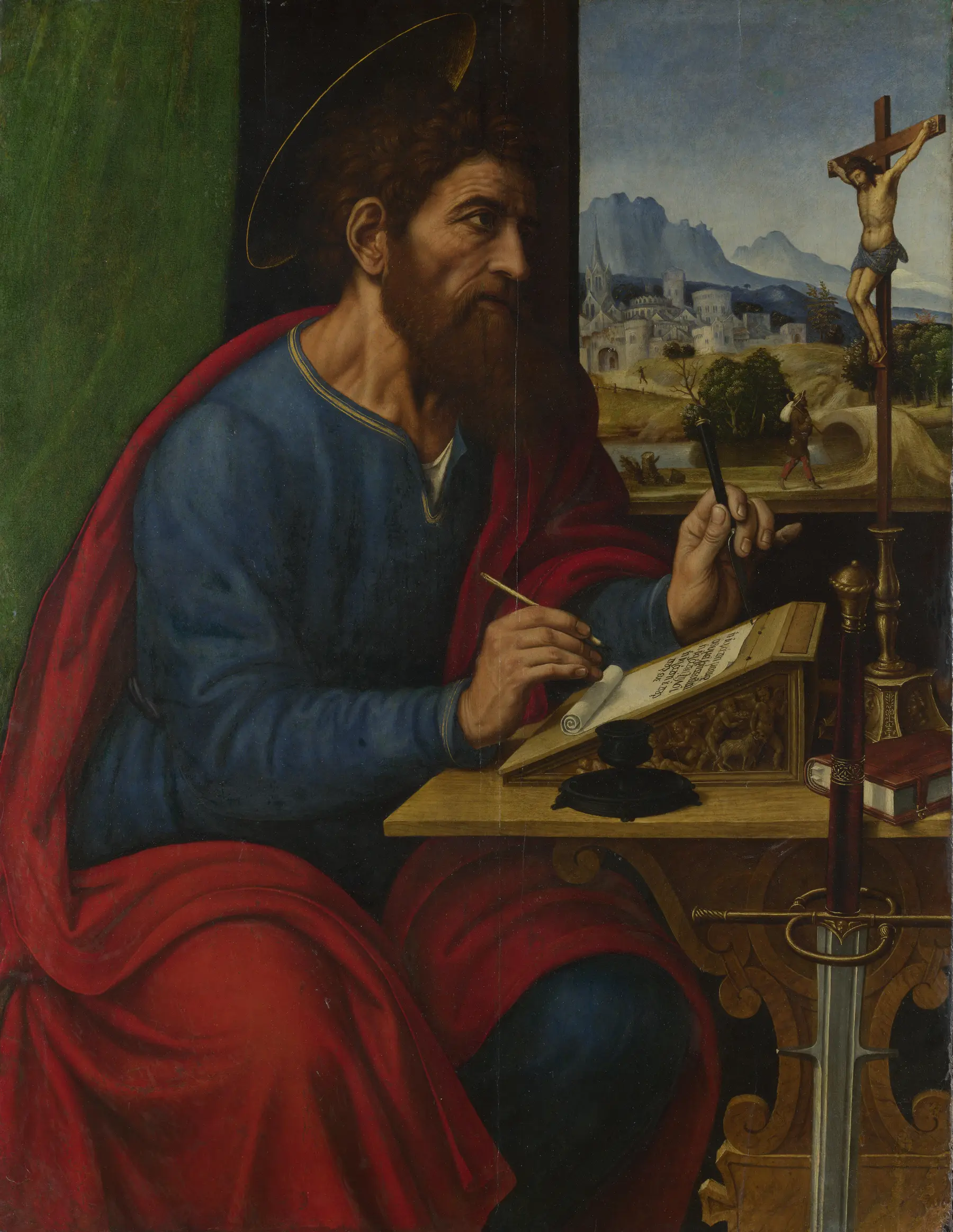
This page draws on Adam Clarke, Commentary on the Bible; Albert Barnes, Notes, Explanatory and Practical, on the Old and New Testaments (1832-1869); Augustine of Hippo, On Holy Virginity 33.34-34.34; Jamieson, Fausset & Brown, Commentary Critical and Explanatory on the Whole Bible; Jerome, Letters 48.8; John Chrysostom, Homily on 1 Timothy 15; John Gill, Exposition of the New Testament (1746-1748); John Wesley, Explanatory Notes upon the New Testament; Matthew Henry, Commentary on the Whole Bible; Oecumenius, COMMENTARY ON 1 TIMOTHY; Theophylact of Ohrid, Commentary on 1 Timothy and Thomas Aquinas, Commentary on 1 Timothy.