
Zechariah 1:8
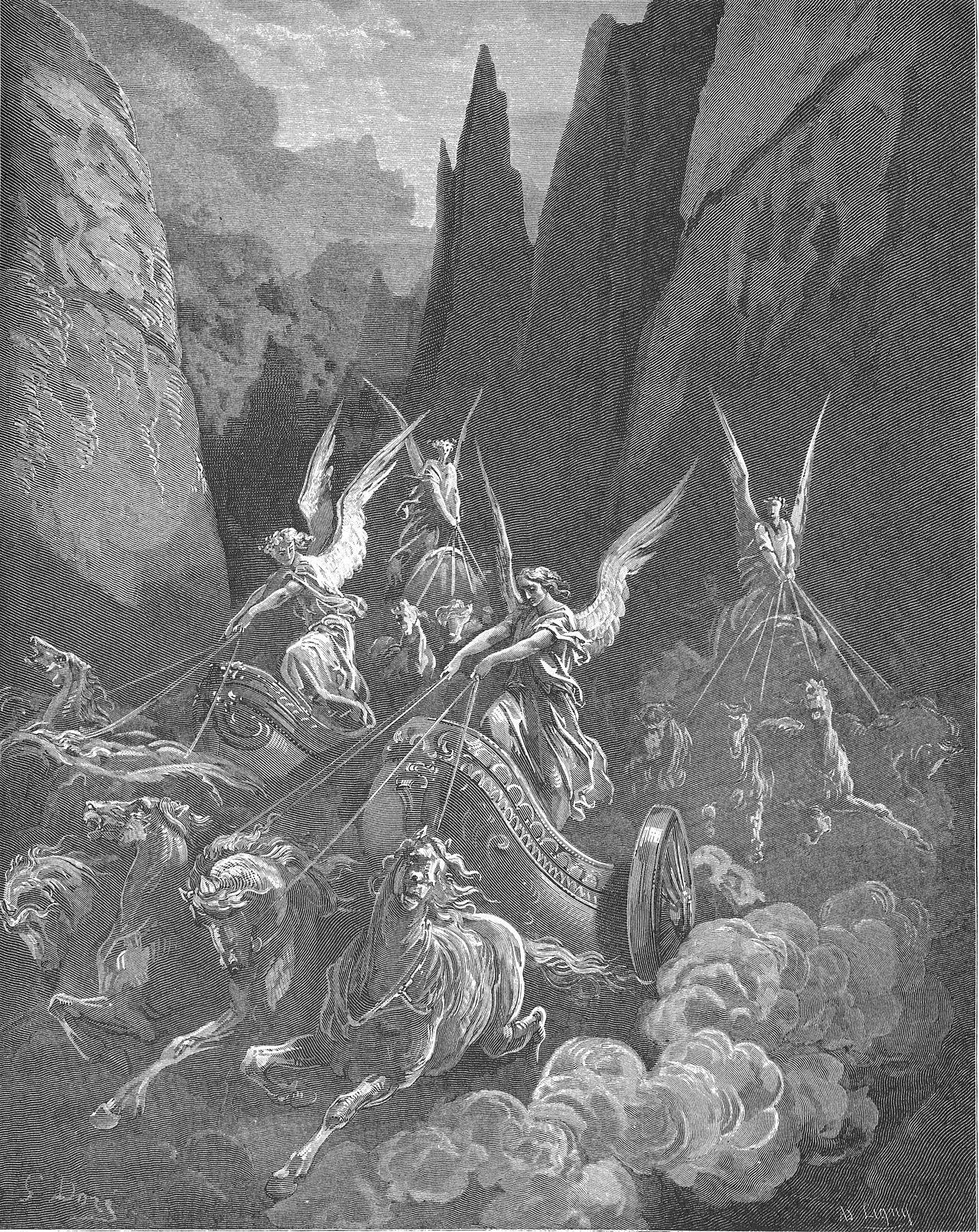
in Zechariah 1I looked out into the night and saw a man riding on a red horse. He was standing among the myrtle trees in the hollow, and behind him were red, sorrel, and white horses.
BSB
The same verse in ASV and KJV ▾
ASV
I saw in the night, and, behold, a man riding upon a red horse, and he stood among the myrtle-trees that were in the bottom; and behind him there were horses, red, sorrel, and white.
KJV
I saw by night, and behold a man riding upon a red horse, and he stood among the myrtle trees that were in the bottom; and behind him were there red horses, speckled, and white.
⋯
This verse in Zechariah 1
Commentary
13 notes on this verseI saw by night - The time was emblematical of the affliction under which the Jews groaned. A man - An angel in the form of a man: supposed to have been the Lord Jesus; who seems to have appeared often in this way, as a prelude to his incarnation; see Jos 5:13; Eze 1:26; Dan 7:13; Dan 10:6. The same, probably, that appeared to Joshua with a drawn sword, as the captain of the Lord’s host. Jos 5:13-15. A red horse - An emblem of war and bloodshed.
This site's exposition
Upon the four and twentieth day
on Zechariah 1:7-13
Three months later, on the twenty-fourth of Shebat, the first of eight night visions opens: a rider on a red horse among the myrtle trees in a ravine, with red, speckled and white horses behind him, patrol-angels who have walked to and fro through the earth and report that all the earth sitteth still, and is at rest. The report is the vision's irony, the Persian world at ease while Jerusalem and the cities of Judah lie under the Lord's own indignation these threescore and ten years, the seventy years of Jeremiah's prophecy apparently expired without the promised restoration arriving in full. The angel of the Lord himself intercedes, how long wilt thou not have mercy, and the Lord answers with good words and comfortable words, the vision's crisis resolved before it is explained to the prophet.
The record, by era
The Church Fathers4 voices
It is clear that those who were seen are invisible powers, "sent for service," according to the divine apostle, "for the sake of those who are due to inherit salvation." Their natures are not seen, however, being incorporeal: he who is Lord of them and …
[Daniel 7:5] "And behold another beast like a bear stood up on one side; and there were three rows in his mouth and in his teeth; and they said to him: 'Arise up and devour flesh in abundance.'" The second beast resembling a bear is the same as that of which we read in the vision of the statue (2:32): "His chest and arms were of silver." In the former case the comparison was based on the hardness of the metal, in this case on the ferocity of the bear. For the Persian kingdom followed a rigorous and frugal manner of life after the manner of the Spartans, and that too to such an extent that they used to use salt and nasturtium-cress in their relish. Let us consult the record of the childhood of Cyrus the Great (i.e., "The Education or Training" of Cyrus). And as for the fact that the bear is said to have "stood up on one side," the Hebrews interpret it by saying that the Persians never perpetrated any cruelty against Israel. Hence they are described in the Prophecy of Zechariah also as white horses (Zechariah 1:7-11). But as for the three rows or ranks that were in his mouth and between his teeth, one authority has interpreted this to mean that allusion was made to the fact that the Persian kingdom was divided up among three princes, just as we read in the sections dealing with Belshazzar and with Darius that there were three princes who were in charge of the one hundred and twenty satraps. But other commentators affirm that these were three kings of the Persians who were subsequent to Cyrus, and yet they fail to mention them by name. But we know that after Cyrus's reign of thirty years his son Cambyses ruled among the Persians, and his brothers the magi, and then Darius, in the second year of whose reign the rebuilding of the Temple was commenced at Jerusalem. […]
(Verse 8 and following) I saw during the night: and behold, a man riding on a red horse, and he stood among the myrtle trees that were in the ravine, and behind him there were red, sorrel, and white horses. And I said, 'What are these, my lord?' And the angel who was speaking with me said to me, 'I will show you what these are.' And the man who was standing among the myrtle trees answered and said, 'These are the ones whom the Lord has sent to go throughout the earth.'
It is quite clear that all the things shown to the prophet were tokens of certain realities, just as Joseph saw sheaves, sun, moon and stars, each of which carried a clue to some coming event, and the Pharaoh saw ears of corn and oxen, …
The Puritans and the Awakening1 voice
Behind him - Christ was, as becomes a captain, at the head, the rest, as his soldiers, are behind attending on him. Red horses - Horses and horsemen, and those are angels, ver. 10. And the colour of these horses is red, probably denoting the bloody condition of states and kingdoms, by wars one against another when God punisheth his church, or when he avengeth himself.
6 more voices on this verse
The Puritans and the Awakening2 voices
This man is no other than the man Christ Jesus, the same that appeared to Joshua with his sword drawn in his hand as captain of the host of the Lord ( Josh. v. 13, 14 ) and to John with his bow and his crown, Rev. vi. Though the church was in a low condition, yet Christ was present in the midst of it.
I saw by night,....
The Nineteenth Century4 voices
A commentator
Jamieson, Fausset & Brown1802–1910
Commentary Critical and Explanatory on the Whole Bible (1871)
proposed
by night--The Jews begin their day with sunset; therefore the night which preceded the twenty-fourth day of the month is meant (Zec 1:7). a man--Jehovah, the second person of the Trinity, manifested in man's form, an earnest of the incarnation; called the "angel of Jehovah" (Zec 1:11, 12), "Jehovah the angel of the covenant" (Mal 3:1; compare Ge 16:7 with Zec 1:13;
quarantine:debris (2026-07-29) — starts-lowercase+unbalanced-parens
Therefore thus says the Lord; I am returned to Jerusalem with mercies: My house shall be built in it, says the Lord of Hosts and a line shall be stretched forth upon Jerusalem. Cry yet, saying, Thus says the Lord of hosts: My cities through prosperity shall yet be spread abroad. And the Lord shall yet comfort Zion and shall yet choose Jerusalem. Then lifted I up my eyes and sa w and behold four horns. And I said unto the angel that talked with me, What are these?
Therefore thus says the Lord; I am returned to Jerusalem with mercies: My house shall be built in it, says the Lord of Hosts and a line shall be stretched forth upon Jerusalem. Cry yet, saying, Thus says the Lord of hosts: My cities through prosperity shall yet be spread abroad. And the Lord shall yet comfort Zion and shall yet choose Jerusalem. Then lifted I up my eyes and sa w and behold four horns. And I said unto the angel that talked with me, What are these? And he answered me, These are the horns which have scattered Judah, Israel and Jerusalem. And the Lord showed me four carpenters. Then said I, What come these to do? And He spoke, saying, These are the horns which have scattered Judah, so that no man did lift up his head: but these are come to scatter them, to cast out the horns of the Gentiles, which lifted up their horn over the land of Judah to scatter it." Zechariah 1:8-21. THIS is a somewhat dark and mysterious passage. And if we should ask many a reader, "Do you understand what you are reading?" he would be compelled to reply as did the Ethiopian eunuch, "How can I, except some man should guide me?" Although there are some portions of the Word of God which are hard to be understood—by far the greater portion of Scriptures which are at first perplexing—will open up if we will carefully peruse them and prayerfully ask the illumination of God's Holy Spirit. We should seek to know all of God's Word which can be known. You will perceive that the Prophet Zechariah himself was not content with beholding the two visions described in this passage, but had to ask, in the ninth verse, "O my Lord, what are these?" And then, again, in the nineteenth verse, "What are these?" Nor did he cease his enquiries! In the twenty-first verse he says, "What come these to do?" If the seer of the vision asked for an interpretation, much more may you and I.
A commentator
Albert Barnes1798–1870
Notes, Explanatory and Practical, on the Old and New Testaments (1832-1869)
proposed
I saw in the night - that is, that following on “the twenty-fourth day.” The darkness of the night perhaps was chosen, as agreeing with the dimness of the restored condition. Night too is, Dionysius), “through the silence of the senses and of the fancy, more suited for receiving divine revelations.” A man riding upon a red horse - The man is an angel of God, appearing in form of man, as Daniel says, “The man Gabriel, whom I had seen in the vision at the beginning, touched me” Dan 9:21. He is doubtless the same who appeared to Joshua in form of man, preparing thereby for the revelation of God manifest in the flesh - He, before whom Joshua fell on his face and in him worshiped God, through whom also God required the same tokens of reverence as He had from Moses. “Joshua lifted up his eyes, and looked, and behold there stood a man over against him with a sword drawn in his hand, who said, as Captain of the Lord’s host am I come” (Jos 5:13-15. See the note on “the Angel of the Lord” in Dr. Pusey’s Daniel the Prophet, pp. 519-525). He rides here, as Leader of the host who follow Him; to Him the others report, and He instructs the Angel who instructs the prophet. Red, being the color of blood, symbolizes doubtless “the vengeance of God to be inflicted on the enemies of the Jews for their sins committed against the Jews” (Dionysius), exceeding the measure of chastisement allowed by God. It probably was Michael Dan 10:13, who is entitled in Daniel, “your prince Dan 10:21, the great prince which standeth up for the children of thy people” . And he was standing - Almost as we say, stationary, abiding in that one place. […]
The words behind it
19 Hebrew wordsEvery Hebrew word of this verse in the order it stands, with what it means and the door to its own study. The last column counts the times a word stands in the whole Bible: the rarer the word, the more the places it appears belong together.
| Hebrew | Sound | Meaning | Word study | In the Bible |
|---|---|---|---|---|
| רָאִ֣יתִי׀ | raiti | I saw | H7200 → | 1300 times |
| הַלַּ֗יְלָה | halaylah | the night | H3915 → | |
| וְהִנֵּה־ | vehineh- | and there! | H2009 → | 843 times |
| אִישׁ֙ | ʾish | a man | H376 → | 1663 times |
| רֹכֵב֙ | rokhev | [was] riding | H7392 → | 78 times |
| עַל־ | ʾal- | on | H5921 → | 5755 times |
| ס֣וּס | sus | a horse | H5483 → | 140 times |
| אָדֹ֔ם | ʾadom | red | H122 → | 9 times |
| וְה֣וּא | vehu' | and he | H1931 → | 1879 times |
| עֹמֵ֔ד | ʾomed | [was] standing | H5975 → | 521 times |
| בֵּ֥ין | bein | between | H996 → | 407 times |
| הַהֲדַסִּ֖ים | hahadasim | the myrtle trees | H1918 → | 6 times |
| אֲשֶׁ֣ר | ʾasher | which | H834 → | 5497 times |
| בַּמְּצֻלָ֑ה | bametzulah | [were] in the hollow | H4699 → | |
| וְאַחֲרָיו֙ | veacharav | and [were] behind him | H310 → | 715 times |
| סוּסִ֣ים | susim | horses | H5483 → | 140 times |
| אֲדֻמִּ֔ים | ʾadumim | red | H122 → | 9 times |
| שְׂרֻקִּ֖ים | serukim | sorrel | H8320 → | |
| וּלְבָנִֽים׃ | ulevanim | and white | H3836 → | 29 times |
רָאִ֣יתִי׀I saw
raitiH7200 →1300 times
הַלַּ֗יְלָהthe night
halaylahH3915 →
וְהִנֵּה־and there!
vehineh-H2009 →843 times
אִישׁ֙a man
ʾishH376 →1663 times
רֹכֵב֙[was] riding
rokhevH7392 →78 times
עַל־on
ʾal-H5921 →5755 times
ס֣וּסa horse
susH5483 →140 times
אָדֹ֔םred
ʾadomH122 →9 times
וְה֣וּאand he
vehu'H1931 →1879 times
עֹמֵ֔ד[was] standing
ʾomedH5975 →521 times
בֵּ֥יןbetween
beinH996 →407 times
הַהֲדַסִּ֖יםthe myrtle trees
hahadasimH1918 →6 times
אֲשֶׁ֣רwhich
ʾasherH834 →5497 times
בַּמְּצֻלָ֑ה[were] in the hollow
bametzulahH4699 →
וְאַחֲרָיו֙and [were] behind him
veacharavH310 →715 times
סוּסִ֣יםhorses
susimH5483 →140 times
אֲדֻמִּ֔יםred
ʾadumimH122 →9 times
שְׂרֻקִּ֖יםsorrel
serukimH8320 →
וּלְבָנִֽים׃and white
ulevanimH3836 →29 times
A shaded row is a word that stands 400 times or fewer in the Bible.
The walk
8 stopsEach card is a verse this one points to, and under it the verses that one points to in turn. Where several paths arrive at the same place, that place is listed first: the text keeps returning to it.
Through
Zechariah 13:7Awake, O sword, against My Shepherd, against the man who is My Companion, declares the LORD of Hosts. Strike the Shepherd, and the sheep will be scattered, and I will turn My hand against…
it leads to
- Mark 14:27
Then Jesus said to them, “You will all fall away, for it is written: ‘I will strike the Shepherd, and the sheep will be scattered.’
- Matthew 26:31
Then Jesus said to them, “This very night you will all fall away on account of Me. For it is written: ‘I will strike the Shepherd, and the sheep of the flock will be…
- John 16:32
“Look, an hour is coming and has already come when you will be scattered, each to his own home, and you will leave Me all alone. Yet I am not alone, because the Father…
- Isaiah 40:11
He tends His flock like a shepherd; He gathers the lambs in His arms and carries them close to His heart. He gently leads the nursing ewes.
- Mark 14:27
Through
Isaiah 55:13Instead of the thornbush, a cypress will grow, and instead of the brier, a myrtle will spring up; they will make a name for the LORD, an everlasting sign, never to be destroyed.”
it leads to
- Ephesians 3:20–21
Now to Him who is able to do immeasurably more than all we ask or imagine, according to His power that is at work within us,
- Ephesians 3:20–21
Through
Revelation 2:1“To the angel of the church in Ephesus write: These are the words of Him who holds the seven stars in His right hand and walks among the seven golden lampstands.
it leads to
- Revelation 1:20
This is the mystery of the seven stars you saw in My right hand and of the seven golden lampstands: The seven stars are the angels of the seven churches, and the seven lampstands…
- Revelation 1:16
He held in His right hand seven stars, and a sharp double-edged sword came from His mouth. His face was like the sun shining at its brightest.
- Revelation 1:20
Through
Isaiah 41:19I will plant cedars in the wilderness, acacias, myrtles, and olive trees. I will set cypresses in the desert, elms and boxwood together,
it leads to
- Isaiah 55:13
Instead of the thornbush, a cypress will grow, and instead of the brier, a myrtle will spring up; they will make a name for the LORD, an everlasting sign, never to be destroyed.”
- Isaiah 55:13
Where this verse is studied
On this page
Studies3
On this verse
On this chapter
About Zechariah
This page draws on 13 works. Open the list of works
This page draws on Adam Clarke, Commentary on the Bible; Albert Barnes, Notes, Explanatory and Practical, on the Old and New Testaments (1832-1869); Carl Friedrich Keil, The Twelve Minor Prophets; Charles Spurgeon, The Metropolitan Tabernacle Pulpit, Sermon No. 598: “Two Visions” (lightly modernized text, CCEL edition); Edward Bouverie Pusey, The Minor Prophets: A Commentary; Jamieson, Fausset & Brown, Commentary Critical and Explanatory on the Whole Bible; Jerome, St. Jerome, Commentary on Daniel, CHAPTER SEVEN; Jerome, Commentary on Zechariah; John Gill, Exposition of the Old Testament (1748-1763); John Wesley, Explanatory Notes upon the Old Testament; Matthew Henry, Commentary on the Whole Bible; Theodore of Mopsuestia, COMMENTARY ON ZECHARIAH 1:7-10 and Theodoret of Cyrus, COMMENTARY ON ZECHARIAH 1:8-11.