
Titus 1:3
in Titus 1In His own time He has made His word evident in the proclamation entrusted to me by the command of God our Savior.
BSB
The same verse in ASV and KJV ▾
ASV
but in his own seasons manifested his word in the message, wherewith I was intrusted according to the commandment of God our Saviour;
KJV
But hath in due times manifested his word through preaching, which is committed unto me according to the commandment of God our Saviour;
⋯
This verse in Titus 1
Commentary
12 notes on this versePay close attention to the text and order of the reading: for eternal life, which the not false God promised before eternal ages, is none other than the Word of God. For he has manifested his word in due time, saying: Therefore the word itself, which was in the beginning with the Father, must be that life eternal which he had promised; and the Word was God, and the Word was made flesh and dwelt among us.
This site's exposition
in due times manifested
on Titus 1:3-4
The word once hidden is now manifested in due times through preaching, and Paul names the trust as a commandment, not a suggestion, from God our Saviour. Titus is called mine own son after the common faith, the language of spiritual rather than natural fatherhood, the same figure Paul uses of Timothy. The greeting names both the Father and the Lord Jesus Christ our Saviour in one breath, the letter's habit of applying Saviour to each without confusion of persons.
The record, by era
The Church Fathers2 voices
but has now been revealed in his times his message through his preaching, which was entrusted to me, according to the command of our Savior God. but has now been revealed. What did God reveal in his own times and appropriate seasons? The life which …
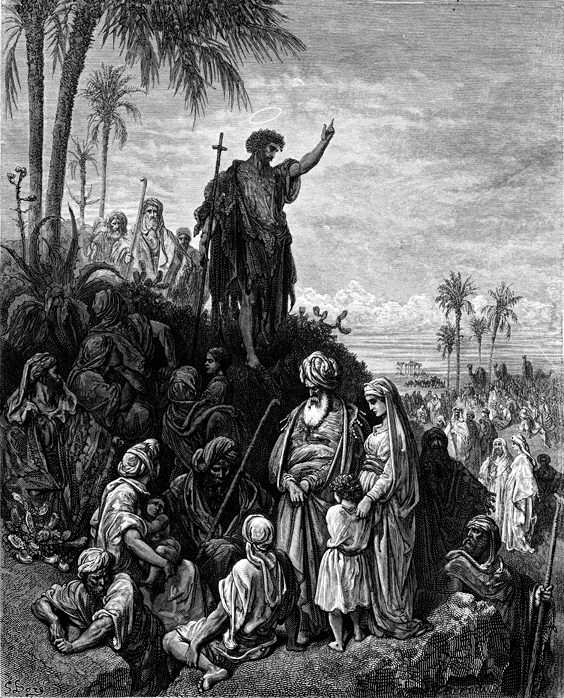
Ver. 3. "But hath in due times manifested His word through preaching, which is committed unto me." That is, the preaching is committed unto me. For this included everything, the Gospel, and things present, and things future, life, and godliness, and faith, and all things at once. "Through preaching," that is, openly and with all boldness, for this is the meaning of "preaching." For as a herald proclaims in the theater in the presence of all, so also we preach, adding nothing, but declaring the things which we have heard. For the excellence of a herald consists in proclaiming to all what has really happened, not in adding or taking away anything. If therefore it is necessary to preach, it is necessary to do it with boldness of speech. Otherwise, it is not preaching. On this account Christ did not say, Tell it "upon the housetops," but "preach upon the housetops" (Matt. x. 27); showing both by the place and by the manner what was to be done. "Which is committed unto me according to the commandment of God our Saviour." The expressions, "committed unto me," and "according to the commandment," show the matter to be worthy of credit, so that no one should think it discreditable, nor be hesitating about it, or discontented. If then it is, a commandment, it is not at my disposal. I fulfill what is commanded. For of things to be done, some are in our power, others are not. For what He commands, that is not in our power, what He permits, is left to our choice. For instance, "Whosoever shall say to his brother, Thou fool, shall be in danger of hell fire." (Matt. v. 22.) This is a commandment. And again, "If thou bring thy gift to the altar, and there rememberest that thy brother hath aught against thee, leave there thy gift before the altar, and go thy way; first be reconciled to thy brother, and then come and offer thy gift." (Matt. v. 23, 24.) This also is a command. […]
The Medieval Church2 voices
This hope is confirmed by the manifestation of the promise; hence he says, but has in due times manifested his word. And he describes this manifestation in three ways. First, from the time; hence he manifested when his Word became incarnate. Therefore, he says, in …
Lest someone say: why did He delay in giving that which was determined from eternity? he says it was out of care for us and in order to do it at the fitting time. By "time" Scripture means the opportune time, as for example: "It …
The Puritans and the Awakening1 voice
What creature dares ask, "Why no sooner?" Manifested his word - Containing that promise, and the whole "truth which is after godliness." Through the preaching wherewith I am intrusted according to the commandment of God our saviour - And who dares exercise this office on any less authority?
5 more voices on this verse
The Puritans and the Awakening2 voices
Preaching is a work appointed by a God as a Saviour. See a proof here of Christ's deity, for by him was the gospel committed to Paul when he was converted ( Acts ix. 10, 14, 15 ), and again when Christ appeared to him, v. 17-21 .
But hath in due times manifested his word,....
The Nineteenth Century3 voices
A commentator
Albert Barnes1798–1870
Notes, Explanatory and Practical, on the Old and New Testaments (1832-1869)
But hath in due times - At the proper time; the time which he had intended; the best time: see the notes at 1Ti 2:6; compare the notes at Mat 2:2. Manifested his word through preaching - See the notes at 2Ti 2:10. The meaning here is, that he has made known his eternal purpose through the preaching of the gospel; compare the notes at Rom 10:14-15. Which is committed unto me - Not exclusively, but in common with others; see the notes at 2Ti 1:
A commentator
Jamieson, Fausset & Brown1802–1910
Commentary Critical and Explanatory on the Whole Bible (1871)
17:3, 17). through preaching--Greek, "in preaching," of rather as ALFORD (see on 2Ti 4:17), "in the (Gospel) proclamation (the thing preached, the Gospel) with which I was entrusted." according to--in pursuance of (compare 1Ti 1:1). of God our Saviour--rather as Greek, "of our Saviour God." God is predicated of our Saviour (compare Jude 25;
But hath in due times - Καιροις ιδιοις· In its own times. See 1Ti 2:6; Gal 4:4; Eph 1:10; Eph 2:7. God caused the Gospel to be published in that time in which it could be published with the greatest effect. It is impossible that God should prematurely hasten, or causelessly delay, the accomplishment of any of his works. Jesus was manifested precisely at the time in which that manifestation could best promote the glory of God and the salvation of man. Manifested his word - Τον λογον αὑτου· His doctrine - the doctrine of eternal life, by the incarnation, passion, death, and resurrection of Jesus Christ. Which is committed unto me - That is, to preach it among the Gentiles. According to the commandment of God our Savior - This evidently refers to the commission which he had received from Christ. See Act 9:15: “He is a chosen vessel unto me, to bear my name before the Gentiles.” For, “I have appeared unto thee for this purpose, to make thee a minister and a witness both of these things which thou hast seen, and of those things in the which I will appear unto thee; delivering thee from the people and from the Gentiles, unto whom now I send thee; to open their eyes, to turn them from darkness to light,” etc,; Act 26:16, etc. This is the commandment; and according to it he became the apostle of the Gentiles. God our Savior. - As the commission was given by Jesus Christ alone, the person whom he terms here God our Savior must be Jesus Christ only; and this is another proof that St. Paul believed Jesus Christ to be God. This eternal life God had promised in a comparatively obscure way before the foundation of the world, the Jewish dispensation; but now under the Gospel, he had made it manifest - produced it with all its brightness, illustrations, and proofs.
The words behind it
18 Greek wordsEvery Greek word of this verse in the order it stands, with what it means and the door to its own study. The last column counts the times a word stands in the whole Bible: the rarer the word, the more the places it appears belong together.
| Greek | Sound | Meaning | Word study | In the Bible |
|---|---|---|---|---|
| ἐφανέρωσεν | ephanerosen | He revealed | G5319 → | |
| δὲ | de | now | G1161 → | 2765 times |
| καιροῖς | kairois | [in] seasons | G2540 → | |
| ἰδίοις | idiois | [His] own | G2398 → | 114 times |
| τὸν | ton | in the | G3588 → | 19766 times |
| λόγον | logon | word | G3056 → | 329 times |
| αὐτοῦ | autou | of Him | G846 → | 5565 times |
| ἐν | en | in | G1722 → | 2738 times |
| κηρύγματι, | kerugmati | [the] proclamation | G2782 → | |
| ὃ | ho | with which | G3739 → | 1405 times |
| ἐπιστεύθην | episteuthen | was entrusted | G4100 → | |
| ἐγὼ | ego | I myself | G1473 → | 839 times |
| κατ᾽ | kat᾽ | according to | G2596 → | 468 times |
| ἐπιταγὴν | epitagen | [the] commandment | G2003 → | |
| τοῦ | tou | of the | G3588 → | 19766 times |
| σωτῆρος | soteros | Savior | G4990 → | 24 times |
| ἡμῶν | hemon | of us | G3165 → | 1936 times |
| θεοῦ· | theou | God; | G2316 → | 1312 times |
ἐφανέρωσενHe revealed
ephanerosenG5319 →
δὲnow
deG1161 →2765 times
καιροῖς[in] seasons
kairoisG2540 →
ἰδίοις[His] own
idioisG2398 →114 times
τὸνin the
tonG3588 →19766 times
λόγονword
logonG3056 →329 times
αὐτοῦof Him
autouG846 →5565 times
ἐνin
enG1722 →2738 times
κηρύγματι,[the] proclamation
kerugmatiG2782 →
ὃwith which
hoG3739 →1405 times
ἐπιστεύθηνwas entrusted
episteuthenG4100 →
ἐγὼI myself
egoG1473 →839 times
κατ᾽according to
kat᾽G2596 →468 times
ἐπιταγὴν[the] commandment
epitagenG2003 →
τοῦof the
touG3588 →19766 times
σωτῆροςSavior
soterosG4990 →24 times
ἡμῶνof us
hemonG3165 →1936 times
θεοῦ·God;
theouG2316 →1312 times
A shaded row is a word that stands 400 times or fewer in the Bible.
The walk
8 stopsEach card is a verse this one points to, and under it the verses that one points to in turn. Where several paths arrive at the same place, that place is listed first: the text keeps returning to it.
Through
Titus 2:13as we await the blessed hope and glorious appearance of our great God and Savior Jesus Christ.
it leads to
- 2 Timothy 4:8
From now on there is laid up for me the crown of righteousness, which the Lord, the righteous Judge, will award to me on that day—and not only to me, but to all who…
- 1 Corinthians 1:7
Therefore you do not lack any spiritual gift as you eagerly await the revelation of our Lord Jesus Christ.
- Matthew 16:27
For the Son of Man will come in His Father’s glory with His angels, and then He will repay each one according to what he has done.
- Titus 1:2
in the hope of eternal life, which God, who cannot lie, promised before time began.
- 2 Peter 3:12–14
as you anticipate and hasten the coming of the day of God, when the heavens will be destroyed by fire and the elements will melt in the heat.
- 2 Timothy 4:8
Through
1 Timothy 1:1Paul, an apostle of Christ Jesus by the command of God our Savior and of Christ Jesus our hope,
it leads to
- Colossians 1:27
To them God has chosen to make known among the Gentiles the glorious riches of this mystery, which is Christ in you, the hope of glory.
- Acts 9:15
“Go!” said the Lord. “This man is My chosen instrument to carry My name before the Gentiles and their kings, and before the people of Israel.
- Galatians 1:1
Paul, an apostle—sent not from men nor by man, but by Jesus Christ and God the Father, who raised Him from the dead—
- Colossians 1:27
Where this verse is studied
On this page
Studies5
About Titus
This page draws on 11 works. Open the list of works
This page draws on Adam Clarke, Commentary on the Bible; Albert Barnes, Notes, Explanatory and Practical, on the Old and New Testaments (1832-1869); Jamieson, Fausset & Brown, Commentary Critical and Explanatory on the Whole Bible; Jerome, Commentary on Titus; John Chrysostom, Homily on Titus 1; John Gill, Exposition of the New Testament (1746-1748); John Wesley, Explanatory Notes upon the New Testament; Matthew Henry, Commentary on the Whole Bible; Oecumenius, COMMENTARY ON TITUS; Theophylact of Ohrid, Commentary on Titus and Thomas Aquinas, Commentary on Titus.