
Psalms 104:24
in Psalms 104How many are Your works, O LORD! In wisdom You have made them all; the earth is full of Your creatures.
BSB
The same verse in ASV and KJV ▾
ASV
O Jehovah, how manifold are thy works! In wisdom hast thou made them all: The earth is full of thy riches.
KJV
O Lord, how manifold are thy works! in wisdom hast thou made them all: the earth is full of thy riches.
⋯
This verse in Psalms 104
Commentary
19 notes on this verseA commentator
Athanasius of Alexandria296–373
DEFENSE OF THE NICENE DEFINITION 4:17 · Written before 373.
Doubtless the things that came to be through the Word, these are "founded in wisdom" and what are "founded in wisdom," these are all made by the Hand and came to be through the Son. And we have proof of this, not from external sources, but from the Scriptures; for God says by Isaiah the prophet, "My hand also has laid the foundation of the earth, and my right hand has spanned the heavens." And again, "And I will cover you in the shadow of my hand, by which I planted the heaven, and laid the foundations of the earth."
This site's exposition
How many are Your works
on Psalms 104:24-26
Wisdom is named as the means of it all. The sea gets its own verse, wide and full of creatures past counting, great and small. Leviathan is in it, and the verse says God formed him to frolic there.
The record, by era
The Church Fathers5 voices
That none of us might struggle, two things have been said: God and neighbor; He who made you, and with whom He made you. No one said to you: "Love the sun, love the moon, love the earth and whatever has been made." In these, God is to be praised, the Creator is to be blessed. How magnificent are your works! We say, you have made all things in wisdom. They are yours, you made all things. Thanks to you! But you made us above all things. Thanks to you! For we are your image and likeness. Thanks to you! We have sinned, we have been sought. Thanks to you! We have neglected, we have not been neglected. Thanks to you! While we despised you, we were not despised; lest we forget your divinity and lose you, you even assumed our humanity. Thanks to you! Where not to be thankful?
"O Lord, how great are made Thy works!" Justly great, justly sublime! where were those works made, that are so great? what was that station where God stood, or that seat whereupon He sat, when He did those works? what was the place where He worked thus? whence did those so beautiful works proceed at the first? To take it word for word, every ordained creation, running by ordinance, beautiful by ordinance, rising by ordinance, setting by ordinance, going through all seasons by ordinance, whence hath it proceeded? whence hath the Church herself received her rise, her growth, her perfection? In what manner is she destined to a consummation in immortality? with what heralding is she preached? by what mysteries is she recommended? by what types is she concealed? by what preaching is she revealed? where hath God done these things? I see great works. "How great are made Thy works, O Lord!" I ask where He hath made them: I find not the place: but I see what followeth: "In Wisdom hast Thou made them all." All therefore Thou hast made in Christ. ..."The earth is full of Thy creation." The earth is full of the creation of Christ. And how so? We discern how: for what was not made by the Father through the Son? Whatever walketh and doth crawl on earth, whatever doth swim in the waters, whatever flieth in the air, whatever doth revolve in heaven, how much more then the earth, the whole universe, is the work of God. But he seems to me to speak here of some new creation, of which the Apostle saith, "If any man be in Christ, he is a new creature: old things have passed away; behold, all things are become new. And all things are of God." All who believe in Christ, who put off the old man, and put on the new, are a new creature. […]
The Word, by which heaven and earth were made, the Word itself was not made. For if it was made, by what was it made? All things were made through him. If whatever was made was made through the Word, without a doubt the Word was not made, through which all things were made. In short, the narrator of the works, servant of God Moses, says: In the beginning, he says, God made heaven and earth. He made heaven and earth in the beginning. By what did he make it? By the Word. Did he also make the Word? No: but what? In the beginning was the Word. Already it was, through which he made; therefore, that which was not, he made. We can understand, and rightly understand, that heaven and earth was made in the only-begotten Word. For by what they were made, in it they were made. This can also be understood as the beginning, in which God made heaven and earth. For the Word itself is also the Wisdom of God, to which it is said: You have made all things in wisdom. If in wisdom God made all things, and his only-begotten Son is undoubtedly the Wisdom of God, let us not doubt that those things were made in the Son, which we have learned were made through the Son. For indeed the Son himself is the beginning. For inquiring Jews indeed and saying: Who are you? he answered: The beginning. Behold, in the beginning God made heaven and earth.
I will not contest the point, chiefly because it gives me the liveliest satisfaction to find the Trinity celebrated in the very beginning of the book of Genesis. For having said "In the Beginning God created the heaven and the earth," meaning that the Father made them in the Son (as the psalm testifies where it says, "How manifold are Thy works, O Lord! in Wisdom hast Thou made them all"), a little afterwards mention is fitly made of the Holy Spirit also. For, when it had been told us what kind of earth God created at first, or what the mass or matter was which God, under the name of "heaven and earth," had provided for the construction of the world, as is told in the additional words, "And the earth was without form, and void; and darkness was upon the face of the deep," then, for the sake of completing the mention of the Trinity, it is immediately added, "And the Spirit of God moved upon the face of the waters." Let each one, then, take it as he pleases; for it is so profound a passage, that it may well suggest, for the exercise of the reader's tact, many opinions, and none of them widely departing from the rule of faith.
A commentator
Augustine of HippoTractates on the Gospel of John, Tractate 1.16 · Written in the 5th century.
proposed
"All things," then, brethren, "all things were made by Him, and without Him was nothing made." But how were all things made by Him? "That, which was made, in Him is life." It can also be read thus "That, which was made in Him, is life;" and if we so read it, everything is life. For what is there that was not made in Him? For He is the Wisdom of God, and it is said in the Psalm, "In Wisdom hast Thou made all things." If, then, Christ is the Wisdom of God, and the Psalm says, "In Wisdom hast Thou made all things:" as all things were made by Him, so all things were made in Him.
12 more voices on this verse
The Church Fathers3 voices
A commentator
Athanasius of Alexandria296–373
Discourses Against the Arians 1.6.19 · Written before 373.
proposed
But their doctrine is false. Truth witnesses that God is the eternal fountain of his proper wisdom; and, if the Fountain is eternal, the Wisdom also has to be eternal. For in it were all things made, as David says in the psalm, "In wisdom you have made them all"; and Solomon says, "The Lord by wisdom has formed the earth, by understanding he has established the heavens." And this Wisdom is the Word, and by him, as John says, "all things were made," and "without him not one thing was made."
How magnified are your works, O Lord. The prophet comes into an ecstasy of mind. Not finding how he might praise the Lord, he said: How magnified are your works, O Lord. Your works surpass human understanding. You have made all things in wisdom. In our Lord Jesus Christ (for he himself is the wisdom of God), according to the apostle who says that in him all things were created. The earth is filled with your possession. And truly all the works of the Lord are full of wisdom. For when we see the ant know when winter is coming, and store up food for itself; and again the gnat, so tiny, having eyes, a belly, and all its members, just as we have; and the flea, and the rest: and then we see the elephant, so great a beast, having eyes, nostrils, feet, a belly, just as we have in those same places: and likewise the bee, how it makes honey and wax: are these things not worthy of wonder and full of wisdom?
This world is an example of the workings of God, because, while we observe the work, the Worker is brought before us. The arts may be considered in various aspects. There are those that are practical. These relate to the movement of the body or to the sound of the voice. When the movement or the sound has passed away, there is nothing that survives or remains for the spectators or the hearers. Other arts are theoretical. These display the vigor of the mind. There are other arts of such a nature that, even when the processes of operation cease, the handiwork remains visible. As an example of this we have buildings or woven material that, even when the craftsman is silent, still exhibit his skill, so that testimony is presented of the craftsman's own work. In a similar way, this work is a distinctive mark of divine majesty from which the wisdom of God is made manifest. On beholding this, raising the eyes of his mind at the same time to the things invisible, the psalmist says, "How great are your works, O Lord; you have made all things in wisdom."
The Medieval Church1 voice
A commentator
BonaventureItinerarium Mentis in Deum, Chapter 1 · Written in the 13th century.
proposed
He therefore who is not illumined by such great splendors of created things is blind; he who is not awakened by such great cries is deaf; he who does not praise God on account of all these effects is mute; he who from such great …
The Puritans and the Awakening3 voices
Satisfied - By this means all the parts of the earth, are made fruitful. The fruit - With the effects of those sweet showers. Oil - He alludes to the custom of those times and places, which was upon festival occasions to anoint their faces with oil.
O Lord, how manifold are thy works,....
They are all made in wisdom, for they are all made to answer the end they were designed to serve, the good of the universe, in order to the glory of the universal Monarch. 31 The glory of the L ORD shall endure for ever: the L ORD shall rejoice in his works.
The Nineteenth Century5 voices
A commentator
Jamieson, Fausset & Brown1802–1910
Commentary Critical and Explanatory on the Whole Bible (1871)
proposed
From a view of the earth thus full of God's blessings, the writer passes to the sea, which, in its immensity, and as a scene and means of man's activity in commerce, and the home of countless multitudes of creatures, also displays divine power and beneficence.
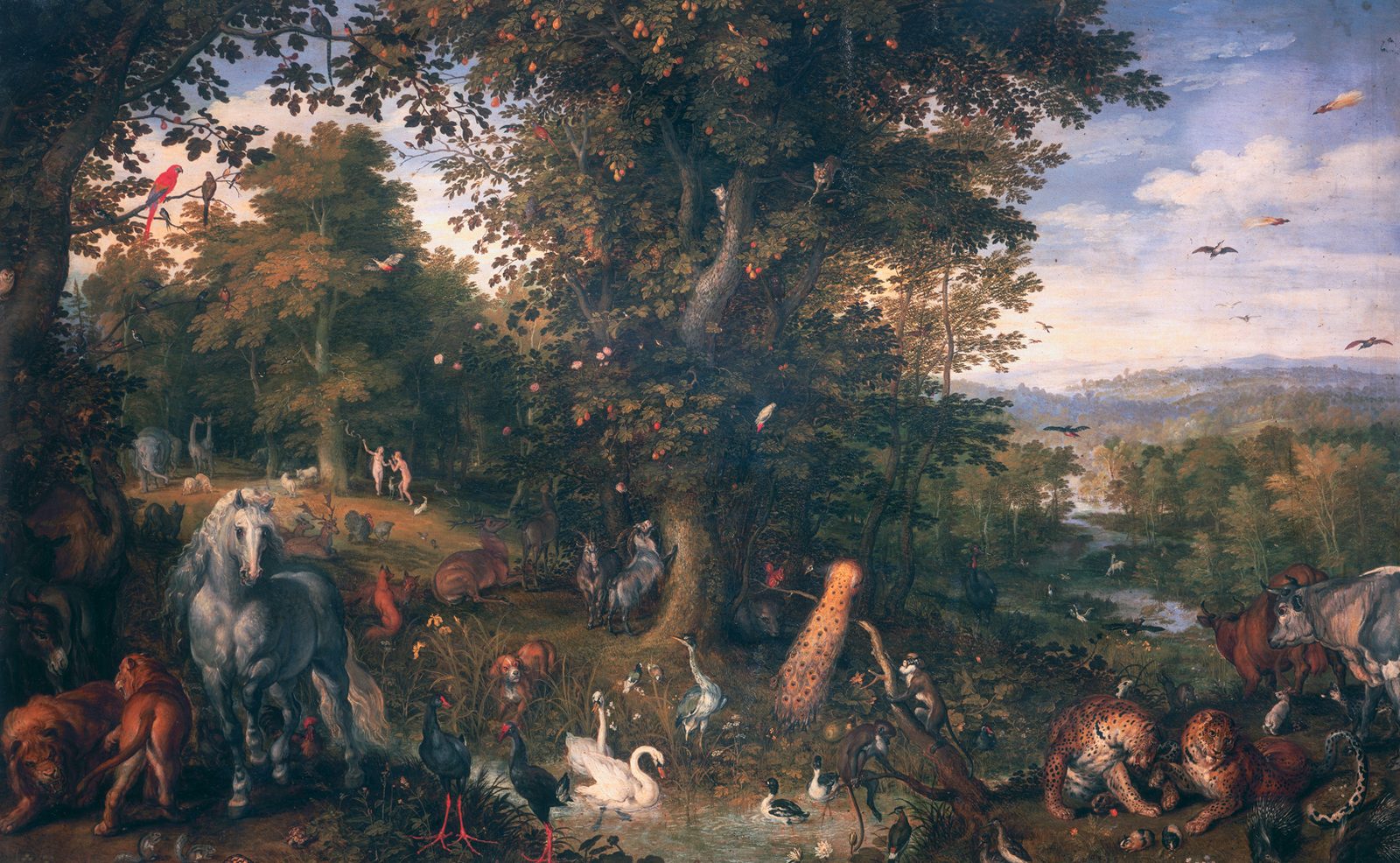
O Lord, how manifold are thy works. They are not only many for number but manifold for variety. Mineral, vegetable, animal—what: a range of works is suggested by these three names! No two even of the same class are exactly alike, and the classes are more numerous than science can number. Works in the heavens above and in the earth beneath, and in the waters under the earth, works which abide the ages, works which come to perfection and pass away in a year, works which with all their beauty do not outlive a day, works within works, and works within these—who can number one of a thousand? God is the great worker, and ordainer of variety. It is ours to study his works, for they are great, and sought out of all them that have pleasure therein. The kingdom of grace contains as manifold and as great works as that of nature, but the chosen of the Lord alone discern them. In wisdom hast thou made them all, or wrought them all. They are all his works, wrought by his own power, and they all display his wisdom. It was wise to make their—none could be spared; every link is essential to the chain of nature—wild beasts as much as men, poisons as truly as odoriferous herbs. They are wisely made—each one fits its place, fills it, and is happy in so doing. As a whole, the "all" of creation is a wise achievement, and however it may be chequered with mysteries, and clouded with terrors, it all works together for good, and as one complete harmonious piece of workmanship it answers the great Worker's end. The earth is full of thy riches. It is not a poor house, but a palace; not a hungry ruin, but a well filled store house. The Creator has not set his creatures down in a dwelling place where the table is bare, and the buttery empty, he has filled the earth with food; and not with bare necessaries only, but with riches—dainties, luxuries, beauties, treasures.
O Lord, how manifold are thy works. They are not only many for number but manifold for variety. Mineral, vegetable, animal—what: a range of works is suggested by these three names! No two even of the same class are exactly alike, and the classes are more numerous than science can number.
O Lord, how manifold are thy works - In this verse there are three propositions: 1. The works of the Lord are multitudinous and varied. 2. They are so constructed as to show the most consummate wisdom in their design, and in the end for which they are formed. 3. They are all God’s property, and should be used only in reference to the end for which they were created. All abuse and waste of God’s creatures are spoil and robbery on the property of the Creator. On this verse Mr. Ray has published an excellent work, entitled, “The Wisdom of God in the Creation,” which the reader will do well, not only to consult, but carefully to read over and study.
A commentator
Albert Barnes1798–1870
Notes, Explanatory and Practical, on the Old and New Testaments (1832-1869)
proposed
O Lord, how manifold are thy works! - literally, “how many.” The reference is to the “number” and the “variety” of the works of God, and to the wisdom displayed in them all. The earth is not suited up merely for one class of inhabitants, but for an almost endless variety; and the wisdom of God is manifested alike in the number and in the variety. No one can estimate the “number” of beings God has made on the earth; no one can comprehend the richness of the variety. By day the air, the earth, the waters swarm with life - life struggling everywhere as if no placc was to be left unoccupied; even for the dark scenes of night countless numbers of beings have been created; and, in all this immensity of numbers, there is an endless variety. No two are alike. Individuality is everywhere preserved, and the mind is astonished and confounded alike at the numbers and the variety. In wisdom hast thou made them all - That is, Thou hast adapted each and all to the different ends contemplated in their creation. Anyone of these beings shows the wisdom of God in its formation, and in its adaptations to the ends of its existence; how much more is that wisdom displayed in these countless numbers, and in this endless variety! The earth is full of thy riches - Hebrew, “possessions.” So the Septuagint and the Vulgate. That is, these various objects thus created are regarded as the “possession” of God; or, they belong to him, as the property of a man belongs to himself. The psalmist says that this wealth or property abounds everywhere; the earth is full of it.
The words behind it
10 Hebrew wordsEvery Hebrew word of this verse in the order it stands, with what it means and the door to its own study. The last column counts the times a word stands in the whole Bible: the rarer the word, the more the places it appears belong together.
| Hebrew | Sound | Meaning | Word study | In the Bible |
|---|---|---|---|---|
| מָֽה־ | mah- | how! | H4100 → | 752 times |
| רַבּ֬וּ | rabu | they are many | H7231 → | 21 times |
| מַעֲשֶׂ֨יךָ׀ | maaseikha | works your | H4639 → | 236 times |
| יְֽהוָ֗ה | yahweh | O Yahweh | H3068 → | 6520 times |
| כֻּ֭לָּם | kulom | all of them | H3605 → | 5413 times |
| בְּחָכְמָ֣ה | bechakhemah | with wisdom | H2451 → | 153 times |
| עָשִׂ֑יתָ | ʾasita | you have made | H6213 → | 2628 times |
| מָלְאָ֥ה | malah | it is full | H4390 → | 249 times |
| הָ֝אָ֗רֶץ | haaretz | the earth | H776 → | 2504 times |
| קִנְיָנֶֽךָ׃ | kinyanecha | creature[s] your | H7075 → |
מָֽה־how!
mah-H4100 →752 times
רַבּ֬וּthey are many
rabuH7231 →21 times
מַעֲשֶׂ֨יךָ׀works your
maaseikhaH4639 →236 times
יְֽהוָ֗הO Yahweh
yahwehH3068 →6520 times
כֻּ֭לָּםall of them
kulomH3605 →5413 times
בְּחָכְמָ֣הwith wisdom
bechakhemahH2451 →153 times
עָשִׂ֑יתָyou have made
ʾasitaH6213 →2628 times
מָלְאָ֥הit is full
malahH4390 →249 times
הָ֝אָ֗רֶץthe earth
haaretzH776 →2504 times
קִנְיָנֶֽךָ׃creature[s] your
kinyanechaH7075 →
A shaded row is a word that stands 400 times or fewer in the Bible.
The walk
8 stopsEach card is a verse this one points to, and under it the verses that one points to in turn. Where several paths arrive at the same place, that place is listed first: the text keeps returning to it.
Through
Romans 11:33O, the depth of the riches of the wisdom and knowledge of God! How unsearchable are His judgments, and untraceable His ways!
it leads to
- Psalms 92:5
How great are Your works, O LORD, how deep are Your thoughts!
Reached by 2 separate paths from here.
- Job 11:7–9
Can you fathom the deep things of God or discover the limits of the Almighty?
- Job 5:9
the One who does great and unsearchable things, wonders without number.
- Colossians 2:2–3
that they may be encouraged in heart, knit together in love, and filled with the full riches of complete understanding, so that they may know the mystery of God, namely Christ,
- Psalms 92:5
Through
Psalms 40:5Many, O LORD my God, are the wonders You have done, and the plans You have for us— none can compare to You— if I proclaim and declare them, they are more than I…
it leads to
- Jeremiah 29:11
For I know the plans I have for you, declares the LORD, plans to prosper you and not to harm you, to give you a future and a hope.
- Exodus 15:11
Who among the gods is like You, O LORD? Who is like You—majestic in holiness, revered with praises, performing wonders?
- Psalms 139:17–18
How precious to me are Your thoughts, O God, how vast is their sum!
- Psalms 71:15
My mouth will declare Your righteousness and Your salvation all day long, though I cannot know their full measure.
- Jeremiah 29:11
Where this verse is studied
By subject
Creation34 verses
About Psalms
This page draws on 19 works. Open the list of works
This page draws on Adam Clarke, Commentary on the Bible; Albert Barnes, Notes on the Book of Psalms; Albert Barnes, Notes, Explanatory and Practical, on the Old and New Testaments (1832-1869); Ambrose of Milan, The Six Days of Creation 1:5.17; Athanasius of Alexandria, DEFENSE OF THE NICENE DEFINITION 4:17; Athanasius of Alexandria, Discourses Against the Arians 1.6.19; Augustine of Hippo, Sermon 16A.6; Augustine of Hippo, Exposition on Psalm 104; Augustine of Hippo, Sermon 223A.1; Augustine of Hippo, City of God 11.32; Augustine of Hippo, Tractates on the Gospel of John, Tractate 1.16; Bonaventure, Itinerarium Mentis in Deum, Chapter 1; Charles Spurgeon, The Treasury of David, Vol. 5; Franz Delitzsch, Biblical Commentary on the Psalms; Jamieson, Fausset & Brown, Commentary Critical and Explanatory on the Whole Bible; Jerome, Homily 30, on Psalm 103; John Gill, Exposition of the Old Testament (1748-1763); John Wesley, Explanatory Notes upon the Old Testament and Matthew Henry, Commentary on the Whole Bible.