
Psalms 104:33
in Psalms 104I will sing to the LORD all my life; I will sing praise to my God while I have my being.
BSB
The same verse in ASV and KJV ▾
ASV
I will sing unto Jehovah as long as I live: I will sing praise to my God while I have any being.
KJV
I will sing unto the Lord as long as I live: I will sing praise to my God while I have my being.
⋯
This verse in Psalms 104
Commentary
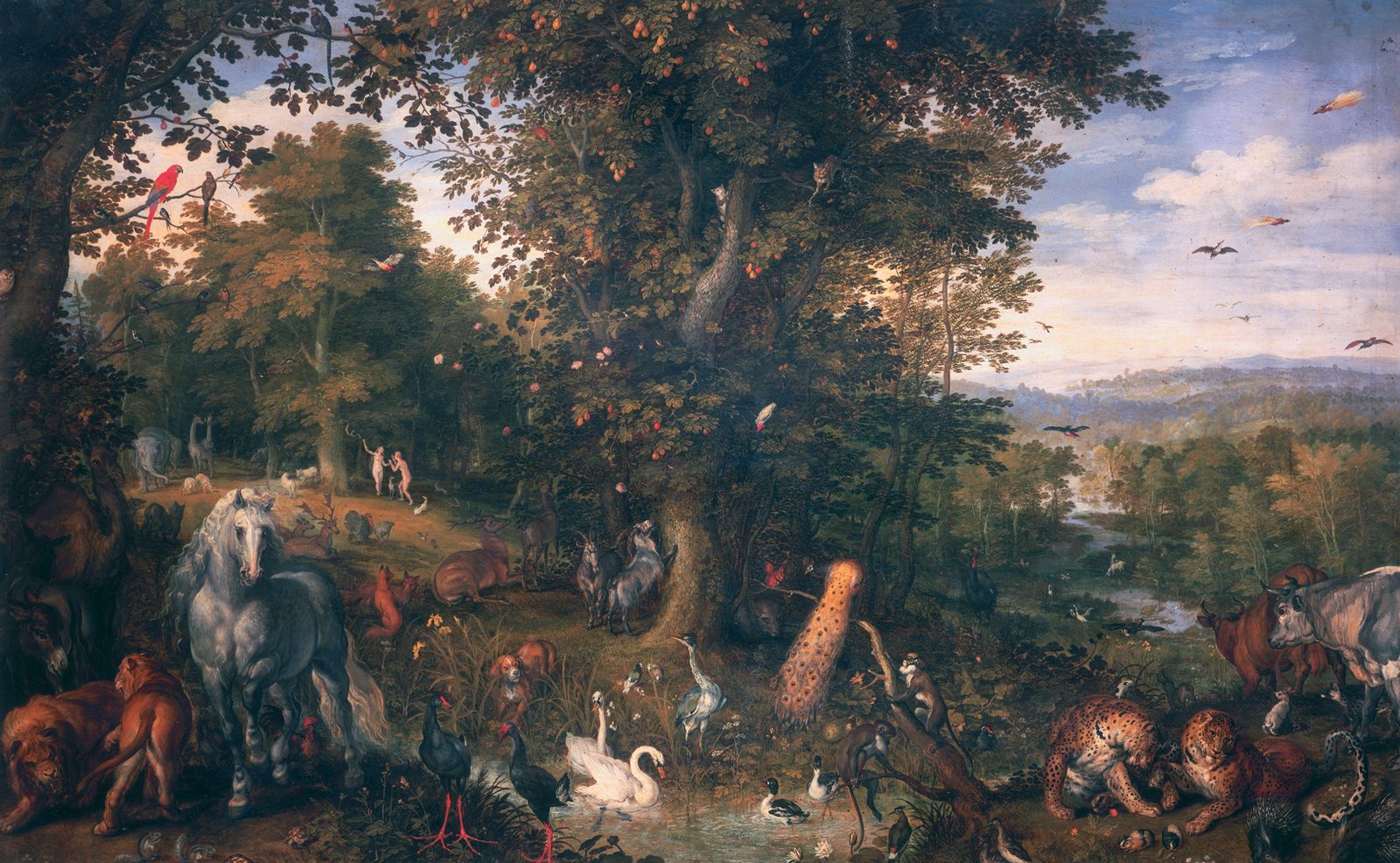
10 notes on this verseI will sing unto the Lord as long as I live, or, literally, in my lives. Here and hereafter the psalmist would continue to praise the Lord, for the theme is an endless one, and remains for ever fresh and new. The birds sang God's praises before men were created, but redeemed men will sing his glories when the birds are no more. Jehovah, who ever lives and makes us to live shall be for ever exalted, and extolled in the songs of redeemed men. I will sing praise to my God while I have my being.
This site's exposition
I will sing to the LORD
on Psalms 104:33-34
The vow is to sing for the whole of his life, and his meditation is offered to please the LORD. The word for rejoice in verse 34 is the same Hebrew word used of the wine at verse 15, samach. The gladness God gave comes back to Him in praise.
The record, by era
The Church Fathers2 voices
"I will sing unto the Lord in my life" [Psalm 104:33]. What will sing? Everything that is willing. Let us sing unto the Lord in our life. Our life at present is only hope; our life will be eternity hereafter: the life of mortal life, is the hope of an everlasting life. "I will praise my God while I have my being." Since I am in Him for ever and ever, while I have my being, I will praise my God. Let us not imagine that, when we have commenced praising God in that state, we shall have any other work: our whole life will be for the praises of God. If we become weary of Him whom we praise, we may also become weary of praising. If He is ever loved, He is ever praised by us.
I will sing to the Lord in my life; I will make music to my God as long as I am. Just as he also said elsewhere: "Let me be, that I may be refreshed before I depart, and be no more." Let me be for a little while, that I may do penance for my sins: since in hell there is no one who can confess his sins.
The Puritans and the Awakening2 voices
What art thou thinking of? Here is work to be done, good work, angels' work; set about it in good earnest; let all the powers and faculties be engaged and employed in it: Bless the Lord, O my soul! " In these verses, I. The psalmist looks up to the divine glory shining in the upper world, of which, though it is one of the things not seen, faith is the evidence.
quarantine:debris (2026-07-29) — odd-straight-quotes
I will sing unto the Lord as long as I live,.... Or, "in my life or lives (w)", throughout the whole of it. This was what the psalmist determined to do, let others do what they would; even sing songs of praise to the Lord; since he was the God of his life, who had fed him all his life long; from whom he had all the mercies of life, and by whom he had been followed with goodness and mercy all his days, and on whom his life and the comforts of it depended.
The Nineteenth Century1 voice
A commentator
Jamieson, Fausset & Brown1802–1910
Commentary Critical and Explanatory on the Whole Bible (1871)
proposed
While God could equally glorify His power in destruction, that He does it in preservation is of His rich goodness and mercy, so that we may well spend our lives in grateful praise, honoring to Him, and delightful to pious hearts (Ps 147:1).
3 more voices on this verse
The Nineteenth Century3 voices
I will sing unto the Lord as long as I live, or, literally, in my lives. Here and hereafter the psalmist would continue to praise the Lord, for the theme is an endless one, and remains for ever fresh and new. The birds sang God's praises before men were created, but redeemed men will sing his glories when the birds are no more. Jehovah, who ever lives and makes us to live shall be for ever exalted, and extolled in the songs of redeemed men. I will sing praise to my God while I have my being. A resolve both happy for himself and glorifying to the Lord. Note the sweet title—my God. We never sing so well as when we know that we have an interest in the good things of which we sing, and a relationship to the God whom we praise.
I will sing unto the Lord - The psalmist exulting in the glorious prospect of the renovation of all things, breaks out in triumphant anticipation of the great event, and says, I will sing unto the Lord בחיי bechaiyai, with my lives, the life that I now have, and the life that I shall have hereafter. I will sing praise to my God - בעודי beodi, “in my eternity;” my going on, my endless progression. What astonishing ideas! But then, how shall this great work be brought about? and how shall the new earth be inhabited with righteous spirits only? The answer is,
A commentator
Albert Barnes1798–1870
Notes, Explanatory and Practical, on the Old and New Testaments (1832-1869)
proposed
I will sing unto the Lord as long as I live - That is, I will continue to praise him; I will never cease to adore him. The result of the psalmist’s meditations on the wonderful works of God is to awaken in his mind a desire to praise God forever. He is so filled with a sense of his greatness and glory that he sees that there would be occasion for eternal praise; or that the reason for praise could never be exhausted. He who has any proper sense of the greatness, the majesty, and the glory of God “intends” to praise him forever. He sees that there is enough in the character of God to demand eternal praise, and he does not anticipate that a period can ever occur in all the future when he will feel that the causes for praise have come to an end, or when his heart will be indisposed to celebrate that praise.
The words behind it
6 Hebrew wordsEvery Hebrew word of this verse in the order it stands, with what it means and the door to its own study. The last column counts the times a word stands in the whole Bible: the rarer the word, the more the places it appears belong together.
| Hebrew | Sound | Meaning | Word study | In the Bible |
|---|---|---|---|---|
| אָשִׁ֣ירָה | ʾashirah | I will sing | H7891 → | 86 times |
| לַיהוָ֣ה | layahweh | to Yahweh | H3068 → | 6520 times |
| בְּחַיָּ֑י | bechaiyai | in life my | H2416 → | 498 times |
| אֲזַמְּרָ֖ה | ʾazamerah | I will sing praises | H2167 → | 45 times |
| לֵאלֹהַ֣י | lelohai | to God my | H430 → | 2601 times |
| בְּעוֹדִֽי׃ | beodi | in duration my | H5750 → | 490 times |
אָשִׁ֣ירָהI will sing
ʾashirahH7891 →86 times
לַיהוָ֣הto Yahweh
layahwehH3068 →6520 times
בְּחַיָּ֑יin life my
bechaiyaiH2416 →498 times
אֲזַמְּרָ֖הI will sing praises
ʾazamerahH2167 →45 times
לֵאלֹהַ֣יto God my
lelohaiH430 →2601 times
בְּעוֹדִֽי׃in duration my
beodiH5750 →490 times
A shaded row is a word that stands 400 times or fewer in the Bible.
The walk
8 stopsEach card is a verse this one points to, and under it the verses that one points to in turn. Where several paths arrive at the same place, that place is listed first: the text keeps returning to it.
Through
Psalms 146:2I will praise the LORD all my life; I will sing praises to my God while I have my being.
it leads to
- Psalms 63:4
So I will bless You as long as I live; in Your name I will lift my hands.
- Psalms 71:14–15
But I will always hope and will praise You more and more.
- Psalms 145:1–2
I will exalt You, my God and King; I will bless Your name forever and ever.
- Revelation 7:9–17
After this I looked and saw a multitude too large to count, from every nation and tribe and people and tongue, standing before the throne and before the Lamb. They were wearing white robes…
- Psalms 63:4
Through
Psalms 63:4So I will bless You as long as I live; in Your name I will lift my hands.
it leads to
- Psalms 134:2
Lift up your hands to the sanctuary and bless the LORD!
- Psalms 28:2
Hear my cry for mercy when I call to You for help, when I lift up my hands toward Your holy sanctuary.
- 1 Kings 8:22–66
Then Solomon stood before the altar of the LORD in front of the whole assembly of Israel, spread out his hands toward heaven,
- Psalms 145:1–3
I will exalt You, my God and King; I will bless Your name forever and ever.
- Psalms 134:2
Where this verse is studied
On this page
About Psalms
This page draws on 9 works. Open the list of works
This page draws on Adam Clarke, Commentary on the Bible; Albert Barnes, Notes, Explanatory and Practical, on the Old and New Testaments (1832-1869); Augustine of Hippo, Exposition on Psalm 104; Charles Spurgeon, The Treasury of David, Vol. 5; Charles Spurgeon, The Treasury of David; Jamieson, Fausset & Brown, Commentary Critical and Explanatory on the Whole Bible; Jerome, Homily 30, on Psalm 103; John Gill, Exposition of the Old Testament (1748-1763) and Matthew Henry, Commentary on the Whole Bible.