
Numbers 16:39
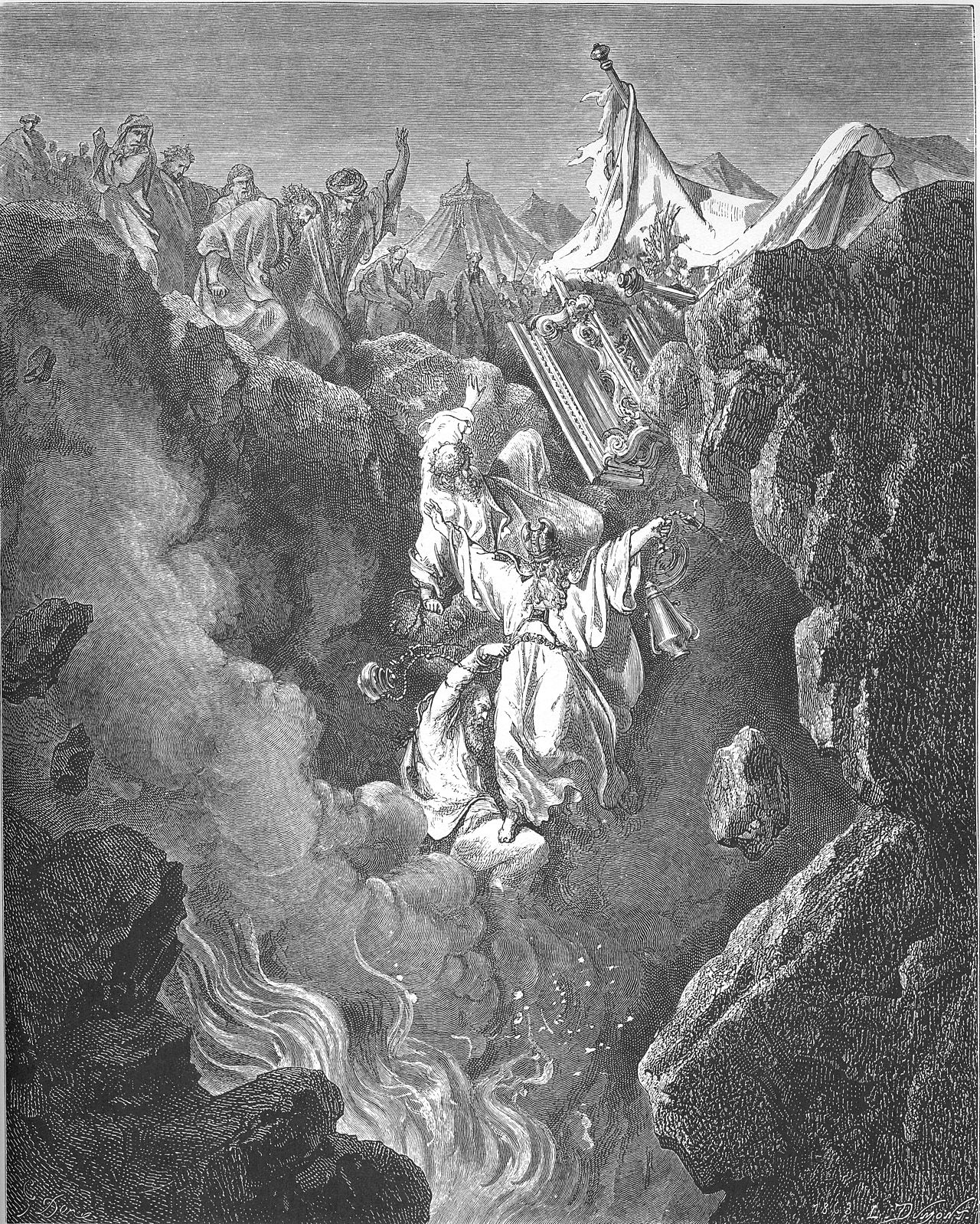
in Numbers 16So Eleazar the priest took the bronze censers brought by those who had been burned up, and he had them hammered out to overlay the altar,
BSB
The same verse in ASV and KJV ▾
ASV
And Eleazar the priest took the brazen censers, which they that were burnt had offered; and they beat them out for a covering of the altar,
KJV
And Eleazar the priest took the brasen censers, wherewith they that were burnt had offered; and they were made broad plates for a covering of the altar:
⋯
This verse in Numbers 16
Commentary
4 notes on this verseThis site's exposition
Eleazar the priest took the brasen censers
on Numbers 16:39-40
Eleazar does the work, and the plates go on the altar where every man bringing a sacrifice will see them. The rule they carry is stated in one line, that no stranger who is not of the seed of Aaron come near to offer incense. 2 Chronicles 26:16-21 records a king of Judah with a censer in his hand being told the same thing by the priests, and Uzziah left the house a leper.
The record, by era
The Church Fathers1 voice
When the divine lesson was read just now, dearly beloved, we heard that our Lord told Moses to forge the censers in which those haughty, rebellious men had offered incense, beat them flat and fasten them to the altar as a sign of the rebellious …
The Puritans and the Awakening2 voices
And Eleazar the priest took the brazen censers,....
These censers were preserved in terrorem, that others might hear and fear, and do no more presumptuously. Thus God has provided that his wonderful works, both in mercy and judgment, should be had in everlasting remembrance, that the end of them may be answered, and they may serve for instruction and admonition to those on whom the ends of the world are come.
The words behind it
12 Hebrew wordsEvery Hebrew word of this verse in the order it stands, with what it means and the door to its own study. The last column counts the times a word stands in the whole Bible: the rarer the word, the more the places it appears belong together.
| Hebrew | Sound | Meaning | Word study | In the Bible |
|---|---|---|---|---|
| וַיִּקַּ֞ח | vaiyikach | and he took | H3947 → | 966 times |
| אֶלְעָזָ֣ר | ʾelazar | Eleazar | H499 → | 72 times |
| הַכֹּהֵ֗ן | hakohen | the priest | H3548 → | 750 times |
| אֵ֚ת | ʾet | <obj.> | H853 → | 10935 times |
| מַחְתּ֣וֹת | machtot | [the] censers of | H4289 → | 22 times |
| הַנְּחֹ֔שֶׁת | hanechoshet | <the> bronze | H5178 → | 140 times |
| אֲשֶׁ֥ר | ʾasher | which | H834 → | 5497 times |
| הִקְרִ֖יבוּ | hikrivu | they had brought near | H7126 → | 280 times |
| הַשְּׂרֻפִ֑ים | haserufim | the [ones who] were burned | H8313 → | 117 times |
| וַֽיְרַקְּע֖וּם | vayrakeum | and people beat out them | H7554 → | |
| צִפּ֥וּי | tzipui | overlay | H6826 → | |
| לַמִּזְבֵּֽחַ׃ | lamizbeach | for the altar | H4196 → | 401 times |
וַיִּקַּ֞חand he took
vaiyikachH3947 →966 times
אֶלְעָזָ֣רEleazar
ʾelazarH499 →72 times
הַכֹּהֵ֗ןthe priest
hakohenH3548 →750 times
אֵ֚ת<obj.>
ʾetH853 →10935 times
מַחְתּ֣וֹת[the] censers of
machtotH4289 →22 times
הַנְּחֹ֔שֶׁת<the> bronze
hanechoshetH5178 →140 times
אֲשֶׁ֥רwhich
ʾasherH834 →5497 times
הִקְרִ֖יבוּthey had brought near
hikrivuH7126 →280 times
הַשְּׂרֻפִ֑יםthe [ones who] were burned
haserufimH8313 →117 times
וַֽיְרַקְּע֖וּםand people beat out them
vayrakeumH7554 →
צִפּ֥וּיoverlay
tzipuiH6826 →
לַמִּזְבֵּֽחַ׃for the altar
lamizbeachH4196 →401 times
A shaded row is a word that stands 400 times or fewer in the Bible.
Where this verse is studied
On this page
About Numbers
Who and where
1 name in this verse with a page on the site.
This page draws on Alfred Edersheim, The Temple: Its Ministry and Services; Caesarius of Arles, SERMON 110.1; John Gill, Exposition of the Old Testament (1748-1763); Keil and Delitzsch, Biblical Commentary on the Old Testament: The Pentateuch and Matthew Henry, Commentary on the Whole Bible.