
Nehemiah 4:3
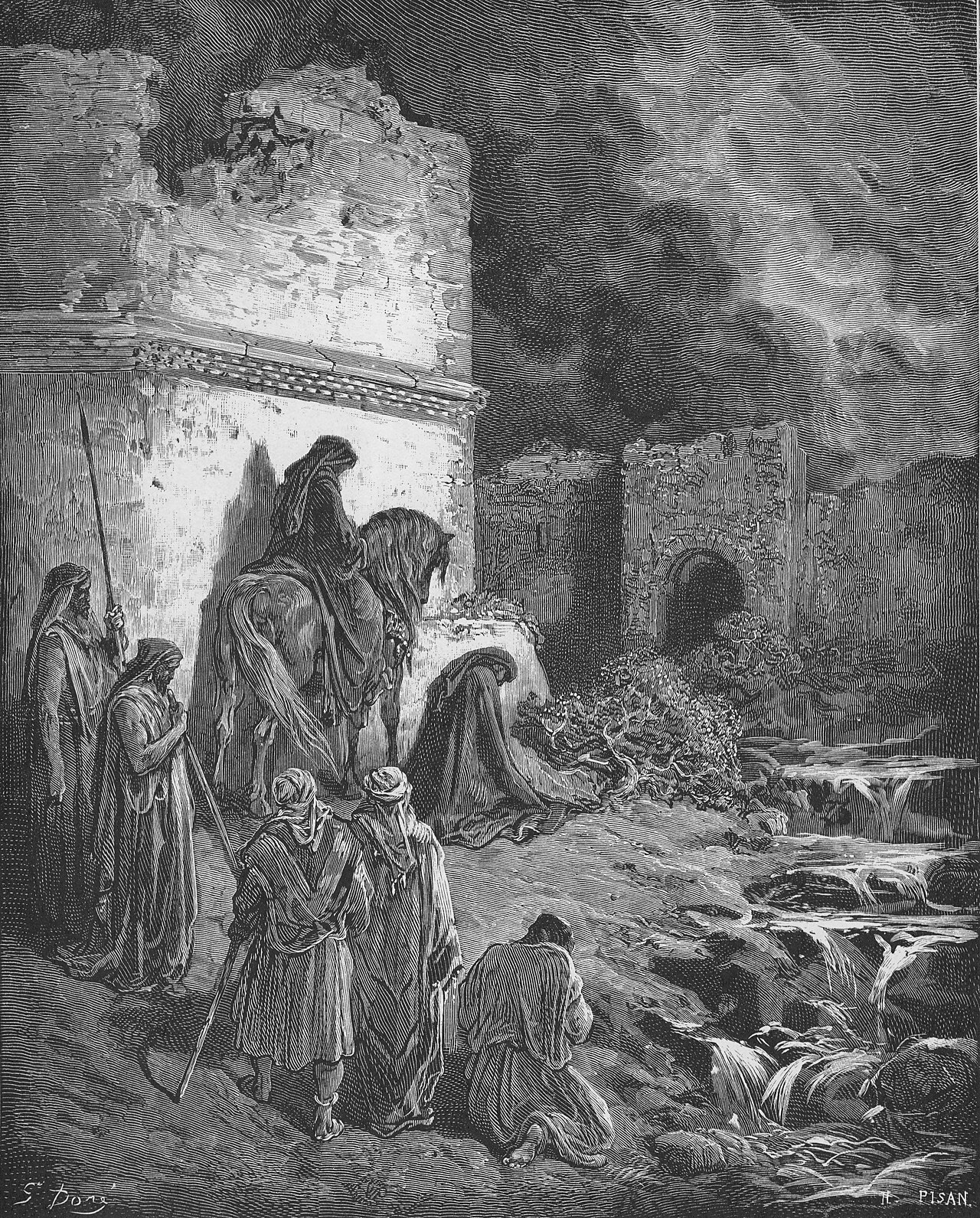
in Nehemiah 4Then Tobiah the Ammonite, who was beside him, said, “If even a fox were to climb up on what they are building, it would break down their wall of stones!”
BSB
The same verse in ASV and KJV ▾
ASV
Now Tobiah the Ammonite was by him, and he said, Even that which they are building, if a fox go up, he shall break down their stone wall.
KJV
Now Tobiah the Ammonite was by him, and he said, Even that which they build, if a fox go up, he shall even break down their stone wall.
⋯
This verse in Nehemiah 4
Commentary
5 notes on this verseHe had notice brought him of what they said. It is probable that they themselves sent him a message to this purport, to discourage him, hoping to jeer him out of his attempt; but he did not answer these fools according to their folly; he did not upbraid them with their weakness, but looked up to God by prayer.
This site's exposition
and mocked the Jews
on Nehemiah 4:1-3
Sanballat hears that the wall rises and answers with contempt before he answers with force, mocking feeble Jews who cannot finish what they started. Tobiah adds the sharper jab: a fox climbing the stones would break down all they have built. Matthew Henry reads the sequence as the pattern of every threatened enemy, ridicule tried first because it costs nothing and works if it lands. The mockery will harden into conspiracy by verse eight, words giving way to weapons.
The record, by era
The Medieval Church1 voice
But also Tobias the Ammonite, his neighbor, said: Let them build, etc. And both the person and words of this Tobias agree with heretics. The person indeed, because his patriarch Ammon was conceived from incest and drunkenness, and at night and in a cave. All …
The Puritans and the Awakening1 voice
Now Tobiah the Ammonite was by him,....
The Nineteenth Century1 voice
A commentator
Jamieson, Fausset & Brown1802–1910
Commentary Critical and Explanatory on the Whole Bible (1871)
proposed
The prayer, therefore, is to be considered as emanating from hearts in which neither hatred, revenge, nor any inferior passion, but a pious and patriotic zeal for the glory of God and the success of His cause, held the ascendant sway.
The words behind it
14 Hebrew wordsEvery Hebrew word of this verse in the order it stands, with what it means and the door to its own study. The last column counts the times a word stands in the whole Bible: the rarer the word, the more the places it appears belong together.
| Hebrew | Sound | Meaning | Word study | In the Bible |
|---|---|---|---|---|
| וְטוֹבִיָּ֥ה | vetoiyah | and Tobiah | H2900 → | 18 times |
| הָעַמֹּנִ֖י | haamoni | the Ammonite | H5984 → | 21 times |
| אֶצְל֑וֹ | ʾetzlo | [was] beside him | H681 → | 61 times |
| וַיֹּ֗אמֶר | vaiyomer | and he said | H559 → | 5305 times |
| גַּ֚ם | gam | also | H1571 → | 769 times |
| אֲשֶׁר־ | ʾasher- | [that] which | H834 → | 5497 times |
| הֵ֣ם | hem | they | H1992 → | 553 times |
| בּוֹנִ֔ים | bonim | [are] building | H1129 → | 376 times |
| אִם־ | ʾim- | if | H518 → | 1069 times |
| יַעֲלֶ֣ה | yaaleh | it will go up | H5927 → | 890 times |
| שׁוּעָ֔ל | shual | a fox | H7776 → | |
| וּפָרַ֖ץ | ufaratz | and it will break down | H6555 → | 49 times |
| חוֹמַ֥ת | chomat | [the] wall of | H2346 → | 133 times |
| אַבְנֵיהֶֽם׃ פ | ʾavneihem | stones their | H68 → | 273 times |
וְטוֹבִיָּ֥הand Tobiah
vetoiyahH2900 →18 times
הָעַמֹּנִ֖יthe Ammonite
haamoniH5984 →21 times
אֶצְל֑וֹ[was] beside him
ʾetzloH681 →61 times
וַיֹּ֗אמֶרand he said
vaiyomerH559 →5305 times
גַּ֚םalso
gamH1571 →769 times
אֲשֶׁר־[that] which
ʾasher-H834 →5497 times
הֵ֣םthey
hemH1992 →553 times
בּוֹנִ֔ים[are] building
bonimH1129 →376 times
אִם־if
ʾim-H518 →1069 times
יַעֲלֶ֣הit will go up
yaalehH5927 →890 times
שׁוּעָ֔לa fox
shualH7776 →
וּפָרַ֖ץand it will break down
ufaratzH6555 →49 times
חוֹמַ֥ת[the] wall of
chomatH2346 →133 times
אַבְנֵיהֶֽם׃ פstones their
ʾavneihemH68 →273 times
A shaded row is a word that stands 400 times or fewer in the Bible.
The walk
8 stopsEach card is a verse this one points to, and under it the verses that one points to in turn. Where several paths arrive at the same place, that place is listed first: the text keeps returning to it.
Through
Nehemiah 2:19But when Sanballat the Horonite, Tobiah the Ammonite official, and Geshem the Arab heard about this, they mocked us and ridiculed us, saying, “What is this you are doing? Are you rebelling against the…
it leads to
- Nehemiah 6:6
that read: “It is reported among the nations—and Geshem agrees—that you and the Jews are plotting to revolt, and this is why you are building the wall. According to these reports, you are to…
- Nehemiah 6:1–2
When Sanballat, Tobiah, Geshem the Arab, and the rest of our enemies heard that I had rebuilt the wall and not a gap was left—though to that time I had not yet installed the…
- Nehemiah 6:6
Through
Nehemiah 2:10But when Sanballat the Horonite and Tobiah the Ammonite official heard about this, they were deeply disturbed that someone had come to seek the well-being of the Israelites.
it leads to
- Nehemiah 2:19
But when Sanballat the Horonite, Tobiah the Ammonite official, and Geshem the Arab heard about this, they mocked us and ridiculed us, saying, “What is this you are doing? Are you rebelling against the…
- Nehemiah 4:7
When Sanballat and Tobiah, together with the Arabs, Ammonites, and Ashdodites, heard that the repair to the walls of Jerusalem was progressing and that the gaps were being closed, they were furious,
- Ezekiel 25:6–8
For this is what the Lord GOD says: ‘Because you clapped your hands and stomped your feet and rejoiced over the land of Israel with a heart full of contempt,
- Nehemiah 13:4
Now before this, Eliashib the priest, a relative of Tobiah, had been put in charge of the storerooms of the house of our God
- Nehemiah 2:19
Through
1 Kings 20:10Then Ben-hadad sent another message to Ahab: “May the gods deal with me, and ever so severely, if enough dust remains of Samaria for each of my men to have a handful.”
it leads to
- 1 Kings 19:2
So Jezebel sent a messenger to Elijah, saying, “May the gods deal with me, and ever so severely, if by this time tomorrow I do not make your life like the lives of those…
- Isaiah 10:13–14
For he says: ‘By the strength of my hand I have done this, and by my wisdom, for I am clever. I have removed the boundaries of nations and plundered their treasures; like a…
Reached by 2 separate paths from here.
- 1 Kings 19:2
About Nehemiah
This page draws on Adam Clarke, Commentary on the Bible; Bede, Commentary on Ezra and Nehemiah; Jamieson, Fausset & Brown, Commentary Critical and Explanatory on the Whole Bible; John Gill, Exposition of the Old Testament (1748-1763) and Matthew Henry, Commentary on the Whole Bible.