
Lamentations 2:20
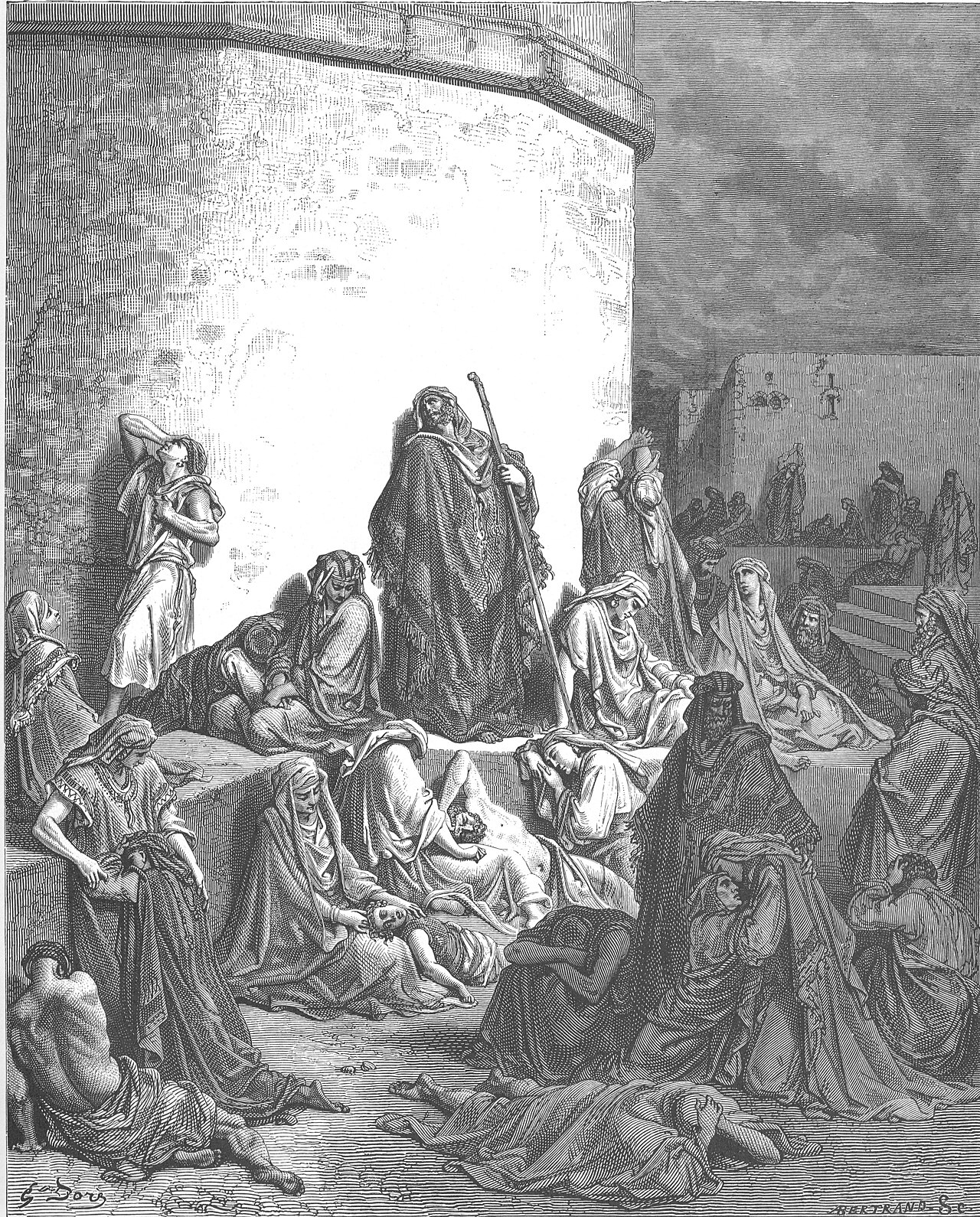
in Lamentations 2Look, O LORD, and consider: Whom have You ever treated like this? Should women eat their offspring, the infants they have nurtured? Should priests and prophets be killed in the sanctuary of the Lord?
BSB
The same verse in ASV and KJV ▾
ASV
See, O Jehovah, and behold to whom thou hast done thus! Shall the women eat their fruit, the children that are dandled in the hands? Shall the priest and the prophet be slain in the sanctuary of the Lord?
KJV
Behold, O Lord, and consider to whom thou hast done this. Shall the women eat their fruit, and children of a span long? shall the priest and the prophet be slain in the sanctuary of the Lord?
⋯
This verse in Lamentations 2
Commentary
8 notes on this verseConsider to whom thou hast done this - Perhaps the best sense of this difficult verse is this: “Thou art our Father, we are thy children; wilt thou destroy thy own offspring?
This site's exposition
Look, O LORD, and consider
on Lamentations 2:20-22
The hardest of the chapter's questions to the LORD, “Should women eat their offspring, the infants they have nurtured?”, names the siege's worst horror plainly. Moses warned of this curse in Deuteronomy 28:53. The chapter closes on “the day of the LORD’s anger”, when no one escaped.
The record, by era
The Medieval Church1 voice
Prayer in itself here is viewed. First, divine mercy is called forth, as to an inhumanity in punishment; second, as to its universality. Verse 21 later so states: "In the dust of the streets lie the young and the old." Third, prayer is called forth …
The Puritans and the Awakening4 voices
(4.) This was the Lord's doing; he suffered the sword of the Chaldeans to devour thus without distinction: Thou has slain them in the day of thy anger, for it is God that kills and makes alive, and saves alive, as he pleases. But that which follows is very harsh: Thou has killed, and not pitied; for his soul is grieved for the misery of Israel.
9 Her gates are sunk into the ground; he hath destroyed and broken her bars: her king and her princes are among the Gentiles: the law is no more; her prophets also find no vision from the L ORD .
quarantine:scripture (2026-07-29) — scripture-overlap:95%@v9
Lord, take their case into thy compassionate consideration!" Note, Prayer is a salve for every sore, even the sorest, a remedy for every malady, even the most grievous. And our business in prayer is not to prescribe, but to subscribe to the wisdom and will of God; to refer our case to him, and then to leave it with him.
quarantine:debris (2026-07-29) — odd-straight-quotes
Behold, O Lord, and consider to whom thou hast done this,....
1 more voice on this verse
The Nineteenth Century1 voice
A commentator
Albert Barnes1798–1870
Notes, Explanatory and Practical, on the Old and New Testaments (1832-1869)
proposed
The sense is: “See, Yahweh, and look! whom hast Thou treated thus? Shall women eat their fruit - children whom they must still carry?” the swaddled child being one still needing to be nursed and borne in their arms.
The words behind it
18 Hebrew wordsEvery Hebrew word of this verse in the order it stands, with what it means and the door to its own study. The last column counts the times a word stands in the whole Bible: the rarer the word, the more the places it appears belong together.
| Hebrew | Sound | Meaning | Word study | In the Bible |
|---|---|---|---|---|
| רְאֵ֤ה | reeh | see | H7200 → | 1300 times |
| יְהוָה֙ | yahweh | O Yahweh | H3068 → | 6520 times |
| וְֽהַבִּ֔יטָה | vehabitah | and look ! | H5027 → | 69 times |
| לְמִ֖י | lemi | to whom? | H4310 → | 423 times |
| עוֹלַ֣לְתָּ | olalta | have you dealt severely | H5953 → | 20 times |
| כֹּ֑ה | koh | thus | H3541 → | |
| אִם־ | ʾim- | <if>? | H518 → | 1069 times |
| תֹּאכַ֨לְנָה | tokhalnah | will they eat | H398 → | 810 times |
| נָשִׁ֤ים | nashim | women | H802 → | 781 times |
| פִּרְיָם֙ | piryam | descendant[s] their | H6529 → | |
| עֹלֲלֵ֣י | ʾolalei | children of | H5768 → | 20 times |
| טִפֻּחִ֔ים | tipuchim | health<s> | H2949 → | |
| אִם־ | ʾim- | or? | H518 → | 1069 times |
| יֵהָרֵ֛ג | yehareg | will he be killed | H2026 → | 167 times |
| בְּמִקְדַּ֥שׁ | bemikdash | in [the] sanctuary of | H4720 → | 75 times |
| אֲדֹנָ֖י | ʾadonai | [the] Lord | H136 → | 440 times |
| כֹּהֵ֥ן | kohen | priest | H3548 → | 750 times |
| וְנָבִֽיא׃ ס | venavi' | and prophet | H5030 → | 314 times |
רְאֵ֤הsee
reehH7200 →1300 times
יְהוָה֙O Yahweh
yahwehH3068 →6520 times
וְֽהַבִּ֔יטָהand look !
vehabitahH5027 →69 times
לְמִ֖יto whom?
lemiH4310 →423 times
עוֹלַ֣לְתָּhave you dealt severely
olaltaH5953 →20 times
כֹּ֑הthus
kohH3541 →
אִם־<if>?
ʾim-H518 →1069 times
תֹּאכַ֨לְנָהwill they eat
tokhalnahH398 →810 times
נָשִׁ֤יםwomen
nashimH802 →781 times
פִּרְיָם֙descendant[s] their
piryamH6529 →
עֹלֲלֵ֣יchildren of
ʾolaleiH5768 →20 times
טִפֻּחִ֔יםhealth<s>
tipuchimH2949 →
אִם־or?
ʾim-H518 →1069 times
יֵהָרֵ֛גwill he be killed
yeharegH2026 →167 times
בְּמִקְדַּ֥שׁin [the] sanctuary of
bemikdashH4720 →75 times
אֲדֹנָ֖י[the] Lord
ʾadonaiH136 →440 times
כֹּהֵ֥ןpriest
kohenH3548 →750 times
וְנָבִֽיא׃ סand prophet
venavi'H5030 →314 times
A shaded row is a word that stands 400 times or fewer in the Bible.
The walk
8 stopsEach card is a verse this one points to, and under it the verses that one points to in turn. Where several paths arrive at the same place, that place is listed first: the text keeps returning to it.
Through
Jeremiah 19:9I will make them eat the flesh of their sons and daughters, and they will eat one another’s flesh in the siege and distress inflicted on them by their enemies who seek their lives.’
it leads to
- Leviticus 26:29
You will eat the flesh of your own sons and daughters.
Reached by 2 separate paths from here.
- Ezekiel 5:10
As a result, fathers among you will eat their sons, and sons will eat their fathers. I will execute judgments against you and scatter all your remnant to every wind.’
Reached by 2 separate paths from here.
- Isaiah 9:20
They carve out what is on the right, but they are still hungry; they eat what is on the left, but they are still not satisfied. Each one devours the flesh of his own…
- Lamentations 4:10
The hands of compassionate women have cooked their own children, who became their food in the destruction of the daughter of my people.
- Leviticus 26:29
Through
Exodus 32:11But Moses sought the favor of the LORD his God, saying, “O LORD, why does Your anger burn against Your people, whom You brought out of the land of Egypt with great power and…
it leads to
- Deuteronomy 9:18–20
Then I fell down before the LORD for forty days and forty nights, as I had done the first time. I did not eat bread or drink water because of all the sin you…
- Deuteronomy 9:18–20
Through
Lamentations 4:10The hands of compassionate women have cooked their own children, who became their food in the destruction of the daughter of my people.
it leads to
- Isaiah 49:15
“Can a woman forget her nursing child, or lack compassion for the son of her womb? Even if she could forget, I will not forget you!
- 2 Kings 6:26–29
As the king of Israel was passing by on the wall, a woman cried out to him, “Help me, my lord the king!”
- Isaiah 49:15
Through
Deuteronomy 9:26And I prayed to the LORD and said, “O Lord GOD, do not destroy Your people, Your inheritance, whom You redeemed through Your greatness and brought out of Egypt with a mighty hand.
it leads to
- Titus 2:14
He gave Himself for us to redeem us from all lawlessness and to purify for Himself a people for His own possession, zealous for good deeds.
- Titus 2:14
Where this verse is studied
About Lamentations
This page draws on Adam Clarke, Commentary on the Bible; Albert Barnes, Notes on the Old Testament; Albert Barnes, Notes, Explanatory and Practical, on the Old and New Testaments (1832-1869); Carl Friedrich Keil, Lamentations; John Gill, Exposition of the Old Testament (1748-1763); Matthew Henry, Commentary on the Whole Bible and Thomas Aquinas, Commentary on Lamentations.