
Jeremiah 4:6
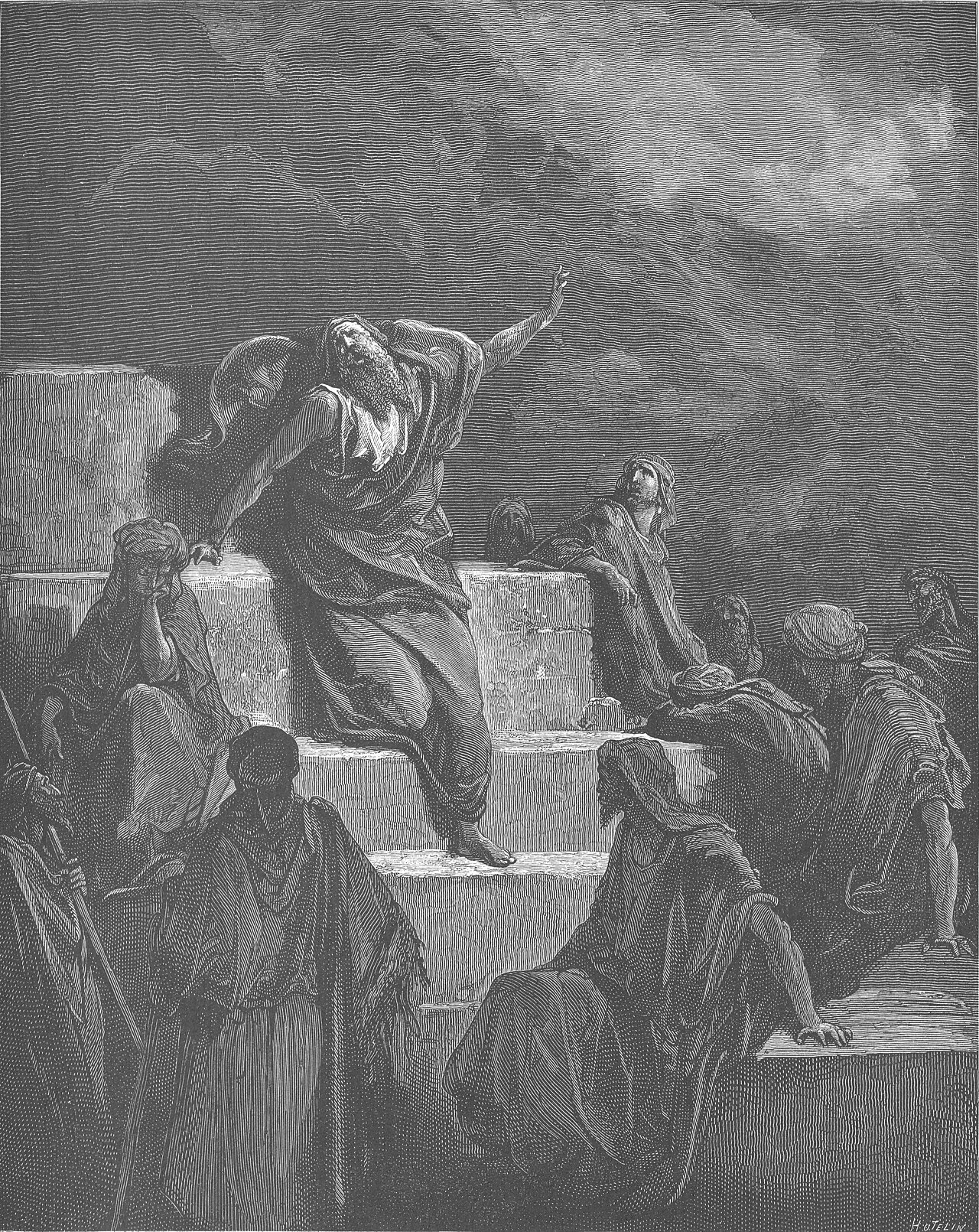
in Jeremiah 4Raise a signal flag toward Zion. Seek refuge! Do not delay! For I am bringing disaster from the north, and terrible destruction.
BSB
The same verse in ASV and KJV ▾
ASV
Set up a standard toward Zion: flee for safety, stay not; for I will bring evil from the north, and a great destruction.
KJV
Set up the standard toward Zion: retire, stay not: for I will bring evil from the north, and a great destruction.
⋯
This verse in Jeremiah 4
Commentary
8 notes on this verse(Verse 5, 6.) Announce in Judah, and make it heard in Jerusalem, speak: blow the trumpet in the land, cry aloud, and say: Gather together, and let us enter the fortified cities. Let Judah hear this, let Jerusalem hear this, in which the confession of faith is, and in which the peace of Christ dwells, and to which it was said through Isaiah: Ascend to the high mountain, you who proclaim good news to Zion. Raise your voice, you who proclaim good news to Jerusalem (Isa. 40:9): cry aloud, and thus command: Let us enter the fortified cities.
This site's exposition
Blow ye the trumpet in the land
on Jeremiah 4:5-9
The alarm is sounded in stages, trumpet, standard toward Zion, and then the enemy named in a figure, the lion is come up from his thicket, and the destroyer of the Gentiles is on his way, ancient royal language for an invading king turned against Judah's own capital. The panic reaches every office that should have steadied the people, the heart of the king shall perish, the priests shall be astonished, and the prophets shall wonder, the whole leadership caught without an answer at the one moment it was needed.
The record, by era
The Church Fathers1 voice
"Take up your baggage and flee to Zion"; as many of you as are outside Zion, "take up your baggage and flee to Zion; hasten, do not stand still," you who are in progress hasten to the Watchtower, "for I bring evils from the north and great destruction"—of the evils brought "from the north," from the north of the adversary, as has often been said; and whoever is found not to have hastened, nor to have entered "into the walled cities," not having come to be in "the churches of God," but standing outside, he himself, being seized by the enemies, will be destroyed.
The Puritans and the Awakening3 voices
Those that are able men, and fit for service, must go into the defenced cities, to garrison them; those that are weak, and would lessen their provisions, but not increase their strength, must retire, and not stay. An express arrived with intelligence of the approach of the king of Babylon and his army. It is an evil that God will bring from the north (as he had said, ch. i.
quarantine:debris (2026-07-29) — unbalanced-parens
Set up the standard toward Zion,....
To affect them the more with the greatness of the desolation that was coming, the prophet does himself bitterly lament it, and sympathize with his people in the calamities it brought upon them, and the plunge it brought them to, representing it as a reduction of the world to its first chaos,
The Nineteenth Century1 voice
I will bring evil from the north - From the land of Chaldea.
1 more voice on this verse
The Nineteenth Century1 voice
A commentator
Albert Barnes1798–1870
Notes, Explanatory and Practical, on the Old and New Testaments (1832-1869)
proposed
The standard - A flag or signal, to which the people were to rally.Retire, stay not - Rather, gather your goods together: linger not; “for I” (emphatic, Yahweh) am bringing at this very time etc.
The words behind it
13 Hebrew wordsEvery Hebrew word of this verse in the order it stands, with what it means and the door to its own study. The last column counts the times a word stands in the whole Bible: the rarer the word, the more the places it appears belong together.
| Hebrew | Sound | Meaning | Word study | In the Bible |
|---|---|---|---|---|
| שְׂאוּ־ | seu- | lift up | H5375 → | 656 times |
| נֵ֣ס | nes | a standard | H5251 → | 21 times |
| צִיּ֔וֹנָה | tziyonah | Zion towards | H6726 → | 154 times |
| הָעִ֖יזוּ | haizu | take refuge | H5756 → | |
| אַֽל־ | ʾal- | may not | H408 → | 724 times |
| תַּעֲמֹ֑דוּ | taamodu | you stand still | H5975 → | 521 times |
| כִּ֣י | ki | for | H3588 → | 4482 times |
| רָעָ֗ה | raah | calamity | H7451 → | 662 times |
| אָנֹכִ֛י | ʾanokhi | I | H595 → | 359 times |
| מֵבִ֥יא | mevi' | [am] about to bring | H935 → | 2568 times |
| מִצָּפ֖וֹן | mitzafon | from [the] north | H6828 → | 153 times |
| וְשֶׁ֥בֶר | veshever | and destruction | H7667 → | 45 times |
| גָּדֽוֹל׃ | gadol | great | H1419 → | 526 times |
שְׂאוּ־lift up
seu-H5375 →656 times
נֵ֣סa standard
nesH5251 →21 times
צִיּ֔וֹנָהZion towards
tziyonahH6726 →154 times
הָעִ֖יזוּtake refuge
haizuH5756 →
אַֽל־may not
ʾal-H408 →724 times
תַּעֲמֹ֑דוּyou stand still
taamoduH5975 →521 times
כִּ֣יfor
kiH3588 →4482 times
רָעָ֗הcalamity
raahH7451 →662 times
אָנֹכִ֛יI
ʾanokhiH595 →359 times
מֵבִ֥יא[am] about to bring
mevi'H935 →2568 times
מִצָּפ֖וֹןfrom [the] north
mitzafonH6828 →153 times
וְשֶׁ֥בֶרand destruction
vesheverH7667 →45 times
גָּדֽוֹל׃great
gadolH1419 →526 times
A shaded row is a word that stands 400 times or fewer in the Bible.
The walk
8 stopsEach card is a verse this one points to, and under it the verses that one points to in turn. Where several paths arrive at the same place, that place is listed first: the text keeps returning to it.
Through
Jeremiah 50:2“Announce and declare to the nations; lift up a banner and proclaim it; hold nothing back when you say, ‘Babylon is captured; Bel is put to shame; Marduk is shattered, her images are disgraced,…
it leads to
- Isaiah 46:1
Bel crouches; Nebo cowers. Their idols weigh down beasts and cattle. The images you carry are burdensome, a load to the weary animal.
- Isaiah 21:9
Look, here come the riders, horsemen in pairs.” And one answered, saying: “Fallen, fallen is Babylon! All the images of her gods lie shattered on the ground!”
- Isaiah 46:1
Through
Jeremiah 6:1“Run for cover, O sons of Benjamin; flee from Jerusalem! Sound the ram’s horn in Tekoa; send up a signal over Beth-haccherem, for disaster looms from the north, even great destruction.
it leads to
- Jeremiah 4:5–6
Announce in Judah, proclaim in Jerusalem, and say: “Blow the ram’s horn throughout the land. Cry aloud and say, ‘Assemble yourselves and let us flee to the fortified cities.’
Reached by 2 separate paths from here.
- Nehemiah 3:14
The Dung Gate was repaired by Malchijah son of Rechab, ruler of the district of Beth-haccherem. He rebuilt it and installed its doors, bolts, and bars.
- Jeremiah 4:5–6
Through
Jeremiah 51:27“Raise a banner in the land! Blow the ram’s horn among the nations! Prepare the nations against her. Summon the kingdoms against her—Ararat, Minni, and Ashkenaz. Appoint a captain against her; bring up horses…
it leads to
- Genesis 10:3
The sons of Gomer: Ashkenaz, Riphath, and Togarmah.
- Genesis 8:4
On the seventeenth day of the seventh month, the ark came to rest on the mountains of Ararat.
- 1 Chronicles 1:6
The sons of Gomer: Ashkenaz, Riphath, and Togarmah.
- Jeremiah 51:12
Raise a banner against the walls of Babylon; post the guard; station the watchmen; prepare the ambush. For the LORD has both devised and accomplished what He spoke against the people of Babylon.
- Genesis 10:3
Where this verse is studied
On this page
Studies1
About Jeremiah
Who and where
1 name in this verse with a page on the site.
This page draws on Adam Clarke, Commentary on the Bible; Albert Barnes, Notes on the Old Testament; Albert Barnes, Notes, Explanatory and Practical, on the Old and New Testaments (1832-1869); Jerome, Commentary on Jeremiah; John Gill, Exposition of the Old Testament; John Gill, Exposition of the Old Testament (1748-1763); Matthew Henry, Commentary on the Whole Bible and Origen of Alexandria, HOMILIES ON JEREMIAH 5.