
Jeremiah 17:20
in Jeremiah 17Say to them, ‘Hear the word of the LORD, O kings of Judah, all people of Judah and Jerusalem who enter through these gates.
BSB
The same verse in ASV and KJV ▾
ASV
and say unto them, Hear ye the word of Jehovah, ye kings of Judah, and all Judah, and all the inhabitants of Jerusalem, that enter in by these gates:
KJV
And say unto them, Hear ye the word of the Lord, ye kings of Judah, and all Judah, and all the inhabitants of Jerusalem, that enter in by these gates:
⋯
This verse in Jeremiah 17
Commentary
4 notes on this verseon Jeremiah 17:20-27
(Verse 20 and following) Thus says the Lord: Guard your souls, and do not carry burdens on the Sabbath day, or bring them through the gates of Jerusalem. And do not cast burdens out of your houses on the Sabbath day, and you shall not do any work, and sanctify the Sabbath day, as I commanded your fathers. But they did not listen, nor inclined their ear, and they stiffened their necks (and what is not found in Hebrew, against their fathers), so that they would not listen to me, and would not receive discipline.
This site's exposition
Go and stand in the gate of the children of the people
on Jeremiah 17:19-27
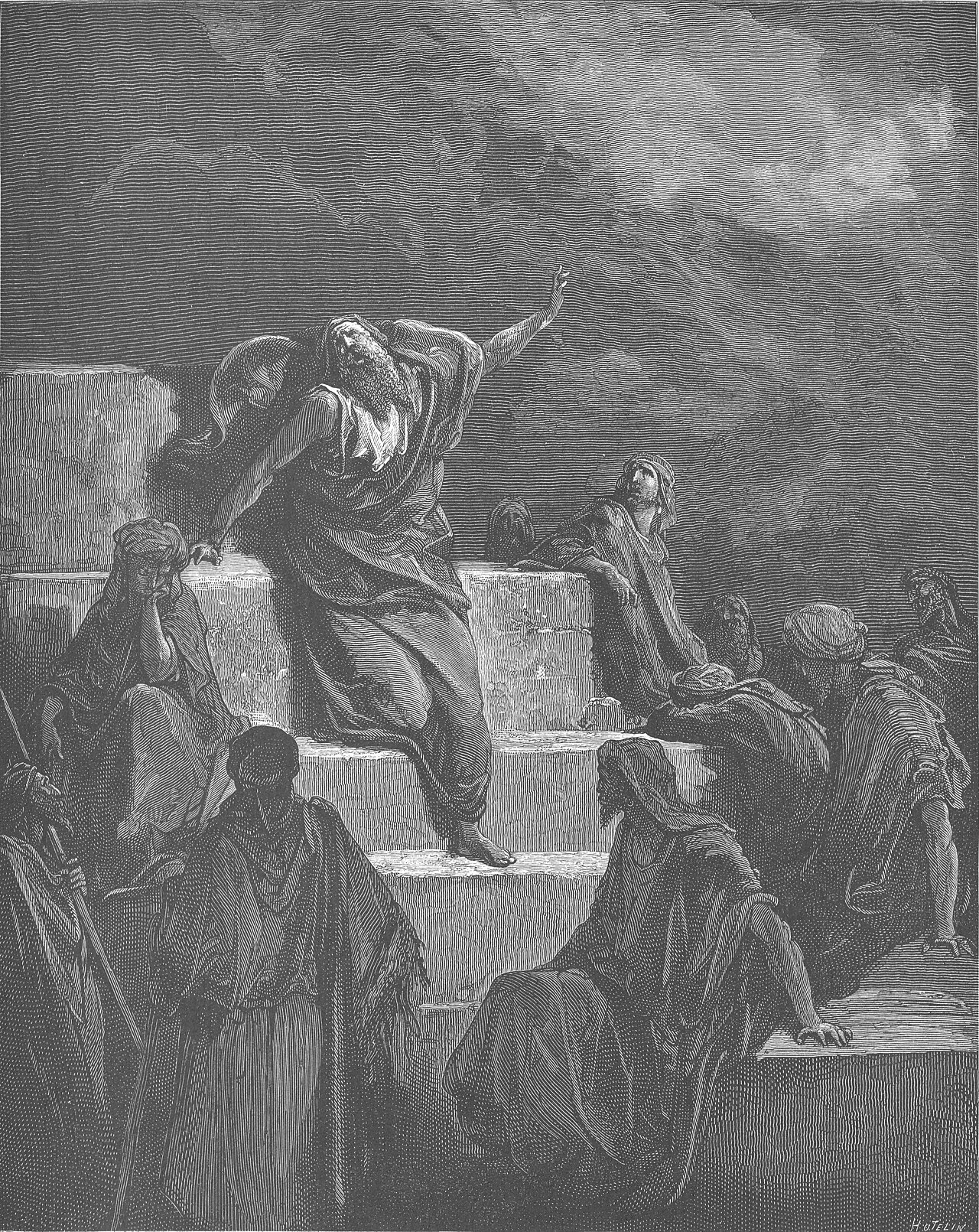
The word turns to a sign-act at the city gates, stand where the kings of Judah come in and go out, and preach a single commandment, keep the sabbath, carrying no burden through the gates of Jerusalem on that day. Clarke reads the sabbath test as representative rather than exhaustive, one visible commandment standing for the whole covenant obedience the fathers refused, they obeyed not, neither inclined their ear, but made their neck stiff. The chapter closes on a conditional promise stated in full, obedience bringing kings and princes riding into a city that shall remain for ever, disobedience bringing an unquenchable fire in the gates, the same two ways as the cursed and blessed man of verses 5 to 8 now applied to the whole city.
The record, by era
The Puritans and the Awakening1 voice
on Jeremiah 17:19-27
The people had asked ( ch. xvi. 10 ), What is our iniquity, and what is our sin? as if they could not be charged with any thing worth speaking of, for which God should enter into judgment with them; their challenge was answered there, but here we have a further reply to it, in which, I.
The Nineteenth Century1 voice
Ye kings of Judah, and all Judah - This last clause is wanting in eight of Kennicott’s and De Rossi’s MSS., in the Arabic, and some copies of the Septuagint.
How the passage was read
On Jeremiah 17:19-27On Jeremiah 17:19-27
Burdens through the gates
Jeremiah stands in Jerusalem's gates and warns: “bear no burden on the sabbath day, nor bring it in by the gates of Jerusalem.” The written Sabbath command says “no work”; this prophetic oracle is the clearest Scripture naming CARRYING as the work in view, and it became the root of the tradition's rule against carrying from one domain to another on the Sabbath, the last of the Mishnah's thirty-nine categories of forbidden labor (Shabbat 7:2). The categories are kept by observant Jews to this day, which is why traditional neighborhoods build an eruv, a boundary that legally merges private domains so families can carry outdoors on the day.
This passage is the live background of John 5:10: “It is the sabbath day: it is not lawful for thee to carry thy bed.” The objectors are standing on Jeremiah's oracle as the tradition had built on it. The healed man's mat, not his healing, is what the rule could name.
This section is reception history: how the passage was read and kept in the Jewish tradition. Where a reading parts from an essential of the Christian faith, the section says so at that point.
Sources: Mishnah Shabbat 7:2 (the thirty-nine categories; carrying is the last)
The words behind it
15 Hebrew wordsEvery Hebrew word of this verse in the order it stands, with what it means and the door to its own study. The last column counts the times a word stands in the whole Bible: the rarer the word, the more the places it appears belong together.
| Hebrew | Sound | Meaning | Word study | In the Bible |
|---|---|---|---|---|
| וְאָמַרְתָּ֣ | veamarta | and you will say | H559 → | 5305 times |
| אֲ֠לֵיהֶם | ʾaleihem | to them | H413 → | 5510 times |
| שִׁמְע֨וּ | shimu | hear | H8085 → | 1159 times |
| דְבַר־ | devar- | [the] word of | H1697 → | 1440 times |
| יְהוָ֜ה | yahweh | Yahweh | H3068 → | 6520 times |
| מַלְכֵ֤י | malkhei | O kings of | H4428 → | 2525 times |
| יְהוּדָה֙ | yehudah | Judah | H3063 → | 819 times |
| וְכָל־ | vekhol | and all | H3605 → | 5413 times |
| יְהוּדָ֔ה | yehudah | Judah | H3063 → | 819 times |
| וְכֹ֖ל | vekhol | and all | H3605 → | 5413 times |
| יֹשְׁבֵ֣י | yoshevei | [the] inhabitants of | H3427 → | 1079 times |
| יְרוּשָׁלִָ֑ם | yerushalim | Jerusalem | H3389 → | 643 times |
| הַבָּאִ֖ים | habaim | who go | H935 → | 2568 times |
| בַּשְּׁעָרִ֥ים | bashearim | in the gates | H8179 → | 374 times |
| הָאֵֽלֶּה׃ ס | haeleh | <the> these | H428 → | 746 times |
וְאָמַרְתָּ֣and you will say
veamartaH559 →5305 times
אֲ֠לֵיהֶםto them
ʾaleihemH413 →5510 times
שִׁמְע֨וּhear
shimuH8085 →1159 times
דְבַר־[the] word of
devar-H1697 →1440 times
יְהוָ֜הYahweh
yahwehH3068 →6520 times
מַלְכֵ֤יO kings of
malkheiH4428 →2525 times
יְהוּדָה֙Judah
yehudahH3063 →819 times
וְכָל־and all
vekholH3605 →5413 times
יְהוּדָ֔הJudah
yehudahH3063 →819 times
וְכֹ֖לand all
vekholH3605 →5413 times
יֹשְׁבֵ֣י[the] inhabitants of
yosheveiH3427 →1079 times
יְרוּשָׁלִָ֑םJerusalem
yerushalimH3389 →643 times
הַבָּאִ֖יםwho go
habaimH935 →2568 times
בַּשְּׁעָרִ֥יםin the gates
bashearimH8179 →374 times
הָאֵֽלֶּה׃ ס<the> these
haelehH428 →746 times
A shaded row is a word that stands 400 times or fewer in the Bible.
The walk
8 stopsEach card is a verse this one points to, and under it the verses that one points to in turn. Where several paths arrive at the same place, that place is listed first: the text keeps returning to it.
Through
Amos 4:1Hear this word, you cows of Bashan on Mount Samaria, you women who oppress the poor and crush the needy, who say to your husbands, “Bring us more to drink.”
it leads to
- Psalms 22:12
Many bulls surround me; strong bulls of Bashan encircle me.
- Amos 6:1
Woe to those at ease in Zion and those secure on Mount Samaria, the distinguished ones of the foremost nation, to whom the house of Israel comes.
- Psalms 22:12
Through
Ezekiel 2:7But speak My words to them, whether they listen or refuse to listen, for they are rebellious.
it leads to
- Jeremiah 23:28
Let the prophet who has a dream retell it, but let him who has My word speak it truthfully. For what is straw compared to grain?” declares the LORD.
- Ezekiel 3:17
“Son of man, I have made you a watchman for the house of Israel. Whenever you hear a word from My mouth, give them a warning from Me.
- Jeremiah 1:7
But the LORD told me: “Do not say, ‘I am only a child.’ For to everyone I send you, you must go, and all that I command you, you must speak.
- Ezekiel 2:5
And whether they listen or refuse to listen—for they are a rebellious house—they will know that a prophet has been among them.
- Ezekiel 3:10
“Son of man,” He added, “listen carefully to all the words I speak to you, and take them to heart.
- Jeremiah 23:28
Through
Jeremiah 19:3saying, ‘Hear the word of the LORD, O kings of Judah and residents of Jerusalem. This is what the LORD of Hosts, the God of Israel, says: I am going to bring such disaster…
it leads to
- 1 Samuel 3:11
Then the LORD said to Samuel, “I am about to do something in Israel at which the ears of all who hear it will tingle.
- 1 Samuel 3:11
Where this verse is studied
On this page
About Jeremiah
Who and where
2 names in this verse with a page on the site.
- PersonPatriarchsJudahJacob's fourth son who pledges himself for Benjamin; the tribe that carries the scepter to Shiloh (49:10) and the line to Christ (…
- PlaceJerusalemJerusalemThe city David took from the Jebusites and made his capital, where Solomon built the temple, where Christ was crucified and rose,…
This page draws on Adam Clarke, Commentary on the Bible; Jamieson Fausset and Brown, Commentary Critical and Explanatory on the Whole Bible; Jerome, Commentary on Jeremiah and Matthew Henry, Commentary on the Whole Bible.