
Jeremiah 17:11
in Jeremiah 17Like a partridge hatching eggs it did not lay is the man who makes a fortune unjustly. In the middle of his days his riches will desert him, and in the end he will be the fool.”
BSB
The same verse in ASV and KJV ▾
ASV
As the partridge that sitteth on eggs which she hath not laid, so is he that getteth riches, and not by right; in the midst of his days they shall leave him, and at his end he shall be a fool.
KJV
As the partridge sitteth on eggs, and hatcheth them not; so he that getteth riches, and not by right, shall leave them in the midst of his days, and at his end shall be a fool.
⋯
This verse in Jeremiah 17
Commentary
3 notes on this verse(Verse 11.) The partridge hatches (or gathers) what it did not lay. (And as the Septuagint translated: The partridge cried out, it gathered what it did not lay.) It acquired its riches not with justice. In the middle of its days, it will leave them (or in the middle of its days, they will leave it) and in its last days, it will be foolish.
This site's exposition
The heart is deceitful above all things
on Jeremiah 17:9-11
The heart is deceitful above all things, and desperately wicked: who can know it? is answered in the next breath by the Lord who searches the heart and tries the reins, so that self-deception meets an examiner it cannot fool. Calvin reads the pairing as the whole doctrine of sin and grace stated in two verses, human self-knowledge bankrupt and divine knowledge sufficient in its place. Wesley reads the partridge hatching eggs not her own beside the man who gathers riches not by right as one figure, what is gained by fraud does not stay gained, and the fool is left with nothing at his end.
The record, by era
The Nineteenth Century1 voice
As the partridge - קרא kore. It is very likely that this was a bird different from our partridge. The text Dr. Blayney translates thus: - (As) the kore that hatcheth what it doth not lay (So is) he who getteth riches, and not according to right. “The covetous man,” says Dahler, “who heaps up riches by unjust ways, is compared to a bird which hatches the eggs of other fowls.
The words behind it
14 Hebrew wordsEvery Hebrew word of this verse in the order it stands, with what it means and the door to its own study. The last column counts the times a word stands in the whole Bible: the rarer the word, the more the places it appears belong together.
| Hebrew | Sound | Meaning | Word study | In the Bible |
|---|---|---|---|---|
| קֹרֵ֤א | kore' | a partridge | H7124 → | |
| דָגַר֙ | dagar | [which] it gathers a brood | H1716 → | |
| וְלֹ֣א | velo' | and not | H3808 → | 5168 times |
| יָלָ֔ד | yalad | it has laid | H3205 → | 496 times |
| עֹ֥שֶׂה | ʾoseh | [one who] makes | H6213 → | 2628 times |
| עֹ֖שֶׁר | ʾosher | wealth | H6239 → | |
| וְלֹ֣א | velo' | and not | H3808 → | 5168 times |
| בְמִשְׁפָּ֑ט | vemishpat | with justice | H4941 → | 422 times |
| בַּחֲצִ֤י | bachatzi | in [the] middle of | H2677 → | |
| יָמָיו֙ | yomov | days his | H3117 → | 2304 times |
| יַעַזְבֶ֔נּוּ | yaazvenu | it will leave him | H5800 → | 215 times |
| וּבְאַחֲרִית֖וֹ | uveacharito | and at end his | H319 → | 61 times |
| יִהְיֶ֥ה | yihyeh | he will be | H1961 → | 3559 times |
| נָבָֽל׃ | naval | a fool | H5036 → |
קֹרֵ֤אa partridge
kore'H7124 →
דָגַר֙[which] it gathers a brood
dagarH1716 →
וְלֹ֣אand not
velo'H3808 →5168 times
יָלָ֔דit has laid
yaladH3205 →496 times
עֹ֥שֶׂה[one who] makes
ʾosehH6213 →2628 times
עֹ֖שֶׁרwealth
ʾosherH6239 →
וְלֹ֣אand not
velo'H3808 →5168 times
בְמִשְׁפָּ֑טwith justice
vemishpatH4941 →422 times
בַּחֲצִ֤יin [the] middle of
bachatziH2677 →
יָמָיו֙days his
yomovH3117 →2304 times
יַעַזְבֶ֔נּוּit will leave him
yaazvenuH5800 →215 times
וּבְאַחֲרִית֖וֹand at end his
uveacharitoH319 →61 times
יִהְיֶ֥הhe will be
yihyehH1961 →3559 times
נָבָֽל׃a fool
navalH5036 →
A shaded row is a word that stands 400 times or fewer in the Bible.
The walk
8 stopsEach card is a verse this one points to, and under it the verses that one points to in turn. Where several paths arrive at the same place, that place is listed first: the text keeps returning to it.
Through
Proverbs 21:6Making a fortune by a lying tongue is a vanishing mist, a deadly pursuit.
it leads to
- Proverbs 13:11
Dishonest wealth will dwindle, but what is earned through hard work will be multiplied.
Reached by 2 separate paths from here.
- Proverbs 10:2
Ill-gotten treasures profit nothing, but righteousness brings deliverance from death.
- Proverbs 13:11
Through
Proverbs 28:20A faithful man will abound with blessings, but one eager to be rich will not go unpunished.
it leads to
- Luke 16:10–12
Whoever is faithful with very little will also be faithful with much, and whoever is dishonest with very little will also be dishonest with much.
- Luke 16:10–12
Through
Proverbs 28:8He who increases his wealth by interest and usury lays it up for one who is kind to the poor.
it leads to
- Job 27:16–17
Though he heaps up silver like dust and piles up a wardrobe like clay,
- Proverbs 13:22
A good man leaves an inheritance to his children’s children, but the sinner’s wealth is passed to the righteous.
- Ecclesiastes 2:26
To the man who is pleasing in His sight, He gives wisdom and knowledge and joy, but to the sinner He assigns the task of gathering and accumulating that which he will hand over…
- Job 27:16–17
Through
Jeremiah 22:13“Woe to him who builds his palace by unrighteousness, and his upper rooms without justice, who makes his countrymen serve without pay, and fails to pay their wages,
it leads to
- Leviticus 19:13
You must not defraud your neighbor or rob him. You must not withhold until morning the wages due a hired hand.
- James 5:4
Look, the wages you withheld from the workmen who mowed your fields are crying out against you. The cries of the harvesters have reached the ears of the Lord of Hosts.
- Leviticus 19:13
Where this verse is studied
On this page
About Jeremiah
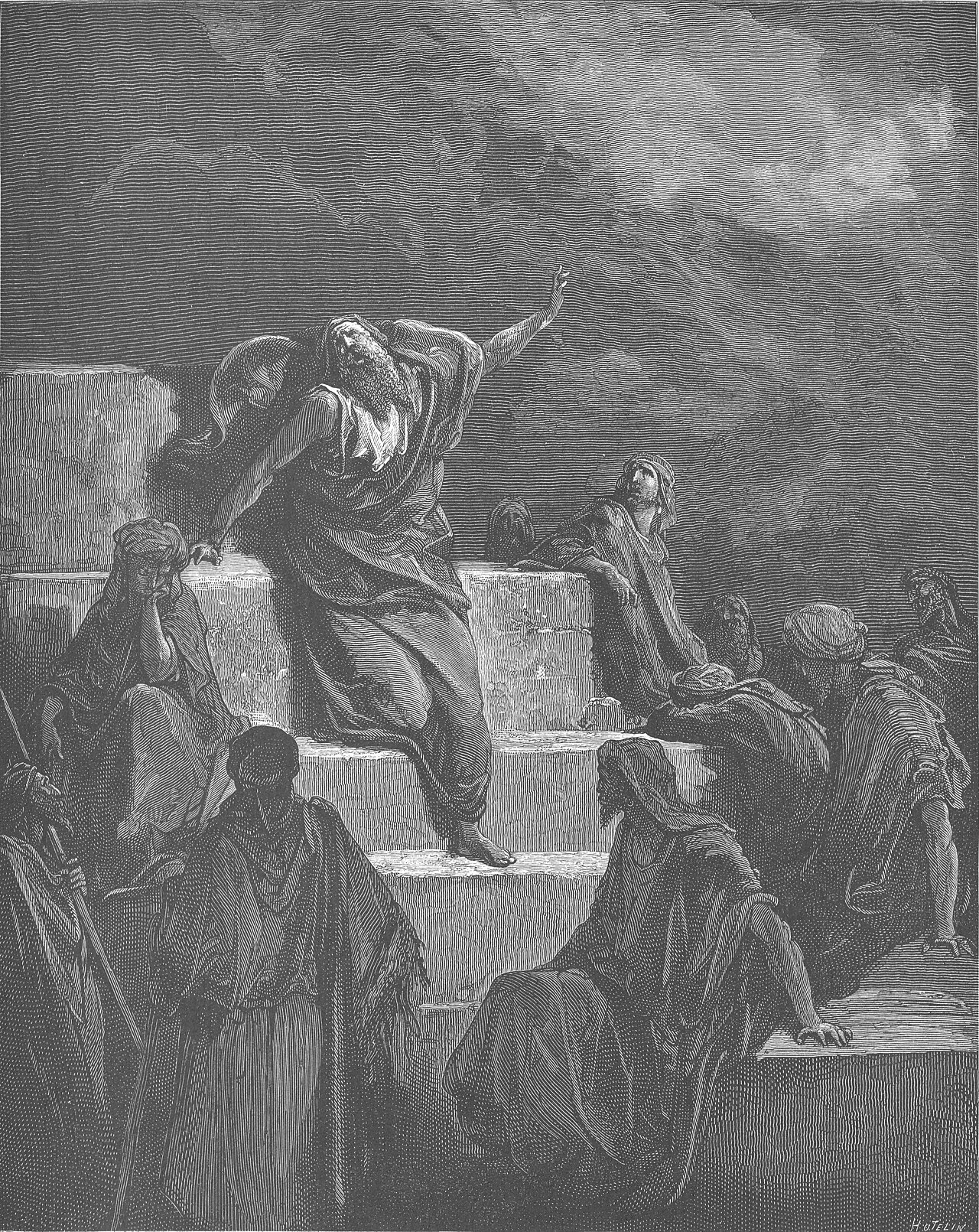
This page draws on Adam Clarke, Commentary on the Bible; Jerome, Commentary on Jeremiah; John Calvin, Commentary on Jeremiah and Lamentations and John Wesley, Explanatory Notes upon the Old Testament.