
Jeremiah 1:9
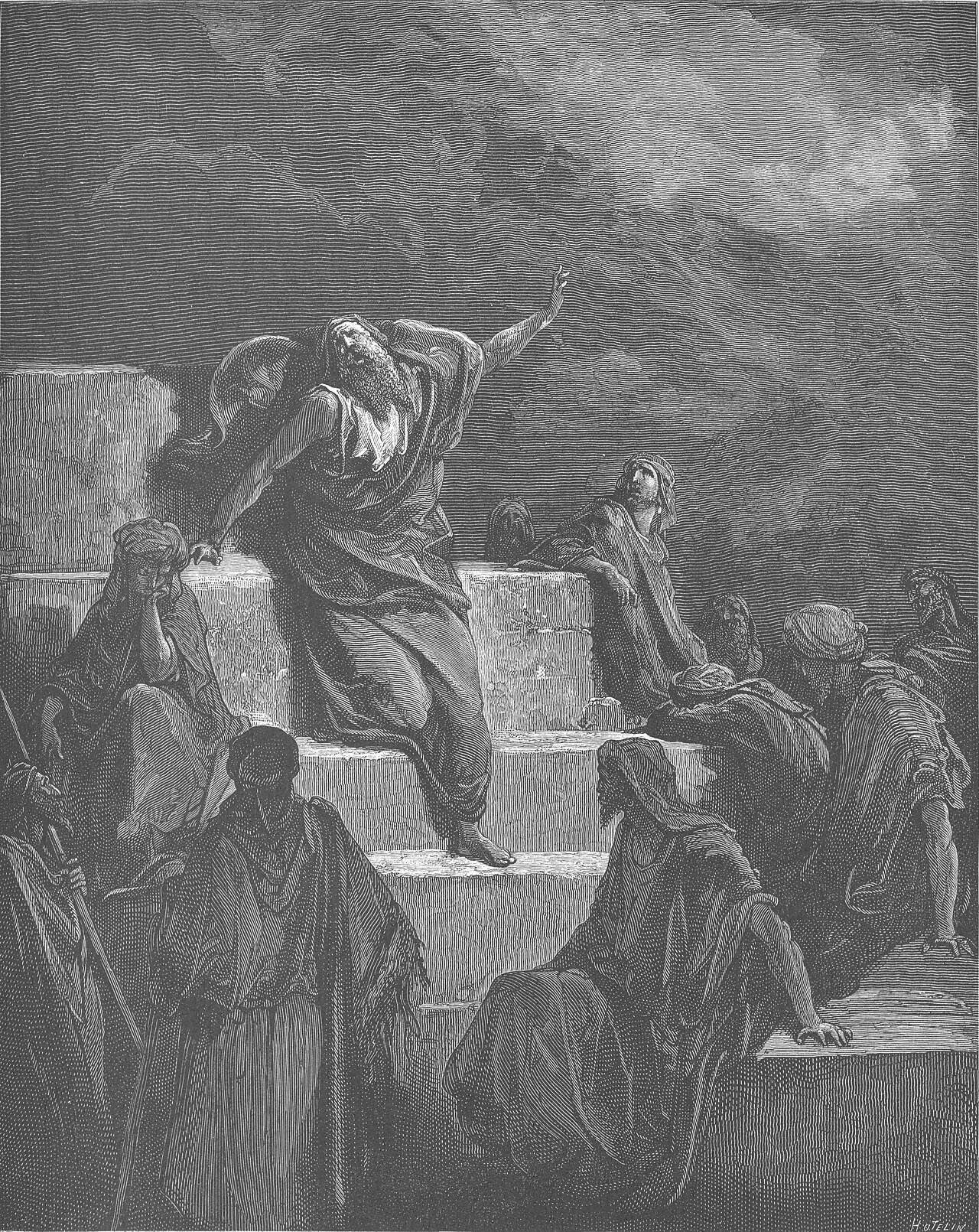
in Jeremiah 1Then the LORD reached out His hand, touched my mouth, and said to me: “Behold, I have put My words in your mouth.
BSB
The same verse in ASV and KJV ▾
ASV
Then Jehovah put forth his hand, and touched my mouth; and Jehovah said unto me, Behold, I have put my words in thy mouth:
KJV
Then the Lord put forth his hand, and touched my mouth. And the Lord said unto me, Behold, I have put my words in thy mouth.
⋯
This verse in Jeremiah 1
Commentary
14 notes on this verseA commentator
Albert Barnes1798–1870
Notes, Explanatory and Practical, on the Old and New Testaments (1832-1869)
Touched - “Made it touch.” This was the symbol of the bestowal of divine grace and help, by which that want of eloquence, which the prophet had pleaded as a disqualification, was removed.
This site's exposition
Then the LORD reached out His hand
on Jeremiah 1:9-10
The commission is sealed by touch, “I have put My words in your mouth”. The six verbs of verse 10 give the book its program. Four of judgment, “to uproot and tear down, to destroy and overthrow”, and two of restoration, “to build and plant”.
The record, by era
The Church Fathers5 voices
The Lord has said to his prophet, "See, I have this day set you over the nations and over the kingdoms to root out and to pull down and to destroy and … to build and to plant." In every age he bestows the same …
In sacred language God is called a fire. For instance, Scripture says, "Our God is a consuming fire." It also speaks as follows concerning the substance of the angels when it says, "He makes his angels spirits and his ministers a burning fire." In another place, "The angel of the Lord appeared in a flame of fire in the bush." We have, moreover, received a commandment to be "fervent in spirit," which undoubtedly means that the Word of God is hot and fiery. The prophet Jeremiah also hears from him who gave him his answer, "Behold, I have put my words into your mouth like a fire." Since God, then, is a fire, and the angels a flame of fire and all the saints are fervent in spirit, so, on the contrary, those who have fallen away from the love of God are undoubtedly said to have cooled in their affection for him and to have become cold. For the Lord also says that "because iniquity has grown, the love of many will grow cold."
We pray that words may be given us, as it is written in the book of Jeremiah that the Lord said to the prophet: "Behold, I have put my words in your mouth as fire. See, I have set you this day over the nations, and over the kingdoms, to root out and to pull down, and to destroy, and to throw down, and to build and to plant."
"For I am with you to deliver you, says the Lord. And the Lord stretched out his hand toward me, and touched my mouth, and the Lord said to me." Observe the differences between Jeremiah and Isaiah. Isaiah says, "Having unclean lips, in the midst of a people having unclean lips I dwell, and I saw with my eyes the King, the Lord of Sabaoth." And since he confessed that he had no unclean deeds, but only trifling words (for up to that point he was a sinner), the Lord did not "stretch out his hand," but "one of the Seraphim touched his lips with his hand, and said: Behold, I have taken away your iniquities." But since this man was sanctified "from the womb," neither are tongs sent to him, nor a coal "from the altar" (he had nothing worthy of the fire), but the very hand of the Lord touched him. Therefore he says: "The Lord stretched out his hand toward me and touched my mouth, and the Lord said to me: Behold, I have put my words in your mouth. Behold, I have set you this day over nations and kingdoms, to root up."
We are not ignorant that some refer these things, as being too great for Jeremiah, to our Savior and Lord; and one must know that most of them are in accord with Him and can be referred to the Savior, which I will set forth; but a few of the things said to Jeremiah press hard upon the argument, being unable, as they can with respect to the many, to be fitted to the Savior. What, then, are the things that fit the Savior? "To all to whom I shall send you, you shall go, and according to all that I command you, you shall speak. Do not be afraid before their face, for I am with you to deliver you, says the Lord." These would not yet seem to be referred to the Savior; but what follows—"and the Lord stretched out His hand to me and touched my mouth, and the Lord said to me: Behold, I have given my words into your mouth. Behold, I have set you this day over nations and kingdoms, to root out and to pull down"—presses hard upon the interpretation concerning Jeremiah. What nations did Jeremiah root out, what kingdoms did he overthrow? For it is written: "Behold, I have set you this day over nations and kingdoms, to root out and to pull down." And what authority did Jeremiah have "to destroy," which is said as if to Jeremiah in the phrase "and to destroy"? And how many so great did Jeremiah build up, that it should be said "and to build"? Jeremiah says: "I have not benefited, nor has anyone benefited me." How then has "to build and to plant" been given to him? How will "to plant" fit Jeremiah? These things, referred to the Savior, do not press hard upon the interpreter, since Jeremiah in these matters is a symbol of the Savior. […]
7 more voices on this verse
The Church Fathers3 voices
The Scripture narrative goes on to explain in a popular manner that "they did not understand that he spoke to them about the Father," although they ought certainly to have known that the Father's words were uttered in the Son because they read in Jeremiah, "And the Lord said to me, 'Behold, I have put my words in your mouth.' "
Surely these things were said for their sakes, that they might have no pretense of excuse. Since if this were not the case, what shall He have more than Isaiah? for he too saith the very same thing, "The Lord God giveth me the tongue of the learned, that I should know when I ought to speak a word." What more than Jeremiah? for he too when he was sent was inspired. What then Ezekiel? for he too, after eating the roll, so spake.
(Verse 9) And the Lord put forth his hand, and touched my mouth: and the Lord said unto me, Behold, I have put my words in thy mouth.
The Puritans and the Awakening3 voices
God not only put knowledge into his head, but words into his mouth; for there are words which the Holy Ghost teaches, 1 Cor. ii. It is fit God's message should be delivered in his own words, that it may be delivered accurately. And those that faithfully do so shall not want instructions as the case requires;
Then - God having excited the prophet by command and promise, now in a vision confirms him, either by the hand of an angel, or by himself in some visible shape.
Then the Lord put forth his hand,....
The Nineteenth Century1 voice
A commentator
Jamieson, Fausset & Brown1802–1910
Commentary Critical and Explanatory on the Whole Bible (1871)
Jeremiah's call to the prophetical office. unto me--other manuscripts read "to him"; but English Version probably represents the true Hebrew text; this inscription was doubtless made by Jeremiah himself.
How the passage was read
What the Jewish commentators add
On the verses either side of this one
I have appointed you I have appointed you over the heathens.
This section is reception history: how the passage was read and kept in the Jewish tradition. Where a reading parts from an essential of the Christian faith, the section says so at that point.
Texts and citation data: Sefaria; each excerpt follows its version’s licence. 4 further sources are cited on this chapter that carry no English text this site may quote or only restate the verse.
The words behind it
14 Hebrew wordsEvery Hebrew word of this verse in the order it stands, with what it means and the door to its own study. The last column counts the times a word stands in the whole Bible: the rarer the word, the more the places it appears belong together.
| Hebrew | Sound | Meaning | Word study | In the Bible |
|---|---|---|---|---|
| וַיִּשְׁלַ֤ח | vaiyishlach | and he stretched out | H7971 → | 845 times |
| יְהוָה֙ | yahweh | Yahweh | H3068 → | 6520 times |
| אֶת־ | ʾet- | <obj.> | H853 → | 10935 times |
| יָד֔וֹ | yado | hand his | H3027 → | 1618 times |
| וַיַּגַּ֖ע | vaiyaga' | and he touched | H5060 → | 150 times |
| עַל־ | ʾal- | <on> | H5921 → | 5755 times |
| פִּ֑י | pi | mouth my | H6310 → | 498 times |
| וַיֹּ֤אמֶר | vaiyomer | and he said | H559 → | 5305 times |
| יְהוָה֙ | yahweh | Yahweh | H3068 → | 6520 times |
| אֵלַ֔י | ʾelai | to me | H413 → | 5510 times |
| הִנֵּ֛ה | hineh | here! | H2009 → | 843 times |
| נָתַ֥תִּי | natati | I have put | H5414 → | 2011 times |
| דְבָרַ֖י | devarai | words my | H1697 → | 1440 times |
| בְּפִֽיךָ׃ | befikha | in mouth your | H6310 → | 498 times |
וַיִּשְׁלַ֤חand he stretched out
vaiyishlachH7971 →845 times
יְהוָה֙Yahweh
yahwehH3068 →6520 times
אֶת־<obj.>
ʾet-H853 →10935 times
יָד֔וֹhand his
yadoH3027 →1618 times
וַיַּגַּ֖עand he touched
vaiyaga'H5060 →150 times
עַל־<on>
ʾal-H5921 →5755 times
פִּ֑יmouth my
piH6310 →498 times
וַיֹּ֤אמֶרand he said
vaiyomerH559 →5305 times
יְהוָה֙Yahweh
yahwehH3068 →6520 times
אֵלַ֔יto me
ʾelaiH413 →5510 times
הִנֵּ֛הhere!
hinehH2009 →843 times
נָתַ֥תִּיI have put
natatiH5414 →2011 times
דְבָרַ֖יwords my
devaraiH1697 →1440 times
בְּפִֽיךָ׃in mouth your
befikhaH6310 →498 times
A shaded row is a word that stands 400 times or fewer in the Bible.
The walk
8 stopsEach card is a verse this one points to, and under it the verses that one points to in turn. Where several paths arrive at the same place, that place is listed first: the text keeps returning to it.
Through
Isaiah 50:4The Lord GOD has given Me the tongue of discipleship, to sustain the weary with a word. He awakens Me morning by morning; He awakens My ear to listen as a disciple.
it leads to
- Luke 21:15
For I will give you speech and wisdom that none of your adversaries will be able to resist or contradict.
Reached by 2 separate paths from here.
- Exodus 4:11–12
And the LORD said to him, “Who gave man his mouth? Or who makes the mute or the deaf, the sighted or the blind? Is it not I, the LORD?
Reached by 2 separate paths from here.
- John 7:15–17
The Jews were amazed and asked, “How did this man attain such learning without having studied?”
- Proverbs 25:11
A word fitly spoken is like apples of gold in settings of silver.
- Proverbs 15:23
A man takes joy in a fitting reply—and how good is a timely word!
- Luke 21:15
Through
Luke 21:15For I will give you speech and wisdom that none of your adversaries will be able to resist or contradict.
it leads to
- Acts 6:10
but they could not stand up to his wisdom or the Spirit by whom he spoke.
Reached by 2 separate paths from here.
- Ephesians 6:19
Pray also for me, that whenever I open my mouth, words may be given me so that I will boldly make known the mystery of the gospel,
- Luke 12:12
For at that time the Holy Spirit will teach you what you should say.”
- Acts 6:10
Where this verse is studied
On this page
Studies8
About Jeremiah
This page draws on 14 works. Open the list of works
This page draws on Albert Barnes, Notes, Explanatory and Practical, on the Old and New Testaments (1832-1869); Carl Friedrich Keil, The Prophecies of Jeremiah; Jamieson, Fausset & Brown, Commentary Critical and Explanatory on the Whole Bible; Jerome, Commentary on Jeremiah; John Calvin, Commentary on Jeremiah and Lamentations; John Chrysostom, HOMILIES ON THE GOSPEL OF JOHN 69; John Gill, Exposition of the Old Testament (1748-1763); John Wesley, Explanatory Notes upon the Old Testament; Matthew Henry, Commentary on the Whole Bible; Origen of Alexandria, ON FIRST PRINCIPLES 2:8.3; Origen of Alexandria, AGAINST CELSUS 4:1; Origen of Alexandria, HOMILIES ON JEREMIAH 1; Tertullian, AGAINST PRAXEAS 22 and Theophilus of Alexandria, LETTER 90, TO EPIPHANIUS.