
Isaiah 13:19
in Isaiah 13And Babylon, the jewel of the kingdoms, the glory of the pride of the Chaldeans, will be overthrown by God like Sodom and Gomorrah.
BSB
The same verse in ASV and KJV ▾
ASV
And Babylon, the glory of kingdoms, the beauty of the Chaldeans’ pride, shall be as when God overthrew Sodom and Gomorrah.
KJV
And Babylon, the glory of kingdoms, the beauty of the Chaldees’ excellency, shall be as when God overthrew Sodom and Gomorrah.
⋯
This verse in Isaiah 13
Commentary
10 notes on this verse(Verse 18, 19.) All the kings of the nations slept in glory, each one in his own house. But you have been cast out of your tomb like a fetid liquid: defiled, wrapped up with the slain and those pierced by the sword, who descend to the depths of the pit. LXX: All the kings of the nations slept in honor, each one in his own house. But you will be cast down on the mountains like an untimely birth, abominable and wrapped up with the slain who descend to the foundations of the earth.
This site's exposition
Babylon, the jewel of the kingdoms
on Isaiah 13:19-22
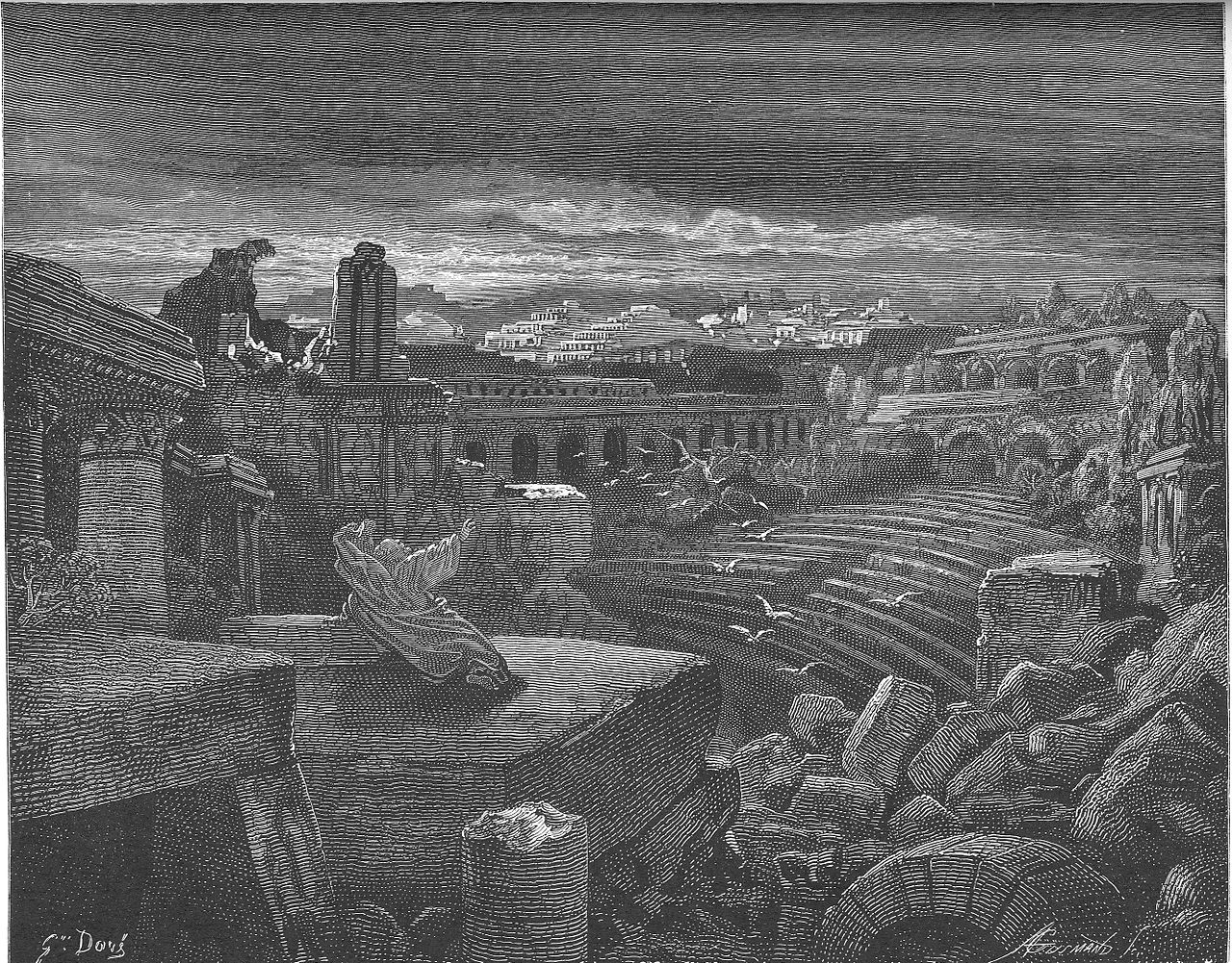
Babylon, "the jewel of the kingdoms," is measured against Sodom and Gomorrah, the standard of total ruin fixed in Israel's memory from Genesis. Desert creatures in the palaces are the Hebrew picture of a place abandoned, which Revelation later borrows for the fall of the final Babylon.
The record, by era
The Church Fathers1 voice
(Verse 19.) And Babylon will be glorious in kingdoms, renowned in the pride of the Chaldeans: just as the Lord overthrew Sodom and Gomorrah: it will not be inhabited until the end, and it will not be established until generation after generation. We have heard of the Medes, we have heard of Babylon, we have heard of the renowned in the pride of the Chaldeans: we do not want to understand what was, and we seek to hear what was not.
The Medieval Church1 voice
And that Babylon. Here he describes Babylon's subsequent desolation. And first, the destruction of the city: turned, that is, overturned, as Sodom, about which Revelation 18:10 says: alas! Alas! That great city, Babylon, that mighty city: for in one hour is your judgment come.
The Puritans and the Awakening3 voices
And Babylon, the glory of kingdoms,.... The first and most ancient kingdom, Gen 10:10 and now, at the time of its fall, the largest and most extensive; wherefore of the image Nebuchadnezzar saw in his dream, which was a representation of several kingdoms, this was the head, the head of gold, Dan 2:31 so Babylon is called the "lady of kingdoms", Isa 47:5 the word here used for "glory" is the same with that which is rendered a "roe", Isa 13:
3 I have commanded my sanctified ones, I have also called my mighty ones for mine anger, even them that rejoice in my highness. 4 The noise of a multitude in the mountains, like as of a great people; a tumultuous noise of the kingdoms of nations gathered together: the L ORD of hosts mustereth the host of the battle.
quarantine:scripture (2026-07-29) — scripture-overlap:97%@v3-4
Glory - Which once was the most noble of all the kingdoms. Beauty - The beautiful seat of the Chaldean monarchy shall be totally and irrecoverably destroyed.
3 more voices on this verse
The Nineteenth Century3 voices
A commentator
Albert Barnes1798–1870
Notes, Explanatory and Practical, on the Old and New Testaments (1832-1869)
And Babylon, the glory of kingdoms - That is, the capital or chief ornament of many nations. Appellations of this kind, applied to Babylon, abound in the Scriptures. In Dan 4:30, it is called ‘great Babylon;’ in Isa 14:4, it is called ‘the golden city;’ in Isa 47:5, ‘the lady of kingdoms;’ in Jer 51:13, it is, spoken of as ‘abundant in treasures;’ and, in Jer 51:41, as ‘the praise of the whole earth.’ All these expressions are designed to indicate its immense wealth and magnificence.
A commentator
Jamieson, Fausset & Brown1802–1910
Commentary Critical and Explanatory on the Whole Bible (1871)
proposed
glory of kingdoms-- (Isa 14:4; Jer 51:41). beauty of . . . excellency--Hebrew, "the glory of the pride" of the Chaldees; it was their glory and boast. as . . .
quarantine:debris (2026-07-29) — starts-lowercase
And Babylon - The great city of Babylon was at this time rising to its height of glory, while the Prophet Isaiah was repeatedly denouncing its utter destruction. From the first of Hezekiah to the first of Nebuchadnezzar, under whom it was brought to the highest degree of strength and splendor, are about one hundred and twenty years. I will here very briefly mention some particulars of the greatness of the place, and note the several steps by which this remarkable prophecy was at length accomplished in the total ruin of it. It was, according to the lowest account given of it by ancient historians, a regular square, forty-five miles in compass, inclosed by a wall two hundred feet high and fifty broad; in which there were a hundred gates of brass. Its principal ornaments were the temple of Belus, in the middle of which was a tower of eight stories of building, upon a base of a quarter of a mile square, a most magnificent palace, and the famous hanging gardens, which were an artificial mountain, raised upon arches, and planted with trees of the largest as well as the most beautiful sorts. Cyrus took the city by diverting the waters of the Euphrates which ran through the midst of it, and entering the place at night by the dry channel. The river being never restored afterward to its proper course, overflowed the whole country, and made it little better than a great morass; this and the great slaughter of the inhabitants, with other bad consequences of the taking of the city, was the first step to the ruin of the place. The Persian monarchs ever regarded it with a jealous eye; they kept it under, and took care to prevent its recovering its former greatness. Darius Hystaspes not long afterward most severely punished it for a revolt, greatly depopulated the place, lowered the walls, and demolished the gates. […]
The words behind it
13 Hebrew wordsEvery Hebrew word of this verse in the order it stands, with what it means and the door to its own study. The last column counts the times a word stands in the whole Bible: the rarer the word, the more the places it appears belong together.
| Hebrew | Sound | Meaning | Word study | In the Bible |
|---|---|---|---|---|
| וְהָיְתָ֤ה | vehayetah | and it will be | H1961 → | 3559 times |
| בָבֶל֙ | vavel | Babylon | H894 → | 262 times |
| צְבִ֣י | tzevi | [the] beauty of | H6643 → | 33 times |
| מַמְלָכ֔וֹת | mamlakhot | kingdoms | H4467 → | 117 times |
| תִּפְאֶ֖רֶת | tiferet | [the] splendor of | H8597 → | 51 times |
| גְּא֣וֹן | geon | [the] pride of | H1347 → | 49 times |
| כַּשְׂדִּ֑ים | kasdim | [the] Chaldeans | H3778 → | 80 times |
| כְּמַהְפֵּכַ֣ת | kemahpekhat | like [the] overthrow of | H4114 → | |
| אֱלֹהִ֔ים | ʾelohim | God | H430 → | 2601 times |
| אֶת־ | ʾet- | <obj.> | H853 → | 10935 times |
| סְדֹ֖ם | sedom | Sodom | H5467 → | 39 times |
| וְאֶת־ | veet | and <obj.> | H853 → | 10935 times |
| עֲמֹרָֽה׃ | ʾamorah | Gomorrah | H6017 → | 19 times |
וְהָיְתָ֤הand it will be
vehayetahH1961 →3559 times
בָבֶל֙Babylon
vavelH894 →262 times
צְבִ֣י[the] beauty of
tzeviH6643 →33 times
מַמְלָכ֔וֹתkingdoms
mamlakhotH4467 →117 times
תִּפְאֶ֖רֶת[the] splendor of
tiferetH8597 →51 times
גְּא֣וֹן[the] pride of
geonH1347 →49 times
כַּשְׂדִּ֑ים[the] Chaldeans
kasdimH3778 →80 times
כְּמַהְפֵּכַ֣תlike [the] overthrow of
kemahpekhatH4114 →
אֱלֹהִ֔יםGod
ʾelohimH430 →2601 times
אֶת־<obj.>
ʾet-H853 →10935 times
סְדֹ֖םSodom
sedomH5467 →39 times
וְאֶת־and <obj.>
veetH853 →10935 times
עֲמֹרָֽה׃Gomorrah
ʾamorahH6017 →19 times
A shaded row is a word that stands 400 times or fewer in the Bible.
The walk
8 stopsEach card is a verse this one points to, and under it the verses that one points to in turn. Where several paths arrive at the same place, that place is listed first: the text keeps returning to it.
Through
Amos 4:11“Some of you I overthrew as I overthrew Sodom and Gomorrah, and you were like a firebrand snatched from a blaze, yet you did not return to Me,” declares the LORD.
it leads to
- Genesis 19:24–25
Then the LORD rained down sulfur and fire on Sodom and Gomorrah—from the LORD out of the heavens.
Reached by 3 separate paths from here.
- Jude 1:7
In like manner, Sodom and Gomorrah and the cities around them, who indulged in sexual immorality and pursued strange flesh, are on display as an example of those who sustain the punishment of eternal…
Reached by 2 separate paths from here.
- Zechariah 3:2
And the LORD said to Satan: “The LORD rebukes you, Satan! Indeed, the LORD, who has chosen Jerusalem, rebukes you! Is not this man a firebrand snatched from the fire?”
- Jeremiah 23:14
And among the prophets of Jerusalem I have seen a horrible thing: They commit adultery and walk in lies. They strengthen the hands of evildoers, so that no one turns his back on wickedness.…
- Genesis 19:24–25
Through
Daniel 4:30the king exclaimed, “Is this not Babylon the Great, which I myself have built by the might of my power as a royal residence and for the glory of my majesty?”
it leads to
- Proverbs 16:18
Pride goes before destruction, and a haughty spirit before a fall.
- Proverbs 16:18
Through
Deuteronomy 29:23All its soil will be a burning waste of sulfur and salt, unsown and unproductive, with no plant growing on it, just like the destruction of Sodom and Gomorrah, Admah and Zeboiim, which the…
it leads to
- Jeremiah 17:6
He will be like a shrub in the desert; he will not see when prosperity comes. He will dwell in the parched places of the desert, in a salt land where no one lives.
- Zephaniah 2:9
Therefore, as surely as I live,” declares the LORD of Hosts, the God of Israel, “surely Moab will be like Sodom and the Ammonites like Gomorrah—a place of weeds and salt pits, a perpetual…
- Jeremiah 17:6
Through
Jeremiah 51:41How Sheshach has been captured! The praise of all the earth has been seized. What a horror Babylon has become among the nations!
it leads to
- Jeremiah 25:26
all the kings of the north, both near and far, one after another—all the kingdoms on the face of the earth. And after all of them, the king of Sheshach will drink it too.
- Jeremiah 25:26
Where this verse is studied
On this page
Studies1
About Isaiah
Who and where
3 names in this verse with a page on the site.
- PlaceBabil Governorate (archaeological site)BabylonAncient Mesopotamian city and imperial capital; site of the Israelite exile and a recurring biblical symbol of worldly power.
- PlaceCities of the plainGomorrahSodom's sister city, destroyed with it by fire as a byword of judgment.
- PlaceCities of the plainSodomThe city of the plain that Abraham pleaded for and that fire from heaven destroyed while Lot fled, named by the prophets, by Peter…
This page draws on 9 works. Open the list of works
This page draws on Adam Clarke, Commentary on the Bible; Albert Barnes, Notes, Explanatory and Practical, on the Old and New Testaments (1832-1869); Jamieson, Fausset & Brown, Commentary Critical and Explanatory on the Whole Bible; Jerome, Commentary on Isaiah; John Gill, Exposition of the Old Testament; John Gill, Exposition of the Old Testament (1748-1763); John Wesley, Explanatory Notes upon the Old Testament; Matthew Henry, Commentary on the Whole Bible and Thomas Aquinas, Commentary on Isaiah.