
Genesis 23:20
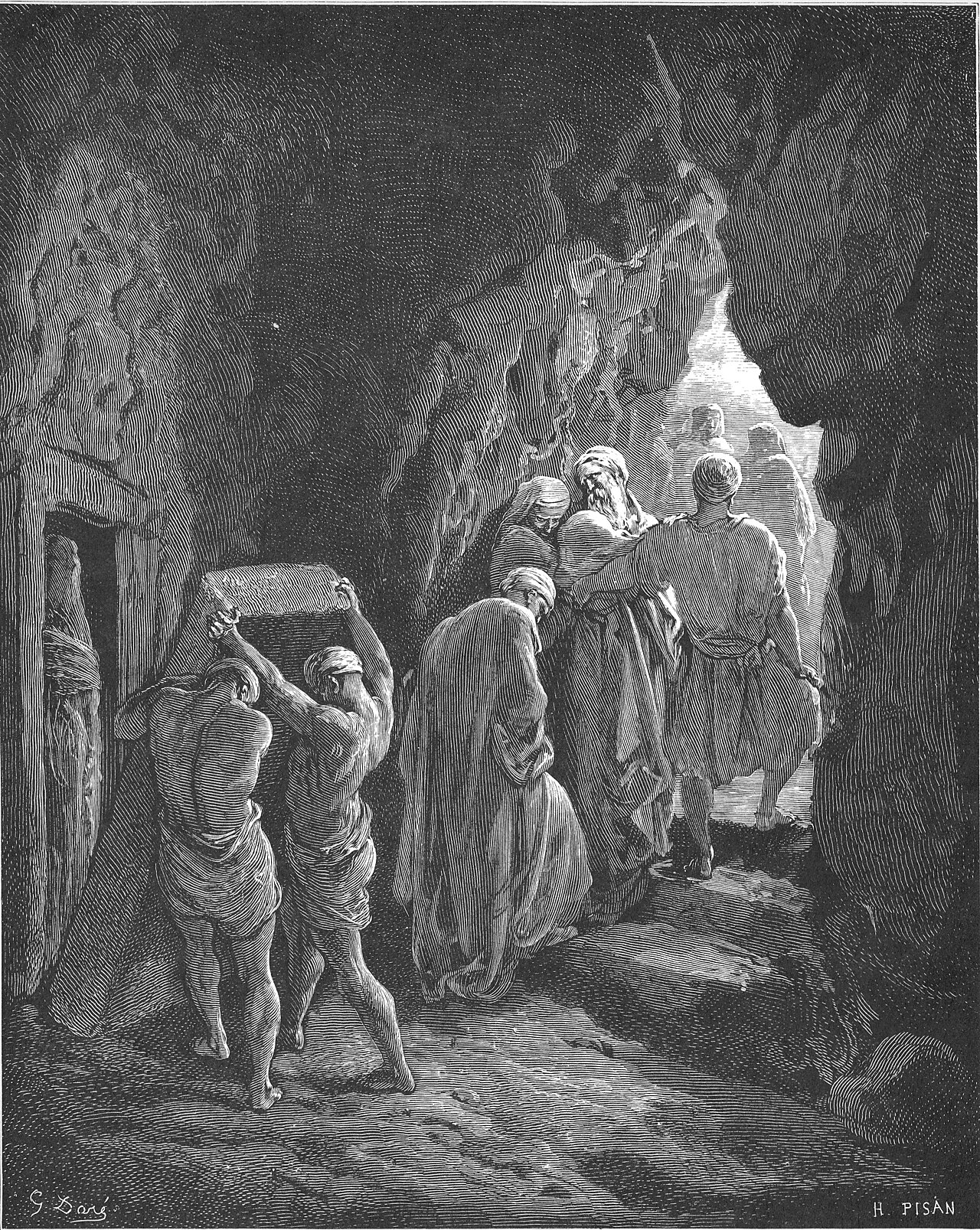
in Genesis 23So the field and its cave were deeded by the Hittites to Abraham as a burial site.
BSB
The same verse in ASV and KJV ▾
ASV
And the field, and the cave that is therein, were made sure unto Abraham for a possession of a burying-place by the children of Heth.
KJV
And the field, and the cave that is therein, were made sure unto Abraham for a possession of a buryingplace by the sons of Heth.
⋯
This verse in Genesis 23
Commentary
7 notes on this verseAnd the field, etc. were made sure - ויקם vaiyakom, were established, caused to stand; the whole transaction having been regulated according to all the forms of law then in use. 1. In this transaction between Abraham and the sons of Heth concerning the cave and field of Machpelah, we have the earliest account on record of the purchase of land. The simplicity, openness, and candour on both sides cannot be too much admired.
This site's exposition
the field and its cave were deeded by the Hittites
The chapter closes on a legal formula, the field and its cave deeded by the Hittites as a burial site. Jacob buys the second and last parcel any patriarch owns in Canaan, a field at Shechem for a hundred pieces of silver. That field becomes Joseph's grave at Joshua 24:32.
The record, by era
The Church Fathers2 voices
With this in mind, dearly beloved, let us who live in the age of grace imitate the man who lived before the law, not burn with desire for more and heap up for ourselves to a greater and more intense degree the fire that cannot be extinguished and the flame that is intolerable. We will hear, in fact, if we persist in such awful deeds of injustice and avarice, the words spoken to that notorious rich man, "Fool, this night they are looking for your soul from you; but as for what you have put aside, whom will it belong to?" I mean, what is the reason, dearly beloved, that you are anxious to amass so many things that you will shortly leave here, due as you are to be snatched away from the scene, not only powerless to gain any advantage from them but even saddled with the burden of sins on your own shoulders, at this stage too late for worthwhile repentance? While the goods you have amassed with avarice oftentimes finish even in the hands of enemies, you yourself will be required to give an account of them. So what folly would it be to labor for others' benefit and pay the price for them yourself?
Even if in the past, however, we have to this degree managed our affairs with indifference, now at least let us plan for what is needful and not simply be anxious to bedeck ourselves with the trappings of wealth, but rather pay much attention to doing good. After all, our being will not come to an end with this present life, nor shall we be always in exile; instead, before long we shall reach our true homeland. So let us do everything in the hope of not being found wanting there. I mean, what good is it to leave behind great wealth in foreign parts while wanting for bare necessities in our true country? Consequently let us strive, dearly beloved, while there is still time, to transfer there what we own in this foreign country. Although in fact the distance may be great, nevertheless the transfer is quite easy. You see, there are those ready to make the transfer, to travel there safely and deposit in a secure treasury whatever we are able to send ahead by means of them. I mean, the hands of the poor lay up in the treasuries of heaven what is given them by us. Since then the ease and security are so great, why do we delay and not rather with all haste act on this so that we will have those things at our disposal in the place where we most have need of them?
The Puritans and the Awakening3 voices
A burying place - 'Tis worth noting, 1. That a burying-place was the first spot of ground Abraham was possessed of in Canaan. That it was the only piece of land he was ever possessed of, tho' it was all his own in reversion.
A burying place - 'Tis worth noting, 1. That a burying-place was the first spot of ground Abraham was possessed of in Canaan. That it was the only piece of land he was ever possessed of, tho' it was all his own in reversion.
And the field, and the cave that is therein, was made sure to Abraham for a possession of a buryingplace, by the sons of Heth.
The words behind it
11 Hebrew wordsEvery Hebrew word of this verse in the order it stands, with what it means and the door to its own study. The last column counts the times a word stands in the whole Bible: the rarer the word, the more the places it appears belong together.
| Hebrew | Sound | Meaning | Word study | In the Bible |
|---|---|---|---|---|
| וַיָּ֨קָם | vaiyakom | and it was confirmed | H6965 → | 628 times |
| הַשָּׂדֶ֜ה | hasadeh | the field | H7704 → | 334 times |
| וְהַמְּעָרָ֧ה | vehamearah | and the cave | H4631 → | 37 times |
| אֲשֶׁר־ | ʾasher- | which | H834 → | 5497 times |
| בּ֛וֹ | bo | [was] in <the> it | ||
| לְאַבְרָהָ֖ם | leavraham | to Abraham | H85 → | 175 times |
| לַאֲחֻזַּת־ | laachuzat- | to a possession of | H272 → | 66 times |
| קָ֑בֶר | kaver | a burial site | H6913 → | 67 times |
| מֵאֵ֖ת | meet | from with | H854 → | 929 times |
| בְּנֵי־ | benei- | [the] people of | H1121 → | 4930 times |
| חֵֽת׃ ס | chet | Heth | H2845 → | 14 times |
וַיָּ֨קָםand it was confirmed
vaiyakomH6965 →628 times
הַשָּׂדֶ֜הthe field
hasadehH7704 →334 times
וְהַמְּעָרָ֧הand the cave
vehamearahH4631 →37 times
אֲשֶׁר־which
ʾasher-H834 →5497 times
בּ֛וֹ[was] in <the> it
bo
לְאַבְרָהָ֖םto Abraham
leavrahamH85 →175 times
לַאֲחֻזַּת־to a possession of
laachuzat-H272 →66 times
קָ֑בֶרa burial site
kaverH6913 →67 times
מֵאֵ֖תfrom with
meetH854 →929 times
בְּנֵי־[the] people of
benei-H1121 →4930 times
חֵֽת׃ סHeth
chetH2845 →14 times
A shaded row is a word that stands 400 times or fewer in the Bible.
The walk
8 stopsEach card is a verse this one points to, and under it the verses that one points to in turn. Where several paths arrive at the same place, that place is listed first: the text keeps returning to it.
Through
2 Samuel 24:24“No,” replied the king, “I insist on paying a price, for I will not offer to the LORD my God burnt offerings that cost me nothing.” So David bought the threshing floor and the…
it leads to
- 1 Chronicles 21:24–25
“No,” replied King David, “I insist on paying the full price, for I will not take for the LORD what belongs to you, nor will I offer burnt offerings that cost me nothing.”
- Malachi 1:12–14
“But you profane it when you say, ‘The table of the Lord is defiled, and as for its fruit, its food is contemptible.’
- Genesis 23:13
and said to Ephron in their presence, “If you will please listen to me, I will pay you the price of the field. Accept it from me, so that I may bury my dead…
- Romans 12:17
Do not repay anyone evil for evil. Carefully consider what is right in the eyes of everybody.
- 1 Chronicles 21:24–25
Through
Genesis 25:9His sons Isaac and Ishmael buried him in the cave of Machpelah near Mamre, in the field of Ephron son of Zohar the Hittite.
it leads to
- Genesis 50:13
They carried him to the land of Canaan and buried him in the cave at Machpelah in the field near Mamre, which Abraham had purchased from Ephron the Hittite as a burial site.
- Genesis 35:29
Then he breathed his last and died and was gathered to his people, old and full of years. And his sons Esau and Jacob buried him.
- Genesis 49:29–30
Then Jacob instructed them, “I am about to be gathered to my people. Bury me with my fathers in the cave in the field of Ephron the Hittite.
- Genesis 21:9–10
But Sarah saw that the son whom Hagar the Egyptian had borne to Abraham was mocking her son,
- Genesis 50:13
Where this verse is studied
On this page
About Genesis
Who and where
1 name in this verse with a page on the site.
This page draws on Adam Clarke, Commentary on the Bible; John Chrysostom, HOMILIES ON GENESIS 48.5; John Chrysostom, HOMILIES ON GENESIS 48.6; John Gill, Exposition of the Old Testament (1748-1763); John Wesley, Explanatory Notes upon the Old Testament and Matthew Henry, Commentary on the Whole Bible.