
Genesis 10:25
in Genesis 10Two sons were born to Eber: One was named Peleg, because in his days the earth was divided, and his brother was named Joktan.
BSB
The same verse in ASV and KJV ▾
ASV
And unto Eber were born two sons: the name of the one was Peleg; for in his days was the earth divided; and his brother’s name was Joktan.
KJV
And unto Eber were born two sons: the name of one was Peleg; for in his days was the earth divided; and his brother’s name was Joktan.
⋯
This verse in Genesis 10
Commentary
7 notes on this verseShem, the third son of Noah, had five sons, who inhabited the land that began at Euphrates, and reached to the Indian Ocean. For Elam left behind him the Elamites, the ancestors of the Persians.
This site's exposition
in his days the earth was divided
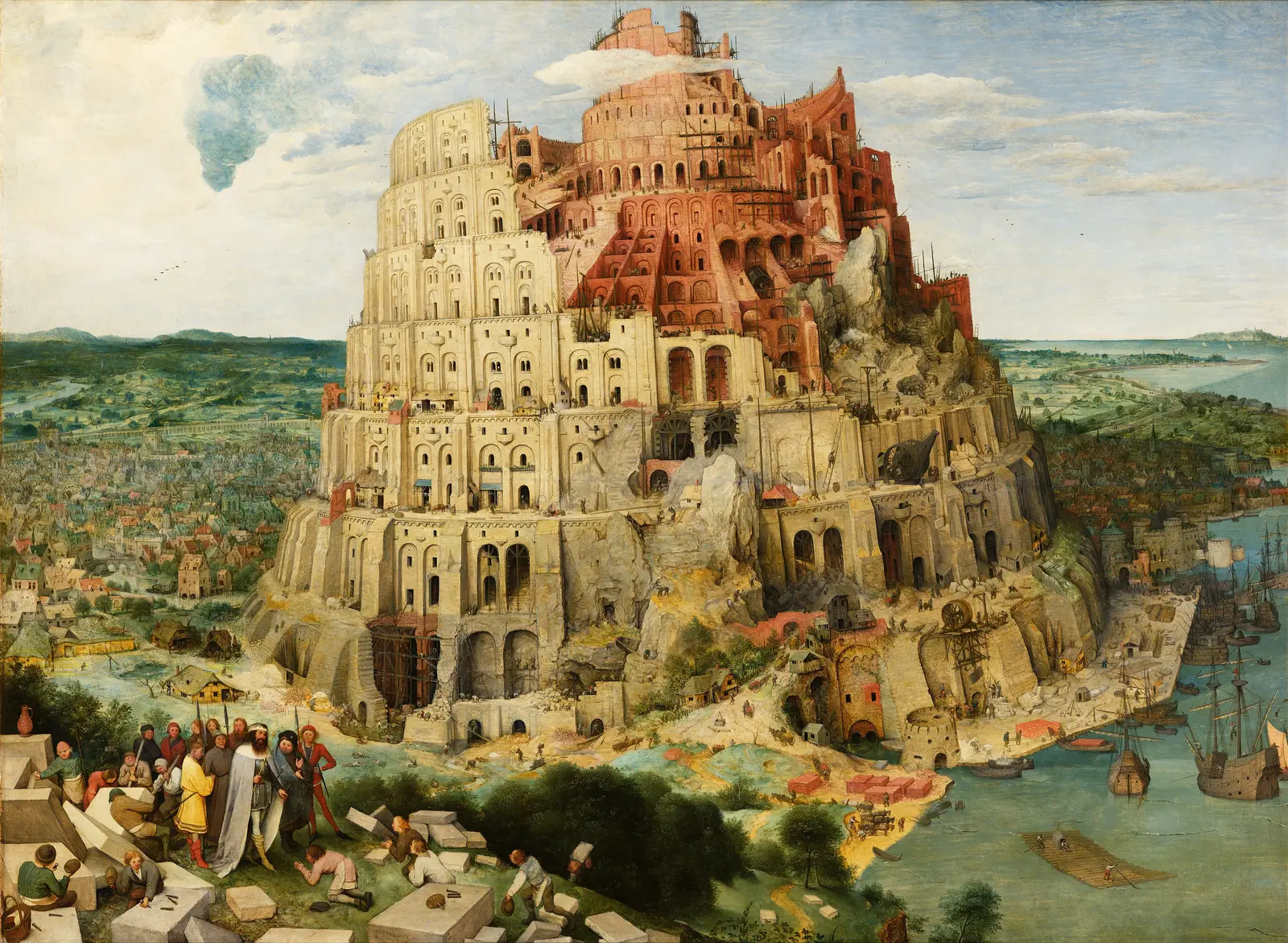
Peleg's name records a division, and the verse says it fell in his days. Jerome takes that as Babel, where the languages were divided, and Adam Clarke reports a second reading, a physical dividing of the land. Two sons are born, and the book follows Peleg and lets Joktan go.
The record, by era
The Church Fathers1 voice
(Verse 24.) Arphaxad begot Shelah, and Shelah begot Eber. From Eber were born two sons: one was named Peleg, because in his days the earth was divided, and his brother's name was Joktan. Eber, from whom the Hebrews are descended, gave his son Peleg the name which means 'division', because in his days the languages were divided in Babylon.
The Medieval Church1 voice
And there were born to Heber two sons: the name of one was Peleg, because in his days the earth was divided, and the name of his brother was Joktan. He calls this the division of the earth, which occurred in the confusion of languages.
The Puritans and the Awakening1 voice
And unto Eber were born two sons: the name of one was Peleg,....
The Nineteenth Century2 voices
Peleg - From פלג palag, to divide, because in his days, which is supposed to be about one hundred years after the flood, the earth was divided among the sons of Noah. Though some are of opinion that a physical division, and not a political one, is what is intended here, viz., a separation of continents and islands from the main land; the earthy parts having been united into one great continent previously to the days of Peleg. This opinion appears to me the most likely, for what is said, Gen 10:5, is spoken by way of anticipation.
A commentator
Jamieson, Fausset & Brown1802–1910
Commentary Critical and Explanatory on the Whole Bible (1871)
proposed
But according to divine instruction, made probably through Eber, who seems to have been distinguished for piety or a prophetic character, the earth was divided and his son's name, "Peleg," was given in memory of that event (see De 32:8;
quarantine:debris (2026-07-29) — unbalanced-parens
The words behind it
14 Hebrew wordsEvery Hebrew word of this verse in the order it stands, with what it means and the door to its own study. The last column counts the times a word stands in the whole Bible: the rarer the word, the more the places it appears belong together.
| Hebrew | Sound | Meaning | Word study | In the Bible |
|---|---|---|---|---|
| וּלְעֵ֥בֶר | ulever | and to Eber | H5677 → | 15 times |
| יֻלַּ֖ד | yulad | <it> was born | H3205 → | 496 times |
| שְׁנֵ֣י | shenei | two | H8147 → | 768 times |
| בָנִ֑ים | vanim | sons | H1121 → | 4930 times |
| שֵׁ֣ם | shem | [the] name of | H8034 → | 864 times |
| הָֽאֶחָ֞ד | haechad | the one | H259 → | 971 times |
| פֶּ֗לֶג | peleg | [was] Peleg | H6389 → | 7 times |
| כִּ֤י | ki | for | H3588 → | 4482 times |
| בְיָמָיו֙ | veyamav | in days his | H3117 → | 2304 times |
| נִפְלְגָ֣ה | niflegah | <it> was divided | H6385 → | |
| הָאָ֔רֶץ | haaretz | the earth | H776 → | 2504 times |
| וְשֵׁ֥ם | veshem | and [the] name of | H8034 → | 864 times |
| אָחִ֖יו | ʾachiv | brother his | H251 → | 630 times |
| יָקְטָֽן׃ | yaketan | [was] Joktan | H3355 → | 6 times |
וּלְעֵ֥בֶרand to Eber
uleverH5677 →15 times
יֻלַּ֖ד<it> was born
yuladH3205 →496 times
שְׁנֵ֣יtwo
sheneiH8147 →768 times
בָנִ֑יםsons
vanimH1121 →4930 times
שֵׁ֣ם[the] name of
shemH8034 →864 times
הָֽאֶחָ֞דthe one
haechadH259 →971 times
פֶּ֗לֶג[was] Peleg
pelegH6389 →7 times
כִּ֤יfor
kiH3588 →4482 times
בְיָמָיו֙in days his
veyamavH3117 →2304 times
נִפְלְגָ֣ה<it> was divided
niflegahH6385 →
הָאָ֔רֶץthe earth
haaretzH776 →2504 times
וְשֵׁ֥םand [the] name of
veshemH8034 →864 times
אָחִ֖יוbrother his
ʾachivH251 →630 times
יָקְטָֽן׃[was] Joktan
yaketanH3355 →6 times
A shaded row is a word that stands 400 times or fewer in the Bible.
The walk
8 stopsEach card is a verse this one points to, and under it the verses that one points to in turn. Where several paths arrive at the same place, that place is listed first: the text keeps returning to it.
Through
Acts 17:26From one man He made every nation of men, that they should inhabit the whole earth; and He determined their appointed times and the boundaries of their lands.
it leads to
- Deuteronomy 32:7–8
Remember the days of old; consider the years long past. Ask your father, and he will tell you, your elders, and they will inform you.
- Genesis 3:20
And Adam named his wife Eve, because she would be the mother of all the living.
- Malachi 2:10
Do we not all have one Father? Did not one God create us? Why then do we break faith with one another so as to profane the covenant of our fathers?
- Romans 5:12–19
Therefore, just as sin entered the world through one man, and death through sin, so also death was passed on to all men, because all sinned.
- 1 Corinthians 15:22
For as in Adam all die, so in Christ all will be made alive.
- Deuteronomy 32:7–8
Through
Deuteronomy 32:8When the Most High gave the nations their inheritance, when He divided the sons of man, He set the boundaries of the peoples according to the number of the sons of God.
it leads to
- Acts 17:26
From one man He made every nation of men, that they should inhabit the whole earth; and He determined their appointed times and the boundaries of their lands.
Reached by 2 separate paths from here.
- Genesis 11:8–9
So the LORD scattered them from there over the face of all the earth, and they stopped building the city.
- Acts 17:26
Through
Genesis 10:32All these are the clans of Noah’s sons, according to their generations and nations. From these the nations of the earth spread out after the flood.
it leads to
- Genesis 9:19
These three were the sons of Noah, and from them the whole earth was populated.
- Genesis 9:19
Where this verse is studied
On this page
About Genesis
This page draws on Adam Clarke, Commentary on the Bible; Bede, Commentary on Genesis (Hexaemeron); Jamieson, Fausset & Brown, Commentary Critical and Explanatory on the Whole Bible; Jerome, Hebrew Questions on Genesis; John Gill, Exposition of the Old Testament (1748-1763) and Josephus, Antiquities of the Jews - Book I, Chapter 6, Sections 4.