
Genesis 10:24
in Genesis 10Arphaxad was the father of Shelah, and Shelah was the father of Eber.
BSB
The same verse in ASV and KJV ▾
ASV
And Arpachshad begat Shelah; and Shelah begat Eber.
KJV
And Arphaxad begat Salah; and Salah begat Eber.
⋯
This verse in Genesis 10
Commentary
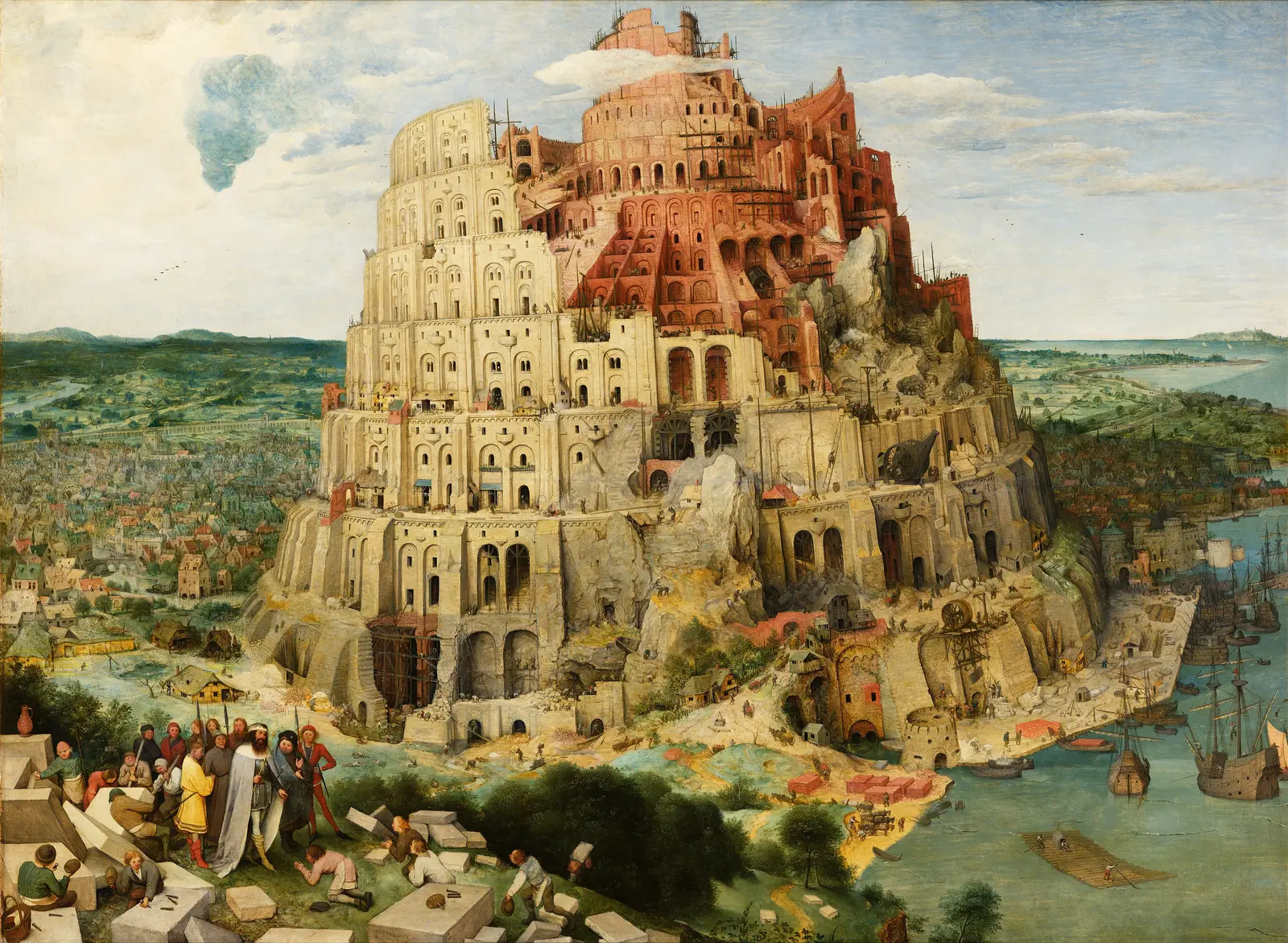
9 notes on this verse(Verse 24.) Arphaxad begot Shelah, and Shelah begot Eber. From Eber were born two sons: one was named Peleg, because in his days the earth was divided, and his brother's name was Joktan. Eber, from whom the Hebrews are descended, gave his son Peleg the name which means 'division', because in his days the languages were divided in Babylon.
This site's exposition
The sons of Shem
on Genesis 10:22-24
Asshur stands in both halves of the chapter, in Nimrod's Assyria and here as a son of Shem. That is the ground of the old reading that Nimrod pushed into land given to another man's line. Aram gives his name to the country the family's wives come from.
This site's exposition
Arphaxad was the father of Shelah
The Greek adds Cainan between Arphaxad and Shelah, as Adam Clarke notes. Luke 3:36 keeps Cainan in the line of Jesus. The Hebrew runs straight from Arphaxad to Shelah to Eber, the forefather named in verse 21.
The record, by era
The Church Fathers2 voices
Shem, the third son of Noah, had five sons, who inhabited the land that began at Euphrates, and reached to the Indian Ocean. For Elam left behind him the Elamites, the ancestors of the Persians.
(Verse 24.) Arphaxad begot Shelah, and Shelah begot Eber. From Eber were born two sons: one was named Peleg, because in his days the earth was divided, and his brother's name was Joktan. Eber, from whom the Hebrews are descended, gave his son Peleg the name which means 'division', because in his days the languages were divided in Babylon.
The Medieval Church1 voice
But indeed Arphaxad begat Salah, from whom Heber was born. From this Heber both Abraham and the people born from him, as we have mentioned before, are surnamed Hebrew.
The Puritans and the Awakening1 voice
And Arphaxad begat Salah,....
The Nineteenth Century1 voice
Salah - The founder of the people of Susiana. Eber - See Gen 10:21. The Septuagint add Cainan here, with one hundred and thirty to the chronology.
1 more voice on this verse
The Nineteenth Century1 voice
A commentator
Jamieson, Fausset & Brown1802–1910
Commentary Critical and Explanatory on the Whole Bible (1871)
proposed
Arphaxad--The settlement of his posterity was in the extensive valley of Shinar, on the Tigris, towards the southern extremity of Mesopotamia, including the country of Eden and the region on the east side of the river.
The words behind it
8 Hebrew wordsEvery Hebrew word of this verse in the order it stands, with what it means and the door to its own study. The last column counts the times a word stands in the whole Bible: the rarer the word, the more the places it appears belong together.
| Hebrew | Sound | Meaning | Word study | In the Bible |
|---|---|---|---|---|
| וְאַרְפַּכְשַׁ֖ד | vearpakhshad | and Arphaxad | H775 → | 9 times |
| יָלַ֣ד | yalad | he fathered | H3205 → | 496 times |
| אֶת־ | ʾet- | <obj.> | H853 → | 10935 times |
| שָׁ֑לַח | shalach | Shelah | H7974 → | 9 times |
| וְשֶׁ֖לַח | veshelach | and Shelah | H7974 → | 9 times |
| יָלַ֥ד | yalad | he fathered | H3205 → | 496 times |
| אֶת־ | ʾet- | <obj.> | H853 → | 10935 times |
| עֵֽבֶר׃ | ʾever | Eber | H5677 → | 15 times |
וְאַרְפַּכְשַׁ֖דand Arphaxad
vearpakhshadH775 →9 times
יָלַ֣דhe fathered
yaladH3205 →496 times
אֶת־<obj.>
ʾet-H853 →10935 times
שָׁ֑לַחShelah
shalachH7974 →9 times
וְשֶׁ֖לַחand Shelah
veshelachH7974 →9 times
יָלַ֥דhe fathered
yaladH3205 →496 times
אֶת־<obj.>
ʾet-H853 →10935 times
עֵֽבֶר׃Eber
ʾeverH5677 →15 times
A shaded row is a word that stands 400 times or fewer in the Bible.
The walk
2 stopsEach card is a verse this one points to, and under it the verses that one points to in turn. Where several paths arrive at the same place, that place is listed first: the text keeps returning to it.
Through
Luke 3:35the son of Serug, the son of Reu, the son of Peleg, the son of Eber, the son of Shelah,
it leads to
- Genesis 10:24–25
Arphaxad was the father of Shelah, and Shelah was the father of Eber.
- Genesis 11:12–21
When Arphaxad was 35 years old, he became the father of Shelah.
- Genesis 10:24–25
Where this verse is studied
About Genesis
This page draws on Adam Clarke, Commentary on the Bible; Bede, Commentary on Genesis (Hexaemeron); Jamieson, Fausset & Brown, Commentary Critical and Explanatory on the Whole Bible; Jerome, Hebrew Questions on Genesis; John Gill, Exposition of the Old Testament (1748-1763) and Josephus, Antiquities of the Jews - Book I, Chapter 6, Sections 4.