
Genesis 10:1
in Genesis 10This is the account of Noah’s sons Shem, Ham, and Japheth, who also had sons after the flood.
BSB
The same verse in ASV and KJV ▾
ASV
Now these are the generations of the sons of Noah, namely, of Shem, Ham, and Japheth: and unto them were sons born after the flood.
KJV
Now these are the generations of the sons of Noah, Shem, Ham, and Japheth: and unto them were sons born after the flood.
⋯
This verse in Genesis 10
Commentary
9 notes on this verseA commentator
Jamieson, Fausset & Brown1802–1910
Commentary Critical and Explanatory on the Whole Bible (1871)
Those descendants, with one or two exceptions, are described by names indicative of tribes and nations and ending in the Hebrew im, or the English "-ite."
This site's exposition
This is the account of Noah's sons
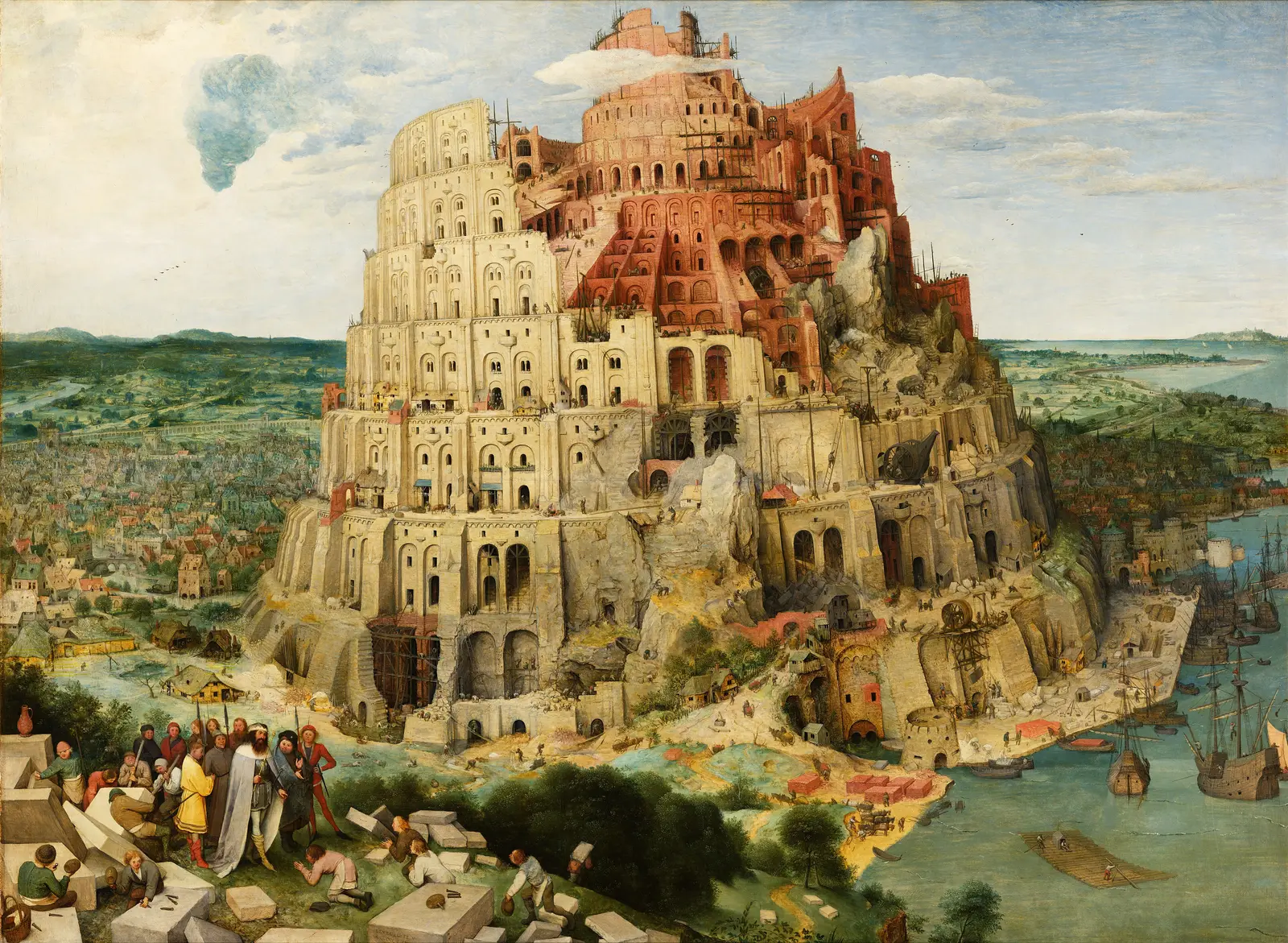
This is the fourth of the eleven accounts that divide Genesis, and it opens on Noah's sons after the flood. Each account narrows the field, and this one carries the widest list in the book, every nation out of Shem, Ham and Japheth. Babel tells in the next chapter how they were scattered.
The record, by era
The Church Fathers2 voices
In the same book [of Genesis], when the generations of the sons of Noah are recalled to our minds, we read, "These are the children of Ham in their tribes according to their tongues, in their lands and nations." Also, in enumerating the sons of Shem, it is said, "These are the children of Shem in their tribes according to their tongues, in their lands and nations." And this is added in reference to all of them: "These are the tribes of the sons of Noah, according to their generations and according to their nations. From these were the islands of the nations scattered over the earth after the flood. And the whole earth was one tongue, and there was one speech for all." And so, because this sentence was added: "And the earth was one tongue and there was one speech for all" (that is, one language for them all), it could be inferred that at that time, when human beings had been scattered according to the islands of the nations over the earth, there was one language common to all of them. Without a doubt, this contradicts the words used above, "according to their tribes and tongues." For, each single tribe that had formed individual nations would not be said to have had its own tongue when there was a common one for all. So it is by way of recapitulation that there is added: "And the earth was one tongue, and there was one speech for all." The narrative, without mentioning it, goes back to tell how it came about that the one language common to all men was broken up into many tongues. And immediately we are told about the building of the tower, when this punishment for their pride was inflicted upon them by the divine judgment. After this event they were scattered over the earth according to their languages.
We must therefore introduce into this work an explanation of the generations of the three sons of Noah, insofar as that may illustrate the progress in time of the two cities. Scripture first mentions the youngest son, who is called Japheth, who had eight sons, and by two of these sons seven grandchildren, three by one son, four by the other; in all, fifteen descendants. Ham, Noah's middle son, had four sons, and by one of them five grandsons, and by one of these two great-grandsons; in all, eleven. After enumerating these, Scripture returns to the first of the sons and says, "Cush begat Nimrod; he began to be a giant on the earth." He was a giant hunter against the Lord God; hence they say, "Nimrod a mighty hunter before the Lord." And the beginning of his kingdom was Babylon, Erech, Accad and Calneh, in the land of Shinar. Out of that land went forth Assur, and built Nineveh, Rehoboth-Ir and Calah, and Resen between Nineveh and Calah: this was a great city." Now this Cush, father of the giant Nimrod, is the first-named among the sons of Ham, to whom five sons and two grandsons are ascribed. But he either begat this giant after his grandsons were born or, which is more credible, Scripture speaks of him separately on account of his eminence, for mention is also made of his kingdom, which began with that magnificent city Babylon, and the other places, whether cities or districts, mentioned along with it. But what is recorded of the land of Shinar, which belonged to Nimrod's kingdom—that Assur went forth from it and built Nineveh and the other cities mentioned with it—happened long after. But he takes occasion to speak of it here on account of the grandeur of the Assyrian kingdom, which was wonderfully extended by Ninus son of Belus, and founder of the great city Nineveh, which was named after him, Nineveh, from Ninus.
The Medieval Church1 voice
These are the generations of the sons of Noah: Shem, Ham, and Japheth; and sons were born to them after the flood. The sons of Japheth: Gomer, and Magog, and Madai, Javan, and Tubal, and Meshech, and Tiras.
The Puritans and the Awakening1 voice
Now these are the generations of the sons of Noah,....
The Nineteenth Century1 voice
A commentator
Jamieson, Fausset & Brown1802–1910
Commentary Critical and Explanatory on the Whole Bible (1871)
proposed
Those descendants, with one or two exceptions, are described by names indicative of tribes and nations and ending in the Hebrew im, or the English "-ite."
2 more voices on this verse
The Nineteenth Century2 voices
Now these are the generations - It is extremely difficult to say what particular nations and people sprang from the three grand divisions of the family of Noah, because the names of many of those ancient people have become changed in the vast lapse of time from the deluge to the Christian era; yet some are so very distinctly marked that they can be easily ascertained, while a few still retain their original names. Moses does not always give the name of the first settler in a country, but rather that of the people from whom the country afterwards derived its name. Thus Mizraim is the dual of Mezer, and could never be the name of an individual. The like may be said of Kittim, Dodanim, Ludim, Ananim, Lehabim, Naphtuhim, Pathrusim, Casluhim, Philistim, and Caphtorim, which are all plurals, and evidently not the names of individuals, but of families or tribes. See Gen 10:4, Gen 10:6, Gen 10:13, Gen 10:14. In the posterity of Canaan we find whole nations reckoned in the genealogy, instead of the individuals from whom they sprang; thus the Jebusite, Amorite, Girgasite, Hivite, Arkite, Sinite, Arvadite, Zemarite, and Hamathite, Gen 10:16-18, were evidently whole nations or tribes which inhabited the promised land, and were called Canaanites from Canaan, the son of Ham, who settled there. Moses also, in this genealogy, seems to have introduced even the name of some places that were remarkable in the sacred history, instead of the original settlers.
A commentator
Albert Barnes1798–1870
Notes, Explanatory and Practical, on the Old and New Testaments (1832-1869)
proposed
- Section VIII - The Nations - Japheth 2. גמר gomer, “Gomer, completion; related: complete;” Κιμμέριοι Kimmerioi. מגוג māgôg, “Magog, Caucasian, Skyth.” מדי māday, “Madai, middle: Mede.” יון yāvān, “Javan”; Ἰάων Iaōn; “Sanskrit, Javana; Old Persian, Juna.” תבל tubāl, “Tubal”; Τιβαρηνοὶ Tibareenoi. משׁך meshek, “Meshek, drawing possession, valor”; Μόσχοι Moschoi, תירס tı̂yrās, “Tiras;” Θρᾷξ Thrax.
How the passage was read
What the Jewish commentators add
The intent thereof is to imply that even though they were fit to have children before the flood — for in those generations it was normal to beget children at about sixty years of age. See above,:15,.
This section is reception history: how the passage was read and kept in the Jewish tradition. Where a reading parts from an essential of the Christian faith, the section says so at that point.
Texts and citation data: Sefaria; each excerpt follows its version’s licence. 4 further sources are cited on this chapter that carry no English text this site may quote or only restate the verse.
The words behind it
12 Hebrew wordsEvery Hebrew word of this verse in the order it stands, with what it means and the door to its own study. The last column counts the times a word stands in the whole Bible: the rarer the word, the more the places it appears belong together.
| Hebrew | Sound | Meaning | Word study | In the Bible |
|---|---|---|---|---|
| וְאֵ֙לֶּה֙ | veeleh | and these | H428 → | 746 times |
| תּוֹלְדֹ֣ת | toldot | [are] [the] accounts of | H8435 → | 39 times |
| בְּנֵי־ | benei- | [the] sons of | H1121 → | 4930 times |
| נֹ֔חַ | noach | Noah | H5146 → | 46 times |
| שֵׁ֖ם | shem | Shem | H8035 → | 17 times |
| חָ֣ם | cham | Ham | H2526 → | 16 times |
| וָיָ֑פֶת | vayafet | and Japheth | H3315 → | 11 times |
| וַיִּוָּלְד֥וּ | vaiyivaldu | and they were born | H3205 → | 496 times |
| לָהֶ֛ם | lahem | to <the> them | ||
| בָּנִ֖ים | banim | sons | H1121 → | 4930 times |
| אַחַ֥ר | ʾachar | after | H310 → | 715 times |
| הַמַּבּֽוּל׃ | hamabul | the flood | H3999 → | 13 times |
וְאֵ֙לֶּה֙and these
veelehH428 →746 times
תּוֹלְדֹ֣ת[are] [the] accounts of
toldotH8435 →39 times
בְּנֵי־[the] sons of
benei-H1121 →4930 times
נֹ֔חַNoah
noachH5146 →46 times
שֵׁ֖םShem
shemH8035 →17 times
חָ֣םHam
chamH2526 →16 times
וָיָ֑פֶתand Japheth
vayafetH3315 →11 times
וַיִּוָּלְד֥וּand they were born
vaiyivalduH3205 →496 times
לָהֶ֛םto <the> them
lahem
בָּנִ֖יםsons
banimH1121 →4930 times
אַחַ֥רafter
ʾacharH310 →715 times
הַמַּבּֽוּל׃the flood
hamabulH3999 →13 times
A shaded row is a word that stands 400 times or fewer in the Bible.
The walk
8 stopsEach card is a verse this one points to, and under it the verses that one points to in turn. Where several paths arrive at the same place, that place is listed first: the text keeps returning to it.
Through
Genesis 6:9This is the account of Noah. Noah was a righteous man, blameless in his generation; Noah walked with God.
it leads to
- Hebrews 11:7
By faith Noah, when warned about things not yet seen, in godly fear built an ark to save his family. By faith he condemned the world and became heir of the righteousness that comes…
- Luke 1:6
Both of them were righteous in the sight of God, walking blamelessly in all the commandments and decrees of the Lord.
- Galatians 3:11
Now it is clear that no one is justified before God by the law, because, “The righteous will live by faith.”
- Genesis 5:24
Enoch walked with God, and then he was no more, because God had taken him away.
- 2 Peter 2:5
if He did not spare the ancient world when He brought the flood on its ungodly people, but preserved Noah, a preacher of righteousness, among the eight;
- Hebrews 11:7
Through
Genesis 5:1This is the book of the generations of Adam. In the day that God created man, He made him in His own likeness.
it leads to
- Ephesians 4:24
and to put on the new self, created to be like God in true righteousness and holiness.
- Colossians 3:10
and have put on the new self, which is being renewed in knowledge in the image of its Creator.
- Genesis 1:26–27
Then God said, “Let Us make man in Our image, after Our likeness, to rule over the fish of the sea and the birds of the air, over the livestock, and over all the…
- Ephesians 4:24
Where this verse is studied
On this page
Studies2
On this verse
On this chapter
About Genesis
Who and where
1 name in this verse with a page on the site.
This page draws on Adam Clarke, Commentary on the Bible; Albert Barnes, Notes, Explanatory and Practical, on the Old and New Testaments (1832-1869); Augustine of Hippo, CHRISTIAN INSTRUCTION 3.36.53; Augustine of Hippo, City of God 16.3; Bede, Commentary on Genesis (Hexaemeron); Chuck Missler, The Book of Genesis; Jamieson, Fausset & Brown, Commentary Critical and Explanatory on the Whole Bible and John Gill, Exposition of the Old Testament (1748-1763).