
Ezra 4:2
in Ezra 4they approached Zerubbabel and the heads of the families, saying, “Let us build with you because, like you, we seek your God and have been sacrificing to Him since the time of King Esar-haddon of Assyria, who brought us here.”
BSB
The same verse in ASV and KJV ▾
ASV
then they drew near to Zerubbabel, and to the heads of fathers’ houses, and said unto them, Let us build with you; for we seek your God, as ye do; and we sacrifice unto him since the days of Esar-haddon king of Assyria, who brought us up hither.
KJV
Then they came to Zerubbabel, and to the chief of the fathers, and said unto them, Let us build with you: for we seek your God, as ye do; and we do sacrifice unto him since the days of Esar–haddon king of Assur, which brought us up hither.
⋯
This verse in Ezra 4
Commentary
7 notes on this verseThis site's exposition
the enemies of Judah and Benjamin
on Ezra 4:1-2
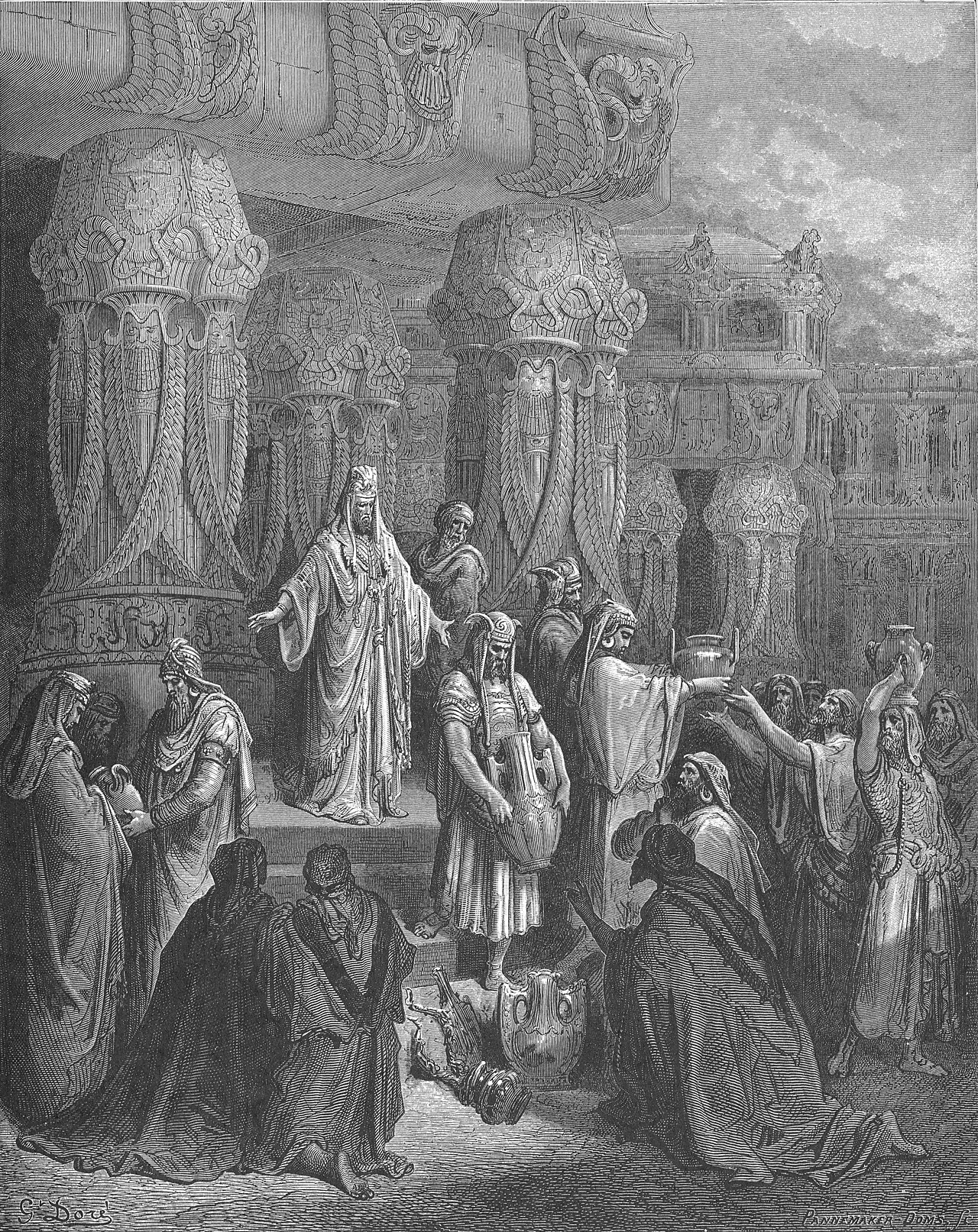
When the enemies of Judah and Benjamin hear that the exiles are building the temple, they come to Zerubbabel with an offer of kinship. They claim to seek the same God and to have sacrificed to Him since the time of Esar-haddon king of Assyria, who brought them here.
This site's exposition
we seek your God
Verse 1 names the speakers enemies of Judah and Benjamin. Albert Barnes identifies these men as Samaritans, a mixed people, partly Israelite and chiefly foreign. He notes from 2 Kings 17:29-41 that they had joined idolatrous rites to the worship of the LORD.
The record, by era
The Puritans and the Awakening2 voices
Then they came to Zerubbabel, and the chief of the fathers,....
Herein they designed, if it were possible, to hinder the building of it, at least to hinder their comfortable enjoyment of it; as good almost not have it as not have it to themselves, for the pure worship of the true God and him only. Thus are the kisses of an enemy deceitful; his words are smoother than butter when war is in his heart.
The Nineteenth Century3 voices
A commentator
Jamieson, Fausset & Brown1802–1910
Commentary Critical and Explanatory on the Whole Bible (1871)
proposed
we seek your God, as ye do; and we do sacrifice unto him since the days of Esar-haddon . . . which brought us up hither--A very interesting explanation of this passage has been recently obtained from the Assyrian sculptures.
quarantine:debris (2026-07-29) — starts-lowercase
Let us build with you - We acknowledge the same God, are solicitous for his glory, and will gladly assist you in this work. But that they came with no friendly intention, the context proves.
A commentator
Albert Barnes1798–1870
Notes, Explanatory and Practical, on the Old and New Testaments (1832-1869)
proposed
Compare 2Ki 17:24-28 notes. Since the days - Esar-haddon reigned from 681-668 B.C. Thus, the Samaritans speak of what had taken place at least 130 years previously. There appear to have been at least three colonizations of Samaria by the Assyrian kings. The first is mentioned in 2Ki 17:24. Later in his reign Sargon added to these first settlers an Arabian element. Some 30 or 40 years afterward, Esarhaddon, his grandson, largely augmented the population by colonists drawn especially from the southeast parts of the Empire Ezr 4:10. Thus, the later Samaritans were an exceedingly mixed race.
The words behind it
25 Hebrew wordsEvery Hebrew word of this verse in the order it stands, with what it means and the door to its own study. The last column counts the times a word stands in the whole Bible: the rarer the word, the more the places it appears belong together.
| Hebrew | Sound | Meaning | Word study | In the Bible |
|---|---|---|---|---|
| וַיִּגְּשׁ֨וּ | vaiyigeshu | and they approached | H5066 → | |
| אֶל־ | ʾel- | <to> | H413 → | 5510 times |
| זְרֻבָּבֶ֜ל | zerubavel | Zerubbabel | H2216 → | 21 times |
| וְאֶל־ | veel- | and <to> | H413 → | 5510 times |
| רָאשֵׁ֣י | rashei | [the] heads of | H7218 → | 599 times |
| הָֽאָב֗וֹת | haavot | the fathers | H1 → | 1212 times |
| וַיֹּאמְר֤וּ | vaiyomeru | and they said | H559 → | 5305 times |
| לָהֶם֙ | lahem | to <the> them | ||
| נִבְנֶ֣ה | nivneh | let us build | H1129 → | 376 times |
| עִמָּכֶ֔ם | ʾimakhem | with you | H5973 → | 1050 times |
| כִּ֣י | ki | for | H3588 → | 4482 times |
| כָכֶ֔ם | khakhem | like you | ||
| נִדְר֖וֹשׁ | nidroosh | we seek | H1875 → | 164 times |
| לֵֽאלֹהֵיכֶ֑ם | leloheikhem | <to> God your | H430 → | 2601 times |
| וְל֣וֹ | velo | and to <the> him | ||
| אֲנַ֣חְנוּ | ʾanachnu | we | H587 → | 120 times |
| זֹבְחִ֗ים | zoechim | [have been] sacrificing | H2076 → | |
| מִימֵי֙ | mimei | since [the] days of | H3117 → | 2304 times |
| אֵסַ֤ר | ʾesar | Esar- | H634 → | |
| חַדֹּן֙ | chadon | -haddon | H634 → | |
| מֶ֣לֶךְ | melekh | [the] king of | H4428 → | 2525 times |
| אַשּׁ֔וּר | ʾashur | Assyria | H804 → | |
| הַמַּעֲלֶ֥ה | hamaaleh | who brought up | H5927 → | 890 times |
| אֹתָ֖נוּ | ʾotanu | <obj.> us | H853 → | 10935 times |
| פֹּֽה׃ | poh | here | H6311 → |
וַיִּגְּשׁ֨וּand they approached
vaiyigeshuH5066 →
אֶל־<to>
ʾel-H413 →5510 times
זְרֻבָּבֶ֜לZerubbabel
zerubavelH2216 →21 times
וְאֶל־and <to>
veel-H413 →5510 times
רָאשֵׁ֣י[the] heads of
rasheiH7218 →599 times
הָֽאָב֗וֹתthe fathers
haavotH1 →1212 times
וַיֹּאמְר֤וּand they said
vaiyomeruH559 →5305 times
לָהֶם֙to <the> them
lahem
נִבְנֶ֣הlet us build
nivnehH1129 →376 times
עִמָּכֶ֔םwith you
ʾimakhemH5973 →1050 times
כִּ֣יfor
kiH3588 →4482 times
כָכֶ֔םlike you
khakhem
נִדְר֖וֹשׁwe seek
nidrooshH1875 →164 times
לֵֽאלֹהֵיכֶ֑ם<to> God your
leloheikhemH430 →2601 times
וְל֣וֹand to <the> him
velo
אֲנַ֣חְנוּwe
ʾanachnuH587 →120 times
זֹבְחִ֗ים[have been] sacrificing
zoechimH2076 →
מִימֵי֙since [the] days of
mimeiH3117 →2304 times
אֵסַ֤רEsar-
ʾesarH634 →
חַדֹּן֙-haddon
chadonH634 →
מֶ֣לֶךְ[the] king of
melekhH4428 →2525 times
אַשּׁ֔וּרAssyria
ʾashurH804 →
הַמַּעֲלֶ֥הwho brought up
hamaalehH5927 →890 times
אֹתָ֖נוּ<obj.> us
ʾotanuH853 →10935 times
פֹּֽה׃here
pohH6311 →
A shaded row is a word that stands 400 times or fewer in the Bible.
The walk
8 stopsEach card is a verse this one points to, and under it the verses that one points to in turn. Where several paths arrive at the same place, that place is listed first: the text keeps returning to it.
Through
Galatians 2:4This issue arose because some false brothers had come in under false pretenses to spy on our freedom in Christ Jesus, in order to enslave us.
it leads to
- 1 John 4:1
Beloved, do not believe every spirit, but test the spirits to see whether they are from God. For many false prophets have gone out into the world.
Reached by 2 separate paths from here.
- Galatians 5:1
It is for freedom that Christ has set us free. Stand firm, then, and do not be encumbered once more by a yoke of slavery.
- Jude 1:4
For certain men have crept in among you unnoticed—ungodly ones who were designated long ago for condemnation. They turn the grace of our God into a license for immorality, and they deny our only…
- 2 Peter 2:1–2
Now there were also false prophets among the people, just as there will be false teachers among you. They will secretly introduce destructive heresies, even denying the Master who bought them—bringing swift destruction on…
- 1 John 4:1
Through
2 Timothy 3:8Just as Jannes and Jambres opposed Moses, so also these men oppose the truth. They are depraved in mind and disqualified from the faith.
it leads to
- Revelation 2:20
But I have this against you: You tolerate that woman Jezebel, who calls herself a prophetess. By her teaching she misleads My servants to be sexually immoral and to eat food sacrificed to idols.
- Acts 13:8–11
But Elymas the sorcerer (for that is what his name means) opposed them and tried to turn the proconsul from the faith.
- Exodus 7:11
But Pharaoh called the wise men and sorcerers and magicians of Egypt, and they also did the same things by their magic arts.
- 1 Timothy 6:5
and constant friction between men of depraved mind who are devoid of the truth. These men regard godliness as a means of gain.
- Revelation 2:20
Where this verse is studied
About Ezra
Who and where
2 names in this verse with a page on the site.
- PersonReturn from exileZerubbabelGovernor of Judah and grandson of Jeconiah who led the first return and laid the second temple's foundation; Haggai's signet-ring…
- PlaceUpper MesopotamiaAssyriaMesopotamian empire whose capital Nineveh repented at Jonah's preaching and fell to Nahum's burden in 612 BC; the rod of God's ang…
This page draws on Adam Clarke, Commentary on the Bible; Albert Barnes, Notes, Explanatory and Practical, on the Old and New Testaments; Albert Barnes, Notes, Explanatory and Practical, on the Old and New Testaments (1832-1869); Berean Standard Bible, Ezra 4; Jamieson, Fausset & Brown, Commentary Critical and Explanatory on the Whole Bible; John Gill, Exposition of the Old Testament; John Gill, Exposition of the Old Testament (1748-1763) and Matthew Henry, Commentary on the Whole Bible.