
Ezra 9:13
in Ezra 9After all that has come upon us because of our evil deeds and our great guilt (though You, our God, have punished us less than our iniquities deserve and have given us such a remnant as this),
BSB
The same verse in ASV and KJV ▾
ASV
And after all that is come upon us for our evil deeds, and for our great guilt, seeing that thou our God hast punished us less than our iniquities deserve, and hast given us such a remnant,
KJV
And after all that is come upon us for our evil deeds, and for our great trespass, seeing that thou our God hast punished us less than our iniquities deserve, and hast given us such deliverance as this;
⋯
This verse in Ezra 9
Commentary
2 notes on this verseHast punished us less than our iniquities - Great, numerous, and oppressive as our calamities have been, yet merely as temporal punishments, they have been much less than our provocations have deserved.
This site's exposition
punished us less than our iniquities deserve
on Ezra 9:13-15
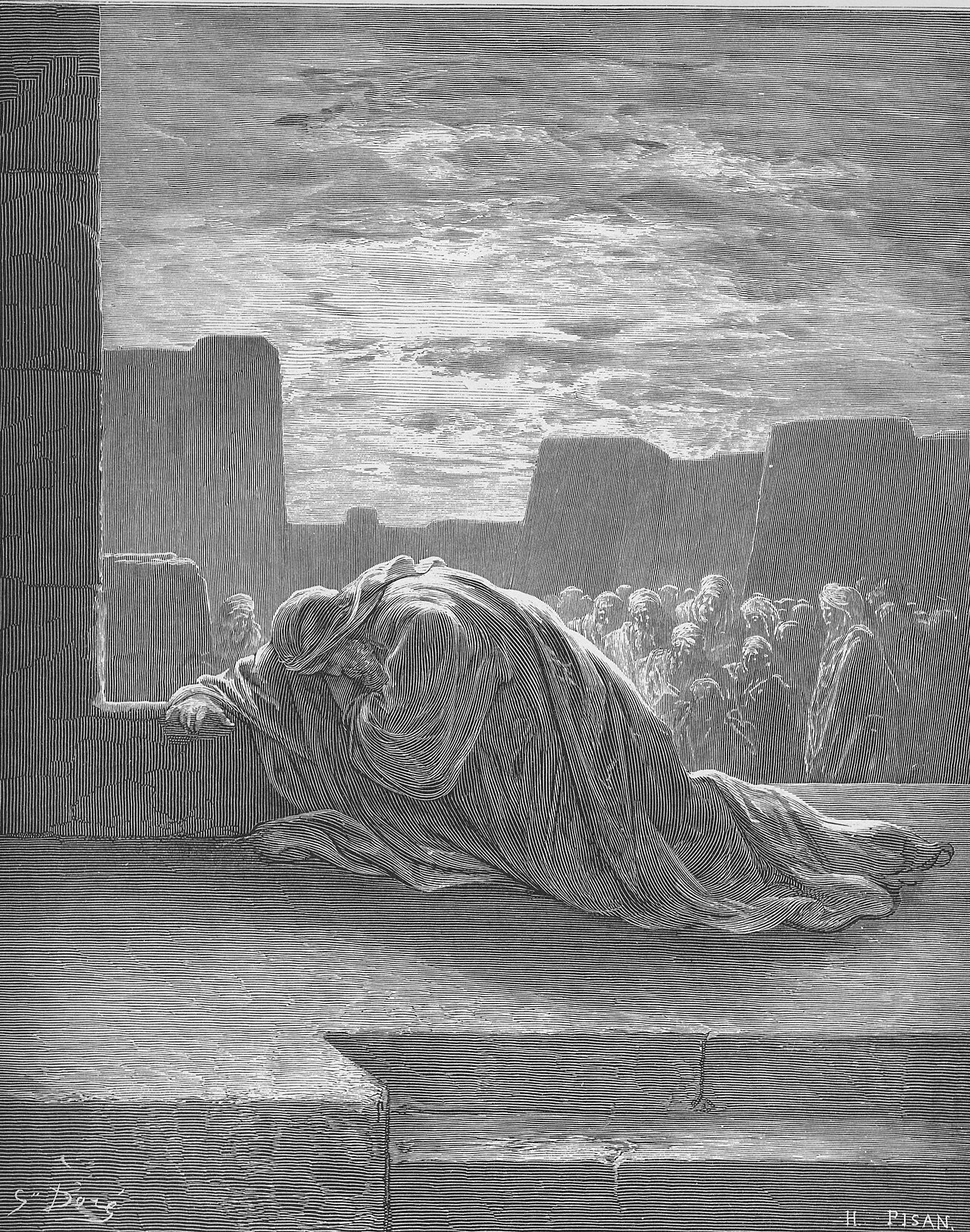
The confession names grace exactly: after all that is come upon us for our evil deeds and for our great trespass, thou our God hast punished us less than our iniquities deserve. Ezra asks the question the whole chapter has been building toward, should we again break thy commandments and join in affinity with the people of these abominations, and answers it himself: God's anger would leave no remnant nor escaping. The prayer ends without petition or resolution, O Lord God of Israel, thou art righteous, for we remain yet escaped and we cannot stand before thee because of this; the covenant's response comes only in the chapter that follows.
How the passage was read
What the Jewish commentators add
And after all that has come upon us after all the calamity that has befallen us because of our evil deeds.
1 more on this passage, in their own words ▾
and you shall cause..to inherit You shall give the land to your children as an inheritance to eternity.
This section is reception history: how the passage was read and kept in the Jewish tradition. Where a reading parts from an essential of the Christian faith, the section says so at that point.
Texts and citation data: Sefaria; each excerpt follows its version’s licence. 3 further sources are cited on this chapter that carry no English text this site may quote or only restate the verse.
The words behind it
18 Hebrew wordsEvery Hebrew word of this verse in the order it stands, with what it means and the door to its own study. The last column counts the times a word stands in the whole Bible: the rarer the word, the more the places it appears belong together.
| Hebrew | Sound | Meaning | Word study | In the Bible |
|---|---|---|---|---|
| וְאַֽחֲרֵי֙ | veacharei | and after | H310 → | 715 times |
| כָּל־ | kol- | every | H3605 → | 5413 times |
| הַבָּ֣א | haba' | <the> [thing which] has come | H935 → | 2568 times |
| עָלֵ֔ינוּ | ʾaleinu | on us | H5921 → | 5755 times |
| בְּמַעֲשֵׂ֙ינוּ֙ | bemaaseinu | by deeds our | H4639 → | |
| הָרָעִ֔ים | haraim | <the> evil | H7451 → | |
| וּבְאַשְׁמָתֵ֖נוּ | uveashmatenu | and by guilt our | H819 → | 19 times |
| הַגְּדֹלָ֑ה | hagedolah | <the> great | H1419 → | 526 times |
| כִּ֣י׀ | ki | for | H3588 → | 4482 times |
| אַתָּ֣ה | ʾatah | you | H859 → | 1094 times |
| אֱלֹהֵ֗ינוּ | ʾeloheinu | O God our | H430 → | 2601 times |
| חָשַׂ֤כְתָּֽ | chasakhta | you have withheld | H2820 → | |
| לְמַ֙טָּה֙ | lematah | <to> downwards | H4295 → | |
| מֵֽעֲוֹנֵ֔נוּ | meavonenu | from iniquity our | H5771 → | 233 times |
| וְנָתַ֥תָּה | venatatah | and you have given | H5414 → | 2011 times |
| לָּ֛נוּ | lanu | to us | ||
| פְּלֵיטָ֖ה | peleitah | an escaped remnant | H6413 → | 28 times |
| כָּזֹֽאת׃ | kazot | like this | H2063 → | 603 times |
וְאַֽחֲרֵי֙and after
veachareiH310 →715 times
כָּל־every
kol-H3605 →5413 times
הַבָּ֣א<the> [thing which] has come
haba'H935 →2568 times
עָלֵ֔ינוּon us
ʾaleinuH5921 →5755 times
בְּמַעֲשֵׂ֙ינוּ֙by deeds our
bemaaseinuH4639 →
הָרָעִ֔ים<the> evil
haraimH7451 →
וּבְאַשְׁמָתֵ֖נוּand by guilt our
uveashmatenuH819 →19 times
הַגְּדֹלָ֑ה<the> great
hagedolahH1419 →526 times
כִּ֣י׀for
kiH3588 →4482 times
אַתָּ֣הyou
ʾatahH859 →1094 times
אֱלֹהֵ֗ינוּO God our
ʾeloheinuH430 →2601 times
חָשַׂ֤כְתָּֽyou have withheld
chasakhtaH2820 →
לְמַ֙טָּה֙<to> downwards
lematahH4295 →
מֵֽעֲוֹנֵ֔נוּfrom iniquity our
meavonenuH5771 →233 times
וְנָתַ֥תָּהand you have given
venatatahH5414 →2011 times
לָּ֛נוּto us
lanu
פְּלֵיטָ֖הan escaped remnant
peleitahH6413 →28 times
כָּזֹֽאת׃like this
kazotH2063 →603 times
A shaded row is a word that stands 400 times or fewer in the Bible.
The walk
8 stopsEach card is a verse this one points to, and under it the verses that one points to in turn. Where several paths arrive at the same place, that place is listed first: the text keeps returning to it.
Through
Lamentations 3:22Because of the loving devotion of the LORD we are not consumed, for His mercies never fail.
it leads to
- Psalms 86:15
But You, O Lord, are a compassionate and gracious God, slow to anger, abounding in loving devotion and faithfulness.
- Nehemiah 9:31
But in Your great compassion, You did not put an end to them; nor did You forsake them, for You are a gracious and compassionate God.
Reached by 2 separate paths from here.
- Luke 1:50
His mercy extends to those who fear Him, from generation to generation.
- Micah 7:18–19
Who is a God like You, who pardons iniquity and passes over the transgression of the remnant of His inheritance—who does not retain His anger forever, because He delights in loving devotion?
- Malachi 3:6
“Because I, the LORD, do not change, you descendants of Jacob have not been destroyed.
- Psalms 86:15
Through
Psalms 103:10He has not dealt with us according to our sins or repaid us according to our iniquities.
it leads to
- Lamentations 3:22
Because of the loving devotion of the LORD we are not consumed, for His mercies never fail.
Reached by 2 separate paths from here.
- Psalms 130:3
If You, O LORD, kept track of iniquities, then who, O Lord, could stand?
- Job 11:6
and disclose to you the secrets of wisdom, for true wisdom has two sides. Know then that God exacts from you less than your iniquity deserves.
- Lamentations 3:22
Where this verse is studied
On this page
Studies1
About Ezra
This page draws on Adam Clarke, Commentary on the Bible and John Wesley, Explanatory Notes upon the Old Testament.