
Amos 7:14
in Amos 7“I was not a prophet,” Amos replied, “nor was I the son of a prophet; rather, I was a herdsman and a tender of sycamore-fig trees.
BSB
The same verse in ASV and KJV ▾
ASV
Then answered Amos, and said to Amaziah, I was no prophet, neither was I a prophet’s son; but I was a herdsman, and a dresser of sycomore-trees:
KJV
Then answered Amos, and said to Amaziah, I was no prophet, neither was I a prophet’s son; but I was an herdman, and a gatherer of sycomore fruit:
⋯
This verse in Amos 7
Commentary
12 notes on this verse(v. 14 onwards) And Amos answered and said to Amaziah, 'I am not a prophet, nor am I the son of a prophet, but I am a herdsman and a gatherer of sycamore fruit. And the Lord took me from following the flock, and the Lord said to me (the Vulgate adds 'the Lord'): Go, prophesy to my people Israel. Now hear the word of the Lord: You say, 'Do not prophesy against Israel, and do not preach against the house of idolatry.'
This site's exposition
I was no prophet, neither was I a prophet's son
on Amos 7:14-15
Amos answers with his own resume against the charge that he prophesies for a living: I was no prophet, neither was I a prophet's son, but I was an herdman, and a gatherer of sycomore fruit, a working man with no guild membership and no fee to lose. The Lord took me as I followed the flock, and the Lord said unto me, Go, prophesy unto my people Israel grounds his commission outside Bethel's control entirely, a call Amaziah's order cannot rescind because Amaziah never issued it. The bench reads the verse as the clearest statement in the Twelve of prophecy as vocation rather than profession.
The record, by era
The Church Fathers1 voice
Amos also said, "I was no prophet, nor the son of a prophet, but only a herdsman, a gatherer of sycamore fruit. And God took me." But he did not say this to exalt himself, but to stop their mouths that suspected him as no prophet, and to show that he is no deceiver, nor says of his own mind the things which he says.
The Medieval Church3 voices
How good it is to raise up eyes of faith to the power of this worker, the Holy Spirit, and to look here and there at our ancestors in the Old and New Testaments. With the eyes of my faith open, I gaze on David, on Amos, on Daniel, on Peter, on Paul, on Matthew—and I am filled with a desire to behold the nature of this worker, the Holy Spirit. But I fall short. The Spirit filled a boy who played upon the harp, and made him a psalmist; on a shepherd and herdsman who pruned sycamore trees, and made him a prophet; on a child given to abstinence, and made him a judge of his elders; on a fisherman, and made him a preacher; on one who persecuted the church, and made him the teacher of the Gentiles; on a tax collector, and made him an Evangelist. What a skilled worker this Spirit is! There is no question of delay in learning what the Spirit teaches us. No sooner does the Spirit touch our minds in regard to anything than we are taught; the Spirit's very touch is teaching. The Spirit changes the human heart in a moment, filling it with light. Suddenly we are no longer what we were; suddenly we are something we never used to be.
If the spirit of prophecy had always been present to the prophets, the prophet Amos when asked would never have said, "I am no prophet"; he even adds, "neither a prophet's son, but I am a herdsman and a gatherer of sycamore fruit." How then was he no prophet who foretold so many true things concerning the future? Or in what way was he a prophet if he at the time disowned the truth concerning himself? At the moment that he was called in question, he felt that the spirit of prophecy was not with him. He bore true testimony concerning himself in saying, "I am not a prophet." Yet he added afterward, "Now therefore hear the word of the Lord. Therefore thus said the Lord, 'Your wife shall be a harlot in the city, and your sons and your daughters shall fall by the sword, and your land shall be divided by line, and you shall die in a polluted land.' " By these words of the prophet it is plainly shown that while he was bearing that testimony about himself he was filled, and on the instant rewarded with the spirit of prophecy, because he humbly acknowledged himself to be no prophet.
"And Amaziah sends, etc." In fact, since the prophet had received the order to prophesy beside the temple of the idols, so that his words might be heard not only by the ten tribes but also by the people living around, Amaziah, the priest of …
The Puritans and the Awakening1 voice
No prophet - Not originally, or by study, or by any human designation. An herdman - By breeding and occupation I was and still am, an herdman. Sycamore fruit - This fruit was good food for man, or cattle.
5 more voices on this verse
The Puritans and the Awakening2 voices
He did not run before he was sent, but pleads, as Paul, that he was called to be an apostle; and men will find it is at their peril if they contradict and oppose any that come in God's name, if they say to his seers, See not, or silence those whom he has bidden to speak; such fight against God.
Then answered Amos, and said to Amaziah,....
The Nineteenth Century3 voices
I was no prophet - I am an extraordinary messenger of God. I am not called to the prophetic office but for this occasion. I have no message to Judah, and therefore need not go there. I have a message to Israel alone, and I must faithfully deliver it. For the account which Amos gives here of himself, see the introduction.
A commentator
Jamieson, Fausset & Brown1802–1910
Commentary Critical and Explanatory on the Whole Bible (1871)
I am a shepherd (compare Am 7:15, "flock"; the Hebrew for "herdsman" includes the meaning, shepherd, compare Am 1:1) in humble position, who did not even think of prophesying among you, until a divine call impelled me to it. prophet's son--that is, disciple.
A commentator
Albert Barnes1798–1870
Notes, Explanatory and Practical, on the Old and New Testaments (1832-1869)
proposed
I was no prophet - The order of the words is emphatic. “No prophet I, and no prophet’s son I, for a herdsman I, and dresser of sycamores.” It may be, Amos would meet, for the people’s sake, Amaziah’s taunt. He had a living, simple indeed, yet that of the prophets was as simple. But chiefly he tells them of the unusual character of his mission. He did not belong to the order of the prophets, nor had he been educated in the schools of the prophets, nor had he any human training. He was thinking of nothing less; he was doing the works of his calling, until “God took him from following the flock,” and gave him his commission. Rup.: “He promises humbly what he had been, what he had been made, not by merits, but by grace, that he had not assumed the prophetic office by hereditary right, nor had he begun to prophesy out of his own mind, but, being under the necessity of obeying, he had fulfilled the grace and the command of God who inspired and sent Him.” Twice he repeats, “The Lord took me; the Lord said unto me;” inculcating that, what Amaziah forbade, God bade. All was of God. “He” had but obeyed. Jerome: “As then the Apostles, when the Scribes and Pharisees forbade them to teach in the Name of Jesus, answered, ‘We must obey God rather than man’ Act 5:29, so Amos, when forbidden by the idol-priests to prophesy, not only prophesies, shewing that he feared God bidding, more than their forbidding, but he boldly and freely denounces the punishment of him who endeavored to forbid and hinder the word of God.” Rup.: “heaven thundered and commanded him to prophesy; the frog croaked in answer out of his marsh, ‘prophesy no more. ‘“
How the passage was read
What the Jewish commentators add
I am neither a prophet —I am not one of your false prophets, who take pay for prophesying.
1 more on this passage, in their own words ▾
But do not continue to prophesy in Bethel —for here they mention only the name of the idols.
This section is reception history: how the passage was read and kept in the Jewish tradition. Where a reading parts from an essential of the Christian faith, the section says so at that point.
Texts and citation data: Sefaria; each excerpt follows its version’s licence. 4 further sources are cited on this chapter that carry no English text this site may quote or only restate the verse.
The words behind it
17 Hebrew wordsEvery Hebrew word of this verse in the order it stands, with what it means and the door to its own study. The last column counts the times a word stands in the whole Bible: the rarer the word, the more the places it appears belong together.
| Hebrew | Sound | Meaning | Word study | In the Bible |
|---|---|---|---|---|
| וַיַּ֤עַן | vaiyaan | and he answered | H6030 → | |
| עָמוֹס֙ | ʾamos | Amos | H5986 → | 7 times |
| וַיֹּ֣אמֶר | vaiyomer | and he said | H559 → | 5305 times |
| אֶל־ | ʾel- | to | H413 → | 5510 times |
| אֲמַצְיָ֔ה | ʾamatzyah | Amaziah | H558 → | 40 times |
| לֹא־ | lo'- | not | H3808 → | 5168 times |
| נָבִ֣יא | navi' | [am] a prophet | H5030 → | 314 times |
| אָנֹ֔כִי | ʾanokhi | I | H595 → | 359 times |
| וְלֹ֥א | velo' | and not | H3808 → | 5168 times |
| בֶן־ | ven- | [am] a son of | H1121 → | 4930 times |
| נָבִ֖יא | navi' | a prophet | H5030 → | 314 times |
| אָנֹ֑כִי | ʾanokhi | I | H595 → | 359 times |
| כִּֽי־ | ki- | for | H3588 → | 4482 times |
| בוֹקֵ֥ר | voker | [was] a herdsman | H951 → | |
| אָנֹ֖כִי | ʾanokhi | I | H595 → | 359 times |
| וּבוֹלֵ֥ס | uvoles | and a fig picker of | H1103 → | |
| שִׁקְמִֽים׃ | shikmim | sycamores | H8256 → |
וַיַּ֤עַןand he answered
vaiyaanH6030 →
עָמוֹס֙Amos
ʾamosH5986 →7 times
וַיֹּ֣אמֶרand he said
vaiyomerH559 →5305 times
אֶל־to
ʾel-H413 →5510 times
אֲמַצְיָ֔הAmaziah
ʾamatzyahH558 →40 times
לֹא־not
lo'-H3808 →5168 times
נָבִ֣יא[am] a prophet
navi'H5030 →314 times
אָנֹ֔כִיI
ʾanokhiH595 →359 times
וְלֹ֥אand not
velo'H3808 →5168 times
בֶן־[am] a son of
ven-H1121 →4930 times
נָבִ֖יאa prophet
navi'H5030 →314 times
אָנֹ֑כִיI
ʾanokhiH595 →359 times
כִּֽי־for
ki-H3588 →4482 times
בוֹקֵ֥ר[was] a herdsman
vokerH951 →
אָנֹ֖כִיI
ʾanokhiH595 →359 times
וּבוֹלֵ֥סand a fig picker of
uvolesH1103 →
שִׁקְמִֽים׃sycamores
shikmimH8256 →
A shaded row is a word that stands 400 times or fewer in the Bible.
The walk
8 stopsEach card is a verse this one points to, and under it the verses that one points to in turn. Where several paths arrive at the same place, that place is listed first: the text keeps returning to it.
Through
1 Corinthians 1:27But God chose the foolish things of the world to shame the wise; God chose the weak things of the world to shame the strong.
it leads to
- James 2:5
Listen, my beloved brothers: Has not God chosen the poor of this world to be rich in faith and to inherit the kingdom He promised those who love Him?
- Matthew 11:25
At that time Jesus declared, “I praise You, Father, Lord of heaven and earth, because You have hidden these things from the wise and learned, and revealed them to little children.
- 1 Corinthians 1:20
Where is the wise man? Where is the scribe? Where is the philosopher of this age? Has not God made foolish the wisdom of the world?
- Psalms 8:2
From the mouths of children and infants You have ordained praise on account of Your adversaries, to silence the enemy and avenger.
- Luke 21:15
For I will give you speech and wisdom that none of your adversaries will be able to resist or contradict.
- James 2:5
Through
2 Kings 2:5Then the sons of the prophets at Jericho came up to Elisha and said, “Do you know that the LORD will take your master away from you today?” “Yes, I know,” he replied. “Do…
it leads to
- 2 Kings 2:3
Then the sons of the prophets at Bethel came out to Elisha and said, “Do you know that the LORD will take your master away from you today?” “Yes, I know,” he replied. “Do…
Reached by 2 separate paths from here.
- 2 Kings 2:3
Through
Amos 1:1These are the words of Amos, who was among the sheepherders of Tekoa—what he saw concerning Israel two years before the earthquake, in the days when Uzziah was king of Judah and Jeroboam son…
it leads to
- Zechariah 14:5
You will flee by My mountain valley, for it will extend to Azal. You will flee as you fled from the earthquake in the days of Uzziah king of Judah. Then the LORD my…
- Zechariah 14:5
Through
2 Kings 4:38When Elisha returned to Gilgal, there was a famine in the land. As the sons of the prophets were sitting at his feet, he said to his attendant, “Put on the large pot and…
it leads to
- 2 Kings 8:1
Now Elisha had said to the woman whose son he had restored to life, “Arise, you and your household; go and live as a foreigner wherever you can. For the LORD has decreed a…
- 2 Kings 8:1
About Amos
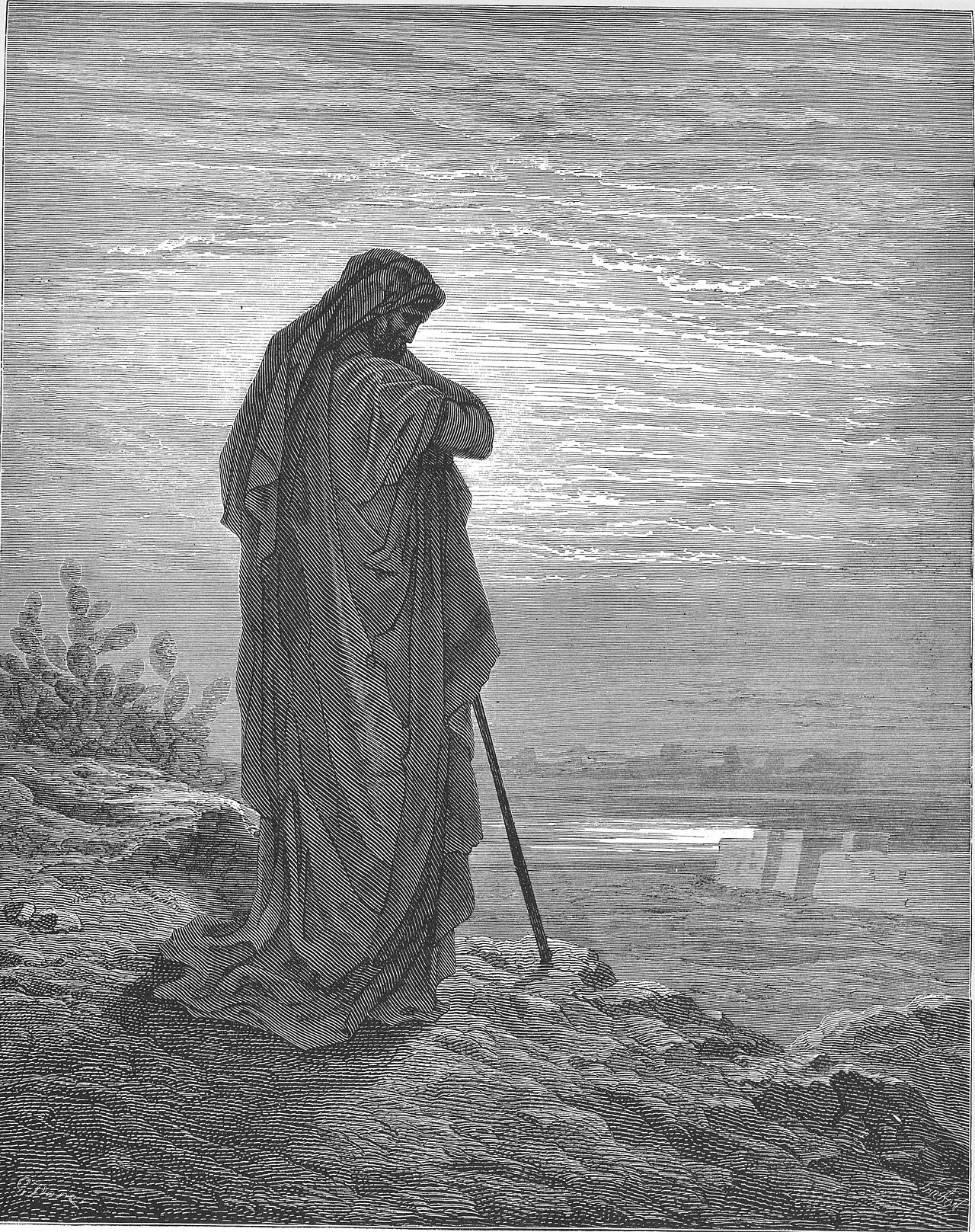
Who and where
1 name in this verse with a page on the site.
This page draws on 12 works. Open the list of works
This page draws on Adam Clarke, Commentary on the Bible; Albert Barnes, Notes, Explanatory and Practical, on the Old and New Testaments (1832-1869); Carl Friedrich Keil, The Twelve Minor Prophets; Gregory the Dialogist, FORTY GOSPEL HOMILIES 30; Gregory the Dialogist, MORALS ON THE BOOK OF JOB 1:2.89; Ishodad of Merv, COMMENTARY ON AMOS; Jamieson, Fausset & Brown, Commentary Critical and Explanatory on the Whole Bible; Jerome, Commentary on Amos; John Chrysostom, Homily 24 on 2 Corinthians; John Gill, Exposition of the Old Testament (1748-1763); John Wesley, Explanatory Notes upon the Old Testament and Matthew Henry, Commentary on the Whole Bible.