
Amos 5:8
in Amos 5He who made the Pleiades and Orion, who turns darkness into dawn and darkens day into night, who summons the waters of the sea and pours them over the face of the earth—the LORD is His name—
BSB
The same verse in ASV and KJV ▾
ASV
seek him that maketh the Pleiades and Orion, and turneth the shadow of death into the morning, and maketh the day dark with night; that calleth for the waters of the sea, and poureth them out upon the face of the earth (Jehovah is his name);
KJV
Seek him that maketh the seven stars and Orion, and turneth the shadow of death into the morning, and maketh the day dark with night: that calleth for the waters of the sea, and poureth them out upon the face of the earth: The Lord is his name:
⋯
This verse in Amos 5
Commentary
14 notes on this verseSeek him that maketh the seven stars,.... Which some connect with the preceding words, without a supplement, "they leave righteousness on the ground, who maketh the seven stars"; understanding it of Christ, the Lord our righteousness, who is made unto us righteousness, whom the Jews rejected and despised, though the Maker of the heavens and the constellations in them. Some continue, and supply the words thus, and remember not him "that maketh the seven stars", as Kimchi; or forget him, as Japhet in Aben Ezra.
This site's exposition
turn judgment to wormwood
on Amos 5:7-9
Verse 7 names the crime the rest of the chapter answers, judgment turned to wormwood, righteousness itself made bitter in the courts where it should have been sweet, and then the second of the book's three doxologies interrupts the indictment. Seek him that maketh the seven stars and Orion, that turns the shadow of death into morning and calls for the waters of the sea, sets the Creator of the constellations directly against the local judges Amos has just named corrupt. The bench reads that strengtheneth the spoiled against the strong as the doxology's own conclusion, the God of the stars able to reverse any human balance of power at will.
The record, by era
The Church Fathers4 voices
What, then, is your opinion about that section of the statement that follows, "He brings about rain upon the just and the unjust"? Surely he who gives, gives when he wishes and gives where he wishes, either by arranging the well- ordered nature or by …
When I think of the past tempest, and of the present calm, I cease not saying, "Blessed be God, who maketh all things, and changeth them; who hath brought light out of darkness; who leadeth to the gates of hell, and bringeth back; who chastiseth, but killeth not." And this I desire you too to repeat constantly, and never to desist. For if He hath benefitted us by deeds, what pardon shall we deserve, if we do not requite Him even by words. Therefore, I exhort that we never cease to give Him thanks; since if we are grateful for the former benefits, it is plain that we shall enjoy others also, which are greater. Let us say, then, continually, Blessed be God, who hath permitted us to spread before you in security the accustomed table, whilst He hath also granted you to hear our word with assurance of safety! Blessed be God, that we no longer run hither flying from the danger without, but only from desire to hear; that we no longer meet one another with agony, trembling, and anxious thoughts; but with much confidence, having shaken off all our fear. Our condition, indeed, on former days was nothing better than that of those who are tossed up and down in the midst of the deep; and expecting shipwreck every hour. We were scared all day long by innumerable rumours, and disturbed and agitated on every side; and were every day busy and curious to know who had come from the court? what news he had brought? and whether what was reported was true or false? Our nights too we passed without sleep, and whilst we looked upon the city, we wept over it, as if it were on the eve of its destruction.
See how highly God has honored us, in committing to us so excellent a frame. I made heaven and earth, He says, and to you I give the power of creation. Make your earth heaven. For it is in thy power. "I am He that maketh and transformeth all things" (Amos v. 8, Sept.), saith God of Himself. And He hath given to men a similar power; as a painter, being an affectionate father, teaches his own art to his son. I formed thy body beautiful, he says, but I give thee the power of forming something better. Make thy soul beautiful. I said, "Let the earth bring forth grass, and every fruitful tree." Do thou also say, Let this earth bring forth its proper fruit, and what thou willest to produce will be produced. "I make the summer and the cloud. I create the lightning and the wind." I formed the dragon, that is, the devil, to make sport with him. Nor have I grudged thee the like power. Thou, if thou wilt, canst sport with him, and bind him as thou wouldest a sparrow. I make the sun to rise upon the evil and the good: do thou imitate Me, by imparting of that is thine to the good and the evil. When mocked I bear with it, and do good to those who mock Me: do thou imitate Me, as thou canst. I do good, not to be requited; do thou imitate Me, and do good, not to be repaid.
(Verse 8 onwards) You who turn judgment into wormwood and abandon righteousness on earth, who makes the Bear and Orion, who turns darkness into morning and darkens day into night. He who calls the waters of the sea and pours them out on the face of the earth: His name is the Lord. He who laughs at destruction, bringing devastation upon the strong. The One who brings judgment from on high and establishes justice on earth; the One who does all things, who transforms and turns the shadow of death into morning and darkens day into night.
The Puritans and the Awakening1 voice
Divers proofs and instances are here given of God's power, as Creator, in the kingdom of nature, as both founding and governing that kingdom. First, The stars are the work of his hands; those stars which the heathens worshipped (
quarantine:debris (2026-07-29) — unbalanced-parens
7 more voices on this verse
The Puritans and the Awakening2 voices
); enquire after him; enquire of him; seek to know his mind as your rule, to secure his favour as your felicity." To press this exhortation we are told to consider, (1.) What we shall get by seeking God; it will be our life; we shall find him, and shall be happy in him.
quarantine:debris (2026-07-29) — leading-punctuation+unbalanced-parens+odd-straight-quotes
The seven stars - A constellation, whose rising about September was usually accompanied with sweet showers. Orion - Which arising about November brings usually cold, rains and frosts intermixt very seasonable for the earth.
The Nineteenth Century5 voices
That maketh the seven stars and Orion - Or, Hyades and Arcturus, Kimah and Kesil. See my notes on Job 9:9; Job 38:32, where the subject of this verse is largely considered. Turneth the shadow of death into the morning - Who makes day and night, light and darkness. Calleth for the waters of the sea - Raising them up by evaporation, and collecting them into clouds. And poureth them out - Causing them to drop down in showers upon the face of the earth. Who has done this? Jehovah is his name.
A commentator
Jamieson, Fausset & Brown1802–1910
Commentary Critical and Explanatory on the Whole Bible (1871)
He names the stars well known to shepherds (to which class Amos belonged), Orion as the precursor of the tempests which are here threatened, and the Pleiades as ushering in spring. shadow of death--Hebraism for the densest darkness. calleth for the waters of the sea--both to send deluges in judgment, and the ordinary rain in mercy (1Ki 18:44).
A commentator
Charles Spurgeon1834–1892
The Metropolitan Tabernacle Pulpit, Sermon No. 3034: “Reasons for Seeking God” (lightly modernized text, CCEL edition) · Written before 1892.
proposed
IDOLATRY has been, in every age, the besetting sin of mankind. In some form or another, the unregenerate are all given to it and even in God's people there remains in their old nature, a tendency towards it. In its grosser manifestation, idolatry is the desire of man to see God with his eyes, to have outward representation of Him who cannot be represented, who is too great, too spiritual to ever be described by human language, much less to be set forth by images of wood and stone, however elaborately carved and cunningly overlaid with gold!
A commentator
Charles Spurgeon1834–1892
The Metropolitan Tabernacle Pulpit, Sermon No. 3034: “Reasons for Seeking God” (lightly modernized text, CCEL edition) · Written before 1892.
proposed
IDOLATRY has been, in every age, the besetting sin of mankind. In some form or another, the unregenerate are all given to it and even in God's people there remains in their old nature, a tendency towards it. In its grosser manifestation, idolatry is the desire of man to see God with his eyes, to have outward representation of Him who cannot be represented, who is too great, too spiritual to ever be described by human language, much less to be set forth by images of wood and stone, however elaborately carved and cunningly overlaid with gold! There is a great God who fills all space and yet is greater than space—whose existence is without beginning and without end, who is everywhere present and universally self-existent! But man is so unspiritual that he will not worship this Invisible One in spirit and in truth, but craves after outward similitudes, symbols and signs. If Aaron makes a calf, Israel forgets the Divine Jehovah's Glory and says of the image of an ox that eats grass, "These are your gods, O Israel, which brought you up out of the land of Egypt." We are apt to imagine that it is a very strange freak of human depravity when men are led to worship visible objects and signs, but it is not at all unusual or singular! It is the general sin of all mankind. I suppose no man has been entirely free from it and every Believer has to contend against it in its subtler forms, for idolatry takes insinuating shapes, less gross in appearance than the worship of Dagon or Ashtaroth, but quite as sinful.
A commentator
Albert Barnes1798–1870
Notes, Explanatory and Practical, on the Old and New Testaments (1832-1869)
proposed
Seek Him that maketh the seven stars - Misbelief effaces the thought of God as He Is. It retains the name God, but means something quite different from the One True God. So people spoke of “the Deity,” as a sort of First Cause of all things, and did not perceive that they only meant to own that this fair harmony of things created was not (at least as it now exists,) self-existent, and that they had lost sight of the Personal God who had made known to them His Will, whom they were to believe in, obey, fear, love. “The Deity” was no object of fear or love. It was but a bold confession that they did not mean to be Atheists, or that they meant intellectually to admire the creation. Such confessions, even when not consciously atheistic, become at least the parents of Atheism or Panotheism, and slide insensibly into either. For a First Cause, who is conceived of as no more, is an abstraction, not God. God is the Cause of all causes. All things are, and have their relations to each other, as cause and effect, because He so created them. A “Great First Cause,” who is only thought of as a Cause, is a mere fiction of a man’s imagining, an attempt to appear to account for the mysteries of being, without owning that, since our being is from God, we are responsible creatures whom He created for Himself, and who are to yield to Him an account of the use of our being which He gave us. In like way, Israel had probably so mixed up the thought of God with Nature, that it had lost sight of God, as distinct from the creation. And so Amos, after appealing to their consciences, sets forth God to them as the Creator, Disposer of all things, and the Just God, who redresseth man’s violence and injustice. […]
The words behind it
18 Hebrew wordsEvery Hebrew word of this verse in the order it stands, with what it means and the door to its own study. The last column counts the times a word stands in the whole Bible: the rarer the word, the more the places it appears belong together.
| Hebrew | Sound | Meaning | Word study | In the Bible |
|---|---|---|---|---|
| עֹשֵׂ֨ה | ʾoseh | [the] maker of | H6213 → | 2628 times |
| כִימָ֜ה | khimah | Pleiades | H3598 → | |
| וּכְסִ֗יל | ukhesil | and Orion | H3685 → | |
| וְהֹפֵ֤ךְ | vehofekh | and [the one who] turns | H2015 → | 94 times |
| לַבֹּ֙קֶר֙ | laboker | into <the> morning | H1242 → | |
| צַלְמָ֔וֶת | tzalmavet | deep darkness | H6757 → | |
| וְי֖וֹם | veyom | and day | H3117 → | 2304 times |
| לַ֣יְלָה | laylah | night | H3915 → | |
| הֶחְשִׁ֑יךְ | hechshikh | he makes dark | H2821 → | |
| הַקּוֹרֵ֣א | hakore' | the [one who] summons | H7121 → | 733 times |
| לְמֵֽי־ | lemei- | <to> [the] waters of | H4325 → | 581 times |
| הַיָּ֗ם | haiyam | the sea | H3220 → | 396 times |
| וַֽיִּשְׁפְּכֵ֛ם | vaiyishpekhem | and he poured out them | H8210 → | |
| עַל־ | ʾal- | on | H5921 → | 5755 times |
| פְּנֵ֥י | penei | [the] surface of | H6440 → | 2123 times |
| הָאָ֖רֶץ | haaretz | the earth | H776 → | 2504 times |
| יְהוָ֥ה | yahweh | [is] Yahweh | H3068 → | 6520 times |
| שְׁמֽוֹ׃ ס | shemo | name his | H8034 → | 864 times |
עֹשֵׂ֨ה[the] maker of
ʾosehH6213 →2628 times
כִימָ֜הPleiades
khimahH3598 →
וּכְסִ֗ילand Orion
ukhesilH3685 →
וְהֹפֵ֤ךְand [the one who] turns
vehofekhH2015 →94 times
לַבֹּ֙קֶר֙into <the> morning
labokerH1242 →
צַלְמָ֔וֶתdeep darkness
tzalmavetH6757 →
וְי֖וֹםand day
veyomH3117 →2304 times
לַ֣יְלָהnight
laylahH3915 →
הֶחְשִׁ֑יךְhe makes dark
hechshikhH2821 →
הַקּוֹרֵ֣אthe [one who] summons
hakore'H7121 →733 times
לְמֵֽי־<to> [the] waters of
lemei-H4325 →581 times
הַיָּ֗םthe sea
haiyamH3220 →396 times
וַֽיִּשְׁפְּכֵ֛םand he poured out them
vaiyishpekhemH8210 →
עַל־on
ʾal-H5921 →5755 times
פְּנֵ֥י[the] surface of
peneiH6440 →2123 times
הָאָ֖רֶץthe earth
haaretzH776 →2504 times
יְהוָ֥ה[is] Yahweh
yahwehH3068 →6520 times
שְׁמֽוֹ׃ סname his
shemoH8034 →864 times
A shaded row is a word that stands 400 times or fewer in the Bible.
The walk
8 stopsEach card is a verse this one points to, and under it the verses that one points to in turn. Where several paths arrive at the same place, that place is listed first: the text keeps returning to it.
Through
Amos 9:6He builds His upper rooms in the heavens and founds His vault upon the earth. He summons the waters of the sea and pours them over the face of the earth. The LORD is…
it leads to
- Psalms 104:13
He waters the mountains from His chambers; the earth is satisfied by the fruit of His works.
Reached by 2 separate paths from here.
- Psalms 104:3
laying the beams of His chambers in the waters above, making the clouds His chariot, walking on the wings of the wind.
- Psalms 104:13
Through
Amos 4:13For behold, He who forms the mountains, who creates the wind and reveals His thoughts to man, who turns the dawn to darkness and strides on the heights of the earth—the LORD, the God…
it leads to
- Micah 1:3
For behold, the LORD comes forth from His dwelling place; He will come down and tread on the high places of the earth.
- Amos 9:6
He builds His upper rooms in the heavens and founds His vault upon the earth. He summons the waters of the sea and pours them over the face of the earth. The LORD is…
- Micah 1:3
Through
Amos 8:9And in that day, declares the Lord GOD, I will make the sun go down at noon, and I will darken the earth in the daytime.
it leads to
- Mark 15:33
From the sixth hour until the ninth hour darkness came over all the land.
- Matthew 27:45
From the sixth hour until the ninth hour darkness came over all the land.
- Jeremiah 15:9
The mother of seven will grow faint; she will breathe her last breath. Her sun will set while it is still day; she will be disgraced and humiliated. And the rest I will put…
- Luke 23:44
It was now about the sixth hour, and darkness came over all the land until the ninth hour.
- Mark 15:33
Where this verse is studied
About Amos
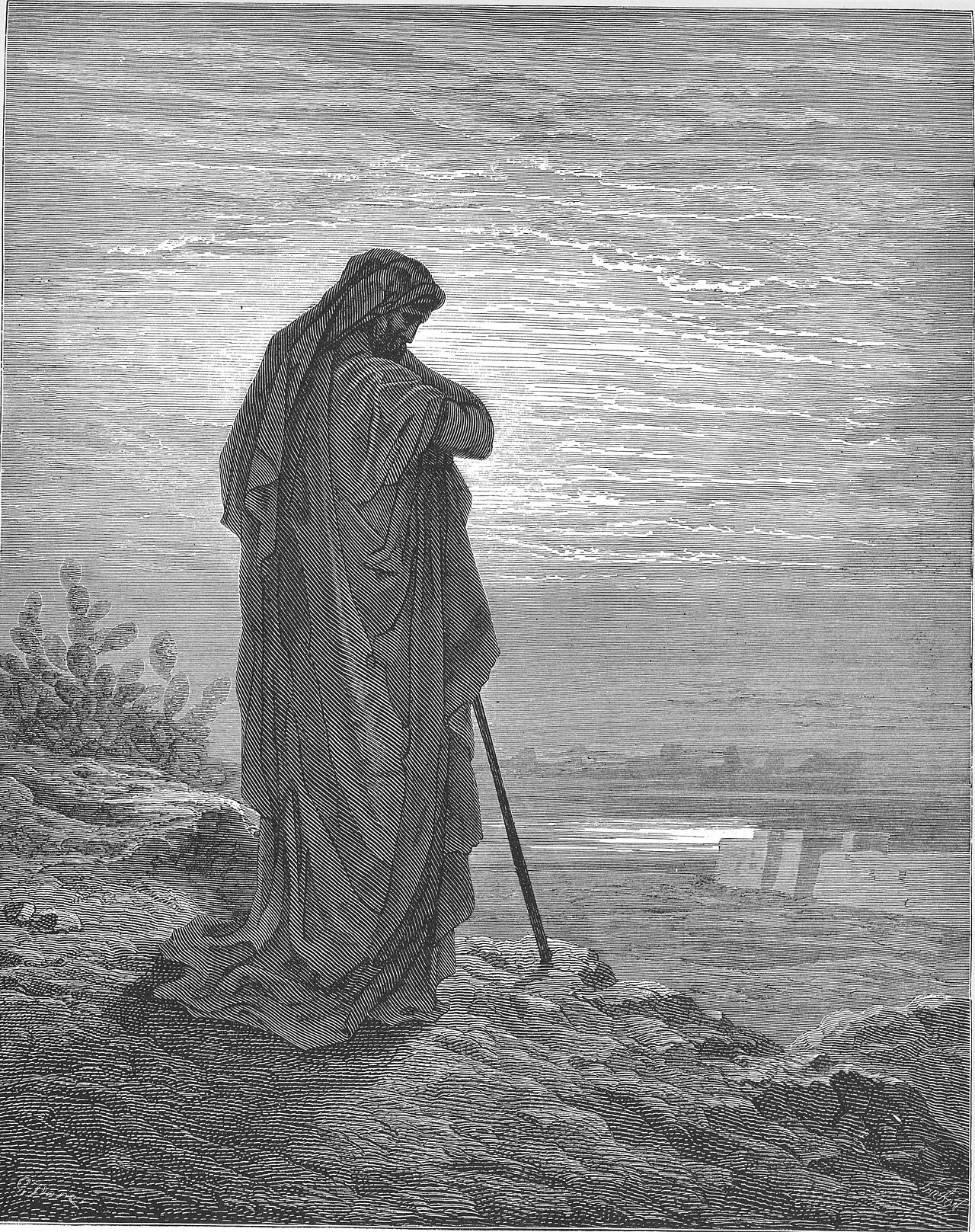
This page draws on 13 works. Open the list of works
This page draws on Adam Clarke, Commentary on the Bible; Albert Barnes, Notes on the Old Testament; Albert Barnes, Notes, Explanatory and Practical, on the Old and New Testaments (1832-1869); Carl Friedrich Keil, The Twelve Minor Prophets; Charles Spurgeon, The Metropolitan Tabernacle Pulpit, Sermon No. 3034: “Reasons for Seeking God” (lightly modernized text, CCEL edition); Jamieson, Fausset & Brown, Commentary Critical and Explanatory on the Whole Bible; Jerome, Commentary on Amos; John Chrysostom, Concerning the Statues, Homily 11; John Chrysostom, Homily 15 on 1 Timothy; John Gill, Exposition of the Old Testament (1748-1763); John Wesley, Explanatory Notes upon the Old Testament; Matthew Henry, Commentary on the Whole Bible and Paulus Orosius, DEFENSE AGAINST THE PELAGIANS 19.