
2 Samuel 21:11
in 2 Samuel 21When David was told what Saul’s concubine Rizpah, daughter of Aiah, had done,
BSB
The same verse in ASV and KJV ▾
ASV
And it was told David what Rizpah the daughter of Aiah, the concubine of Saul, had done.
KJV
And it was told David what Rizpah the daughter of Aiah, the concubine of Saul, had done.
⋯
This verse in 2 Samuel 21
Commentary
3 notes on this verseDavid - Who heard it with so much approbation, that he thought fit to imitate her piety, being by her example provoked to do what hitherto he had neglected, to bestow an honourable interment on the remains of Saul and Jonathan, and, with them, upon those that are now put to death, that the honour done to them herein, might be some comfort to this disconsolate widow.
This site's exposition
spread it for her upon the rock
on 2 Samuel 21:10-11
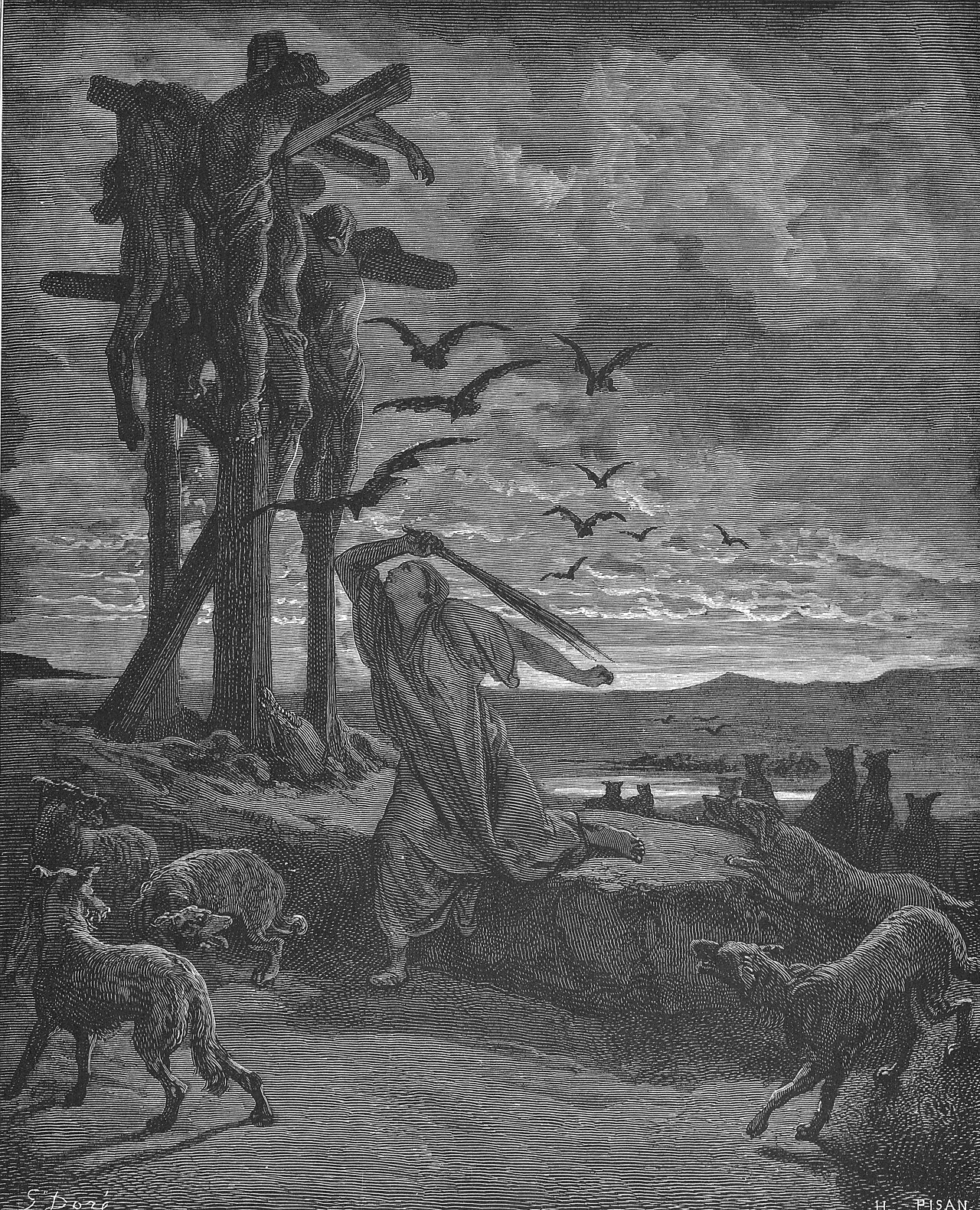
Rizpah pitches sackcloth on the bare rock and keeps a vigil the law did not require of her, driving off carrion birds by day and wild animals by night across the months from barley harvest until the autumn rain finally falls. Wesley reads her vigil as evidence the bodies had to stay exposed rather than be buried at once, until God's judgment against the land was answered. Word of her watch reaches David, and Gill reads the report as moving him to compassion rather than offense, since a grieving mother's faithfulness could not be mistaken for a grudge against the throne. One woman's unbroken watch over the dead becomes the reason a king finally remembers the unburied bones of a whole family.
The record, by era
The Puritans and the Awakening1 voice
And it was told David what Rizpah the daughter of Aiah, the concubine of Saul, had done. Whether this was told out of good will or ill will is not certain; however, it was not disagreeable to David, but served to move pity and compassion in him to the woman, and to stir him up to give an honourable interment to Saul and his sons; and which would show that this fact was not done out of personal pique and revenge to his family, but in obedience to the will of God, and the honour of his name.
How the passage was read
What the Jewish commentators add
On the verses either side of this one
Until the rains fell on them. During the rainy season in Tishri. Their bones were not removed for burial. But is it not written, "His body should not remain [hanging] overnight" 18 Devorim:22. Why did Dovid let this happen? ?
1 more on this passage, in their own words ▾
He took Shaul's bones. He [Dovid] was told concerning them, "Because of Shaul" 20 Earlier in:1. who was not eulogized according to halachah.
This section is reception history: how the passage was read and kept in the Jewish tradition. Where a reading parts from an essential of the Christian faith, the section says so at that point.
Texts and citation data: Sefaria; each excerpt follows its version’s licence. 3 further sources are cited on this chapter that carry no English text this site may quote or only restate the verse.
The words behind it
10 Hebrew wordsEvery Hebrew word of this verse in the order it stands, with what it means and the door to its own study. The last column counts the times a word stands in the whole Bible: the rarer the word, the more the places it appears belong together.
| Hebrew | Sound | Meaning | Word study | In the Bible |
|---|---|---|---|---|
| וַיֻּגַּ֖ד | vaiyugad | and it was told | H5046 → | 370 times |
| לְדָוִ֑ד | ledavid | to David | H1732 → | 999 times |
| אֵ֧ת | ʾet | <obj.> | H853 → | 10935 times |
| אֲשֶׁר־ | ʾasher- | [that] which | H834 → | 5497 times |
| עָשְׂתָ֛ה | ʾasetah | she had done | H6213 → | 2628 times |
| רִצְפָּ֥ה | ritzpah | Rizpah | H7532 → | 4 times |
| בַת־ | vat- | [the] daughter of | H1323 → | 588 times |
| אַיָּ֖ה | ʾaiyah | Aiah | H345 → | 6 times |
| פִּלֶ֥גֶשׁ | pilegesh | [the] concubine of | H6370 → | 37 times |
| שָׁאֽוּל׃ | shaul | Saul | H7586 → | 402 times |
וַיֻּגַּ֖דand it was told
vaiyugadH5046 →370 times
לְדָוִ֑דto David
ledavidH1732 →999 times
אֵ֧ת<obj.>
ʾetH853 →10935 times
אֲשֶׁר־[that] which
ʾasher-H834 →5497 times
עָשְׂתָ֛הshe had done
ʾasetahH6213 →2628 times
רִצְפָּ֥הRizpah
ritzpahH7532 →4 times
בַת־[the] daughter of
vat-H1323 →588 times
אַיָּ֖הAiah
ʾaiyahH345 →6 times
פִּלֶ֥גֶשׁ[the] concubine of
pilegeshH6370 →37 times
שָׁאֽוּל׃Saul
shaulH7586 →402 times
A shaded row is a word that stands 400 times or fewer in the Bible.
The walk
5 stopsEach card is a verse this one points to, and under it the verses that one points to in turn. Where several paths arrive at the same place, that place is listed first: the text keeps returning to it.
Through
2 Samuel 2:4Then the men of Judah came to Hebron, and there they anointed David king over the house of Judah. And they told David, “It was the men of Jabesh-gilead who buried Saul.”
it leads to
- 2 Samuel 5:5
In Hebron he reigned over Judah seven years and six months, and in Jerusalem he reigned thirty-three years over all Israel and Judah.
- 1 Samuel 31:11–13
When the people of Jabesh-gilead heard what the Philistines had done to Saul,
- 2 Samuel 5:3
So all the elders of Israel came to the king at Hebron, where King David made with them a covenant before the LORD. And they anointed him king over Israel.
- 1 Chronicles 11:3
So all the elders of Israel came to the king at Hebron, where David made a covenant with them before the LORD. And they anointed him king over Israel, according to the word of…
- 1 Samuel 16:13
So Samuel took the horn of oil and anointed him in the presence of his brothers, and the Spirit of the LORD rushed upon David from that day forward. Then Samuel set out and…
- 2 Samuel 5:5
Where this verse is studied
About 2 Samuel
Who and where
1 name in this verse with a page on the site.
This page draws on John Gill, Exposition of the Old Testament; John Gill, Exposition of the Old Testament (1748-1763) and John Wesley, Explanatory Notes upon the Old Testament.