
2 Samuel 10:9
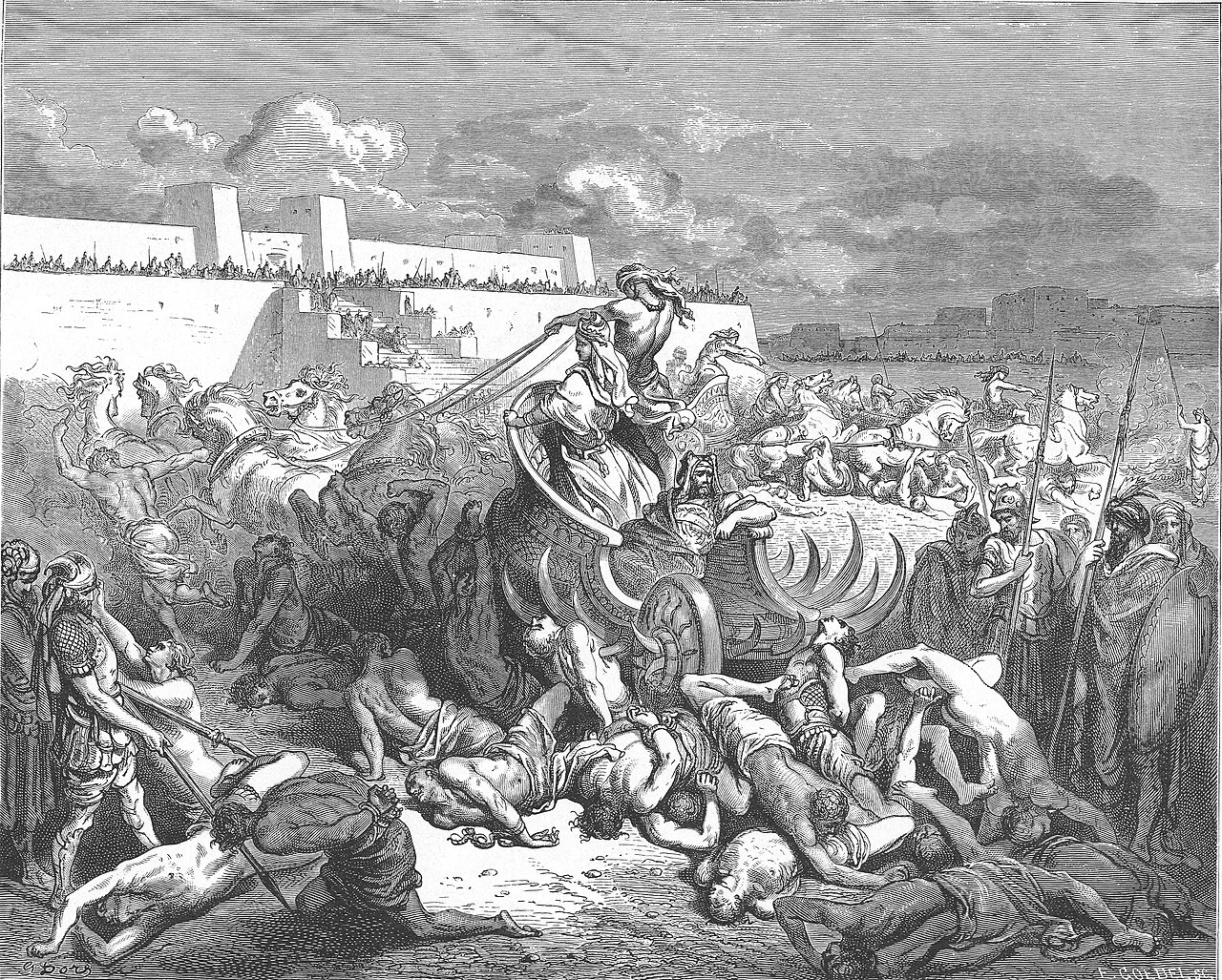
in 2 Samuel 10When Joab saw the battle lines before him and behind him, he selected some of the best men of Israel and arrayed them against the Arameans.
BSB
The same verse in ASV and KJV ▾
ASV
Now when Joab saw that the battle was set against him before and behind, he chose of all the choice men of Israel, and put them in array against the Syrians:
KJV
When Joab saw that the front of the battle was against him before and behind, he chose of all the choice men of Israel, and put them in array against the Syrians:
⋯
This verse in 2 Samuel 10
Commentary
5 notes on this verseA commentator
Albert Barnes1798–1870
Notes, Explanatory and Practical, on the Old and New Testaments (1832-1869)
The two armies of the Ammonites and the Syrians were drawn up facing one another; the Ammonites supported by the city Rabbah behind them; the Syrians in great force, with numerous chariots able to manoeuvre in the plain in front of Medeba. If Joab advanced against either, he would have the other in his rear.
This site's exposition
the front of the battle was against him before and behind
on 2 Samuel 10:9-11
Caught between two fronts, Joab divides the army rather than choosing one enemy: he takes the chosen men against the Syrians himself and gives the rest to his brother Abishai against Ammon. His instruction binds the two forces into one plan, whichever side breaks first, the other comes to help, so neither brother fights alone. Henry draws the line forward into the church: the soldiers of Christ owe each other the same standing pact, to strengthen one another's hands when the pressure falls harder on one than the other.
The record, by era
The Puritans and the Awakening1 voice
When Joab saw that the front of the battle was against him before and behind,....
The Nineteenth Century2 voices
A commentator
Jamieson, Fausset & Brown1802–1910
Commentary Critical and Explanatory on the Whole Bible (1871)
proposed
It was a just and necessary war that had been forced on Israel, and they could hope for the blessing of God upon their arms. With great judgment the battle opened against the mercenaries, who could not stand against the furious onset of Joab, and not feeling the cause their own, consulted their safety by flight.
Before and behind - It is probable that one of the armies was in the field, and the other in the city, when Joab arrived. When he fronted this army, the other appears to have issued from the city, and to have taken him in the rear; he was therefore obliged to divide his army as here mentioned; one part to face the Syrians commanded by himself, and the other to face the Ammonites commanded by his brother Abishai.
The words behind it
16 Hebrew wordsEvery Hebrew word of this verse in the order it stands, with what it means and the door to its own study. The last column counts the times a word stands in the whole Bible: the rarer the word, the more the places it appears belong together.
| Hebrew | Sound | Meaning | Word study | In the Bible |
|---|---|---|---|---|
| וַיַּ֣רְא | vaiyar' | and he saw | H7200 → | 1300 times |
| יוֹאָ֗ב | yoav | Joab | H3097 → | 144 times |
| כִּֽי־ | ki- | that | H3588 → | 4482 times |
| הָיְתָ֤ה | hayetah | it was | H1961 → | 3559 times |
| אֵלָיו֙ | ʾelav | against him | H413 → | 5510 times |
| פְּנֵ֣י | penei | [the] face of | H6440 → | 2123 times |
| הַמִּלְחָמָ֔ה | hamilchamah | the battle | H4421 → | 320 times |
| מִפָּנִ֖ים | mipanim | from before | H6440 → | 2123 times |
| וּמֵֽאָח֑וֹר | umeachor | and from behind | H268 → | |
| וַיִּבְחַ֗ר | vaiyivchar | and he chose | H977 → | 171 times |
| מִכֹּל֙ | mikol | some of all | H3605 → | 5413 times |
| בְּחוּרֵ֣י | bechurei | [the] chosen [men] | H977 → | 171 times |
| יִשְׂרָאֵ֔ל | beyisrael | of Israel | H3478 → | 2507 times |
| וַֽיַּעֲרֹ֖ךְ | vaiyaarokh | and he deployed [them] | H6186 → | 74 times |
| לִקְרַ֥את | likrat | to meet | H7122 → | 139 times |
| אֲרָֽם׃ | ʾaram | Aram | H758 → | 143 times |
וַיַּ֣רְאand he saw
vaiyar'H7200 →1300 times
יוֹאָ֗בJoab
yoavH3097 →144 times
כִּֽי־that
ki-H3588 →4482 times
הָיְתָ֤הit was
hayetahH1961 →3559 times
אֵלָיו֙against him
ʾelavH413 →5510 times
פְּנֵ֣י[the] face of
peneiH6440 →2123 times
הַמִּלְחָמָ֔הthe battle
hamilchamahH4421 →320 times
מִפָּנִ֖יםfrom before
mipanimH6440 →2123 times
וּמֵֽאָח֑וֹרand from behind
umeachorH268 →
וַיִּבְחַ֗רand he chose
vaiyivcharH977 →171 times
מִכֹּל֙some of all
mikolH3605 →5413 times
בְּחוּרֵ֣י[the] chosen [men]
bechureiH977 →171 times
יִשְׂרָאֵ֔לof Israel
beyisraelH3478 →2507 times
וַֽיַּעֲרֹ֖ךְand he deployed [them]
vaiyaarokhH6186 →74 times
לִקְרַ֥אתto meet
likratH7122 →139 times
אֲרָֽם׃Aram
ʾaramH758 →143 times
A shaded row is a word that stands 400 times or fewer in the Bible.
Where this verse is studied
On this page
About 2 Samuel
This page draws on Adam Clarke, Commentary on the Bible; Albert Barnes, Notes, Explanatory and Practical, on the Old and New Testaments (1832-1869); Jamieson, Fausset & Brown, Commentary Critical and Explanatory on the Whole Bible; John Gill, Exposition of the Old Testament; John Gill, Exposition of the Old Testament (1748-1763) and Matthew Henry, Commentary on the Whole Bible.