
2 Kings 1:10
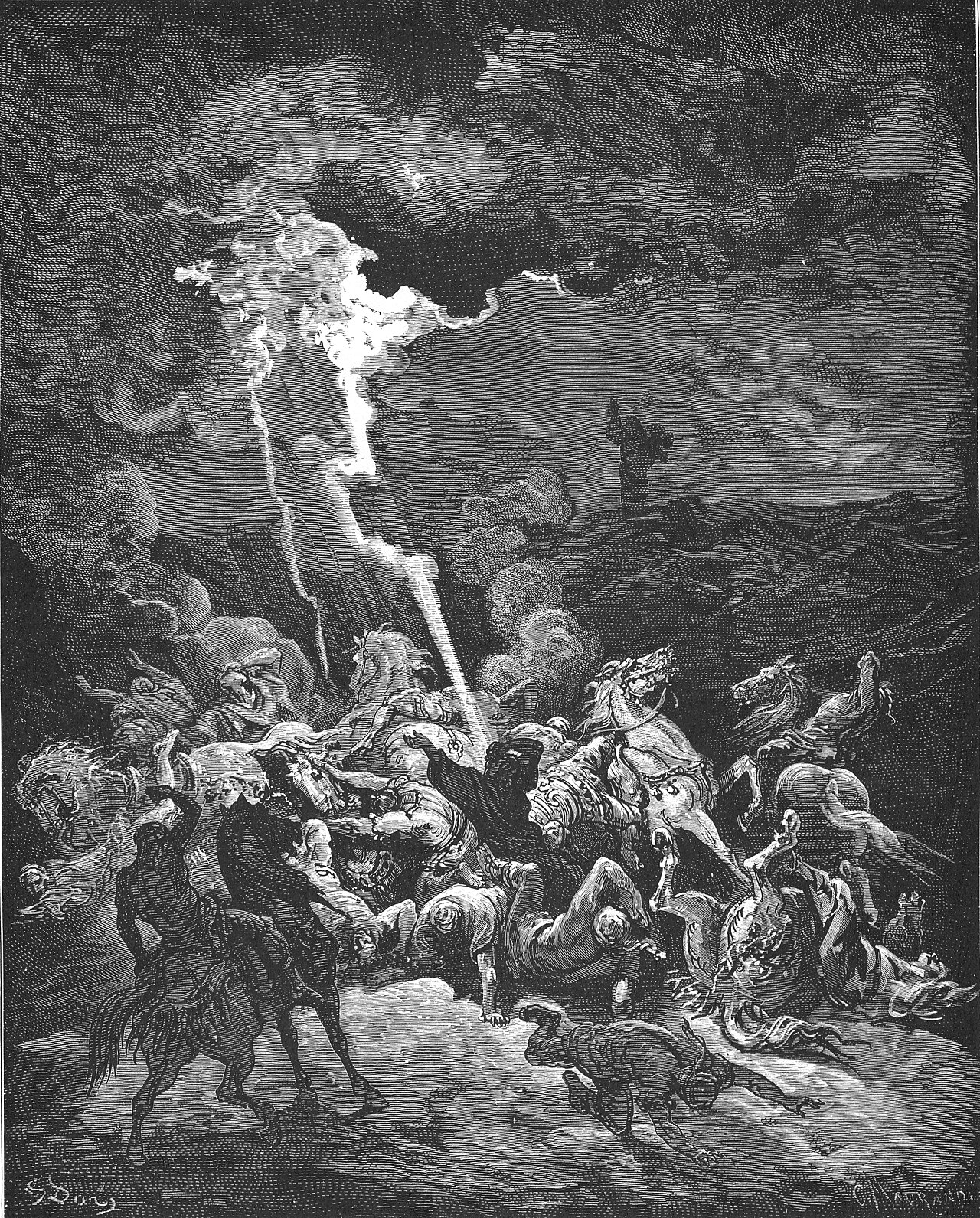
in 2 Kings 1Elijah answered the captain, “If I am a man of God, may fire come down from heaven and consume you and your fifty men.” And fire came down from heaven and consumed the captain and his fifty men.
BSB
The same verse in ASV and KJV ▾
ASV
And Elijah answered and said to the captain of fifty, If I be a man of God, let fire come down from heaven, and consume thee and thy fifty. And there came down fire from heaven, and consumed him and his fifty.
KJV
And Elijah answered and said to the captain of fifty, If I be a man of God, then let fire come down from heaven, and consume thee and thy fifty. And there came down fire from heaven, and consumed him and his fifty.
⋯
This verse in 2 Kings 1
Commentary
11 notes on this verseNow if you consider well, dearly beloved, you will realize that not only the Jewish people fell through pride, but also those two captains perished from the same weakness. With great pride and arrogance but lacking any humility, the latter came to blessed Elijah and …
This site's exposition
a captain of fifty with his fifty
on 2 Kings 1:9-10
The first captain arrives with fifty men and a command dressed as courtesy, thou man of God, the king hath said, come down, though Adam Clarke and others read plain hostility under the polite title, since a squad of fifty was not sent to deliver a mere invitation. Elijah answers with a test in the same shape Carmel already proved, if I be a man of God, then let fire come down from heaven, and the fire falls exactly as asked, consuming the captain and all fifty with him. The prophet supplies no fire of his own. He only states the terms, and heaven answers them.
The record, by era
The Church Fathers3 voices
But the stubborn king did not fear the word of the prophet and said in his heart, "He lies." And so he did not pay attention to his warning, which exhorted him to get rid of the reason of his evils and to repent. He …
A commentator
Philoxenus of Mabbug13 Ascetic Discourses, Discourse 2 -- On Faith · Written before 523.
proposed
And in another place, concerning the captains of the hosts who went up to bring him down with the others who were with them, it is written that he commanded and spake with Godlike authority, and the fire of God came down from heaven and …
These wretched men are apt to censure the writings of the Old Testament saying, "How was it just for blessed Elijah to burn two captains with their soldiers by means of fire brought down from heaven?" How justly and mercifully this was done, dearly beloved, …
The Puritans and the Awakening2 voices
Let fire, &c. - Elijah did this, not to secure himself, he could have done that some other way: nor to revenge himself, for it was not his own cause that he acted in: but to prove his mission, and to reveal the wrath of God from heaven against the ungodliness and unrighteousness of men.
Concerning the work of my hands, command you me, Isa. xiv. What an interest heaven had in the prophets! God was always ready to plead their cause, and avenge the injuries done to them; kings shall still be rebuked for their sakes, and charged to do his prophets no harm; one Elijah is more to God than 10,000 captains and their fifties.
4 more voices on this verse
The Puritans and the Awakening1 voice
And Elijah answered and said to the captain of fifty, if I be a man of God,....
The Nineteenth Century3 voices
And there came down fire - Some have blamed the prophet for destroying these men, by bringing down fire from heaven upon them. But they do not consider that it was no more possible for Elijah to bring down fire from heaven, than for them to do it. God alone could send the fire; and as he is just and good, he would not have destroyed these men had there not been a sufficient cause to justify the act.
A commentator
Jamieson, Fausset & Brown1802–1910
Commentary Critical and Explanatory on the Whole Bible (1871)
proposed
15, 16. he arose, and went down with him--a marvellous instance of faith and obedience. Though he well knew how obnoxious his presence was to the king, yet, on receiving God's command, he goes unhesitatingly, and repeats, with his own lips, the unwelcome tidings conveyed by the messengers. AHAZIAH DIES, AND IS SUCCEEDED BY JEHORAM.
A commentator
Albert Barnes1798–1870
Notes, Explanatory and Practical, on the Old and New Testaments (1832-1869)
proposed
The charge of cruelty made against Elijah makes it needful to consider the question: What was Elijah’s motive? And the answer is: Sharply to make a signal example, to vindicate God’s honor in a striking way. Ahaziah had, as it were, challenged Yahweh to a trial of strength by sending a band of fifty to arrest one man. Elijah was not Jesus Christ, able to reconcile mercy with truth, the vindication of God’s honor with the utmost tenderness for erring men, and awe them merely by His presence (compare Joh 18:6). In Elijah the spirit of the Law was embodied in its full severity. His zeal was fierce; he was not shocked by blood; he had no softness and no relenting. He did not permanently profit by the warning at Horeb (1Ki 19:12 note). He continued the uncompromising avenger of sin, the wielder of the terrors of the Lord, such exactly as he had shown himself at Carmel. He is, consequently, no pattern for Christian men Luk 9:55; but his character is the perfection of the purely legal type. No true Christian after Pentecost would have done what Elijah did. But what he did, when he did it, was not sinful. It was but executing strict, stern justice. Elijah asked that fire should fall - God made it fall; and, by so doing, both vindicated His own honor, and justified the prayer of His prophet.
The words behind it
26 Hebrew wordsEvery Hebrew word of this verse in the order it stands, with what it means and the door to its own study. The last column counts the times a word stands in the whole Bible: the rarer the word, the more the places it appears belong together.
| Hebrew | Sound | Meaning | Word study | In the Bible |
|---|---|---|---|---|
| וַיַּעֲנֶ֣ה | vaiyaaneh | and he answered | H6030 → | 331 times |
| אֵלִיָּ֗הוּ | ʾeliyahu | Elijah | H452 → | 71 times |
| וַיְדַבֵּר֮ | vaydaber | and he spoke | H1696 → | 1141 times |
| אֶל־ | ʾel- | to | H413 → | 5510 times |
| שַׂ֣ר | sar | [the] commander of | H8269 → | 421 times |
| הַחֲמִשִּׁים֒ | hachamishim | the fifty | H2572 → | 163 times |
| וְאִם־ | veim- | and if | H518 → | 1069 times |
| אִ֤ישׁ | ʾish | [am] a man of | H376 → | 1663 times |
| אֱלֹהִים֙ | ʾelohim | God | H430 → | 2601 times |
| אָ֔נִי | ʾani | I | H589 → | 874 times |
| תֵּ֤רֶד | tered | let it come down | H3381 → | 381 times |
| אֵשׁ֙ | ʾesh | fire | H784 → | 378 times |
| מִן־ | min- | from | H4480 → | 1188 times |
| הַשָּׁמַ֔יִם | hashamayim | the heavens | H8064 → | 421 times |
| וְתֹאכַ֥ל | vetokhal | and let it consume | H398 → | 810 times |
| אֹתְךָ֖ | ʾotekha | <obj.> you | H853 → | 10935 times |
| וְאֶת־ | veet | and <obj.> | H853 → | 10935 times |
| חֲמִשֶּׁ֑יךָ | chamisheikha | fifty [men] your | H2572 → | 163 times |
| וַתֵּ֤רֶד | vatered | and it came down | H3381 → | 381 times |
| אֵשׁ֙ | ʾesh | fire | H784 → | 378 times |
| מִן־ | min- | from | H4480 → | 1188 times |
| הַשָּׁמַ֔יִם | hashamayim | the heavens | H8064 → | 421 times |
| וַתֹּ֥אכַל | vatokhal | and it consumed | H398 → | 810 times |
| אֹת֖וֹ | ʾoto | <obj.> him | H853 → | 10935 times |
| וְאֶת־ | veet | and <obj.> | H853 → | 10935 times |
| חֲמִשָּֽׁיו׃ | chamishav | fifty [men] his | H2572 → | 163 times |
וַיַּעֲנֶ֣הand he answered
vaiyaanehH6030 →331 times
אֵלִיָּ֗הוּElijah
ʾeliyahuH452 →71 times
וַיְדַבֵּר֮and he spoke
vaydaberH1696 →1141 times
אֶל־to
ʾel-H413 →5510 times
שַׂ֣ר[the] commander of
sarH8269 →421 times
הַחֲמִשִּׁים֒the fifty
hachamishimH2572 →163 times
וְאִם־and if
veim-H518 →1069 times
אִ֤ישׁ[am] a man of
ʾishH376 →1663 times
אֱלֹהִים֙God
ʾelohimH430 →2601 times
אָ֔נִיI
ʾaniH589 →874 times
תֵּ֤רֶדlet it come down
teredH3381 →381 times
אֵשׁ֙fire
ʾeshH784 →378 times
מִן־from
min-H4480 →1188 times
הַשָּׁמַ֔יִםthe heavens
hashamayimH8064 →421 times
וְתֹאכַ֥לand let it consume
vetokhalH398 →810 times
אֹתְךָ֖<obj.> you
ʾotekhaH853 →10935 times
וְאֶת־and <obj.>
veetH853 →10935 times
חֲמִשֶּׁ֑יךָfifty [men] your
chamisheikhaH2572 →163 times
וַתֵּ֤רֶדand it came down
vateredH3381 →381 times
אֵשׁ֙fire
ʾeshH784 →378 times
מִן־from
min-H4480 →1188 times
הַשָּׁמַ֔יִםthe heavens
hashamayimH8064 →421 times
וַתֹּ֥אכַלand it consumed
vatokhalH398 →810 times
אֹת֖וֹ<obj.> him
ʾotoH853 →10935 times
וְאֶת־and <obj.>
veetH853 →10935 times
חֲמִשָּֽׁיו׃fifty [men] his
chamishavH2572 →163 times
A shaded row is a word that stands 400 times or fewer in the Bible.
The walk
8 stopsEach card is a verse this one points to, and under it the verses that one points to in turn. Where several paths arrive at the same place, that place is listed first: the text keeps returning to it.
Through
Daniel 3:25“Look!” he exclaimed. “I see four men, unbound and unharmed, walking around in the fire—and the fourth looks like a son of the gods!”
it leads to
- Isaiah 43:2
When you pass through the waters, I will be with you; and when you go through the rivers, they will not overwhelm you. When you walk through the fire, you will not be scorched;…
- Acts 28:5
But Paul shook the creature off into the fire and suffered no ill effects.
- Mark 16:18
they will pick up snakes with their hands, and if they drink any deadly poison, it will not harm them; they will lay their hands on the sick, and they will be made well.”
- Psalms 91:3–9
Surely He will deliver you from the snare of the fowler, and from the deadly plague.
- Psalms 34:7
The angel of the LORD encamps around those who fear Him, and he delivers them.
- Isaiah 43:2
Through
Luke 9:54When the disciples James and John saw this, they asked, “Lord, do You want us to call down fire from heaven to consume them?”
it leads to
- 2 Kings 1:10–14
Elijah answered the captain, “If I am a man of God, may fire come down from heaven and consume you and your fifty men.” And fire came down from heaven and consumed the captain…
- James 3:14–18
But if you harbor bitter jealousy and selfish ambition in your hearts, do not boast in it or deny the truth.
- James 1:19–20
My beloved brothers, understand this: Everyone should be quick to listen, slow to speak, and slow to anger,
- 2 Kings 1:10–14
Where this verse is studied
On this page
Studies2
On this verse
On this chapter
About 2 Kings
Who and where
1 name in this verse with a page on the site.
This page draws on 10 works. Open the list of works
This page draws on Adam Clarke, Commentary on the Bible; Albert Barnes, Notes, Explanatory and Practical, on the Old and New Testaments (1832-1869); Caesarius of Arles, SERMON 125.2; Caesarius of Arles, SERMON 125.1; Ephrem the Syrian, ON THE SECOND BOOK OF KINGS 1:1; Jamieson, Fausset & Brown, Commentary Critical and Explanatory on the Whole Bible; John Gill, Exposition of the Old Testament (1748-1763); John Wesley, Explanatory Notes upon the Old Testament; Matthew Henry, Commentary on the Whole Bible and Philoxenus of Mabbug, 13 Ascetic Discourses, Discourse 2 -- On Faith.