
2 Timothy 3:15
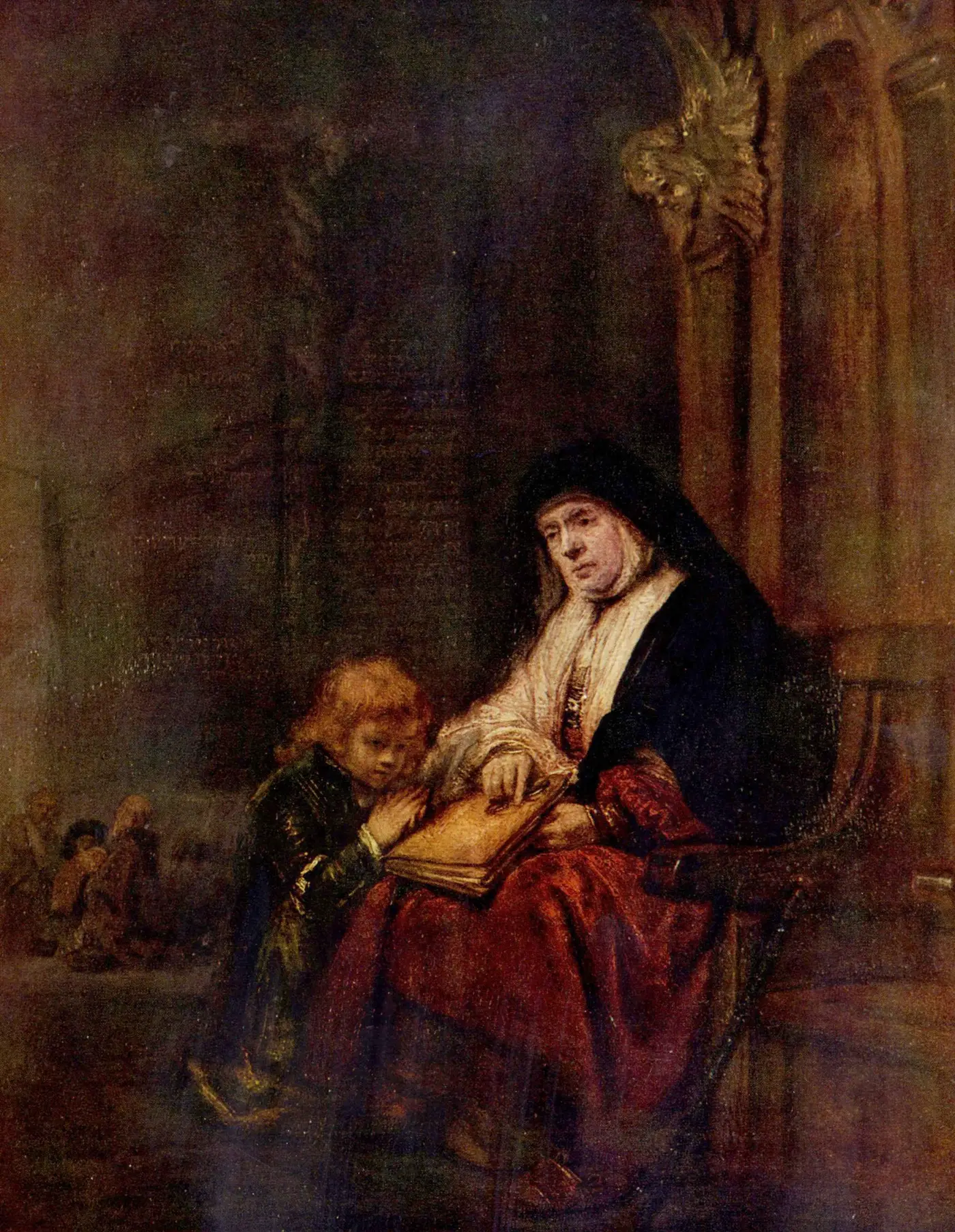
in 2 Timothy 3From infancy you have known the Holy Scriptures, which are able to make you wise for salvation through faith in Christ Jesus.
BSB
The same verse in ASV and KJV ▾
ASV
and that from a babe thou hast known the sacred writings which are able to make thee wise unto salvation through faith which is in Christ Jesus.
KJV
And that from a child thou hast known the holy scriptures, which are able to make thee wise unto salvation through faith which is in Christ Jesus.
⋯
This verse in 2 Timothy 3
Commentary
16 notes on this versePaul here lays out four reasons why Timothy ought to be steadfast, if he will recall them: first, because of the teacher from whom he learned; second, the time when he learned it; third, the source from which the teaching came; and finally, the sublime …
This site's exposition
From infancy you have known the Holy Scriptures
Infancy renders brephos, and Timothy has known the Holy Scriptures, hiera grammata, the synagogue's sacred writings taught by the mother and grandmother whom 1:5 names. They are able to make you wise for salvation through faith in Christ Jesus. The Old Testament saves by leading to the Messiah it promised.
The record, by era
The Church Fathers2 voices
"But continue thou in the things that thou hast learned and hast been assured of, knowing of whom thou hast learned them; And that from a child thou hast known the holy Scriptures, which are able to make thee wise unto salvation through the faith which in Christ Jesus." What is this? As the prophet David exhorted, saying, "Be not thou envious against the workers of iniquity" (Ps. xxxvii. 1), so Paul exhorts, "Continue thou in the things which thou hast learned," and not simply learned, but "hast been assured of," that is, hast believed. And what have I believed? That this is the Life. And if thou seest things happening contrary to thy belief, be not troubled. The same happened to Abraham, yet he was not affected at it. He had heard, "In Isaac shall thy seed be called" (Gen. xxi. 12); and he was commanded to sacrifice Isaac, yet he was not troubled nor dismayed. Let no one be offended because of the wicked. This the Scripture taught from the beginning. "Knowing that from a child thou hast known the sacred writings." The holy Scriptures he calls "sacred writings." In these thou wast nurtured, so that through them thy faith ought to be firm and unshaken. For the root was laid deep, and nourished by length of time, nor will anything subvert it. And speaking of the holy Scriptures, he has added, "Which are able to make thee wise," that is, they will not suffer thee to have any foolish feeling, such as most men have. For he who knows the Scriptures as he ought, is not offended at anything that happens; he endures all things manfully, referring them partly to faith, and to the incomprehensible nature of the divine dispensation, and partly knowing reasons for them, and finding examples in the Scriptures. Since it is a great sign of knowledge not to be curious about everything, nor to wish to know all things. […]
But you remain in the things you have learned and been assured of, knowing from whom you have learned them, and that from childhood you have known the sacred writings, which are able to make you wise for salvation through faith in Christ Jesus. But …
The Medieval Church3 voices
Second, on the part of Timothy himself. For it is a scandal for a man nourished in the good from infancy to depart from it in old age: he that passes over from justice to sin God has prepared such a one for the sword …
External knowledge makes a person clever at deceiving others with various sophisms; hence the ruin of the soul. But divine knowledge is not like this: it makes one wise unto salvation. What kind? Salvation not through works, not through words, but through faith in Jesus …
Be, he says, unchanging and "do not fret because of evildoers, nor be envious of the workers of iniquity" (Ps. 37:1). You have not simply learned, but have also been assured, that is, you received the teaching with conviction. Therefore, even if you should see …
9 more voices on this verse
The Puritans and the Awakening4 voices
And that from a child thou hast known the holy Scriptures,.... And therefore must know that the doctrines he had learned were agreeable to them; and so is another reason why he should continue in them. The Jews very early learned their children the holy Scripture. Philo the Jew says (w), εκ πρωτης ηλικιας "from their very infancy"; a phrase pretty much the same with this here used. It is a maxim with the Jews (x), that when a child was five years of age, it was proper to teach him the Scriptures.
These only were extant when Timothy was an infant. Which are able to make thee wise unto salvation, through faith in the Messiah that was to come. How much more are the Old and New Testament together able, in God's hand, to make us more abundantly wise unto salvation!
Then are we Christ's disciples indeed, John viii. We should not be any more children, tossed to and fro, and carried about with every wind of doctrine, by the sleight of men and cunning craftiness, whereby they lie in wait to deceive, Eph. iv. Be not carried about with divers and strange doctrines; for it is a good thing that the heart be established with grace, Heb. xiii.
): That from a child thou hast known the holy scriptures. " 2. Those who would acquaint themselves with the things of God, and be assured of them, must know the holy scriptures, for these are the summary of divine revelation. It is a great happiness to know the holy scriptures from our childhood; and children should betimes get the knowledge of the scriptures.
quarantine:debris (2026-07-29) — leading-punctuation+unbalanced-parens+odd-straight-quotes
The Nineteenth Century5 voices
A commentator
Albert Barnes1798–1870
Notes, Explanatory and Practical, on the Old and New Testaments (1832-1869)
And that from a child thou hast known the holy Scriptures - That is, the Old Testament; for the New Testament was not then written; see the notes at Joh 5:39. The mother of Timothy was a pious Hebrewess, and regarded it as one of the duties of her religion to train her son in the careful knowledge of the word of God. This was regarded by the Hebrews as an important duty of religion, and there is reason to believe that it was commonly faithfully performed. The Jewish writings abound with lessons on this subject.
A commentator
Jamieson, Fausset & Brown1802–1910
Commentary Critical and Explanatory on the Whole Bible (1871)
Wise also in extending it to others. through faith--as the instrument of this wisdom. Each knows divine things only as far as his own experience in himself extends. He who has not faith, has not wisdom or salvation. which is in--that is, rests on Christ Jesus.
HOW very remarkably the times repeat themselves! As I said just now, in the reading of the chapter, the warning which Paul gave concerning his own times is quite as necessary for this present age. Again darkness thickens and the mists hang heavily around our footsteps. Evil men and seducers wax worse and worse and very many have turned away their ears from the Truth of God to listen to fables. Nor do we wonder that it is so.
HOW very remarkably the times repeat themselves! As I said just now, in the reading of the chapter, the warning which Paul gave concerning his own times is quite as necessary for this present age. Again darkness thickens and the mists hang heavily around our footsteps. Evil men and seducers wax worse and worse and very many have turned away their ears from the Truth of God to listen to fables. Nor do we wonder that it is so. History must repeat itself so long as we have the same human nature to deal with, the same sins to ensnare mankind, the same Truth to be trifled with and the same devil to stir men up to the same mischief. But, Brothers and Sisters, when the same evils come, we must apply to them the same remedies. When a disease appears which has done deadly mischief in past times, physicians inquire for medicines which, on a former occasion, curbed the enemy. We are bound to do the same in spiritual matters. We must see what Paul did in his day when the malaria of false doctrine was in the air. It is remarkable how very simple, as a rule, everything is that is really effective. If a discovery is made in science or machinery, it is complicated, at first, and that for the very reason that it is imperfect. But all improvements are in the direction of simplicity. It is just the same with spiritual teachings. When we get at reality, we cut off superfluity. Let us not talk of inventing wise measures for the present distress in the spiritual world, but let us use the great remedy which was so effectual in Paul's day! Paul, himself, taught young Timothy the Gospel—he made him not only hear his doctrine, but see his practice. We cannot force the Truth of God upon men, but we can make our own teaching clear and decided—and make our lives consistent therewith. Truth and holiness are the surest antidotes to error and unrighteousness.
From a child thou hast known the Holy Scriptures - The early religious education of Timothy has been already sufficiently noticed; see 2Ti 1:5, and the preface to the first epistle. St. Paul introduces this circumstance again here for the confirmation of Timothy’s faith. He had learned the doctrines of Christianity from a genuine apostle; and, as Christianity is founded on the law and the prophets, Timothy was able to compare its doctrines with all that had been typified and predicted, and consequently was assured that the Christian religion was true. Able to make thee wise unto salvation - The apostle is here evidently speaking of the Jewish Scriptures; and he tells us that they are able to make us wise unto salvation provided we have faith in Jesus Christ. This is the simple use of the Old Testament. No soul of man can be made wise unto salvation by it, but as he refers all to Christ Jesus. The Jews are unsaved though they know these Scriptures, because they believe not in Christ; for Christ is the end of the law for the justification of all that believe.
The words behind it
20 Greek wordsEvery Greek word of this verse in the order it stands, with what it means and the door to its own study. The last column counts the times a word stands in the whole Bible: the rarer the word, the more the places it appears belong together.
| Greek | Sound | Meaning | Word study | In the Bible |
|---|---|---|---|---|
| καὶ | kai | and | G2532 → | 9120 times |
| ὅτι | hoti | for | G3754 → | 1292 times |
| ἀπὸ | apo | from | G575 → | 640 times |
| βρέφους | brephous | childhood | G1025 → | |
| τὰ | ta | the | G3588 → | 19766 times |
| ἱερὰ | hi'era | sacred | G2413 → | |
| γράμματα | grammata | writings | G1121 → | |
| οἶδας, | oidas | you know, | ||
| τὰ | ta | which | G3588 → | 19766 times |
| δυνάμενά | dunamena | are being able | G1410 → | 207 times |
| σε | se | you | G4771 → | 2973 times |
| σοφίσαι | sophisai | to make wise | G4679 → | |
| εἰς | eis | unto | G1519 → | 1755 times |
| σωτηρίαν | soterian | salvation | G4991 → | |
| διὰ | dia | through | G1223 → | 664 times |
| πίστεως | pisteos | faith | G4102 → | 242 times |
| τῆς | tes | <the> | G3588 → | 19766 times |
| ἐν | en | in | G1722 → | 2738 times |
| Χριστῷ | christo | Christ | G5547 → | 523 times |
| Ἰησοῦ.¶ | iesou | Jesus. | G2424 → | 908 times |
καὶand
kaiG2532 →9120 times
ὅτιfor
hotiG3754 →1292 times
ἀπὸfrom
apoG575 →640 times
βρέφουςchildhood
brephousG1025 →
τὰthe
taG3588 →19766 times
ἱερὰsacred
hi'eraG2413 →
γράμματαwritings
grammataG1121 →
οἶδας,you know,
oidas
τὰwhich
taG3588 →19766 times
δυνάμενάare being able
dunamenaG1410 →207 times
σεyou
seG4771 →2973 times
σοφίσαιto make wise
sophisaiG4679 →
εἰςunto
eisG1519 →1755 times
σωτηρίανsalvation
soterianG4991 →
διὰthrough
diaG1223 →664 times
πίστεωςfaith
pisteosG4102 →242 times
τῆς<the>
tesG3588 →19766 times
ἐνin
enG1722 →2738 times
ΧριστῷChrist
christoG5547 →523 times
Ἰησοῦ.¶Jesus.
iesouG2424 →908 times
A shaded row is a word that stands 400 times or fewer in the Bible.
The walk
8 stopsEach card is a verse this one points to, and under it the verses that one points to in turn. Where several paths arrive at the same place, that place is listed first: the text keeps returning to it.
Through
Proverbs 22:6Train up a child in the way he should go, and when he is old he will not depart from it.
it leads to
- Deuteronomy 6:7
And you shall teach them diligently to your children and speak of them when you sit at home and when you walk along the road, when you lie down and when you get up.
- Ephesians 6:4
Fathers, do not provoke your children to wrath; instead, bring them up in the discipline and instruction of the Lord.
- Genesis 18:19
For I have chosen him, so that he will command his children and his household after him to keep the way of the LORD by doing what is right and just, in order that…
- Deuteronomy 4:9
Only be on your guard and diligently watch yourselves, so that you do not forget the things your eyes have seen, and so that they do not slip from your heart as long as…
- Psalms 78:3–6
that we have heard and known and our fathers have relayed to us.
- Deuteronomy 6:7
Through
Luke 24:45Then He opened their minds to understand the Scriptures.
it leads to
- Acts 16:14
Among those listening was a woman named Lydia, a dealer in purple cloth from the city of Thyatira, who was a worshiper of God. The Lord opened her heart to respond to Paul’s message.
- 1 John 5:20
And we know that the Son of God has come and has given us understanding, so that we may know Him who is true; and we are in Him who is true—in His Son…
- Psalms 119:18
Open my eyes that I may see wondrous things from Your law.
- Acts 16:14
Where this verse is studied
About 2 Timothy
This page draws on 13 works. Open the list of works
This page draws on Adam Clarke, Commentary on the Bible; Albert Barnes, Notes on the New Testament; Albert Barnes, Notes, Explanatory and Practical, on the Old and New Testaments (1832-1869); Charles Spurgeon, The Metropolitan Tabernacle Pulpit, Sermon No. 1866: “The Sunday School and the Scriptures” (lightly modernized text, CCEL edition); Jamieson, Fausset & Brown, Commentary Critical and Explanatory on the Whole Bible; John Chrysostom, Homily on 2 Timothy 8; John Gill, Exposition of the New Testament (1746-1748); John Wesley, Explanatory Notes upon the New Testament; Matthew Henry, Commentary on the Whole Bible; Oecumenius, COMMENTARY ON 2 TIMOTHY; Theodore of Mopsuestia, COMMENTARY ON 2 TIMOTHY; Theophylact of Ohrid, Commentary on 2 Timothy and Thomas Aquinas, Commentary on 2 Timothy.