
1 Samuel 3:8
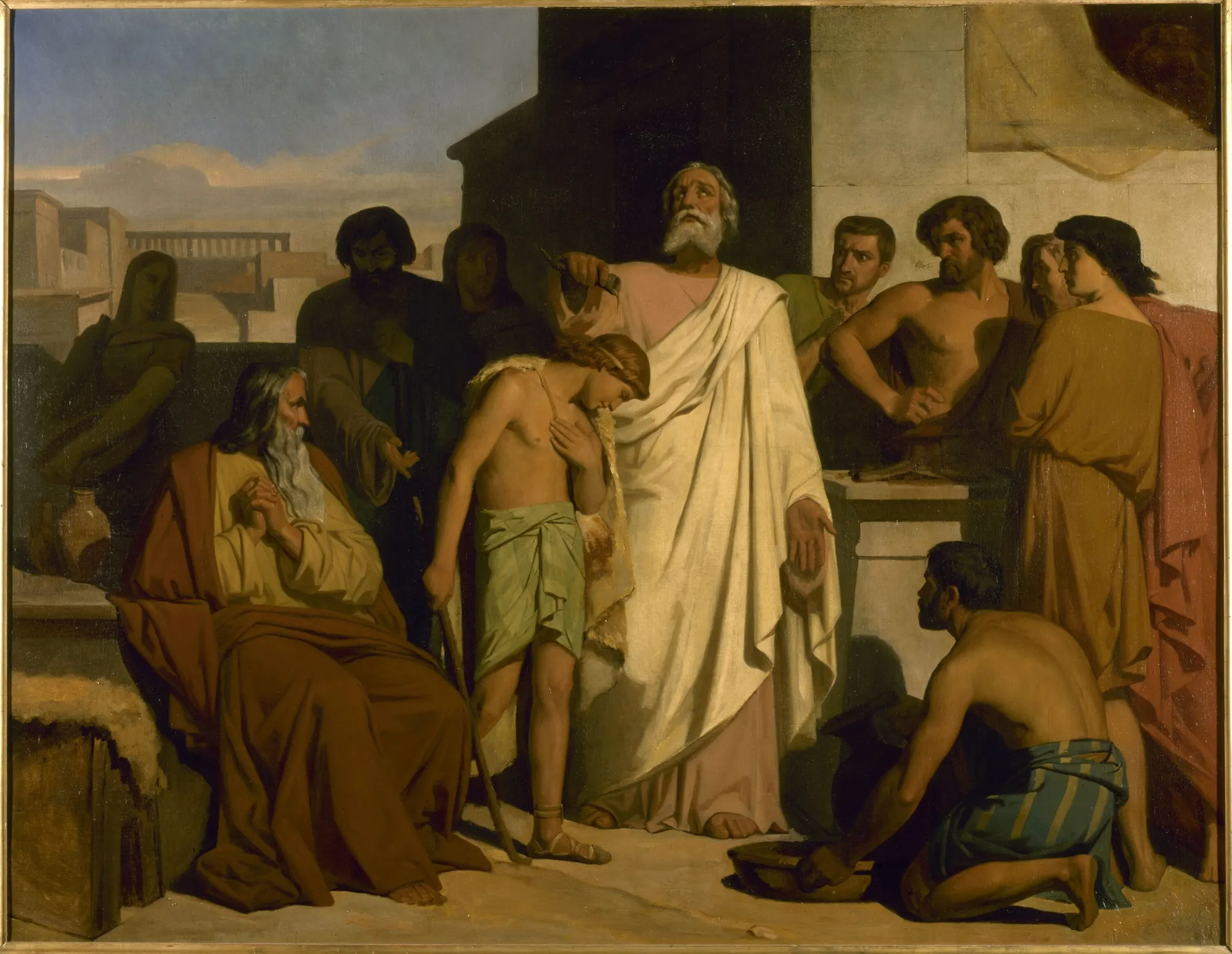
in 1 Samuel 3Once again, for the third time, the LORD called to Samuel. He got up, went to Eli, and said, “Here I am, for you have called me.” Then Eli realized that it was the LORD who was calling the boy.
BSB
The same verse in ASV and KJV ▾
ASV
And Jehovah called Samuel again the third time. And he arose and went to Eli, and said, Here am I; for thou calledst me. And Eli perceived that Jehovah had called the child.
KJV
And the Lord called Samuel again the third time. And he arose and went to Eli, and said, Here am I; for thou didst call me. And Eli perceived that the Lord had called the child.
⋯
This verse in 1 Samuel 3
Commentary
13 notes on this verseThus even the infirmities and mistakes of those whom God employs are overruled by infinite Wisdom, and made serviceable to his purposes. At length Samuel was put into a posture to receive a message from God, not to be lodged with himself and go no further, but, that he might be a complete prophet, to be published and made an open vision.
This site's exposition
for the third time, the LORD called to Samuel
on 1 Samuel 3:8-9
On the third call Eli sees “that it was the LORD who was calling the boy”, and his discernment answers what his eyes can no longer do. He teaches Samuel the words, “Speak, LORD, for Your servant is listening”, and sends him back to a message that falls hardest on Eli's house. The older commentators read Eli's readiness as the one act of faith left in a failing priesthood.
The record, by era
The Church Fathers2 voices
A commentator
Philoxenus of Mabbug13 Ascetic Discourses, Discourse 4 -- On Faith: First Discourse on Simplicity · Written before 523.
proposed
Now when Eli understood that it was the Lord Who had called him, he commanded him to make answer as unto the Lord, and not to run towards him; for "Eli understood that the Lord had called the boy." And old age sent youth to …
And therefore by no means let the ignorance or shallowness of one old man or of a few deter you and cut you off from that salutary path about which we have spoken and from the traditions of our forebears. The clever enemy misuses their gray hairs to deceive the young. But everything should be revealed to the elders without any obfuscating embarrassment, and from them one may confidently receive both healing for one's wounds and examples for one's way of life. Thanks to them we shall experience the same assistance and a like result if we strive to aim at nothing whatsoever by our own judgment and presumption.Finally, it is evident that this understanding is greatly pleasing to God, for not without reason do we find this same instruction even in holy Scripture. Thus, the Lord did not desire of himself to teach the boy Samuel through divine speech, once he had been chosen by his own decision, but he was obliged to return twice to the old man. He willed that one whom he was calling to an intimate relationship with himself should even be instructed by a person who had offended God, because he was an old man. And he desired that one whom he judged most worthy to be selected by himself should be reared by an old man so that the humility of him who was called to a divine ministry might be tested and so that the pattern of this subjection might be offered as an example to young men.
The Medieval Church3 voices
A commentator
Gregory the DialogistCommentary on 1 Kings, Book 2, Chapter 4 · Written before 604.
proposed
9. For to call is to rouse through the force of a greater grace. For the Lord calls one who is sleeping, because He stirs up those who are resting from earthly pursuits to an increase of heavenly knowledge. For while we keep watch through concern for outward things, we do not perceive what is inward and spiritual. The setting aside of earthly care, therefore, is our preparation for receiving heavenly grace, because in the elect the outpouring of the divine gift becomes more abundant in proportion as the mind has been purer through the keeping of interior meditation. There follows: (Verses 4–9.) And the Lord called Samuel. Who answering, said: Here I am, and he ran to Eli and said: For you called me. Who said: I did not call you, my son; go back and sleep. And he went away and slept. And the Lord again called Samuel once more. And rising up, he went to Eli and said: Here I am, for you called me. Who answered: I did not call you, my son; go back and sleep. Now Samuel did not yet know the Lord, nor had the word of the Lord been revealed to him. And the Lord called Samuel again a third time. Who rising up, went to Eli and said: Here I am, for you called me. Eli therefore understood that the Lord was calling the boy, and he said to Samuel: Go and sleep, and if He calls you henceforth, you shall say: Speak, Lord, for your servant is listening. 10. What is it then that almighty God introduces his calling with such skill that the mind of the one called is restrained from recognizing the one who calls him; that hearing God, he thinks this master is a man; that he sends forth the calling yet conceals the cause; that he allows him to go to his master, to return so many times to the quiet of sleep, and yet does not permit the sleeper to rest? […]
And the Lord added, and called again Samuel the third time. The Lord calls Samuel the third time, he himself rises the third time and comes to Eli and tells who has called him. The Father showed the Son visible in the flesh, signs of …
Eli understood that the Lord had called the boy, etc. Finally, after many great deeds and words done and spoken by the Lord, after John the Baptist's proclamations were fulfilled, the priests, scribes, and Pharisees understand that Jesus, who in the reality of the flesh …
6 more voices on this verse
The Medieval Church1 voice
A commentator
Gregory the DialogistCommentary on 1 Kings, Book 3, Chapter 1 · Written before 604.
proposed
15. For if he had not understood, he would by no means have ministered to him the counsels of salvation through the sacred Scriptures. For he understood, because he foresaw. For whatever almighty God arranged to do in the building of the future Church, this He revealed to the ancient Fathers through the holy spirit of prophecy. For through the prophet Amos it is said: "The Lord God will not make a word which He has not revealed to His servants the prophets" (Amos 3:7).
The Puritans and the Awakening4 voices
God's message to Eli, ver. 11-14. His faithful delivery of that message, and Eli's submission to God, ver. 15-18. The establishment of Samuel to be a prophet, ver. 19-21 Commentary on Chapter III
quarantine:anchor (2026-07-29) — cites-ver-15/19-anchored-1-10
), it could be no one else." Samuel's disposition to come when he was called, though but by Eli, proving him dutiful and active, qualified him for the favour now to be shown him; God chooses to employ such. But there was a special providence in it, that he should go thus often to Eli; for hereby, at length, Eli perceived that the Lord had called the child,
quarantine:debris (2026-07-29) — leading-punctuation+unbalanced-parens+odd-straight-quotes
And the Lord called Samuel again the third time,....
Note, The call which divine grace designs to make effectual shall be repeated till it is so, that is, till we come at the call; for the purpose of God, according to which we are called, shall certainly stand.
The Nineteenth Century1 voice
A commentator
Jamieson, Fausset & Brown1802–1910
Commentary Critical and Explanatory on the Whole Bible (1871)
proposed
he ran unto Eli, and said, Here am I; for thou calledst me--It is evident that his sleeping chamber was close to that of the aged high priest and that he was accustomed to be called during the night.
quarantine:debris (2026-07-29) — starts-lowercase
The words behind it
20 Hebrew wordsEvery Hebrew word of this verse in the order it stands, with what it means and the door to its own study. The last column counts the times a word stands in the whole Bible: the rarer the word, the more the places it appears belong together.
| Hebrew | Sound | Meaning | Word study | In the Bible |
|---|---|---|---|---|
| וַיֹּ֨סֶף | vaiyosef | and he repeated | H3254 → | 212 times |
| יְהוָ֥ה | yahweh | Yahweh | H3068 → | 6520 times |
| קְרֹא־ | kero'- | to call | H7121 → | 733 times |
| שְׁמוּאֵל֮ | shemuel | Samuel | H8050 → | 141 times |
| בַּשְּׁלִשִׁית֒ | bashelishit | at the third [time] | H7992 → | 107 times |
| וַיָּ֙קָם֙ | vaiyakom | and he rose | H6965 → | 628 times |
| וַיֵּ֣לֶךְ | vaiyelekh | and he went | H1980 → | 1546 times |
| אֶל־ | ʾel- | to | H413 → | 5510 times |
| עֵלִ֔י | ʾeli | Eli | H5941 → | 33 times |
| וַיֹּ֣אמֶר | vaiyomer | and he said | H559 → | 5305 times |
| הִנְנִ֔י | hini | here [am] I | H2005 → | 316 times |
| כִּ֥י | ki | for | H3588 → | 4482 times |
| קָרָ֖אתָ | karata | you summoned | H7121 → | 733 times |
| לִ֑י | li | <to> <the> me | ||
| וַיָּ֣בֶן | vaiyaven | and he understood | H995 → | |
| עֵלִ֔י | ʾeli | Eli | H5941 → | 33 times |
| כִּ֥י | ki | that | H3588 → | 4482 times |
| יְהוָ֖ה | yahweh | Yahweh | H3068 → | 6520 times |
| קֹרֵ֥א | kore' | [was] summoning | H7121 → | 733 times |
| לַנָּֽעַר׃ | lanaar | <to> the lad | H5288 → | 239 times |
וַיֹּ֨סֶףand he repeated
vaiyosefH3254 →212 times
יְהוָ֥הYahweh
yahwehH3068 →6520 times
קְרֹא־to call
kero'-H7121 →733 times
שְׁמוּאֵל֮Samuel
shemuelH8050 →141 times
בַּשְּׁלִשִׁית֒at the third [time]
bashelishitH7992 →107 times
וַיָּ֙קָם֙and he rose
vaiyakomH6965 →628 times
וַיֵּ֣לֶךְand he went
vaiyelekhH1980 →1546 times
אֶל־to
ʾel-H413 →5510 times
עֵלִ֔יEli
ʾeliH5941 →33 times
וַיֹּ֣אמֶרand he said
vaiyomerH559 →5305 times
הִנְנִ֔יhere [am] I
hiniH2005 →316 times
כִּ֥יfor
kiH3588 →4482 times
קָרָ֖אתָyou summoned
karataH7121 →733 times
לִ֑י<to> <the> me
li
וַיָּ֣בֶןand he understood
vaiyavenH995 →
עֵלִ֔יEli
ʾeliH5941 →33 times
כִּ֥יthat
kiH3588 →4482 times
יְהוָ֖הYahweh
yahwehH3068 →6520 times
קֹרֵ֥א[was] summoning
kore'H7121 →733 times
לַנָּֽעַר׃<to> the lad
lanaarH5288 →239 times
A shaded row is a word that stands 400 times or fewer in the Bible.
Where this verse is studied
On this page
About 1 Samuel
Who and where
2 names in this verse with a page on the site.
- PersonJudges to monarchySamuelAsked of God by Hannah and lent to the LORD at Shiloh; the last judge and first of the prophets after Moses, who anointed both Sau…
- PersonJudges eraEliHigh priest of Israel at Shiloh who mistook Hannah's silent prayer for drunkenness and raised the boy Samuel; his corrupt sons def…
This page draws on 9 works. Open the list of works
This page draws on Bede, Commentary on Samuel; Gregory the Dialogist, Commentary on 1 Kings, Book 2, Chapter 4; Gregory the Dialogist, Commentary on 1 Kings, Book 3, Chapter 1; Jamieson, Fausset & Brown, Commentary Critical and Explanatory on the Whole Bible; John Cassian, CONFERENCE 2.13.12-2.14; John Gill, Exposition of the Old Testament (1748-1763); John Wesley, Explanatory Notes upon the Old Testament; Matthew Henry, Commentary on the Whole Bible and Philoxenus of Mabbug, 13 Ascetic Discourses, Discourse 4 -- On Faith: First Discourse on Simplicity.