
1 Samuel 3:9
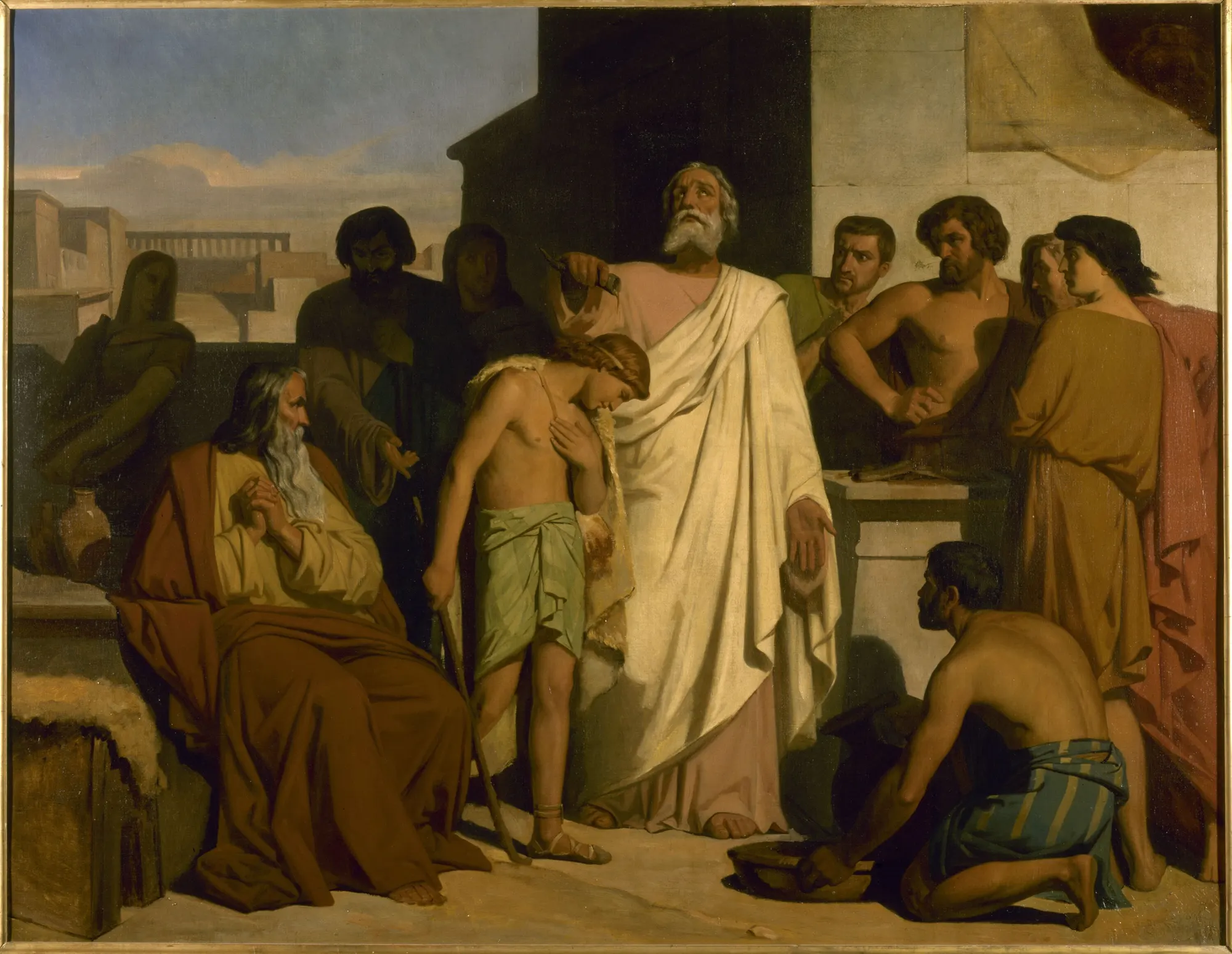
in 1 Samuel 3“Go and lie down,” he said to Samuel, “and if He calls you, say, ‘Speak, LORD, for Your servant is listening.’” So Samuel went and lay down in his place.
BSB
The same verse in ASV and KJV ▾
ASV
Therefore Eli said unto Samuel, Go, lie down: and it shall be, if he call thee, that thou shalt say, Speak, Jehovah; for thy servant heareth. So Samuel went and lay down in his place.
KJV
Therefore Eli said unto Samuel, Go, lie down: and it shall be, if he call thee, that thou shalt say, Speak, Lord; for thy servant heareth. So Samuel went and lay down in his place.
⋯
This verse in 1 Samuel 3
Commentary
13 notes on this verseSpeak, Lord; for thy servant heareth - This was the usual way in which the prophets spoke, when they had intimations that the Lord was about to make some especial revelation.
This site's exposition
for the third time, the LORD called to Samuel
on 1 Samuel 3:8-9
On the third call Eli sees “that it was the LORD who was calling the boy”. His discernment answers what his eyes can no longer do. He teaches Samuel the words, “Speak, LORD, for Your servant is listening”, and sends him to a message that falls hardest on Eli's house.
This site's exposition
“Go and lie down,” he said to Samuel
Matthew Henry notes that Eli could have sent the boy back to sleep, and he taught him instead how to answer God. Charles Spurgeon observes that Eli gave Samuel the listening ear he had failed to teach his own sons. The old priest trains his successor.
The record, by era
The Church Fathers1 voice
And therefore by no means let the ignorance or shallowness of one old man or of a few deter you and cut you off from that salutary path about which we have spoken and from the traditions of our forebears. The clever enemy misuses their gray hairs to deceive the young. But everything should be revealed to the elders without any obfuscating embarrassment, and from them one may confidently receive both healing for one's wounds and examples for one's way of life. Thanks to them we shall experience the same assistance and a like result if we strive to aim at nothing whatsoever by our own judgment and presumption.Finally, it is evident that this understanding is greatly pleasing to God, for not without reason do we find this same instruction even in holy Scripture. Thus, the Lord did not desire of himself to teach the boy Samuel through divine speech, once he had been chosen by his own decision, but he was obliged to return twice to the old man. He willed that one whom he was calling to an intimate relationship with himself should even be instructed by a person who had offended God, because he was an old man. And he desired that one whom he judged most worthy to be selected by himself should be reared by an old man so that the humility of him who was called to a divine ministry might be tested and so that the pattern of this subjection might be offered as an example to young men.
The Medieval Church3 voices
A commentator
Gregory the DialogistCommentary on 1 Kings, Book 3, Chapter 1 · Written before 604.
proposed
But to him whom he understood was to be called, he also supplied counsel, saying: (Verse 9.) "Go and sleep, and if he calls you again, you shall say: Speak, Lord, for your servant hears." 16. Enough has already been shown, I believe, that the sleep of Samuel signifies the quiet of interior meditation. This sleep is indeed commanded to Samuel by Eli, because the teacher is taught through sacred Scripture to devote himself to contemplating interior mysteries.
A commentator
Gregory the DialogistCommentary on 1 Kings, Book 2, Chapter 4 · Written before 604.
proposed
15. For now the boy, having been instructed, is sent to the knowledge of divine speech, when the chosen one, subject to the counsel of his superior, is prepared for knowing spiritual things. And indeed for him to sleep is to rest in the desire of eternal life, when, that is, to the soul now thirsting for heavenly things alone, all present things are held in contempt, so that the more eagerly everything corporeal is driven from its attention, the more abundantly it is filled with the love of invisible things. And it should be noted that he is now commanded to return to the rest of sleep four times, because while we carelessly occupy ourselves with this world regarding visible things, we are awake in deed, speech, and thought. Therefore we are commanded to sleep three times, so that we may be prepared for the knowledge of heavenly things through rest from works, silence of the mouth, and the rejection of superfluous thoughts. But in the fourth place we are sent to sleep when by the permission of our superiors we are commanded to cease even from useful ministry, so that while we are hindered by no care of anxiety, the mind may gather itself entirely to the contemplation of the heavenly vision.
A commentator
Gregory the DialogistCommentary on 1 Kings, Book 2, Chapter 4 · Written before 604.
proposed
9. For to call is to rouse through the force of a greater grace. For the Lord calls one who is sleeping, because He stirs up those who are resting from earthly pursuits to an increase of heavenly knowledge. For while we keep watch through concern for outward things, we do not perceive what is inward and spiritual. The setting aside of earthly care, therefore, is our preparation for receiving heavenly grace, because in the elect the outpouring of the divine gift becomes more abundant in proportion as the mind has been purer through the keeping of interior meditation. There follows: (Verses 4–9.) And the Lord called Samuel. Who answering, said: Here I am, and he ran to Eli and said: For you called me. Who said: I did not call you, my son; go back and sleep. And he went away and slept. And the Lord again called Samuel once more. And rising up, he went to Eli and said: Here I am, for you called me. Who answered: I did not call you, my son; go back and sleep. Now Samuel did not yet know the Lord, nor had the word of the Lord been revealed to him. And the Lord called Samuel again a third time. Who rising up, went to Eli and said: Here I am, for you called me. Eli therefore understood that the Lord was calling the boy, and he said to Samuel: Go and sleep, and if He calls you henceforth, you shall say: Speak, Lord, for your servant is listening. 10. What is it then that almighty God introduces his calling with such skill that the mind of the one called is restrained from recognizing the one who calls him; that hearing God, he thinks this master is a man; that he sends forth the calling yet conceals the cause; that he allows him to go to his master, to return so many times to the quiet of sleep, and yet does not permit the sleeper to rest? […]
The Puritans and the Awakening1 voice
God's message to Eli, ver. 11-14. His faithful delivery of that message, and Eli's submission to God, ver. 15-18. The establishment of Samuel to be a prophet, ver. 19-21 Commentary on Chapter III
quarantine:anchor (2026-07-29) — cites-ver-15/19-anchored-1-10
5 more voices on this verse
The Puritans and the Awakening2 voices
Therefore Eli said unto Samuel, go, lie down,....
Had he been envious of this honour done to Samuel, he would have done what he could to deprive him of it, and, since he did not perceive it himself, would have bidden him lie down and sleep, and never heed it, it was but a dream; but he was of a better spirit than to act so; he gave him the best advice he could, for the forwarding of his advancement.
The Nineteenth Century3 voices
IN the days of Eli the Word of the Lord was precious and there was no open vision. It was well, when the Word did come, that one chosen individual had the hearing ear to receive it and the obedient heart to perform it. Eli failed to tutor his sons to be the willing servants and the attentive hearers of the Lord's Word. In this he was without the excuse of inability since he successfully trained the child Samuel in reverent attention to the Divine will.
A commentator
Jamieson, Fausset & Brown1802–1910
Commentary Critical and Explanatory on the Whole Bible (1871)
proposed
he ran unto Eli, and said, Here am I; for thou calledst me--It is evident that his sleeping chamber was close to that of the aged high priest and that he was accustomed to be called during the night.
quarantine:debris (2026-07-29) — starts-lowercase
IN the days of Eli the Word of the Lord was precious and there was no open vision. It was well, when the Word did come, that one chosen individual had the hearing ear to receive it and the obedient heart to perform it. Eli failed to tutor his sons to be the willing servants and the attentive hearers of the Lord's Word. In this he was without the excuse of inability since he successfully trained the child Samuel in reverent attention to the Divine will. O that those who are diligent about the souls of others would look well to their own households! Alas, poor Eli, like many in our day, you are made the keeper of the vineyards, but your own vineyard you have not kept! As often as he looked upon the gracious child, Samuel, he must have felt the heartache. When he remembered his own neglected and unchastened sons and how they had made themselves vile before all Israel, Samuel was the living witness of what Grace can work where children are trained up in God's fear. Hophni and Phinehas were sad specimens of what parental indulgence will produce in the children of the best of men. Ah, Eli, if you had been as careful with your own sons as with the son of Hannah they had not been such men of Belial, nor would Israel have abhorred the offering of the Lord because of the fornication which those priestly reprobates committed at the very door of the tabernacle! O for Grace to so nurse our little ones for the Lord that they may hear the Lord when He shall be pleased to speak to them! Let us proceed at once to consider our short but very suggestive text in four aspects and I pray that the Holy Spirit may speak to us through His Word. We shall meditate upon this Scripture, first, as the prayer of a little child. Secondly, as the cry of an anxious soul. Thirdly, as the prayer of an earnest Believer. And fourthly as the spirit of a dying saint. I.
How the passage was read
What the Jewish commentators add
On the verses either side of this one
And Shmuel said, "Speak." He did not mention the Name of the Deity as Eili had commanded him, because he said [to himself], 'Perhaps it is another voice.' 10 See Maseches Shabbos 113b.
1 more on this passage, in their own words ▾
And the glory of the LORD was revealed and stood forth, calling as at other times, ‘Samuel!
This section is reception history: how the passage was read and kept in the Jewish tradition. Where a reading parts from an essential of the Christian faith, the section says so at that point.
Texts and citation data: Sefaria; each excerpt follows its version’s licence. 3 further sources are cited on this chapter that carry no English text this site may quote or only restate the verse.
The words behind it
19 Hebrew wordsEvery Hebrew word of this verse in the order it stands, with what it means and the door to its own study. The last column counts the times a word stands in the whole Bible: the rarer the word, the more the places it appears belong together.
| Hebrew | Sound | Meaning | Word study | In the Bible |
|---|---|---|---|---|
| וַיֹּ֨אמֶר | vaiyomer | and he said | H559 → | 5305 times |
| עֵלִ֣י | ʾeli | Eli | H5941 → | 33 times |
| לִשְׁמוּאֵל֮ | lishmuel | to Samuel | H8050 → | 141 times |
| לֵ֣ךְ | lekh | go | H1980 → | 1546 times |
| שְׁכָב֒ | shekhav | lie down | H7901 → | 212 times |
| וְהָיָה֙ | vehayah | and it will be | H1961 → | 3559 times |
| אִם־ | ʾim- | that [if] | H518 → | 1069 times |
| יִקְרָ֣א | yikra' | he will call | H7121 → | 733 times |
| אֵלֶ֔יךָ | ʾeleikha | to you | H413 → | 5510 times |
| וְאָֽמַרְתָּ֙ | veamarta | and you will say | H559 → | 5305 times |
| דַּבֵּ֣ר | daber | speak | H1696 → | 1141 times |
| יְהוָ֔ה | yahweh | O Yahweh | H3068 → | 6520 times |
| כִּ֥י | ki | for | H3588 → | 4482 times |
| שֹׁמֵ֖עַ | shomea' | [is] listening | H8085 → | 1159 times |
| עַבְדֶּ֑ךָ | ʾavdekha | servant your | H5650 → | 799 times |
| וַיֵּ֣לֶךְ | vaiyelekh | and he went | H1980 → | 1546 times |
| שְׁמוּאֵ֔ל | shemuel | Samuel | H8050 → | 141 times |
| וַיִּשְׁכַּ֖ב | vaiyishkav | and he lay down | H7901 → | 212 times |
| בִּמְקוֹמֽוֹ׃ | bimkomo | in place his | H4725 → | 401 times |
וַיֹּ֨אמֶרand he said
vaiyomerH559 →5305 times
עֵלִ֣יEli
ʾeliH5941 →33 times
לִשְׁמוּאֵל֮to Samuel
lishmuelH8050 →141 times
לֵ֣ךְgo
lekhH1980 →1546 times
שְׁכָב֒lie down
shekhavH7901 →212 times
וְהָיָה֙and it will be
vehayahH1961 →3559 times
אִם־that [if]
ʾim-H518 →1069 times
יִקְרָ֣אhe will call
yikra'H7121 →733 times
אֵלֶ֔יךָto you
ʾeleikhaH413 →5510 times
וְאָֽמַרְתָּ֙and you will say
veamartaH559 →5305 times
דַּבֵּ֣רspeak
daberH1696 →1141 times
יְהוָ֔הO Yahweh
yahwehH3068 →6520 times
כִּ֥יfor
kiH3588 →4482 times
שֹׁמֵ֖עַ[is] listening
shomea'H8085 →1159 times
עַבְדֶּ֑ךָservant your
ʾavdekhaH5650 →799 times
וַיֵּ֣לֶךְand he went
vaiyelekhH1980 →1546 times
שְׁמוּאֵ֔לSamuel
shemuelH8050 →141 times
וַיִּשְׁכַּ֖בand he lay down
vaiyishkavH7901 →212 times
בִּמְקוֹמֽוֹ׃in place his
bimkomoH4725 →401 times
A shaded row is a word that stands 400 times or fewer in the Bible.
The walk
8 stopsEach card is a verse this one points to, and under it the verses that one points to in turn. Where several paths arrive at the same place, that place is listed first: the text keeps returning to it.
Through
Isaiah 6:8Then I heard the voice of the Lord saying: “Whom shall I send? Who will go for Us?” And I said: “Here am I. Send me!”
it leads to
- Exodus 4:10–13
“Please, Lord,” Moses replied, “I have never been eloquent, neither in the past nor since You have spoken to Your servant, for I am slow of speech and tongue.”
- Acts 26:16–17
‘But get up and stand on your feet. For I have appeared to you to appoint you as a servant and as a witness of what you have seen from Me and what I…
- Ephesians 3:8
Though I am less than the least of all the saints, this grace was given me: to preach to the Gentiles the unsearchable riches of Christ,
- Acts 22:21
Then He said to me, ‘Go! I will send you far away to the Gentiles.’”
- Isaiah 65:1
“I revealed Myself to those who did not ask for Me; I was found by those who did not seek Me. To a nation that did not call My name, I said, ‘Here I…
- Exodus 4:10–13
Through
Daniel 10:19“Do not be afraid, you who are highly precious,” he said. “Peace be with you! Be strong now; be very strong!” As he spoke with me, I was strengthened and said, “Speak, my lord,…
it leads to
- Isaiah 35:4
Say to those with anxious hearts: “Be strong, do not fear! Behold, your God will come with vengeance. With divine retribution He will come to save you.”
- Joshua 1:9
Have I not commanded you to be strong and courageous? Do not be afraid; do not be discouraged, for the LORD your God is with you wherever you go.”
- Judges 6:23
But the LORD said to him, “Peace be with you. Do not be afraid, for you will not die.”
- Isaiah 35:4
Where this verse is studied
About 1 Samuel
Who and where
1 name in this verse with a page on the site.
This page draws on 9 works. Open the list of works
This page draws on Adam Clarke, Commentary on the Bible; Charles Spurgeon, The Metropolitan Tabernacle Pulpit, Sermon No. 586: “The Child Samuel'S Prayer” (lightly modernized text, CCEL edition); Gregory the Dialogist, Commentary on 1 Kings, Book 3, Chapter 1; Gregory the Dialogist, Commentary on 1 Kings, Book 2, Chapter 4; Jamieson, Fausset & Brown, Commentary Critical and Explanatory on the Whole Bible; John Cassian, CONFERENCE 2.13.12-2.14; John Gill, Exposition of the Old Testament (1748-1763); John Wesley, Explanatory Notes upon the Old Testament and Matthew Henry, Commentary on the Whole Bible.