
1 Samuel 3:1
in 1 Samuel 3And the boy Samuel ministered to the LORD before Eli. Now in those days the word of the LORD was rare and visions were scarce.
BSB
The same verse in ASV and KJV ▾
ASV
And the child Samuel ministered unto Jehovah before Eli. And the word of Jehovah was precious in those days; there was no frequent vision.
KJV
And the child Samuel ministered unto the Lord before Eli. And the word of the Lord was precious in those days; there was no open vision.
⋯
This verse in 1 Samuel 3
Commentary
11 notes on this verseA commentator
Albert Barnes1798–1870
Notes, Explanatory and Practical, on the Old and New Testaments (1832-1869)
See the margin reference note. Josephus says that Samuel’s call to the prophetic office happened when he had just completed his twelfth year (compare Luk 2:42). Was precious - (or rare) The song of Hannah, and the prophecy of the “man of God” (1Sa 2:27 note), are the only instances of prophecy since Deborah. Samuel is mentioned as the first of the series of prophets Act 3:24. No open vision - Better rendered, “There was no vision promulgated or published.” (Compare 2Ch 31:5.)
This site's exposition
the word of the LORD was rare
on 1 Samuel 3:1-2
The chapter opens on a famine of revelation, “the word of the LORD was rare and visions were scarce”, and its last verses answer it. Eli's eyesight has “grown so dim that he could not see”, so the old priest's failing sight pictures Israel's failing sight of God.
The record, by era
The Medieval Church3 voices
But the boy Samuel was ministering to the Lord in the presence of Eli, etc. The boy who was born to us in the flesh, in the sight of the Jewish priests, was ministering his gifts to the early Church both personally and through his …
A commentator
Gregory the DialogistCommentary on 1 Kings, Book 3, Chapter 1 · Written before 604.
proposed
1. Since we were diligently seeking how the meaning of the sacred history might correspond to the conduct of the elect, we deferred revisiting the order of allegory by exposition. Therefore, to supply what we are seen to have omitted, the question is asked: What does it mean that while Samuel is recorded as ministering to the Lord before Eli, the word of the Lord is described as being precious? But, as was said above, by Samuel the preachers of holy Church are signified, and by Eli the elect fathers of the Old Testament are also designated.
A commentator
Gregory the DialogistCommentary on 1 Kings, Book 2, Chapter 4 · Written before 604.
proposed
1. Moreover, it is shown that he repeated in this passage what is mentioned above concerning the chosen boy, where it says: "But the boy Samuel was a minister in the sight of the Lord before the face of Eli." For to minister to the Lord before Eli is the same as to be the Lord's minister before the face of Eli. And because we explained that passage more fully there, with the Lord's help, we do not delay at all in repeating its exposition. But since it is the divine word that speaks this both in this passage and in that one, it is shown that He did this not without a useful reason. Therefore, out of concern for the reader's weariness, we pass over the explanation in silence, but we state the reason for the repetition for his benefit. For certain people who are subject to the authority of the prelates of holy Church obey as untrained beginners; but when they advance a little higher through their manner of life, they by no means persist in that same humility of obedience. The handmaid Hagar of Sarah fittingly represents these in a spiritual sense, for when she saw that she had conceived by Abraham her husband, she despised her mistress (Gen. 16:5). For Hagar conceives when the reprobate mind of a subordinate believes that it is advancing either through the acquisition of knowledge or through its manner of life. And she, being pregnant, is said to have despised her mistress, because she now disdains to submit herself through obedience to the will of her superior who is set over her. But she who despises her mistress is declared to be a handmaid, because proud subjects are also weak through their arrogance, and they do not attain to the number of the children of God. Moreover, Samuel's progress is set forth because it was said above: "But the boy Samuel advanced and grew and was pleasing both to God and to men" (1 Kings 2:18). […]
The Puritans and the Awakening2 voices
Perhaps the impiety and impurity that prevailed in the tabernacle, and no doubt corrupted the whole nation, had provoked God, as a token of his displeasure, to withdraw the Spirit of prophecy, till the decree had gone forth for the raising up of a more faithful priest, and then, as an earnest of that, this faithful prophet was raised up.
God's message to Eli, ver. 11-14. His faithful delivery of that message, and Eli's submission to God, ver. 15-18. The establishment of Samuel to be a prophet, ver. 19-21 Commentary on Chapter III
quarantine:anchor (2026-07-29) — cites-ver-15/19-anchored-1-10
4 more voices on this verse
The Puritans and the Awakening2 voices
Before Eli - That is, under his inspection and direction. Word - The word of prophecy, or the Revelation of God's will to and by the prophets. Precious - Rare or scarce, such things being most precious in mens' esteem, whereas common things are generally despised.
And the child Samuel ministered unto the Lord before Eli,....
The Nineteenth Century2 voices
A commentator
Jamieson, Fausset & Brown1802–1910
Commentary Critical and Explanatory on the Whole Bible (1871)
proposed
6:8). there was no open vision--no publicly recognized prophet whom the people could consult, and from whom they might learn the will of God. There must have been certain indubitable evidences by which a communication from heaven could be distinguished. Eli knew them, for he may have received them, though not so frequently as is implied in the idea of an "open vision."
quarantine:debris (2026-07-29) — unbalanced-parens
Samuel ministered unto the Lord - He performed minor services in the tabernacle, under the direction of Eli, such as opening the doors, etc. See 1Sa 3:15. The word of the Lord was precious - There were but few revelations from God; and because the word was scarce, therefore it was valuable. The author of this book probably lived at a time when prophecy was frequent, See the preface. There was no open vision - There was no public accredited prophet; one with whom the secret of the Lord was known to dwell, and to whom all might have recourse in cases of doubt or public emergency.
How the passage was read
What the Jewish commentators add
And the boy Samuel was serving before the LORD during the life of Eli.
This section is reception history: how the passage was read and kept in the Jewish tradition. Where a reading parts from an essential of the Christian faith, the section says so at that point.
Texts and citation data: Sefaria; each excerpt follows its version’s licence. 3 further sources are cited on this chapter that carry no English text this site may quote or only restate the verse.
The words behind it
16 Hebrew wordsEvery Hebrew word of this verse in the order it stands, with what it means and the door to its own study. The last column counts the times a word stands in the whole Bible: the rarer the word, the more the places it appears belong together.
| Hebrew | Sound | Meaning | Word study | In the Bible |
|---|---|---|---|---|
| וְהַנַּ֧עַר | vehanaar | and the lad | H5288 → | 239 times |
| שְׁמוּאֵ֛ל | shemuel | Samuel | H8050 → | 141 times |
| מְשָׁרֵ֥ת | mesharet | [was] serving | H8334 → | 97 times |
| אֶת־ | ʾet- | <obj.> | H853 → | 10935 times |
| יְהוָ֖ה | yahweh | Yahweh | H3068 → | 6520 times |
| לִפְנֵ֣י | lifnei | <to> before | H6440 → | 2123 times |
| עֵלִ֑י | ʾeli | Eli | H5941 → | 33 times |
| וּדְבַר־ | udevar- | and [the] word of | H1697 → | 1440 times |
| יְהוָ֗ה | yahweh | Yahweh | H3068 → | 6520 times |
| הָיָ֤ה | hayah | it was | H1961 → | 3559 times |
| יָקָר֙ | yakar | rare | H3368 → | |
| בַּיָּמִ֣ים | baiyamim | in the days | H3117 → | 2304 times |
| הָהֵ֔ם | hahem | <the> those | H1992 → | 553 times |
| אֵ֥ין | ʾein | not | H369 → | 789 times |
| חָז֖וֹן | chazon | vision | H2377 → | |
| נִפְרָֽץ׃ ס | nifratz | [was] spread out | H6555 → | 49 times |
וְהַנַּ֧עַרand the lad
vehanaarH5288 →239 times
שְׁמוּאֵ֛לSamuel
shemuelH8050 →141 times
מְשָׁרֵ֥ת[was] serving
mesharetH8334 →97 times
אֶת־<obj.>
ʾet-H853 →10935 times
יְהוָ֖הYahweh
yahwehH3068 →6520 times
לִפְנֵ֣י<to> before
lifneiH6440 →2123 times
עֵלִ֑יEli
ʾeliH5941 →33 times
וּדְבַר־and [the] word of
udevar-H1697 →1440 times
יְהוָ֗הYahweh
yahwehH3068 →6520 times
הָיָ֤הit was
hayahH1961 →3559 times
יָקָר֙rare
yakarH3368 →
בַּיָּמִ֣יםin the days
baiyamimH3117 →2304 times
הָהֵ֔ם<the> those
hahemH1992 →553 times
אֵ֥יןnot
ʾeinH369 →789 times
חָז֖וֹןvision
chazonH2377 →
נִפְרָֽץ׃ ס[was] spread out
nifratzH6555 →49 times
A shaded row is a word that stands 400 times or fewer in the Bible.
The walk
8 stopsEach card is a verse this one points to, and under it the verses that one points to in turn. Where several paths arrive at the same place, that place is listed first: the text keeps returning to it.
Through
Psalms 74:9There are no signs for us to see. There is no longer any prophet. And none of us knows how long this will last.
it leads to
- Amos 8:11
Behold, the days are coming, declares the Lord GOD, when I will send a famine on the land—not a famine of bread or a thirst for water, but a famine of hearing the words…
- Ezekiel 7:26
Disaster upon disaster will come, and rumor after rumor. Then they will seek a vision from a prophet, but instruction from the priests will perish, as will counsel from the elders.
- Amos 8:11
Through
1 Samuel 2:18Now Samuel was ministering before the LORD—a boy wearing a linen ephod.
it leads to
- Exodus 28:4
These are the garments that they shall make: a breastpiece, an ephod, a robe, a woven tunic, a turban, and a sash. They are to make these holy garments for your brother Aaron and…
- 1 Samuel 2:11
Then Elkanah went home to Ramah, but the boy began ministering to the LORD before Eli the priest.
- 2 Samuel 6:14
And David, wearing a linen ephod, danced with all his might before the LORD,
- Exodus 28:4
Through
1 Samuel 3:21And the LORD continued to appear at Shiloh, because there He revealed Himself to Samuel by His word.
it leads to
- Genesis 12:7
Then the LORD appeared to Abram and said, “I will give this land to your offspring.” So Abram built an altar there to the LORD, who had appeared to him.
- 1 Samuel 3:4
Then the LORD called to Samuel, and he answered, “Here I am.”
- Genesis 12:7
Through
1 Samuel 2:11Then Elkanah went home to Ramah, but the boy began ministering to the LORD before Eli the priest.
it leads to
- 1 Samuel 2:18
Now Samuel was ministering before the LORD—a boy wearing a linen ephod.
- 1 Samuel 2:18
Where this verse is studied
On this page
Studies5
On this verse
On this chapter
About 1 Samuel
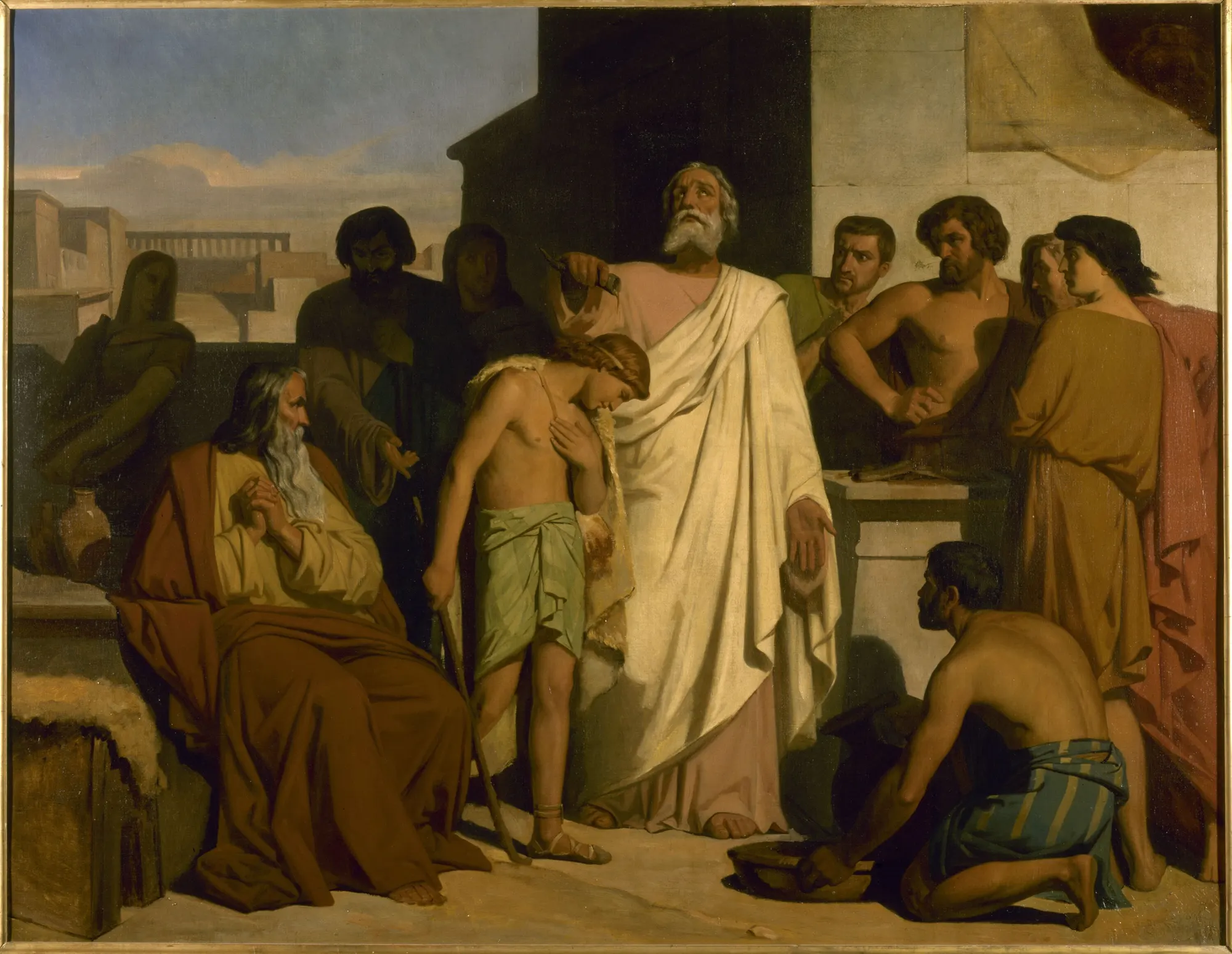
Who and where
2 names in this verse with a page on the site.
- PersonJudges to monarchySamuelAsked of God by Hannah and lent to the LORD at Shiloh; the last judge and first of the prophets after Moses, who anointed both Sau…
- PersonJudges eraEliHigh priest of Israel at Shiloh who mistook Hannah's silent prayer for drunkenness and raised the boy Samuel; his corrupt sons def…
This page draws on 10 works. Open the list of works
This page draws on Adam Clarke, Commentary on the Bible; Albert Barnes, Notes, Explanatory and Practical, on the Old and New Testaments (1832-1869); Albert Barnes, Notes on the Old Testament; Bede, Commentary on Samuel; Gregory the Dialogist, Commentary on 1 Kings, Book 3, Chapter 1; Gregory the Dialogist, Commentary on 1 Kings, Book 2, Chapter 4; Jamieson, Fausset & Brown, Commentary Critical and Explanatory on the Whole Bible; John Gill, Exposition of the Old Testament (1748-1763); John Wesley, Explanatory Notes upon the Old Testament and Matthew Henry, Commentary on the Whole Bible.