
1 Samuel 28:15
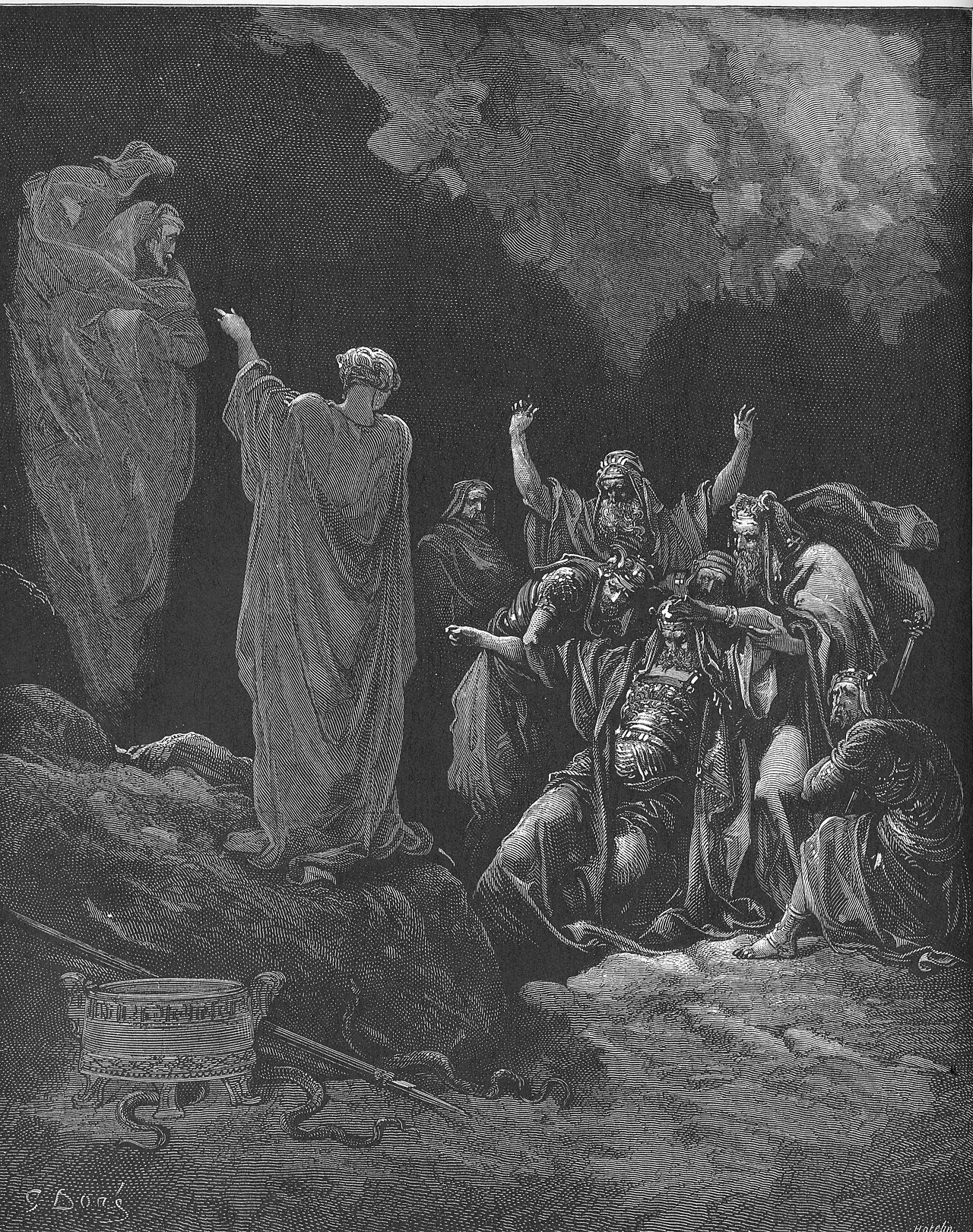
in 1 Samuel 28Then Samuel said to Saul, “Why have you disturbed me by bringing me up?” “I am deeply distressed,” replied Saul. “The Philistines are fighting against me, and God has turned away from me. He no longer answers me, either by prophets or by dreams. So I have called on you to tell me what to do.”
BSB
The same verse in ASV and KJV ▾
ASV
And Samuel said to Saul, Why hast thou disquieted me, to bring me up? And Saul answered, I am sore distressed; for the Philistines make war against me, and God is departed from me, and answereth me no more, neither by prophets, nor by dreams: therefore I have called thee, that thou mayest make known unto me what I shall do.
KJV
And Samuel said to Saul, Why hast thou disquieted me, to bring me up? And Saul answered, I am sore distressed; for the Philistines make war against me, and God is departed from me, and answereth me no more, neither by prophets, nor by dreams: therefore I have called thee, that thou mayest make known unto me what I shall do.
⋯
This verse in 1 Samuel 28
Commentary
9 notes on this verseIf the prophets, the forerunners of Christ, all went down into hades before the Christ, so too Samuel has gone down there. For he does not merely go down, but he goes down as a holy man. Wherever the holy man may be, he is holy. Is Christ no longer Christ, since he was once in hades? Was he no longer Son of God, since he existed in an underworld place, "that every knee should bow in the name of Jesus Christ in heaven and on earth and under the earth"?
This site's exposition
Why hast thou disquieted me
on 1 Samuel 28:15-16
The text names the speaker without qualification: And Samuel said to Saul. Two readings have stood in the church since the fathers. Keil and Delitzsch and Adam Clarke read it as a true appearance permitted by God rather than produced by the woman's craft, pointing to her own terror as proof her art had not caused what she saw. Matthew Henry calls the figure an evil spirit in Samuel's mantle offering Saul cold comfort meant to drive him toward despair, and Tertullian argues the same power that let a demon impersonate a dead man for the followers of Simon was granted once here and nowhere else in Scripture.
The record, by era
The Medieval Church2 voices
And Saul said: I am greatly distressed, etc. The Jews, abandoned by God, possess the gift of prophecy not by merit, attacked by all nations, follow, so to speak, a dead shadow of the law and the prophets under blind night. This, beset by miseries, …
But Samuel said to Saul: Why have you disturbed me? etc. And the books of the Old Testament, very full of the grace of prophecy, openly testify to readers that after the passion of the Lord they should not be raised again to the symbolic …
The Puritans and the Awakening3 voices
Called Samuel - Happy had it been, if he had called Samuel sooner, or rather the God of Samuel! It was now too late: destruction was at hand and God had determined, it should not be stayed.
"God denies me, therefore I come to thee. Flectere si nequeo superos, Acheronta movebo. " -- If I fail with heaven, I will move hell. It is cold comfort which this evil spirit in Samuel's mantle gives to Saul, and is manifestly intended to drive him to despair and self-murder.
), but was only told what he had not done and what should be done to him. Those that expect any good counsel or comfort otherwise than from God, and in the way of his institutions, will be as wretchedly disappointed as Saul here was.
quarantine:debris (2026-07-29) — leading-punctuation+unbalanced-parens
2 more voices on this verse
The Puritans and the Awakening1 voice
And Samuel said to Saul, why hast thou disquieted me to bring me up?....
The Nineteenth Century1 voice
Why hast thou disquieted me - The complaint is not directed against the woman but against Saul. Indeed, her incantations had no influence in the business, and it does not appear that she had commenced her operations before the angels had prepared the way of the prophet, and before the prophet himself had made his appearance. That thou mayest make known unto me what I shall do - In his former difficulties, and when pressed by his enemies, he was in the habit of consulting Samuel; and now he applies to him as his former preceptor.
How the passage was read
What the Jewish commentators add
Have you disturbed me. You have frightened me. 14 The Midrash explains that Shmuel feared that his day of judgment had come. See above verse—Radak
1 more on this passage, in their own words ▾
But why do you ask me. Since you have inquired of the living prophets.
This section is reception history: how the passage was read and kept in the Jewish tradition. Where a reading parts from an essential of the Christian faith, the section says so at that point.
Texts and citation data: Sefaria; each excerpt follows its version’s licence. 5 further sources are cited on this chapter that carry no English text this site may quote or only restate the verse.
The words behind it
32 Hebrew wordsEvery Hebrew word of this verse in the order it stands, with what it means and the door to its own study. The last column counts the times a word stands in the whole Bible: the rarer the word, the more the places it appears belong together.
| Hebrew | Sound | Meaning | Word study | In the Bible |
|---|---|---|---|---|
| וַיֹּ֤אמֶר | vaiyomer | and he said | H559 → | 5305 times |
| שְׁמוּאֵל֙ | shemuel | Samuel | H8050 → | 141 times |
| אֶל־ | ʾel- | to | H413 → | 5510 times |
| שָׁא֔וּל | shaul | Saul | H7586 → | 402 times |
| לָ֥מָּה | lamah | <to> why? | H4100 → | 752 times |
| הִרְגַּזְתַּ֖נִי | hirgaztani | have you disturbed me | H7264 → | |
| לְהַעֲל֣וֹת | lehaalot | by bringing up | H5927 → | 890 times |
| אֹתִ֑י | ʾoti | <obj.> me | H853 → | 10935 times |
| וַיֹּ֣אמֶר | vaiyomer | and he said | H559 → | 5305 times |
| שָׁ֠אוּל | shaul | Saul | H7586 → | 402 times |
| צַר־ | tzar- | it is distress | H6887 → | |
| לִ֨י | li | to <the> me | ||
| מְאֹ֜ד | meod | exceedingly | H3966 → | 300 times |
| וּפְלִשְׁתִּ֣ים׀ | ufelishtim | and [the] Philistines | H6430 → | 287 times |
| נִלְחָמִ֣ים | nilchamim | [are] fighting | H3898 → | 177 times |
| בִּ֗י | bi | against <the> me | ||
| וֵֽאלֹהִ֞ים | velohim | and God | H430 → | 2601 times |
| סָ֤ר | sar | he has turned aside | H5493 → | 299 times |
| מֵֽעָלַי֙ | mealai | from with <the> me | H5921 → | 5755 times |
| וְלֹֽא־ | velo'- | and not | H3808 → | 5168 times |
| עָנָ֣נִי | ʾanani | he has answered me | H6030 → | 331 times |
| ע֗וֹד | od | yet | H5750 → | 490 times |
| גַּ֤ם | gam | neither | H1571 → | 769 times |
| בְּיַֽד־ | beyad- | by [the] hand of | H3027 → | 1618 times |
| הַנְּבִיאִם֙ | haneviim | <the> prophets | H5030 → | 314 times |
| גַּם־ | gam- | nor | H1571 → | 769 times |
| בַּ֣חֲלֹמ֔וֹת | bachalomot | by <the> dreams | H2472 → | |
| וָאֶקְרָאֶ֣ה | vaekraeh | and I have summoned ! | H7121 → | 733 times |
| לְךָ֔ | lekha | <to> <the> you | ||
| לְהוֹדִיעֵ֖נִי | lehodieni | to make known to me | H3045 → | 945 times |
| מָ֥ה | mah | what? | H4100 → | 752 times |
| אֶעֱשֶֽׂה׃ ס | ʾeeseh | will I do | H6213 → | 2628 times |
וַיֹּ֤אמֶרand he said
vaiyomerH559 →5305 times
שְׁמוּאֵל֙Samuel
shemuelH8050 →141 times
אֶל־to
ʾel-H413 →5510 times
שָׁא֔וּלSaul
shaulH7586 →402 times
לָ֥מָּה<to> why?
lamahH4100 →752 times
הִרְגַּזְתַּ֖נִיhave you disturbed me
hirgaztaniH7264 →
לְהַעֲל֣וֹתby bringing up
lehaalotH5927 →890 times
אֹתִ֑י<obj.> me
ʾotiH853 →10935 times
וַיֹּ֣אמֶרand he said
vaiyomerH559 →5305 times
שָׁ֠אוּלSaul
shaulH7586 →402 times
צַר־it is distress
tzar-H6887 →
לִ֨יto <the> me
li
מְאֹ֜דexceedingly
meodH3966 →300 times
וּפְלִשְׁתִּ֣ים׀and [the] Philistines
ufelishtimH6430 →287 times
נִלְחָמִ֣ים[are] fighting
nilchamimH3898 →177 times
בִּ֗יagainst <the> me
bi
וֵֽאלֹהִ֞יםand God
velohimH430 →2601 times
סָ֤רhe has turned aside
sarH5493 →299 times
מֵֽעָלַי֙from with <the> me
mealaiH5921 →5755 times
וְלֹֽא־and not
velo'-H3808 →5168 times
עָנָ֣נִיhe has answered me
ʾananiH6030 →331 times
ע֗וֹדyet
odH5750 →490 times
גַּ֤םneither
gamH1571 →769 times
בְּיַֽד־by [the] hand of
beyad-H3027 →1618 times
הַנְּבִיאִם֙<the> prophets
haneviimH5030 →314 times
גַּם־nor
gam-H1571 →769 times
בַּ֣חֲלֹמ֔וֹתby <the> dreams
bachalomotH2472 →
וָאֶקְרָאֶ֣הand I have summoned !
vaekraehH7121 →733 times
לְךָ֔<to> <the> you
lekha
לְהוֹדִיעֵ֖נִיto make known to me
lehodieniH3045 →945 times
מָ֥הwhat?
mahH4100 →752 times
אֶעֱשֶֽׂה׃ סwill I do
ʾeesehH6213 →2628 times
A shaded row is a word that stands 400 times or fewer in the Bible.
The walk
8 stopsEach card is a verse this one points to, and under it the verses that one points to in turn. Where several paths arrive at the same place, that place is listed first: the text keeps returning to it.
Through
Proverbs 14:14The backslider in heart receives the fill of his own ways, but a good man is rewarded for his ways.
it leads to
- Galatians 6:8
The one who sows to please his flesh, from the flesh will reap destruction; but the one who sows to please the Spirit, from the Spirit will reap eternal life.
- Proverbs 12:14
By fruitful speech a man is filled with good things, and the work of his hands returns to him.
- Hebrews 3:12
See to it, brothers, that none of you has a wicked heart of unbelief that turns away from the living God.
- Galatians 6:8
Through
1 Samuel 28:6He inquired of the LORD, but the LORD did not answer him by dreams or Urim or prophets.
it leads to
- Numbers 12:6
He said, “Hear now My words: If there is a prophet among you, I, the LORD, will reveal Myself to him in a vision; I will speak to him in a dream.
- 1 Samuel 14:37
So Saul inquired of God, “Shall I go down after the Philistines? Will You give them into the hand of Israel?” But God did not answer him that day.
- Lamentations 2:9
Her gates have sunk into the ground; He has destroyed and shattered their bars. Her king and her princes are exiled among the nations, the law is no more, and even her prophets find…
- Numbers 27:21
He shall stand before Eleazar the priest, who will seek counsel for him before the LORD by the judgment of the Urim. At his command, he and all the Israelites with him—the entire congregation—will…
- Ezekiel 20:1–3
In the seventh year, on the tenth day of the fifth month, some of the elders of Israel came to inquire of the LORD, and they sat down before me.
- Numbers 12:6
Where this verse is studied
On this page
Studies1
About 1 Samuel
Who and where
2 names in this verse with a page on the site.
- PersonJudges to monarchySamuelAsked of God by Hannah and lent to the LORD at Shiloh; the last judge and first of the prophets after Moses, who anointed both Sau…
- PersonUnited monarchySaulIsrael's first king, head and shoulders above the people; began in humility, ended in rejection — sparing what God devoted, consul…
This page draws on Adam Clarke, Commentary on the Bible; Bede, Commentary on Samuel; John Gill, Exposition of the Old Testament (1748-1763); John Wesley, Explanatory Notes upon the Old Testament; Keil and Delitzsch, Biblical Commentary on the Books of Samuel; Matthew Henry, Commentary on the Whole Bible; Origen of Alexandria, HOMILY ON 1 KINGS 28.8.1 and Tertullian, De Anima.