
1 Samuel 18:8
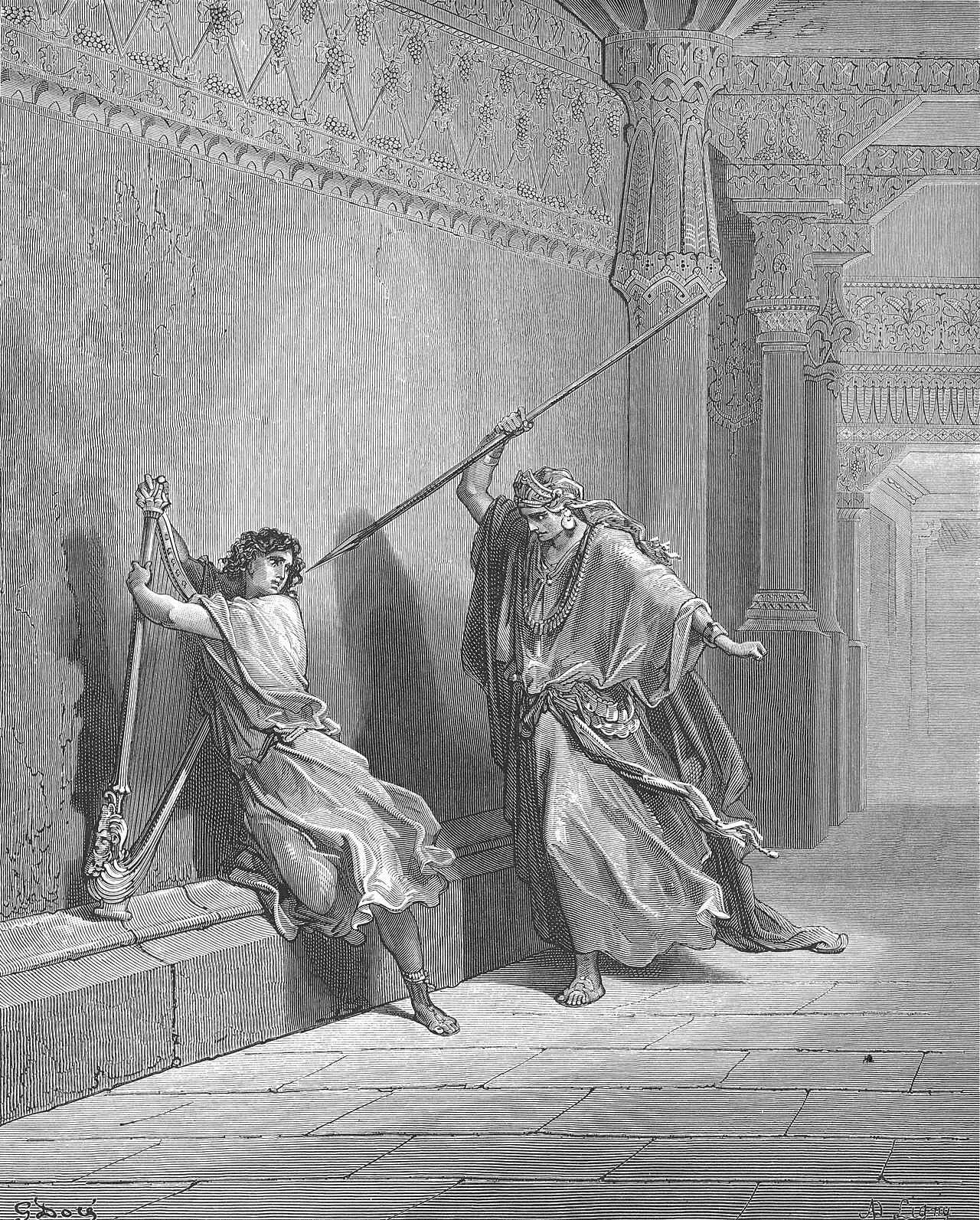
in 1 Samuel 18And Saul was furious and resented this song. “They have ascribed tens of thousands to David,” he said, “but only thousands to me. What more can he have but the kingdom?”
BSB
The same verse in ASV and KJV ▾
ASV
And Saul was very wroth, and this saying displeased him; and he said, They have ascribed unto David ten thousands, and to me they have ascribed but thousands: and what can he have more but the kingdom?
KJV
And Saul was very wroth, and the saying displeased him; and he said, They have ascribed unto David ten thousands, and to me they have ascribed but thousands: and what can he have more but the kingdom?
⋯
This verse in 1 Samuel 18
Commentary
6 notes on this verseA commentator
Albert Barnes1798–1870
Notes, Explanatory and Practical, on the Old and New Testaments (1832-1869)
What can he have ... - Rather, “There is only the kingdom left for him.” Compare for the same sentiment, 1Ki 2:22. “A kingdom (says Camden) brooketh no companion, and majesty more heavily taketh injuries to heart.”
This site's exposition
And Saul was furious and resented this song
on 1 Samuel 18:8-9
Saul’s arithmetic is envy’s arithmetic, two lines of a folk song read as a claim on his crown. Barnes takes his complaint about what more David can have but the kingdom as Saul naming his own fear before anyone else does. Verse 9 marks the turn in one clause, "from that day forward Saul kept a jealous eye on David," a watchfulness that runs the length of the book.
The record, by era
The Church Fathers1 voice
It is usual, indeed, with persons of a weaker character, to be so built up in confidence by certain individuals who are caught by heresy, as to topple over into ruin themselves. How does it come to pass, they ask, that this woman or that man, who were the most faithful, the most prudent and the most approved in the church, have gone over to the other side?
The Medieval Church1 voice
Saul was greatly angered, etc. But the people who gloried in the law, angered against the preachers of grace, and the word displeased them, which, with the Gospel shining forth, set an end to the shadows of the law; and he said, raging against the …
The Puritans and the Awakening2 voices
It may be, he that composed the song only used a poetic liberty, and intended not any invidious comparison between Saul and David; or, if he did, it was below the great mind of a prince to take notice of such a reflection upon his personal honour, when it appeared that the glory of the public was sincerely intended.
And Saul was very wroth, and the saying displeased him,....
The words behind it
18 Hebrew wordsEvery Hebrew word of this verse in the order it stands, with what it means and the door to its own study. The last column counts the times a word stands in the whole Bible: the rarer the word, the more the places it appears belong together.
| Hebrew | Sound | Meaning | Word study | In the Bible |
|---|---|---|---|---|
| וַיִּ֨חַר | vaiyichar | and it burned | H2734 → | 91 times |
| לְשָׁא֜וּל | leshaul | to Saul | H7586 → | 402 times |
| מְאֹ֗ד | meod | exceedingly | H3966 → | 300 times |
| וַיֵּ֤רַע | vaiyera' | and it was displeasing | H7489 → | 107 times |
| בְּעֵינָיו֙ | beeinav | in view his | H5869 → | 887 times |
| הַדָּבָ֣ר | hadavar | the matter | H1697 → | 1440 times |
| הַזֶּ֔ה | hazeh | <the> this | H2088 → | 1180 times |
| וַיֹּ֗אמֶר | vaiyomer | and he said | H559 → | 5305 times |
| נָתְנ֤וּ | natenu | they have ascribed | H5414 → | 2011 times |
| לְדָוִד֙ | ledavid | to David | H1732 → | 999 times |
| רְבָב֔וֹת | revavot | ten thousands | H7233 → | 16 times |
| וְלִ֥י | veli | and to <the> me | ||
| נָתְנ֖וּ | natenu | they have ascribed | H5414 → | 2011 times |
| הָאֲלָפִ֑ים | haalafim | the thousands | H505 → | 505 times |
| וְע֥וֹד | veod | and yet | H5750 → | 490 times |
| ל֖וֹ | lo | for <the> him | ||
| אַ֥ךְ | ʾakh | only | H389 → | 161 times |
| הַמְּלוּכָֽה׃ | hamelukhah | the kingship | H4410 → | 24 times |
וַיִּ֨חַרand it burned
vaiyicharH2734 →91 times
לְשָׁא֜וּלto Saul
leshaulH7586 →402 times
מְאֹ֗דexceedingly
meodH3966 →300 times
וַיֵּ֤רַעand it was displeasing
vaiyera'H7489 →107 times
בְּעֵינָיו֙in view his
beeinavH5869 →887 times
הַדָּבָ֣רthe matter
hadavarH1697 →1440 times
הַזֶּ֔ה<the> this
hazehH2088 →1180 times
וַיֹּ֗אמֶרand he said
vaiyomerH559 →5305 times
נָתְנ֤וּthey have ascribed
natenuH5414 →2011 times
לְדָוִד֙to David
ledavidH1732 →999 times
רְבָב֔וֹתten thousands
revavotH7233 →16 times
וְלִ֥יand to <the> me
veli
נָתְנ֖וּthey have ascribed
natenuH5414 →2011 times
הָאֲלָפִ֑יםthe thousands
haalafimH505 →505 times
וְע֥וֹדand yet
veodH5750 →490 times
ל֖וֹfor <the> him
lo
אַ֥ךְonly
ʾakhH389 →161 times
הַמְּלוּכָֽה׃the kingship
hamelukhahH4410 →24 times
A shaded row is a word that stands 400 times or fewer in the Bible.
The walk
8 stopsEach card is a verse this one points to, and under it the verses that one points to in turn. Where several paths arrive at the same place, that place is listed first: the text keeps returning to it.
Through
James 4:5Or do you think the Scripture says without reason that the Spirit He caused to dwell in us yearns with envy?
it leads to
- 2 Corinthians 6:16
What agreement can exist between the temple of God and idols? For we are the temple of the living God. As God has said: “I will dwell with them and walk among them, and…
- 1 Corinthians 6:19
Do you not know that your body is a temple of the Holy Spirit who is in you, whom you have received from God? You are not your own;
- Numbers 11:29
But Moses replied, “Are you jealous on my account? I wish that all the LORD’s people were prophets and that the LORD would place His Spirit on them!”
- Titus 3:3
For at one time we too were foolish, disobedient, misled, and enslaved to all sorts of desires and pleasures—living in malice and envy, being hated and hating one another.
- 2 Corinthians 6:16
Through
Proverbs 13:10Arrogance leads only to strife, but wisdom is with the well-advised.
it leads to
- Proverbs 19:20
Listen to counsel and accept discipline, that you may be wise the rest of your days.
- Proverbs 12:15–16
The way of a fool is right in his own eyes, but a wise man listens to counsel.
- 1 Timothy 6:4
he is conceited and understands nothing. Instead, he has an unhealthy interest in controversies and semantics, out of which come envy, strife, abusive talk, evil suspicions,
- Proverbs 19:20
Through
1 Samuel 15:28So Samuel said to him, “The LORD has torn the kingdom of Israel from you today and has given it to your neighbor who is better than you.
it leads to
- 1 Samuel 28:17–18
He has done exactly what He spoke through me: The LORD has torn the kingship out of your hand and given it to your neighbor David.
- 1 Samuel 28:17–18
Where this verse is studied
On this page
About 1 Samuel
Who and where
2 names in this verse with a page on the site.
- PersonUnited MonarchyDavidSecond king of united Israel, shepherd-turned-monarch, ancestor of the Messiah, and traditional author of many Psalms.
- PersonUnited monarchySaulIsrael's first king, head and shoulders above the people; began in humility, ended in rejection — sparing what God devoted, consul…
This page draws on Albert Barnes, Notes, Explanatory and Practical, on the Old and New Testaments (1832-1869); Albert Barnes, Notes on the Old Testament; Bede, Commentary on Samuel; John Gill, Exposition of the Old Testament (1748-1763); Matthew Henry, Commentary on the Whole Bible and Tertullian, PRESCRIPTIONS AGAINST HERETICS 3.