
1 Samuel 18:20
in 1 Samuel 18Now Saul’s daughter Michal loved David, and when this was reported to Saul, it pleased him.
BSB
The same verse in ASV and KJV ▾
ASV
And Michal, Saul’s daughter, loved David: and they told Saul, and the thing pleased him.
KJV
And Michal Saul’s daughter loved David: and they told Saul, and the thing pleased him.
⋯
This verse in 1 Samuel 18
Commentary
5 notes on this verseThis site's exposition
Michal Saul’s daughter loved David
on 1 Samuel 18:20-21
Michal is the one woman in Scripture the text says loved a man; every other marriage in the Bible is recorded from the man's side or arranged without a word about hers. Saul hears it and turns her love into a weapon, that she may be a snare to him, the second attempt after Merab to use a daughter to destroy David through the Philistines. The word snare marks Saul's whole strategy in this chapter, unable to strike David himself, he keeps building traps for other hands to spring.
The record, by era
The Medieval Church2 voices
Why did Saul seek to apprehend and kill David whom he had formerly honored as himself and greatly loved as a benefactor? Was it by nature or out of an evil will? Obviously it was out of ill will. No one is born evil by …
And it was reported to Saul, and it pleased him, etc. The envious leaders of the Jews, recognizing that the crowd loved the Lord and flocked with diligent intention to hear Him, which they detested in other matters, began to be pleased in this one …
The Puritans and the Awakening1 voice
And Michal, Saul's daughter, loved David,....
The Nineteenth Century1 voice
A commentator
Albert Barnes1798–1870
Notes, Explanatory and Practical, on the Old and New Testaments (1832-1869)
proposed
The thing pleased him - It partly relieved him from the charge of breaking his faith.
The words behind it
11 Hebrew wordsEvery Hebrew word of this verse in the order it stands, with what it means and the door to its own study. The last column counts the times a word stands in the whole Bible: the rarer the word, the more the places it appears belong together.
| Hebrew | Sound | Meaning | Word study | In the Bible |
|---|---|---|---|---|
| וַתֶּאֱהַ֛ב | vateehav | and she loved | H157 → | 211 times |
| מִיכַ֥ל | mikhal | Michal | H4324 → | 18 times |
| בַּת־ | bat- | [the] daughter of | H1323 → | 588 times |
| שָׁא֖וּל | shaul | Saul | H7586 → | 402 times |
| אֶת־ | ʾet- | <obj.> | H853 → | 10935 times |
| דָּוִ֑ד | david | David | H1732 → | 999 times |
| וַיַּגִּ֣דוּ | vaiyagidu | and people told | H5046 → | 370 times |
| לְשָׁא֔וּל | leshaul | to Saul | H7586 → | 402 times |
| וַיִּשַׁ֥ר | vaiyishar | and it was pleasing | H3474 → | 25 times |
| הַדָּבָ֖ר | hadavar | the matter | H1697 → | 1440 times |
| בְּעֵינָֽיו׃ | beeinav | in view his | H5869 → | 887 times |
וַתֶּאֱהַ֛בand she loved
vateehavH157 →211 times
מִיכַ֥לMichal
mikhalH4324 →18 times
בַּת־[the] daughter of
bat-H1323 →588 times
שָׁא֖וּלSaul
shaulH7586 →402 times
אֶת־<obj.>
ʾet-H853 →10935 times
דָּוִ֑דDavid
davidH1732 →999 times
וַיַּגִּ֣דוּand people told
vaiyagiduH5046 →370 times
לְשָׁא֔וּלto Saul
leshaulH7586 →402 times
וַיִּשַׁ֥רand it was pleasing
vaiyisharH3474 →25 times
הַדָּבָ֖רthe matter
hadavarH1697 →1440 times
בְּעֵינָֽיו׃in view his
beeinavH5869 →887 times
A shaded row is a word that stands 400 times or fewer in the Bible.
The walk
5 stopsEach card is a verse this one points to, and under it the verses that one points to in turn. Where several paths arrive at the same place, that place is listed first: the text keeps returning to it.
Through
1 Samuel 18:28When Saul realized that the LORD was with David and that his daughter Michal loved David,
it leads to
- Genesis 30:27
But Laban replied, “If I have found favor in your eyes, please stay. I have learned by divination that the LORD has blessed me because of you.”
- Genesis 37:8–11
“Do you intend to reign over us?” his brothers asked. “Will you actually rule us?” So they hated him even more because of his dream and his statements.
- 1 Samuel 24:20
Now I know for sure that you will be king, and that the kingdom of Israel will be established in your hands.
- Revelation 3:9
Look at those who belong to the synagogue of Satan, who claim to be Jews but are liars instead. I will make them come and bow down at your feet, and they will know…
- 1 Samuel 26:25
Saul said to him, “May you be blessed, David my son. You will accomplish great things and will surely prevail.” So David went on his way, and Saul returned home.
- Genesis 30:27
Where this verse is studied
On this page
About 1 Samuel
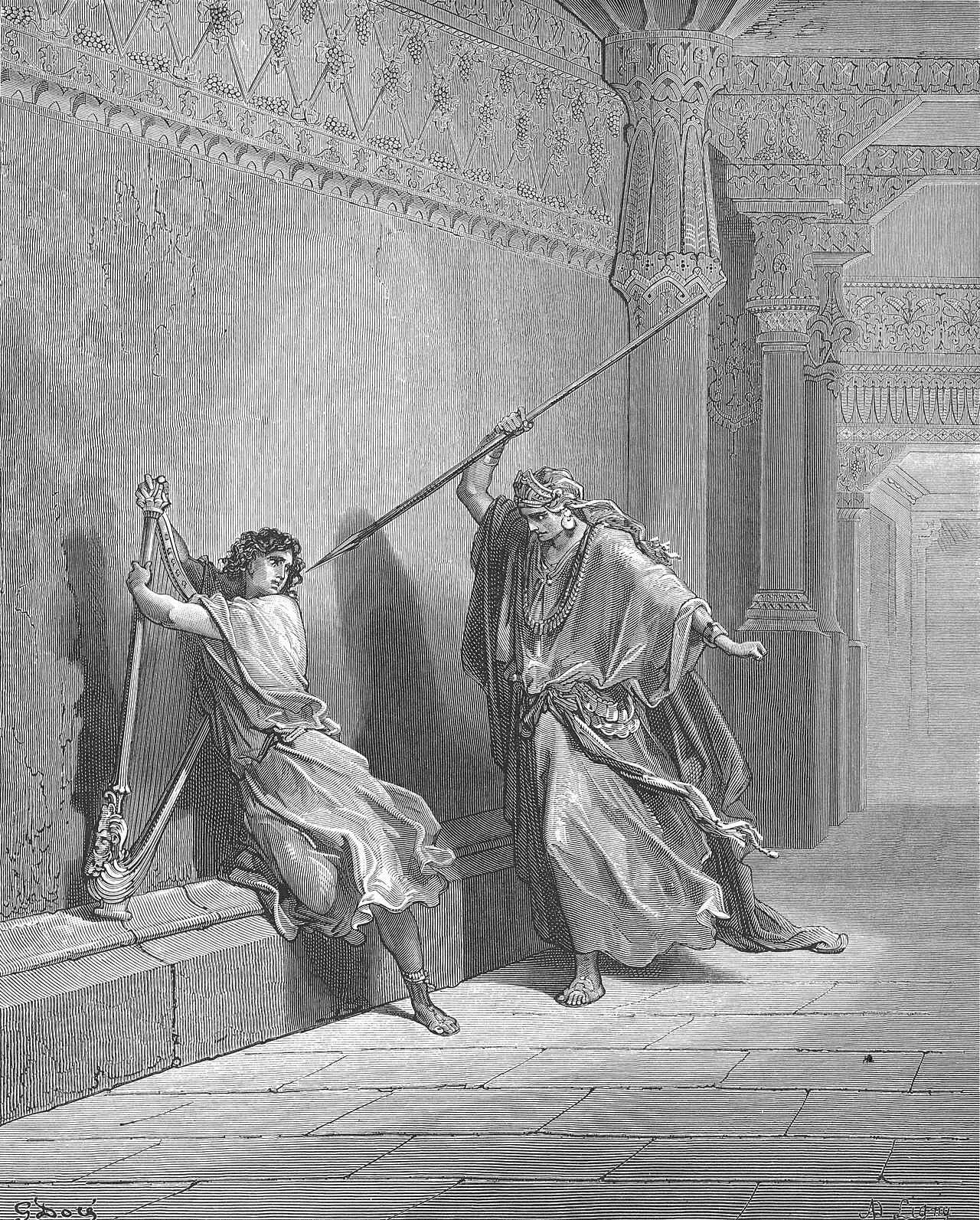
Who and where
2 names in this verse with a page on the site.
- PersonUnited MonarchyDavidSecond king of united Israel, shepherd-turned-monarch, ancestor of the Messiah, and traditional author of many Psalms.
- PersonUnited monarchySaulIsrael's first king, head and shoulders above the people; began in humility, ended in rejection — sparing what God devoted, consul…
This page draws on Albert Barnes, Notes, Explanatory and Practical, on the Old and New Testaments (1832-1869); Bede, Commentary on Samuel; Jamieson Fausset and Brown, Commentary Critical and Explanatory on the Whole Bible; John Gill, Exposition of the Old Testament; John Gill, Exposition of the Old Testament (1748-1763) and Symeon the New Theologian, DISCOURSES 4.2.