
Romanschapter 6
23 verses · Paul · AD 56 or 57 · Paul's letters
What then shall we say? Shall we continue in sin so that grace may increase?
Introduction
Paul, Paul's letters, Romans Overview.
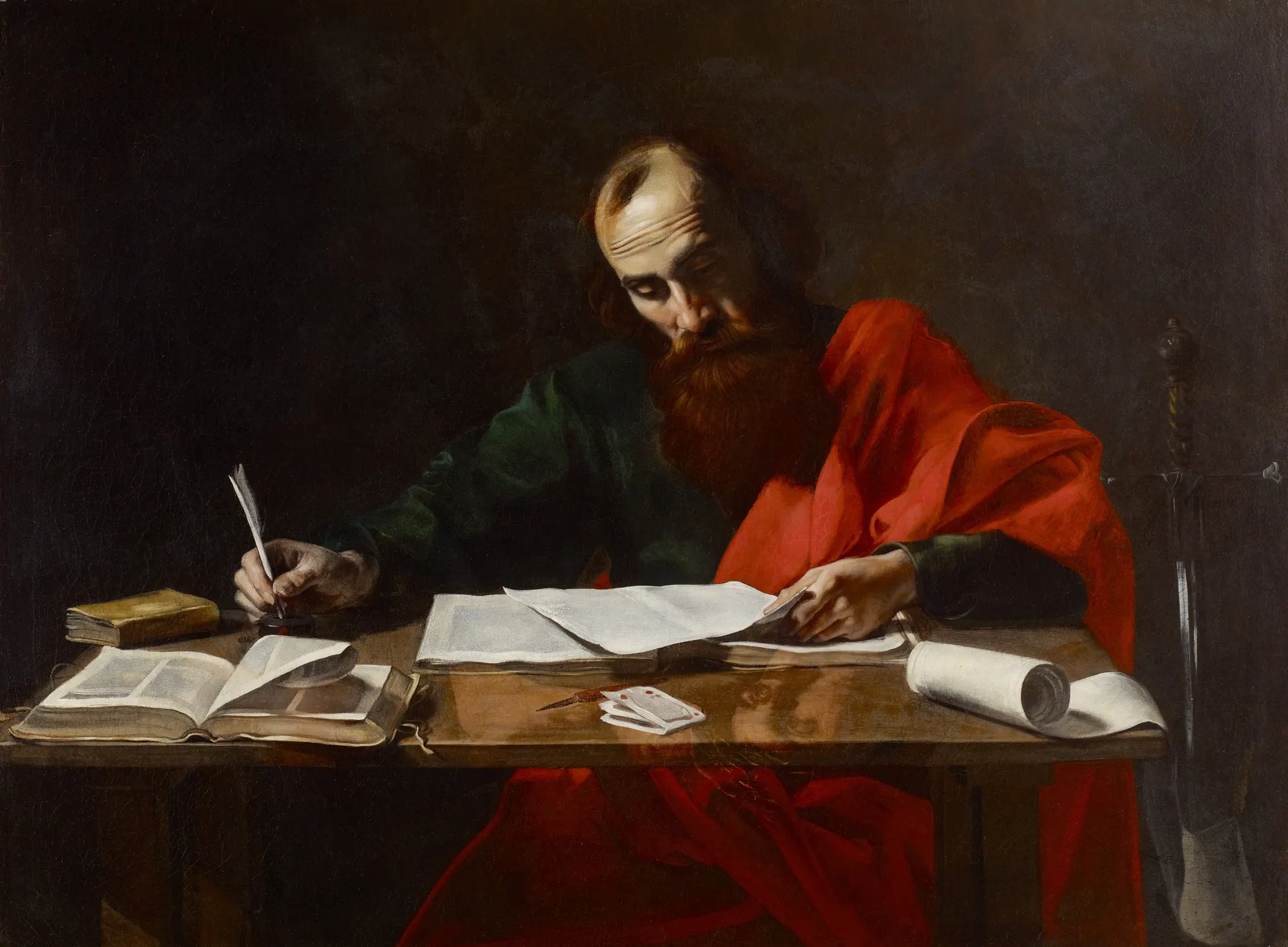
Paul wrote this letter from Corinth about AD 57 to house churches in Rome he had never visited. Many who met in those houses were slaves or freed slaves, and all of them had been baptized. He knew that his teaching on free grace would draw one charge above all, and this chapter meets it. Listen for the two questions an objector puts and the short refusal each one gets. Then listen for the pictures, a burial and a change of owners, which the first hearers knew from their own lives.
Context
- Who
- House churches in Rome where a large share of the members were literally slaves or freed slaves.
- What
- An answer to the charge that grace encourages sin, drawn from the believer's death and rising with Christ and from the change of masters.
- Where
- Written from Corinth to the house churches of Rome.
- When
- About AD 57, early in the reign of Nero.
- Why
- To show that those freed by grace belong to God and serve righteousness, and that sin leads to death while God gives eternal life.
Historical context
Slavery was everywhere in Rome. Perhaps a third of the city's population was enslaved, and the households where these churches met would have contained slaves as members. When Paul says you are slaves of the one you obey, nobody heard a soft metaphor; they heard a description of a life owned by another.
Show the rest of the historical context, 3 more paragraphs
Roman slavery did allow release. A master could free a slave, and freedmen kept obligations to their former household, which is why Paul can speak of being set free from one master and handed over to another rather than being made autonomous.
Baptism in the first century was immersion, and Paul reads its shape as a burial: down under, up again. He is not arguing about the mechanics but using something every believer in the room had personally been through as the picture of what happened to them in Christ.
He apologizes, in effect, for the slavery language, saying he speaks in human terms because of the weakness of their flesh. He knows it is a rough analogy for a relationship that is finally freedom.
Significance
The first hearers were being told that grace does not license sin because grace changed their status. A dead man is not tempted by his old master's orders, and they had died with Christ.
Show the rest of the significance, 1 more paragraph
The practical instruction was blunt and physical: do not go on presenting the parts of your body to sin as weapons; present them to God. In a culture where the body's appetites were regarded by many as morally neutral, that was a genuinely new demand.
The heads below are this chapter's scenes. The numbered points under each are its verses.
Buried With Him, Raised to Walk in Newness of Life
Romans 6:1-2
Shall we continue in sin: Grace increases where sin increases, and verse 1 asks whether a believer should continue in sin so that grace will increase. Paul refuses it flatly. Verse 2 answers with a fact, that those who died to sin no longer live in it.
Romans 6:1
“What shall we say then? - This is a mode of presenting an objection. The objection refers to what the apostle had said in Rom 5:20. What shall we say to such a sentiment as that where sin abounded grace did much more abound? Shall we continue in sin? ... - If sin has been the occasion of grace and favor, ought we not to continue in it, and commit as much as possible, in order that grace might abound? This objection the apostle proceeds to answer.”
1 more voice on this verseWhat preachers and commentators have said about this verse, in their own words.
Romans 6:1
“What, &c.--The subject of this third division of our Epistle announces itself at once in the opening question, "Shall we (or, as the true reading is, "May we," "Are we to") continue in sin, that grace may abound?" Had the apostle's doctrine been that salvation depends in any degree upon our good works, no such objection to it could have been made.”
Jamieson, Fausset & Brown · Commentary Critical and Explanatory on the Whole Bible (1871)reformed
who died to sin: Certainly not answers the question of verse 1. The verb died points to one past event, which verses 3 and 4 place at baptism into the death of Christ. Origen says that to live in sin any longer is to live by the will of sin.
Romans 6:2
God forbid--"That be far from us"; the instincts of the new creature revolting at the thought. How shall we, that are dead, &c.--literally, and more forcibly, "We who died to sin (as presently to be explained), how shall we live any longer therein?"
Jamieson, Fausset & Brown · Commentary Critical and Explanatory on the Whole Bible (1871)reformed
3 more voices on this verse
Romans 6:2
"He who sins certainly lives to sin; we have died to sin through the grace of Christ; then it is false, that what abolishes sin gives vigor to it." The state of the case is really this, -- that the faithful are never reconciled to God without the gift of regeneration; nay, we are for this end justified, -- that we may afterwards serve God in holiness of life.
John Calvin · Commentaries (1554)reformed
Romans 6:2
“But that these things may become clearer, let us inquire what it is to live to sin, and what it is to die to sin. Just as he is said to live to God who lives according to the will of God, so also he is said to live to sin who lives according to the will of sin — as the Apostle himself indicates when he says: "Let not sin therefore reign in your mortal body, so that you obey its desires." In this he shows that to obey the desires of sin is to live to sin.”
Origen of Alexandria · written before 253 · Commentary on the Epistle to the Romanspatristic
Romans 6:2
“God forbid - Μη γενοιτο, Let it not be; by no means; far from it; let not such a thing be mentioned! - Any of these is the meaning of the Greek phrase, which is a strong expression of surprise and disapprobation: and is not properly rendered by our God forbid! for, though this may express the same thing, yet it is not proper to make the sacred Name So familiar on such occasions. How shall we, that are dead to sin - The phraseology of this verse is common among Hebrews, Greeks, and Latins.”
Adam Clarke · Commentary on the Bible (1810-1826)evangelical
Romans 6:3-4
baptized into His death?: Baptism into Christ Jesus is baptism into His death. Verse 4 carries the picture through burial, and the believer is buried with Him. Christ was raised through the glory of the Father, and the new walk follows from that raising.
Romans 6:3
“As many as have been baptized into Jesus Christ have been baptized into his death - In baptism we, through faith, are ingrafted into Christ; and we draw new spiritual life from this new root, through his Spirit, who fashions us like unto him, and particularly with regard to his death and resurrection.”
John Wesley · Explanatory Notes upon the New Testament (1755)evangelical
1 more voice on this verse
Romans 6:3
“Know ye not - This is a further appeal to the Christian profession, and the principles involved in it, in answer to the objection. The simple argument in this verse and the two following is, that by our very profession made in baptism, we have renounced sin, and have pledged ourselves to live to God. So many of us ... - All who were baptized; that is, all professed Christians. As this renunciation of sin had been thus made by all who professed religion, so the objection could not have reference to Christianity in any manner.”
buried with Him through baptism into death: Wesley, Clarke and Barnes hear an allusion to baptism by immersion, the body buried under the water as in a grave. Cyril of Jerusalem told those baptized they were buried in the water as Christ was in the rock. Wesley reads the glory of the Father as His glorious power.
Romans 6:4
“We are buried with him by baptism into death - It is probable that the apostle here alludes to the mode of administering baptism by immersion, the whole body being put under the water, which seemed to say, the man is drowned, is dead; and, when he came up out of the water, he seemed to have a resurrection to life; the man is risen again; he is alive!”
Adam Clarke · Commentary on the Bible (1810-1826)evangelical
3 more voices on this verse
Romans 6:4
“So likewise in baptism, since it is a likeness of death, without a doubt, when you are immersed and rise again, it becomes a likeness of resurrection. Therefore, according to the interpretation of the apostle Peter, just as that resurrection was a regeneration, so is this resurrection a regeneration.”
Ambrose of Milan · written before 397 · On the Sacraments, Book 3, Chapter 1patristic
Romans 6:4
“Our conformity is complete. We are in profession quite cut off from all commerce and communion with sin, as those that are buried are quite cut off from all the world; not only not of the living, but no more among the living, have nothing more to do with them. Thus must we be, as Christ was, separate from sin and sinners.”
Matthew Henry · Commentary on the Whole Bible (1707-1721)puritan
Romans 6:4
“To leave a dead body unburied is represented, alike in heathen authors as in Scripture, as the greatest indignity (Re 11:8, 9). It was fitting, therefore, that Christ, after "dying for our sins according to the Scriptures," should "descend into the lower parts of the earth" (Eph 4:9).”
Jamieson, Fausset & Brown · Commentary Critical and Explanatory on the Whole Bible (1871)reformed
united with Him in His resurrection: Verse 5 sets union with Christ in His death beside union with Him in His resurrection. The one carries the other. Clarke and Godet read the word for united as a graft grown into the stock it was set in.
Romans 6:5
“Emmanuel gave up his soul for us; he died in the flesh. We also were buried together with him when we were baptized. Does this mean that our flesh died in the same way as his did? Hardly. Come, let me explain in what sense we were buried with him in a death like his. Christ died in the flesh in order to remove the sin of the world, but we do not die to the flesh so much as to guilt, as it is written.”
Cyril of Alexandria · written before 444 · Explanation of the Letter to the Romanspatristic
2 more voices on this verse
Romans 6:5
“For if we have been planted together - The word used here σύμφυτος sumphutos, does not occur elsewhere in the New Testament. It properly means sown or planted at the same time; what sprouts or springs up together; and is applied to plants and trees that are planted at the same time, and that sprout and grow together. Thus, the name would be given to a field of grain that was sown at the same time, and where the grain sprung up and grew simultaneously. Hence, it means intimately connected, or joined together.”
Romans 6:5
“Planting is in order to life and fruitfulness: we are planted in the vineyard in a likeness to Christ, which likeness we should evidence in sanctification. Our creed concerning Jesus Christ is, among other things, that he was crucified, dead, and buried; now baptism is a sacramental conformity to him in each of these, as the apostle here takes notice.”
Matthew Henry · Commentary on the Whole Bible (1707-1721)puritan
Romans 6:6-7
our old self was crucified with Him: The old self is what the believer was in Adam. Verse 6 says it was crucified with Christ, and the body of sin was made powerless by that death. Verse 7 gives the rule: a dead man has been freed from sin, a legal discharge.
Romans 6:6
“This in a believer is crucified with Christ, mortified, gradually killed, by virtue of our union with him. That the body of sin - All evil tempers, words, and actions, which are the "members" of the "old man," Colossians iii, 5, might be destroyed.”
John Wesley · Explanatory Notes upon the New Testament (1755)evangelical
4 more voices on this verse
Romans 6:6
“Our old man is crucified with him - This seems to be a farther extension of the same metaphor. When a seed is planted in the earth, it appears as if the whole body of it perished.”
Adam Clarke · Commentary on the Bible (1810-1826)evangelical
Romans 6:6
“By these words we are taught that he who is baptized in Christ is baptized in his death and is not only buried with Christ and planted together with him but is first of all crucified with him. Thus we are instructed that, as he who is crucified is separated from the living, so also he who has been crucified with Christ in the likeness of his death is completely set apart from those who live according to the old man.”
Basil of Caesarea · written before 379 · Concerning Baptism 1.2patristic
Romans 6:6
“The actual transgression is certainly in a great measure prevented by the crucifying and killing of the original corruption. Destroy the body of sin, and then, though there should be Canaanites remaining in the land, yet the Israelites will not be slaves to them. It is the body of sin that sways the sceptre, wields the iron rod; destroy this, and the yoke is broken.”
Matthew Henry · Commentary on the Whole Bible (1707-1721)puritan
Romans 6:6
“EVERY new man is two men—every Believer in Christ is what he was and not what he was—the old nature and the new nature exist at the same time in each regenerate individual. That old nature the Apostle calls a man, because it is a complete manhood after the image of fallen Adam. It has the desires, the judgment, the mind, the thoughts, the language and the action of man as he is in his rebellious estate. He calls it the "old man," because it is as old as Eden's first transgression. It is as old as we are.”
has been freed from sin: Freed is dedikaiotai, literally has been justified, as Clarke notes. Barnes hears a proverb behind it, for the rabbis taught that a dead man is free from the commands of the law. Death ends the claim of sin as it ends the claim of a master on his slave.
Romans 6:7
“For he that is dead - With Christ. Is freed from the guilt of past, and from the power of present, sin, as dead men from the commands of their former masters.”
John Wesley · Explanatory Notes upon the New Testament (1755)evangelical
2 more voices on this verse
Romans 6:7
“But He set a bound to his [state of] sin, by interposing death, and thus causing sin to cease, putting an end to it by the dissolution of the flesh, which should take place in the earth, so that man, ceasing at length to live to sin, and dying to it, might begin to live to God.”
Irenaeus · written before 202 · Against Heresies 3.23.6patristic
Romans 6:7
“For he that is dead - This is evidently an expression having a proverbial aspect, designed to illustrate the sentiment just expressed. The Rabbis had an expression similar to this, “When one is dead he is free from commands.” (Grotius.) So says Paul, when a man dies he is exempt from the power and dominion of his master, of him who reigned over him. The Christian had been subject to sin before his conversion. But he has now become dead to it.”
Romans 6:8-10
if we died with Christ: Dying with Christ carries living with Him, and verse 9 gives the ground, Christ raised from the dead and beyond death's reach. Death has no dominion over Him now. Verse 10 sets the pattern in two clauses, a death to sin once for all and a life lived to God.
Romans 6:8
"But if we have died with Christ, we believe that we shall also live together with him, knowing that Christ rising from the dead dies no more, death shall no longer have dominion over him. For in that he died to sin, he died once; but in that he lives, he lives to God." In everything the Apostle has said above, he wished to show this: that if Christ died to sin, we too have died to sin along with him.
Origen of Alexandria · written before 253 · Commentary on the Epistle to the Romanspatristic
2 more voices on this verse
Romans 6:8
“Christ was obedient to death: when he died, we might be said to die with him, as our dying to sin is an act of conformity both to the design and to the example of Christ's dying for sin. Baptism signifies and seals our union with Christ, our engrafting into Christ; so that we are dead with him, and engaged to have no more to do with sin than he had.”
Matthew Henry · Commentary on the Whole Bible (1707-1721)puritan
Romans 6:8
“THE apostles never traveled far from the simple facts of Christ’s life, death, resurrection, ascension, exaltation, and second advent. These things, of which they were the witnesses, constituted the staple of all their discourses. Newton has very properly said that the two pillars of our religion are, the work of Christ for us, and his work in us by the Holy Spirit.”
He cannot die again: Christ was raised to die no more. Matthew Henry marks it by the grave-clothes, which Lazarus carried out of the tomb to use again and Christ left behind. Death once had dominion over Him by His own consent, and the resurrection ended that dominion for good.
Romans 6:9
“Christ being raised from the dead dieth no more - So we, believing in Christ Jesus, and having a death unto sin, and a life unto righteousness, should sin no more. If we be risen indeed with Christ, we should seek the things above, and set our affections on things above, and not on the earth. The man who walks in humble, loving obedience, to an indwelling Christ, sin has no more dominion over his soul than death has over the immortal and glorified body of his Redeemer.”
Adam Clarke · Commentary on the Bible (1810-1826)evangelical
3 more voices on this verse
Romans 6:9
“But, when Christ rose, he rose to die no more; therefore he left his grave-clothes behind him, whereas Lazarus, who was to die again, brought them out with him, as one that should have occasion to use them again: but over Christ death has no more dominion; he was dead indeed, but he is alive, and so alive that he lives for evermore, Rev. i.”
Matthew Henry · Commentary on the Whole Bible (1707-1721)puritan
Romans 6:9
He declares in the plainest manner, that the same Being who was laid hold of, and underwent suffering, and shed His blood for us, was both Christ and the Son of God, who did also rise again, and was taken up into heaven, as he himself [Paul] says: "But at the same time, [it is] Christ [that] died, yea rather, that is risen again, who is even at the right hand of God."
Irenaeus · written before 202 · Against Heresies Book IIIpatristic
Romans 6:9
“Christ being raised from the dead dieth no more; death hath no more dominion over him--Though Christ's death was in the most absolute sense a voluntary act (Joh 10:17, 18; Ac 2:24), that voluntary surrender gave death such rightful "dominion over Him" as dissolved its dominion over us.”
Jamieson, Fausset & Brown · Commentary Critical and Explanatory on the Whole Bible (1871)reformed
He died to sin once for all: Christ never lived under the power of sin, so Chrysostom and Wesley read died to sin as dying to destroy it and atone for it. Diodorus of Tarsus presses the words once for all, since that death happens once.
Romans 6:10
In the Scriptures we learn that there are three kinds of death. The first is when we die to sin and live to God. Blessed is that death which, escaping from sin and devoted to God, separates us from what is mortal and consecrates us to him who is immortal. The second death is the departure from this life.… The third death is that of which it is said: "Let the dead bury their dead."
Ambrose of Milan · written before 397 · On the Death of Satyrus 2.36patristic
3 more voices on this verse
Romans 6:10
“He died unto sin once - On this clause Rosenmuller speaks thus: “Τῃ ἁμαρτιᾳ απεθανεν εφαπαξ· propter peccatum mortuus est semel, et quidem misera morte. Τῃ ἁμαρτιᾳ , i.e. ὑπερ της ἁμαρτιας, ad expianda peccata; res ipsa docet aliter homines αποθνησκειν τῃ ἁμαρτιᾳ, aliter Christum: amat Paulus parallelismum, in quo interpretando multa cautione opus est.” “He died unto sin once: i.e. he died on account of sin, and truly a miserable death. Τῃ ἁμαρτιᾳ, is the same as ὑπερ της ἁμαρτιας, for the expiation of sin.”
Adam Clarke · Commentary on the Bible (1810-1826)evangelical
Romans 6:10
“He died to sin - To atone for and abolish it. He liveth unto God - A glorious eternal life, such as we shall live also.”
John Wesley · Explanatory Notes upon the New Testament (1755)evangelical
Romans 6:10
“God--There never, indeed, was a time when Christ did not "live unto God." But in the days of His flesh He did so under the continual burden of sin "laid on Him" (Isa 53:6; 2Co 5:21); whereas, now that He has "put away sin by the sacrifice of Himself," He "liveth unto God," the acquitted and accepted Surety, unchallenged and unclouded by the claims of sin.”
Jamieson, Fausset & Brown · Commentary Critical and Explanatory on the Whole Bible (1871)reformed
count yourselves dead to sin: The command is to count, the same accounting word Paul used at chapter 4 for faith credited as righteousness. Here the believer applies it to himself. He counts as true what verses 3 to 10 have already made true, dead to sin and alive to God in Christ Jesus.
Romans 6:11
Whence also with good reason he adds in what follows: "So do you also reckon yourselves to be dead indeed unto sin, but alive unto God in Christ Jesus our Lord" — namely, that by the imitation of Christ we may die to sin, being made strangers to it, and live unto God by joining ourselves to Him and becoming one spirit with Him. Nor was it without cause that he said, "Reckon yourselves to be dead unto sin"; which stands better in the Greek: "Consider (think) yourselves to be dead unto sin."
Origen of Alexandria · written before 253 · Commentary on the Epistle to the Romanspatristic
1 more voice on this verse
Romans 6:11
“Christ is our spiritual life; there is no living to God but through him. He is the Mediator; there can be no comfortable receivings from God, nor acceptable regards to God, but in and through Jesus Christ; no intercourse between sinful souls and a holy God, but by the mediation of the Lord Jesus.”
Matthew Henry · Commentary on the Whole Bible (1707-1721)puritan
Romans 6:12-13
sin reign in your mortal body: Sin's reign has been broken, and verse 12 forbids it a place in the mortal body. The command falls on the will. Verse 13 asks for the parts of the body to be handed over to God as instruments of righteousness.
Romans 6:12
“Let not sin therefore reign - This is a prosopopoeia, or personification. Sin is represented as a king, ruler, or tyrant, who has the desires of the mind and the members of the body under his control so that by influencing the passions he governs the body. Do not let sin reign, do not let him work; that is, let him have no place, no being in your souls; because, wherever he is he governs, less or more: and indeed sin is not sin without this. How is sin known?”
Adam Clarke · Commentary on the Bible (1810-1826)evangelical
4 more voices on this verse
Romans 6:12
“Sin lies very much in the gratifying of the body, and humouring that. And there is a reason implied in the phrase your mortal body; because it is a mortal body, and hastening apace to the dust, therefore let not sin reign in it. It was sin that made our bodies mortal, and therefore do not yield obedience to such an enemy.”
Matthew Henry · Commentary on the Whole Bible (1707-1721)puritan
Romans 6:12
“In these same members, therefore, in which we used to serve sin, and bring forth fruit unto death, does He wish us to [be obedient] unto righteousness, that we may bring forth fruit unto life.”
Irenaeus · written before 202 · Against Heresies 5.14.4patristic
Romans 6:12
“The "body" is here viewed as the instrument by which all the sins of the heart become facts of the outward life, and as itself the seat of the lower appetites; and it is called "our mortal body," probably to remind us how unsuitable is this reign of sin in those who are "alive from the dead." But the reign here meant is the unchecked dominion of sin within us.”
Jamieson, Fausset & Brown · Commentary Critical and Explanatory on the Whole Bible (1871)reformed
Romans 6:12
“Let not sin reign even in your mortal body - It must be subject to death, but it need not be subject to sin.”
John Wesley · Explanatory Notes upon the New Testament (1755)evangelical
instruments of wickedness: Instruments renders hopla, the weapons of a soldier, and Chrysostom notes that one sword serves a defender or a robber. The parts of the body are made by God, and Theodoret holds that they can serve righteousness as readily as wickedness. The one presenting them decides which master they obey.
Romans 6:13
“Neither yield ye your members instruments of unrighteousness unto Sin, but yield yourselves--this is the great surrender. unto God as those that are alive from the dead, and--as the fruit of this. your members--till now prostituted to sin. instruments of righteousness unto God--But what if indwelling sin should prove too strong for us? The reply is: But it will not.”
Jamieson, Fausset & Brown · Commentary Critical and Explanatory on the Whole Bible (1871)reformed
2 more voices on this verse
Romans 6:13
“The surest evidence of our spiritual life is the dedication of ourselves to God. It becomes those that are alive from the dead (it may be understood of a death in law), that are justified and delivered from death, to give themselves to him that hath so redeemed them. (4.) It is to yield our members as instruments of righteousness to God.”
Matthew Henry · Commentary on the Whole Bible (1707-1721)puritan
Romans 6:13
“Neither yield ye your members - Do not give up, or devote, or employ your members, etc. The word “members” here refers to the members of the body - the hands, feet, tongue, etc. It is a specification of what in Rom 6:12 is included under the general term “body;” see Rom 7:5, Rom 7:23; 1Co 6:15; 1Co 12:12, 1Co 12:18, 1Co 12:20. As instruments - This word ὁπλα hopla properly signifies “arms;” or implements of war; but it also denotes an instrument of any kind which we use for defense or aid.”
sin shall not be your master: Verse 14 promises that sin will no longer be the believer's master. The ground is a change of order, from law to grace. Law named what God required and left the sinner under sin's rule, and grace gives what law required, breaking the rule at its root.
Romans 6:14
“The curse of the law has been completely lifted from off them; they are made "the righteousness of God in Him"; and they are "alive unto God through Jesus Christ." So that, as when they were "under the law," Sin could not but have dominion over them, so now that they are "under grace," Sin cannot but be subdued under them.”
Jamieson, Fausset & Brown · Commentary Critical and Explanatory on the Whole Bible (1871)reformed
4 more voices on this verse
Romans 6:14
“Sin shall not have dominion over you - It has neither right nor power. For ye are not under the law - A dispensation of terror and bondage, which only shows sin, without enabling you to conquer it. But under grace - Under the merciful dispensation of the gospel, which brings complete victory over it to every one who is under the powerful influences of the Spirit of Christ.”
John Wesley · Explanatory Notes upon the New Testament (1755)evangelical
Romans 6:14
“Sin may struggle in a believer, and may create him a great deal of trouble, but it shall not have dominion; it may vex him, but shall not rule over him. For we are not under the law, but under grace, not under the law of sin and death, but under the law of the spirit of life, which is in Christ Jesus: we are actuated by other principles than we have been: new lords, new laws.”
Matthew Henry · Commentary on the Whole Bible (1707-1721)puritan
Romans 6:14
“Sin shall not have dominion over you - God delivers you from it; and if you again become subject to it, it will be the effect of your own choice or negligence. Ye are not under the law - That law which exacts obedience, without giving power to obey; that condemns every transgression and every unholy thought without providing for the extirpation of evil or the pardon of sin.”
Adam Clarke · Commentary on the Bible (1810-1826)evangelical
Romans 6:14
“For sin shall not have dominion over you,.... It has dominion over God's people in a state of unregeneracy: and after conversion it is still in them, and has great power oftentimes to hinder that which is good, and to effect that which is evil; it entices and ensnares, and brings into captivity, and seems as though it would regain its dominion, and reign again, but it shall not.”
Whose Slave Are You? The Wages and the Free Gift
Romans 6:15-16
Shall we sin: Verse 15 puts the objection a second time and answers it as flatly as verse 2. The one a person obeys is the one whose slave he is. Verse 16 names two masters, sin leading to death and obedience leading to righteousness.
you are slaves to the one you obey: Barnes notes that Paul answers from the known laws of slavery. Chrysostom points to the shame of it, for these slaves offered themselves of their own accord. Theodoret sets beside it the Lord's saying that no one can serve two masters.
Romans 6:16
“To whom ye yield yourselves - Can you suppose that you should continue to be the servants of Christ if ye give way to sin? Is he not the master who exacts the service, and to whom the service is performed? Sin is the service of Satan; righteousness the service of Christ. If ye sin ye are the servants of Satan, and not the servants of God. The word δουλος, which we translate servant, properly signifies slave; and a slave among the Greeks and Romans was considered as his master’s property, and he might dispose of him as he pleased.”
Adam Clarke · Commentary on the Bible (1810-1826)evangelical
Romans 6:17-18
the form of teaching: Thanks is given for a change that has already happened. Those who were slaves to sin obeyed the form of teaching handed to them, and the obedience came from the whole heart. Verse 18 states both halves of that change, set free from sin and made slaves to righteousness.
Romans 6:17
“After these things he says: "Thanks be to God, that you were the servants of sin, but you have obeyed from the heart that form of doctrine into which you have been delivered." He seems to say this to those about whose life and progress, and concerning whom, he had already said above: "I give thanks to God through Jesus Christ for all these, because your faith is proclaimed in the whole world." Then next he also shows this, that all men first serve sin.”
Origen of Alexandria · written before 253 · Commentary on the Epistle to the Romanspatristic
3 more voices on this verse
Romans 6:17
“But God be thanked - The argument in this verse is drawn from a direct appeal to the feelings of the Roman Christians themselves. From their experience, Paul was able to draw a demonstration to his purpose, and this was with him a ground of gratitude to God. That ye were ... - The sense of this passage is plain. The ground Of the thanksgiving was not that they had been the slaves of sin; but it is, that notwithstanding this, or although they had been thus, yet that they were now obedient.”
Romans 6:17
“But God be thanked that ye were the servants of sin,.... Not that the apostle must be thought to give thanks to God for that these persons had been the servants of sin, than which nothing is more disagreeable to God, or caused more shame to themselves; but that inasmuch as they had been in the drudgery and service of sin, they were now freed from it.”
Romans 6:17
“The form of doctrine into which ye have been delivered - Literally it is, The mould into which ye have been delivered; which, as it contains a beautiful allusion, conveys also a very instructive admonition; intimating that our minds, all pliant and ductile, should be conformed to the gospel precepts, as liquid metal, take the figure of the mould into which they are cast.”
John Wesley · Explanatory Notes upon the New Testament (1755)evangelical
set free from sin: Clarke notes that the verb for set free is the term for releasing a slave by manumission. Jamieson, Fausset and Brown draw the consequence. Every person serves a master, and the one freed from sin passes at once into the service of righteousness.
Romans 6:18
“There is no middle state of personal independence; for which we were never made, and to which we have no claim. When we would not that God should reign over us, we were in righteous judgment "sold under Sin"; now being through grace "made free from Sin," it is only to become "servants to Righteousness," which is our true freedom.”
Jamieson, Fausset & Brown · Commentary Critical and Explanatory on the Whole Bible (1871)reformed
2 more voices on this verse
Romans 6:18
"And being freed from sin, you have been made the servants of justice." In these words there is an exposition of the things he said above. For if you no longer serve sin, it is certain that, being freed from it, you have been made the servants of justice. But it is asked who it is that frees from sin. Without doubt, the knowledge of the truth. For thus Jesus said to the Jews who had believed in him: "If you believe my word, you shall know the truth, and the truth shall set you free."
Origen of Alexandria · written before 253 · Commentary on the Epistle to the Romanspatristic
Romans 6:18
“Being then made free from sin - Ελευθερωθεντες is a term that refers to the manumission of a slave. They were redeemed from the slavery of sin, and became the servants of righteousness. Here is another prosopopoeia: both sin and righteousness are personified: sin can enjoin no good and profitable work; righteousness can require none that is unjust or injurious.”
Adam Clarke · Commentary on the Bible (1810-1826)evangelical
speaking in human terms: Paul speaks in human terms, fitted to the flesh's weakness. The demand matches the old service exactly, the same parts of the body once handed to impurity now handed to righteousness. The end named is holiness.
Romans 6:19
"I speak in human terms because of the weakness of your flesh. For just as you presented your members to serve uncleanness, and iniquity unto iniquity, so now present your members to serve righteousness unto sanctification." By these words the Apostle strikes a certain shame into his hearers, so that they may at least render this much service to righteousness and sanctification as they had formerly paid to uncleanness and iniquity. What, then, is so human — that is, what is so light, what is so free of burden, and what could no weakness of the flesh whatever excuse?
Origen of Alexandria · written before 253 · Commentary on the Epistle to the Romanspatristic
3 more voices on this verse
Romans 6:19
“As ye have presented your members servants to uncleanness and iniquity unto iniquity, so now present your members servants of righteousness unto holiness - Iniquity (whereof uncleanness is an eminent part) is here opposed to righteousness; and unto iniquity is the opposite of unto holiness.”
John Wesley · Explanatory Notes upon the New Testament (1755)evangelical
Romans 6:19
1Pe 1:2: --that is, "Looking back upon the heartiness with which ye served Sin, and the lengths ye went to be stimulated now to like zeal and like exuberance in the service of a better Master."
Jamieson, Fausset & Brown · Commentary Critical and Explanatory on the Whole Bible (1871)reformed
Romans 6:19
“Or serving righteousness, eis hagiasmon -- as an evidence of sanctification. The motives or arguments here used to show the necessity of sanctification. There is such an antipathy in our hearts by nature to holiness that it is no easy matter to bring them to submit to it: it is the Spirit's work, who persuades by such inducements as these set home upon the soul.”
Matthew Henry · Commentary on the Whole Bible (1707-1721)puritan
Romans 6:20-21
free of obligation to righteousness: Slaves to sin were free of obligation to righteousness, and verse 20 states that plainly. Verse 21 asks what fruit came of it, the things these readers are now ashamed of, with death as the outcome. The shame itself marks a standard that has changed.
Romans 6:20
“Ye were free from righteousness - These two servitudes are incompatible; if we cannot serve God and Mammon, surely we cannot serve Christ and Satan. We must be either sinners or saints; God’s servants or the devil’s slaves. It cannot be as a good mistaken man has endeavored to sing: - “To good and evil equal bent, I’m both a devil and a saint.” I know not whether it be possible to paint the utter prevalence of sin in stronger colors than the apostle does here, by saying they were Free from righteousness.”
Adam Clarke · Commentary on the Bible (1810-1826)evangelical
2 more voices on this verse
Romans 6:20
“When ye were the servants of sin, ye were free from righteousness - In all reason, therefore, ye ought now to be free from unrighteousness; to be as uniform and zealous in serving God as ye were in serving the devil.”
John Wesley · Explanatory Notes upon the New Testament (1755)evangelical
Romans 6:20
“For when ye were the servants--"were servants" of Sin, ye were free from--rather, "in respect of" Righteousness--Difficulties have been made about this clause where none exist.”
Jamieson, Fausset & Brown · Commentary Critical and Explanatory on the Whole Bible (1871)reformed
the things of which you are now ashamed?: Chrysostom reasons that if the memory of the old life makes them ashamed, the life itself was worse. Matthew Henry looks to the outcome, a road pleasant at the start and bitter at the end. The fruit reaped then was death.
Romans 6:21
"What fruit, therefore," he says, "did you have then in those things of which you are now ashamed? For their end is death." Divine Scripture teaches that there is fruit both of good things and of evil, as the Savior himself says in the Gospels: "Either make the tree good, and its fruit good; or make the tree evil, and its fruit evil. A good tree cannot bring forth evil fruits, nor an evil tree good fruits."
Origen of Alexandria · written before 253 · Commentary on the Epistle to the Romanspatristic
1 more voice on this verse
Romans 6:21
“What fruit, then ... - What reward, or what advantage. This is an argument drawn from the experience of Christians respecting the indulgence of sinful passions. The question discussed throughout this chapter is, whether the gospel plan of justification by faith leads to indulgence in sin? The argument here is drawn from the past experience which Christians have had in the ways of transgression. They have tried it; they know its effects; they have tasted its bitterness; they have reaped its fruits.”
Romans 6:22-23
become slaves to God: Those set free from sin and made slaves to God reap fruit that leads to holiness, and eternal life is the outcome. Wages are earned and owed, and a gift is given outright. Sin pays death as a wage, and God gives eternal life in Christ Jesus.
Romans 6:22
“But now being made free from sin - As being free from righteousness is the finished character of a sinner, so being made free from sin is the finished character of a genuine Christian. And become servants to God - They were transferred from the service of one master to that of another: they were freed from the slavery of sin, and engaged in the service of God. Fruit unto holiness - Holiness of heart was the principle; and righteousness of life the fruit.”
Adam Clarke · Commentary on the Bible (1810-1826)evangelical
2 more voices on this verse
Romans 6:22
"But now, having been freed from sin and made slaves to God, you have your fruit unto sanctification, and the end, eternal life." He compares fruits with fruits: and the fruits of sin, for which the saints are now — that is, after they have been freed from sin and made slaves to God — ashamed, he declares to be ended in death; but the fruits of righteousness, which are unto sanctification, he says receive as their end eternal life.
Origen of Alexandria · written before 253 · Commentary on the Epistle to the Romanspatristic
Romans 6:22
“Secondly, A resignation of ourselves to the service of God and righteousness, to God as our master, to righteousness as our work. When we are made free from sin, it is not that we may live as we list, and be our own masters; no: when we are delivered out of Egypt, we are, as Israel, led to the holy mountain, to receive the law, and are there brought into the bond of the covenant.”
Matthew Henry · Commentary on the Whole Bible (1707-1721)puritan
the gift of God is eternal life: Wages renders opsonia, the ration money paid to a Roman soldier, so sin is pictured as a master paying out death. Chrysostom marks where Paul breaks his own pattern. The second half names the gift of God and eternal life in Christ Jesus, where a reader expects wages for obedience.
Romans 6:23
“For the wages of sin is death; but the gift of God is eternal life through--"in" Jesus Christ our Lord--This concluding verse--as pointed as it is brief--contains the marrow, the most fine gold, of the Gospel. As the laborer is worthy of his hire, and feels it to be his due--his own of right--so is death the due of sin, the wages the sinner has well wrought for, his own.”
Jamieson, Fausset & Brown · Commentary Critical and Explanatory on the Whole Bible (1871)reformed
4 more voices on this verse
Romans 6:23
“Death - Temporal, spiritual, and eternal. Is the due wages of sin; but eternal life is the gift of God - The difference is remarkable. Evil works merit the reward they receive: good works do not.”
John Wesley · Explanatory Notes upon the New Testament (1755)evangelical
Romans 6:23
But again, those who assert that He was simply a mere man, begotten by Joseph, remaining in the bondage of the old disobedience, are in a state of death having been not as yet joined to the Word of God the Father, nor receiving liberty through the Son, as He does Himself declare: "If the Son shall make you free, ye shall be free indeed."
Irenaeus · written before 202 · Against Heresies Book IIIpatristic
Romans 6:23
“There is no proportion between the glory of heaven and our obedience; we must thank God, and not ourselves, if ever we get to heaven. And this gift is through Jesus Christ our Lord. It is Christ that purchased it, prepared it, prepares us for it, preserves us to it; he is the Alpha and Omega, All in all in our salvation.”
Matthew Henry · Commentary on the Whole Bible (1707-1721)puritan
Romans 6:23
“IN the fifth chapter of this Epistle, Paul had shown, at considerable length, our justification from sin through the righteousness of Jesus Christ our Savior. Our Apostle goes on to speak of our sanctification in Christ, that as by the righteousness of Christ we have been delivered from the guilt and penalty of sin, so by the power and life of Christ in us we are delivered from the dominion of sin, so as not to live any longer therein.”
How this psalm is built
The form: An objection answered from the known laws of slavery, after a first answer from baptism, as Barnes classes it.
The patterns in this chapter
| Device | What it does | Where to see it |
|---|---|---|
| Question and refusal | Verses 1 and 15 each put a question an objector might ask, and verses 2 and 15 each answer Certainly not. Clarke renders the phrase as a strong cry of surprise and disapproval, let not such a thing be mentioned.Adam Clarke, Commentary on the Bible, 1832, on Romans 6:2. | Romans 6:1, Romans 6:2, Romans 6:15 |
| Buried and raised | Verses 3 and 4 read baptism as a burial with Christ into death and a rising to walk in newness of life, and verse 5 carries the picture to the resurrection. Wesley, Clarke and Barnes hear an allusion to baptism by immersion.John Wesley, Explanatory Notes upon the New Testament, 1755, on Romans 6:4. | Romans 6:3, Romans 6:4, Romans 6:5 |
| Slaves of one master | Forms of the word slave stand ten times in the Berean text, from verse 6 to verse 22. Barnes reads verses 16 to 20 from the known laws of slavery, and Clarke hears in set free the term for a slave's release.Albert Barnes, Notes, Explanatory and Practical, on the Old and New Testaments (1832-1869), on Romans 6:16. | Romans 6:16, Romans 6:18, Romans 6:22 |
How this chapter is built
6 more paragraphs on the patterns
The chapter answers two questions, each put by an objector and each refused with Certainly not, at verses 1 and 2 and again at verse 15. The first answer comes from baptism, where the believer was buried with Christ into death and raised to walk in newness of life. Verses 11 to 14 turn that fact into commands to count, to refuse sin its reign and to present the body to God. The second answer comes from slavery, and forms of the word slave stand ten times in the Berean text between verses 6 and 22. The chapter closes on wages and gift.
Where it stands in the letter
Chapter 5 ended with grace increasing where sin increased, and chapter 6 takes up the question that ending invites. The chapter leaves the believer freed from sin and bound to God, and chapter 7 turns to the law, the other power the chapter named at verse 14.
Where to go deeper
The baptism of verses 3 and 4 has its own page at /featured/water-baptism, and the holiness of verses 19 and 22 at /featured/sanctification. The master and slave language stands in its setting at /featured/the-bible-and-slavery.
Sources: Albert Barnes, Notes, Explanatory and Practical, on the Old and New Testaments (1832-1869), on Romans 6:16. Adam Clarke, Commentary on the Bible, 1832, on Romans 6:2. John Wesley, Explanatory Notes upon the New Testament, 1755, on Romans 6:4.
Keep studying
Studies4
Words12
Sources for this chapter
The summary
Jamieson, Fausset & Brown, Commentary Critical and Explanatory; John Calvin, Commentaries; John Wesley, Explanatory Notes Upon the New Testament and Matthew Henry, Complete Commentary.
The form and classifications
Albert Barnes, Notes, Explanatory and Practical, on the Old and New Testaments (1832-1869), on Romans 6:16 and Matthew Henry, Commentary on the Whole Bible, 1710, on Romans 6:2.
The exposition
Adam Clarke, Commentary on the Bible; Albert Barnes, Notes, Explanatory and Practical, on the Old and New Testaments (1832-1869); Charles Hodge, Commentary on the Epistle to the Romans; Cyril of Jerusalem, Catechetical Lecture 3.12; Diodorus of Tarsus, PAULINE COMMENTARY FROM THE GREEK CHURCH; Frederic Godet, Commentary on St. Paul’s Epistle to the Romans; Jamieson, Fausset & Brown, Commentary Critical and Explanatory on the Whole Bible; John Calvin, Commentary on the Epistle to the Romans; John Chrysostom; John Gill, Exposition of the New Testament; John Wesley, Explanatory Notes upon the New Testament; Matthew Henry, Commentary on the Whole Bible; Origen of Alexandria, COMMENTARY ON THE EPISTLE TO THE ROMANS; Robert Haldane, Exposition of the Epistle to the Romans and Theodoret of Cyrus, INTERPRETATION OF THE LETTER TO THE ROMANS.