
Psalm 80
19 verses · Communal lament with a refrain
Hear us, O Shepherd of Israel, who leads Joseph like a flock; You who sit enthroned between the cherubim, shine forth
Introduction
Asaph, the Vine from Egypt, Book 3: The crisis of the throne, Poetry, Psalms Overview.
Headed for Asaph, this psalm is a prayer for the northern tribes in the years when Assyria was tearing their kingdom apart. It names Ephraim, Benjamin and Manasseh, the tribes that marched together behind the ark in the wilderness. The prayer is built around one request made three times, and each time the name it gives God grows longer. Between the requests stands a picture every hill farmer knew, a vineyard planted with years of work and then left open to thieves and wild animals. Listen for the refrain and for how its address to God lengthens.
Context
- Who
- Worshippers in the south watching their northern kin carried away
- What
- A communal prayer with a threefold refrain, asking the Shepherd of Israel to restore His ruined vine.
- Where
- The sanctuary, addressed to God enthroned above the cherubim, praying for the tribes of the north.
- When
- Likely the Assyrian assault on the northern kingdom that ended with the fall of Samaria in 722 BC; the psalm states no date.
- Why
- To plead for the restoration of the northern tribes and of the whole people under God's favour.
Historical context
The psalm carries Asaph's heading, and its verses name Joseph, Ephraim, Benjamin and Manasseh, which points the prayer toward the northern tribes. Those tribes camped together on the west side of the tabernacle and marched as one division in the wilderness, and they are the heart of the northern kingdom, so the prayer fits the years when Assyria was dismantling the north, ending with the fall of Samaria in 722 BC. The address to the One enthroned between the cherubim points to the ark's cover and its two winged figures. The vine describes real work, terraced slopes, stone walls, a winepress cut in rock and a watchtower, and a broken wall left the whole crop open to passers-by and to wild boar.
Significance
Three times the congregation sang the same refrain, asking God to restore them and cause His face to shine so that they might be saved. For a nation under invasion that refrain placed the rescue in being turned back to God, and each time it gave Him a fuller name.
This chapter in Jewish lifeWhat this chapter is in Jewish life and reading.
How it is read
Rashi reads the psalm's three refrains as three exiles, and he names them one by one. He calls it a song of testimony in which Asaph alluded to the three exiles and prayed about them. The plea to be returned and to see God's face stands in it three times (Rashi on Psalms 80:1:2). The first he sets in the days of the house of Jehu and the kings of Aram, with 2 Kings 13:7 beside it. The return asked for at verse 4 he reads of the Babylonian exile, where Mordecai was. The anger of verse 5 he assigns to the Greek kings, and the strife of verse 7 to the same quarrel. The uprooted vine of verse 9 he reads of the exile under Rome (Rashi on Psalms 80:4:1, 80:5:1, 80:7:1 and 80:9:1). The name Joseph in verse 2 covers all Israel, he says, because Joseph sustained them in the famine (Rashi on Psalms 80:2:2). On verse 3 he gives the ground of the prayer plainly. It is fitting for God to save whether the people are guilty or innocent, on the oath sworn to Abraham, Isaac and Jacob (Rashi on Psalms 80:3:1). The man of God's right hand in verse 18 he reads as Esau, the one due to receive retribution (Rashi on Psalms 80:18:1). At the end he notices what this site's own study of the psalm notices, that the divine name grows with each refrain, one name, then two, then three. He reads the growth as matching the intensity of the exile and the redemption (Rashi on Psalms 80:20:1). Rashi is quoted here from the Judaica Press complete Tanach with Rashi, translated by A. J. Rosenberg, under CC-BY.
What the rabbis say
The corpus records forty places where the Midrash and the Talmud draw on this psalm, cited here by reference. Midrash Tehillim treats it at 80:1 and 80:4, and cites its verses again at 4:13 and 74:1. Verse 14, on the boar from the forest, is drawn into Avot DeRabbi Natan 34:4 and into Bereshit Rabbah 65:1 and Eikhah Rabbah 5:1. Verse 2, on the Shepherd of Israel enthroned between the cherubim, is read at Bamidbar Rabbah 14:4, Bereshit Rabbah 91:5 and Eikhah Rabbah 1:52. Verse 3, naming Ephraim, Benjamin and Manasseh, stands at Bamidbar Rabbah 2:10, 14:1 and 14:8. Verse 9, on the vine brought out of Egypt, is carried into Bamidbar Rabbah 8:1 and 8:9 and Bereshit Rabbah 88:5.
Sources: Rashi, Rashi on Psalms 80:1 to 80:20, the Judaica Press complete Tanach with Rashi, translated by A. J. Rosenberg, CC-BY, 1040 to 1105; Midrash Tehillim, 80:1, 80:4, 4:13 and 74:1, cited by reference; Avot DeRabbi Natan, 34:4, cited by reference; Bamidbar Rabbah, 2:10, 8:1, 8:9, 14:1, 14:4 and 14:8, cited by reference; MannaFest, Psalm 80 chapter study, scripts/data/chapter-study/psalms-80.json, on the growing title in the refrain, 2026; The Sefaria corpus, scripts/data/sources/sefaria/psalms/80.json, fetched 2026-09-19, 2026.
Psalms 80:1-3
O Shepherd of Israel: God is addressed as the Shepherd of Israel, the One who leads Joseph like a flock. He sits enthroned between the cherubim, and the prayer asks Him to shine forth before Ephraim, Benjamin and Manasseh. Numbers 2:18 to 22 camps those three tribes together on the west.
Psalms 80:1
"Give ear, O Shepherd of Israel." Hear thou the bleatings of thy suffering flock. The name is full of tenderness, and hence is selected by the troubled psalmist: broken hearts delight in names of grace. Good old Jacob delighted to think of God as the Shepherd of Israel, and this verse may refer to his dying expression: "From thence is the Shepherd, the stone of Israel." We may be quite sure that he who deigns to be a shepherd to his people will not turn a deaf ear to their complaints. "Thou that leadest Joseph like a flock."
Charles Spurgeon · The Treasury of David, Vol. 4 (1874)Particular Baptist
1 more voice on this verseWhat preachers and commentators have said about this verse, in their own words.
Psalms 80:1
“He dwells between the cherubim, where he is ready to receive petitions and to give directions. The mercy-seat was between the cherubim; and it is very comfortable in prayer to look up to God as sitting on a throne of grace, and that it is so to us is owning to the great propitiation, for the mercy-seat was the propitiatory.”
Matthew Henry · Commentary on the Whole Bible (1707-1721)puritan
Rally Your mighty power and come to save us: Wesley read before Ephraim, Benjamin and Manasseh from the camp in the wilderness, where the ark stood in front of these tribes. Barnes added that Joseph's two sons follow his name in verse 1. The prayer asks God to rally His power and come again.
Psalms 80:2
“Before Ephraim, &c.--These tribes marched next the ark (Nu 2:18-24). The name of Benjamin may be introduced merely in allusion to that fact, and not because that tribe was identified with Israel in the schism (1Ki 12:16-21; compare also Nu 10:24).”
Jamieson, Fausset & Brown · Commentary Critical and Explanatory on the Whole Bible (1871)reformed
1 more voice on this verse
Psalms 80:2
“The name of Joseph, the most eminent of the patriarchs, is elsewhere put for all the tribes. Cherubim - Which were by the mercy seat above the ark. Before Ephraim - Here is an allusion to the ancient situation of the tabernacle in the wilderness, where these tribes were placed on the west-side of the tabernacle, in which the ark was, which consequently was before them.”
John Wesley · Explanatory Notes upon the Old Testament (1765)evangelical
cause Your face to shine upon us: This is the first of three refrains. Augustine read restore as turn, for people who have turned away from God return only when He turns them. In his Confessions he added that a soul turned anywhere else holds only sorrow.
Psalms 80:3
"Turn us again, O God." It is not so much said, "turn our captivity, "but "turn us." All will come right if we are right. The best turn is not that of circumstances but of character. When the Lord turns his people he will soon turn their condition. It needs the Lord himself to do this, for conversion is as divine a work as creation; and those who have been once turned unto God, if they at any time backslide, as much need the Lord to turn them again as to turn them at the first.
Charles Spurgeon · The Treasury of David, Vol. 4 (1874)Particular Baptist
Psalms 80:4-7
how long will Your anger smolder: The anger is measured against the prayers of the people, while the neighbors fight and the enemies mock. The bread of tears stands where the grain from heaven stood at Psalm 78:24. Verse 7 repeats the refrain and adds God of Hosts.
Psalms 80:4
“That God should be angry at the sins of his people and at the prayers of his enemies is not strange; but that he should be angry at the prayers of his people is strange indeed. He not only delayed to answer them (that he often does in love), but he was displeased at them. If he be really angry at the prayers of his people, we may be sure it is because they ask amiss, Jam. iv.”
Matthew Henry · Commentary on the Whole Bible (1707-1721)puritan
the bread of tears: Clarke read the full measure as threefold, a measure whose size is now lost. Augustine read it as a limit God sets on the bread of tears, as in 1 Corinthians 10:13. The sorrow instructs His people without crushing them.
Psalms 80:5
“Thou feedest them with the bread of tears,.... With tears instead of bread, having none to eat; or their bread is mingled with their tears, "dipped" therein, as the Targum; such was their constant grief, and the occasion of it, that they could not cease from tears while they were eating their meals, and so ate them with them (n): and givest them tears to drink in great measure; or the wine of tears "three fold", as the Targum.”
You make us contend with our neighbors: Barnes took the strife as the neighbors contending among themselves over who would take the most spoil. Spurgeon named Edom and Moab as those neighbors. God makes Israel contend, so even the mockery of enemies is laid before Him.
Psalms 80:6
“Thou makest us a strife unto our neighbours,.... Either obliges us to contend with them for our defence and safety; or having given us into their hands, they strive and contend one with another about dividing the spoil: and our enemies laugh among themselves; at us, and because there is no help for us in God, as they imagine; or at God himself, as Kimchi, saying he cannot save as.”
1 more voice on this verse
Psalms 80:6
"Thou makest us a strife unto our neighbours." Always jealous and malicious, Edom and Moab exulted over Israel's troubles, and then fell to disputing about their share of the spoil. A neighbour's jeer is ever most cutting, especially if a man has been superior to them, and claimed to possess more grace. None are unneighbourly as envious neighbours. "And our enemies laugh among themselves." They find mirth in our misery, comedy in our tragedy, salt for their wit in the brine of our tears, amusement in our amazement.
Charles Spurgeon · The Treasury of David, Vol. 4 (1874)Particular Baptist
Restore us, O God of Hosts: The refrain of verse 3 returns with one addition, the God of Hosts. Albert Barnes heard deeper earnestness in it, an appeal to the leader of armies who is able to save. Charles Spurgeon said the prayer rises as it names him.
Psalms 80:7
“Turn us again, O God of hosts,.... The same with Psa 80:3, only instead of God there, here it is "the God of hosts"; the repetition of these words shows what was uppermost on the minds of God's people; what they were longing for, and most desirous of, namely, the light of God's countenance.”
Psalms 80:8-11
You uprooted a vine from Egypt: The history becomes one figure, a vine uprooted from Egypt and transplanted where the nations had been driven out. Isaiah 5:1 to 7 works the same figure and names the vineyard as the house of Israel. Its branches run from the Sea to the River.
You cleared the ground for it: Barnes traced the verb cleared from turning to removing, the word Isaiah 40:3 uses for clearing a way. Spurgeon saw the nations driven out like weeds and stones from ground made ready for a vine. Then it took root, and the vine filled the land.
the mighty cedars with its branches: Charles Spurgeon pictured Israel farming the hills to their summits, its influence falling like shade on other lands. The branches rival the cedars, and he took that to mean even single tribes ranked among the mighty. The vine outgrows the forest.
Psalms 80:10
"The hills were covered with the shadow of it." Israel dwelt up the mountains' summits, cultivating every foot of soil. The nation multiplied and became so great that other lands felt its influence, or were shadowed by it. "And the boughs thereof were like the goodly cedars." The nation itself was so great that even its tribes were powerful and worthy to take rank among the mighty. A more correct rendering describes the cedars as covered with the vine, and we know that in many lands vines climb the trees, and cover them.
Charles Spurgeon · The Treasury of David, Vol. 4 (1874)Particular Baptist
its shoots toward the River: Barnes named the Sea as the Mediterranean and the River as the Euphrates. Henry observed that the vine is praised for its shade and branches alone, and he recalled the empty vine of Hosea 10. The fruit is missing.
Psalms 80:11
“Nebuchadnezzar's greatness is represented by a flourishing tree, Dan. iv. But it is observable here concerning this vine that it is praised for its shadow, its boughs, and its branches, but not a word of its fruit, for Israel was an empty vine, Hos. x.”
Matthew Henry · Commentary on the Whole Bible (1707-1721)puritan
Psalms 80:12-13
Why have You broken down its walls: The walls come down and every passerby picks the fruit. A boar from the forest ravages the vine and the creatures of the field feed on it. Barnes reads the animals as active destruction, and the text keeps them as animals.
Psalms 80:12
“This noble vine had become the degenerate plant of a strange vine ( Jer. ii. 21 ), to the reproach of its great owner, and then no marvel if he took away its hedge ( Isa. v. 5 ); yet God's former favours to this vine are urged as pleas in prayer to God, and improved as encouragements to faith, that, notwithstanding all this, God would not wholly cast them off.”
Matthew Henry · Commentary on the Whole Bible (1707-1721)puritan
The boar from the forest ravages it: Augustine noted that the boar was unclean to Israel, so the picture casts the invader as a savage Gentile. Clarke named the boar from the forest as Nebuchadnezzar of Babylon. With the walls broken down, the vine lies open.
Psalms 80:13
“The boar out of the wood doth waste it. Such creatures are famous for rending and devouring vines. Babylon, like a beast from the marshes of the Euphrates, came up and wasted Judah and Israel. Fierce peoples, comparable to wild swine of the forest, warred with the Jewish nation, until it was gored and torn like a vine destroyed by greedy hogs. And the wild beast of the field doth devour it. First one foe and then another wreaked vengeance on the nation, neither did God interpose to chase them away.”
Charles Spurgeon · The Treasury of David, Vol. 4 (1874)Particular Baptist
2 more voices on this verse
Psalms 80:13
“The boar out of the wood doth waste it,.... As Shalmaneser, king of Assyria, who carried the ten tribes captive; the title of this psalm in the Septuagint version is, a psalm for the Assyrian.”
Psalms 80:13
“The devil could not hurt Job so long as God continued the hedge round about him, Job i. See how much it is the interest of any people to keep themselves in the favour of God and then they need not fear any wild beast of the field, Job v. 23 . If we provoke God to withdraw, our defence has departed from us, and we are undone.”
Matthew Henry · Commentary on the Whole Bible (1707-1721)puritan
Psalms 80:14-16
Return, O God of Hosts: The complaint turns back to petition, asking God to look down from heaven and attend to this vine. Verse 15 calls it the root His right hand planted and the son He raised up for Himself. The vine is cut down and burned.
Psalms 80:14
“Return, we beseech thee, O God of hosts - Again come and visit thy people; come back again to thy forsaken land. This is language founded on the idea that God had withdrawn from the land, or had forsaken it; that he had left his people without a protector, and had left them exposed to the ravages of fierce foreign enemies.”
4 more voices on this verse
Psalms 80:14
“Return, we beseech thee, O God of hosts,.... The Lord had been with his vine, the people of Israel, when he brought them out of Egypt, and planted and settled them in the land of Canaan, and made them a flourishing people; but had departed from them when he suffered the hedges about them to be broken down, and the boar and wild beast to enter and devour them; and here he is entreated to return and restore them to their former prosperity.”
Psalms 80:14
But with what profit is this? "O God of virtues turn Thou nevertheless" (ver. 14). Although these things have been done, "Turn Thou nevertheless." "Look from heaven and see, and visit this vineyard." "And perfect Thou her whom Thy right hand hath planted" (ver. 15). No other plant Thou, but this make Thou perfect. For she is the very seed of Abraham, she is the very seed in whom all nations shall be blessed: there is the root where is borne the graffed wild olive. "Perfect Thou this vineyard which Thy right hand hath planted." But wherein doth He perfect?
Augustine of Hippo · written before 430 · Exposition on Psalm 80patristic
Psalms 80:14
“Return, we beseech thee, O God of hosts. Turn thyself to us as well as us to thee. Thou hast gone from us because of our sins, come back to us, for we sigh and cry after thee. Or, if it be too much to ask thee to come then do at least give us some consideration and cast an eye upon our griefs. Look down from heaven, and behold, and visit this vine. Do not close thine eyes; it is thy vine, do not utterly turn away from it as though it were quite gone from thy mind.”
Charles Spurgeon · The Treasury of David, Vol. 4 (1874)Particular Baptist
Psalms 80:14
“Return - O God of hosts - Thou hast abandoned us, and therefore our enemies have us in captivity. Come back to us, and we shall again be restored. Behold, and visit this vine - Consider the state of thy own people, thy own worship, thy own temple. Look down! Let thine eye affect thy heart.”
Adam Clarke · Commentary on the Bible (1810-1826)evangelical
the son You have raised up for Yourself: Henry noted that the Hebrew here reads son. He rested the plea on ownership: God planted this vine and raised it up for Himself, so it may be committed to His care. Spurgeon asked whether all that labor would now be lost.
Psalms 80:15
“And the vineyard which thy right hand hath planted,.... The word "Cannah" is only used in this place, and the first letter of it is larger than usual, to keep in perpetual remembrance, as is thought by some (t), the bringing of this vine out of Egypt, and the great things done for it in the land of Israel; and the letter, being crooked, may denote the oppression of this vine by various calamities.”
1 more voice on this verse
Psalms 80:15
“The root of this vine is Christ, Rom. xi. The branches are believers, John xv. The church is like a vine, weak and needing support, unsightly and having an unpromising outside, but spreading and fruitful, and its fruit most excellent.”
Matthew Henry · Commentary on the Whole Bible (1707-1721)puritan
they perish at the rebuke of Your countenance: Albert Barnes took the rebuke of the countenance as a frown, as if one angry look from God were enough. Matthew Henry said the people were now handled like thorns and briers fit for burning, in place of vines kept and cherished. The axe answers the frown.
Psalms 80:16
“It is burned with fire. In broken utterances the sorrowful singer utters his distress. The vineyard was like a forest which has been set on fire; the choice vines were charred and dead. It is cut down. The cruel axe had hacked after its murderous fashion, the branches were lopped, the trunk was wounded, desolation reigned supreme. They perish at the rebuke of thy countenance. God's rebuke was to Israel what fire and axe would be to a vine. His favour is life, and his wrath is as messengers of death.”
Charles Spurgeon · The Treasury of David, Vol. 4 (1874)Particular Baptist
1 more voice on this verse
Psalms 80:16
“It is burned with fire - That is, the vineyard. This is a description of the desolations that had come upon the nation, such as would come upon a vineyard if it were consumed by fire. It is cut down - It has been made desolate by fire and by the axe. They perish at the rebuke of thy countenance - At the frown on thy face, as if God has only to look upon people in anger, and they perish.”
Psalms 80:17-19
the man at Your right hand: The prayer asks God's hand to rest on the man at His right hand, the son of man He raised up. The son of man is Israel addressed as one man, and some Christian readers hear the title Jesus took. The refrain returns a third time, and LORD is added.
Psalms 80:17
“Let thy hand be upon the man of thy right hand,.... Which some understand of the people of Israel in general, beloved, supported, and strengthened, by the Lord: and others of the then king of Israel, or Judah, the vinedresser, or keeper of the vineyard under God; praying that he might be directed, supported, and protected, by the Lord; but it seems better to understand it with R. Obadiah on the place, and Abarbinel (x) of the Messiah; and so Aben Ezra interprets it either of Israel, or of Messiah the son of Ephraim.”
2 more voices on this verse
Psalms 80:17
“Let thy hand be upon the man of thy right hand. Let thy power rest on thy true Benjamin, son of thy right hand; give a commission to some chosen man by whom thou wilt deliver. Honour him, save us, and glorify thyself. There is no doubt here an outlook to the Messiah, for whom believing Jews had learned to look as the Saviour in time of trouble. Upon the son of man whom thou madest strong for thyself. Send forth thy power with him whom thou shalt strengthen to accomplish thy purposes of grace.”
Charles Spurgeon · The Treasury of David, Vol. 4 (1874)Particular Baptist
Psalms 80:17
“Be - To protect and strengthen him. Right-hand - Benjamin signifies the son of the right hand, a dearly beloved son, as Benjamin was to Jacob. Son of man - The people of Israel, who are often spoken of as one person, as God's son and first-born.”
John Wesley · Explanatory Notes upon the Old Testament (1765)evangelical
Then we will not turn away from You: The vow rests on the prayer of verse 17. Augustine drew from it that God works in His people both their coming to Him and their staying with Him. When God revives them, he said, they call on His name and love Him where they once loved the earth.
Psalms 80:18
“So will not we go back from thee. Under the leadership of one whom God had chosen the nation would be kept faithful, grace would work gratitude, and so cement them to their allegiance. It is in Christ that we abide faithful; because he lives we live also. There is no hope of our perseverance apart from him. Quicken us, and we will call upon thy name. If the Lord gives life out of death, his praise is sure to follow.”
Charles Spurgeon · The Treasury of David, Vol. 4 (1874)Particular Baptist
Restore us, O LORD God of Hosts: The refrain is now full. God of verse 3 became God of Hosts in verse 7, and here the LORD God of Hosts is asked to restore His people. Henry said prayer for grace should grow more earnest, and Barnes called this line the burden of the psalm.
Psalms 80:19
“Turn us again, O Lord God of Hosts. Here we have another advance in the title and the incommunicable name of Jehovah, the I AM is introduced. Faith's day grows brighter as the hours roll on; and her prayers grow more full and mighty. Cause thy face to shine; and we shall be saved. Even we who were so destroyed. No extremity is too great for the power of God. He is able to save at the last point, and that too by simply turning his smiling face upon his afflicted.”
Charles Spurgeon · The Treasury of David, Vol. 4 (1874)Particular Baptist
How this psalm is built
The form: A prayer for the vine of Israel, brought from Egypt and now open to every passer-by, as Spurgeon classes it.
The patterns in this chapter
| Device | What it does | Where to see it |
|---|---|---|
| Restore us, cause Your face to shine | The same petition stands at verses 3, 7 and 19, word for word except for the name of God, which grows at each return: O God, then O God of Hosts, then O LORD God of Hosts. The refrain divides the psalm into three panels and the title lengthens as the prayer becomes more urgent. | Psalm 80:3, Psalm 80:7, Psalm 80:19 |
| The vine carried, planted, and broken open | Verses 8 to 16 tell one figure through in order: uprooted from Egypt, transplanted, the ground cleared, rooted, filling the land, its shade on the mountains, its branches to the Sea and the River, then the walls broken, the fruit picked by anyone passing, the boar in it, the vine cut down and burned. Nothing is stated outside the figure until verse 17. | Psalm 80:8, Psalm 80:11, Psalm 80:12, Psalm 80:16 |
| The Shepherd who sits enthroned | Verse 1 opens with two titles at once. God is the Shepherd of Israel who leads Joseph like a flock, and He is the One enthroned between the cherubim. The psalm asks the enthroned God to shine forth and asks the Shepherd to come and save, and it makes no distinction between them. | Psalm 80:1, Psalm 80:2 |
| The son at the right hand, said twice | Verse 15 calls the vine the root Your right hand has planted and the son You have raised up for Yourself. Verse 17 repeats the second half and adds to it: let Your hand be upon the man at Your right hand, on the son of man You have raised up for Yourself. The repeated line is where the psalm moves from a plant to a person. | Psalm 80:15, Psalm 80:17 |
The vine of this psalm is the figure Isaiah takes up in the song of the vineyard at Isaiah 5, where the ground is cleared, the vine is planted, the wall is broken down and the vineyard is trampled. The same elements stand in the same order, and Psalm 80 is the prayer where Isaiah's parable is a complaint.
8 more paragraphs on the patterns
The psalm also carries the shepherd figure forward from the psalms around it. Psalm 79 closes by calling the people the sheep of God's pasture, and Psalm 80 opens by addressing the Shepherd of Israel who leads Joseph like a flock. Psalm 78 has just ended with David taken from the sheepfolds. The three psalms hand the same image along in sequence.
Inside the psalm the pattern is the growth of a name. The refrain asks the same thing three times, and each time the God addressed is given a longer title: O God at verse 3, O God of Hosts at verse 7, O LORD God of Hosts at verse 19. The request never changes and the address does.
The New Testament's use
No verse of Psalm 80 is quoted in the New Testament. Its vine stands behind the vine of John 15 and behind the vineyard of the parables, and the church has read the three together from the fathers onward. Jerome sets the psalm's language of the son of man beside Daniel's, and Augustine reads the vine of verse 8 of Christ and of the people gathered into Him (Exposition on Psalm 80, 430), but the New Testament nowhere cites the psalm by name.
The debated point
Who prays this psalm is disputed. Barnes reads the three tribes of verse 2 as evidence that it belongs to the northern kingdom and its crisis; Henry reads it as the whole nation's prayer. The second dispute is verse 17, and it is the older one. The man at God's right hand and the son of man raised up for Himself is read by Augustine and by the fathers after him of Christ, and by others of the reigning king or of Israel as a body, since verse 15 uses the same words of the vine. The text uses one phrase for both the plant and the person, which is why the reading is contested.
Where to go deeper
The vine and the vineyard are set out at the vine and the vineyard. The title of verse 17 is set out at son of man. The enthroned God of verse 1 is set out at the throne.
Keep studying
Sources for this chapter
The summary
Jamieson, Fausset & Brown, Commentary Critical and Explanatory; John Calvin, Commentaries; John Wesley, Notes on the Old Testament and Matthew Henry, Complete Commentary.
The form and classifications
Albert Barnes, Notes, Explanatory and Practical, on the Old and New Testaments, 1832 to 1869, on Psalm 80:2; Augustine of Hippo, Exposition on Psalm 80, 430, on Psalm 80:8 and Charles Spurgeon, The Metropolitan Tabernacle Pulpit, Sermon No. 3243, "The Vine of Israel", 1911.
The exposition
Adam Clarke, Commentary on the Bible; Albert Barnes; Alexander Maclaren, The Psalms, Expositor's Bible; Augustine of Hippo; Charles Spurgeon; Franz Delitzsch, Biblical Commentary on the Psalms; John Calvin, Commentary on the Book of Psalms; John Gill, Exposition of the Old Testament; John Wesley, Explanatory Notes upon the Old Testament and Matthew Henry, Commentary on the Whole Bible.
The painting
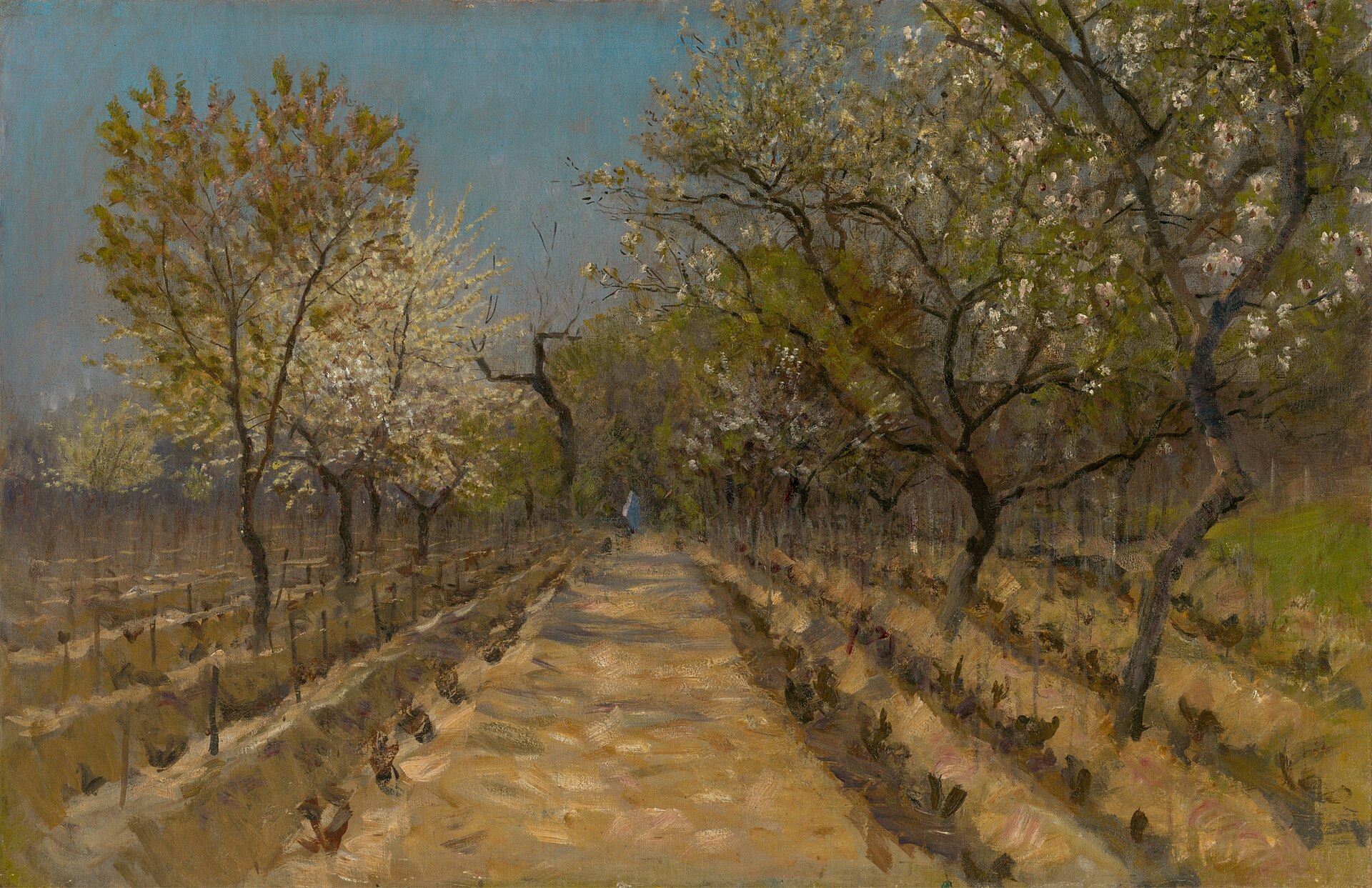
Vineyard. László Mednyánszky, 1890. Wikimedia Commons. Public domain.