
Psalm 126
6 verses · Song of Ascents, community lament
Then our mouths were filled with laughter, our tongues with shouts of joy. Then it was said among the nations, “The LORD has done great things for them.”
Introduction
Author unstated, the Return to Zion, Book 5: The return and the great Hallelujah, Poetry, Psalms Overview.
This psalm names no writer and comes from the years after the exiles came home from Babylon. Its singers remember a rescue so sudden it felt unreal, and then they find the work of rebuilding harder than the dream. The psalm holds both halves together, a memory and a request. Listen for the turn in the middle, where thanks becomes a prayer, and for the farmer's year that carries the promise at the end, from sowing to harvest.
Context
- Who
- Israelites who had come back from Babylon and found the work harder than the dream
- What
- A prayer that remembers the return of Zion's captives and asks the LORD to finish the restoring.
- Where
- Judah, after the return from Babylon.
- When
- After the first return from exile in 538 BC.
- Why
- To carry a returned people through the hard years between the homecoming and the harvest.
Historical context
What fixes the psalm in time is its subject, the restoring of the captives of Zion, which places it after the exile in Babylon. The first half remembers a homecoming so unlikely that the returnees felt like men dreaming, and the second half asks God to do it again, which means the work was unfinished. The Negev is the arid region below Judah, cut by valleys that lie bone dry for most of the year, and after the winter rains those channels run with water. In a lean year a farmer's seed grain was also his family's food, so carrying a sack of it out to scatter on dry ground meant taking bread out of his children's hands. Harvest was a communal celebration with shouting in the fields.
Significance
This was a song for people in the gap between a rescue that had happened and a restoration that had not finished. The walls were low, the temple was modest and the neighbours were hostile. It tells them the gap is a planting season.
This chapter in Jewish lifeWhat this chapter is in Jewish life and reading.
What is done
Psalm 126 is the seventh of the fifteen Songs of Ascents, sung within the collection whose setting this site records at /featured/psalms-of-ascent from Mishnah Middot 2:5 and Mishnah Sukkah 5:4. Its subject is a return from exile, and Jewish reading has kept it as the psalm of a people brought home.
How it is read
Rashi fixes the return as a particular one. He reads the opening as the day the LORD returns the returnees to Zion "from the Babylonian exile", and says that on that day the people were like dreamers (Rashi on Psalms 126:1:1, the Judaica Press complete Tanach with Rashi, translated by A. J. Rosenberg, CC-BY). On the fourth verse he takes the streams in the Negev as water directed into dry ground, and reads the psalm's turn from that: those who sow in arid land in tears, fearing nothing will grow, reap with song once the water is led in. On the last verse he carries that figure over to the exile he stood in himself, and says that Israel in exile sow charity in tears "and they will reap it when You pay their reward in the future" (Rashi on Psalms 126:6:1). Ibn Ezra, Malbim, Metzudat David and Radak comment across the psalm, and the corpus holds no English version of any of them here under a licence permitting quotation, so they stand as citations: Ibn Ezra on Psalms 126:1:1, Malbim on Psalms 126:1:1, Metzudat David on Psalms 126:1:1, Radak on Psalms 126:1:1.
What the rabbis say
The corpus records forty locators on this chapter, thirty-three Midrash and seven Talmud. The dreamers of the first verse are taken up at Midrash Tehillim 126:1, Berakhot 31a:4, Taanit 23a:14 and Jerusalem Talmud Taanit 3:9:4. The mouth filled with laughter is taken up at Eikhah Rabbah 1:57, Kohelet Rabbah 3:8:2, Mekhilta DeRabbi Yishmael, Tractate Shirah 1:1 and Midrash Tehillim 126:2. The streams in the Negev are taken up at Shemot Rabbah 30:8, Midrash Tehillim 126:3 and Taanit 8b:15, and the sowing in tears at Bereshit Rabbah 79:4, Pesikta Rabbati 42:1 and Taanit 5a:7 and 5a:8. Each is a locator without text in the corpus.
Sources: Rashi, Rashi on Psalms 126:1:1, 126:4:1 and 126:6:1, the Judaica Press complete Tanach with Rashi, translated by A. J. Rosenberg, CC-BY; Ibn Ezra, Ibn Ezra on Psalms 126:1:1, cited only, no English version in the corpus; Malbim, Malbim on Psalms 126:1:1, cited only; Metzudat David, Metzudat David on Psalms 126:1:1, cited only; Radak, Radak on Psalms 126:1:1, cited only; Midrash, Midrash Tehillim 126:1, 126:2 and 126:3, Eikhah Rabbah 1:57, Kohelet Rabbah 3:8:2, Shemot Rabbah 30:8, Bereshit Rabbah 79:4, Pesikta Rabbati 42:1, Mekhilta DeRabbi Yishmael, Tractate Shirah 1:1; Babylonian Talmud, Berakhot 31a:4, Taanit 23a:14, Taanit 8b:15, Taanit 5a:7 and 5a:8; Jerusalem Talmud, Taanit 3:9:4, Berakhot 2:4:10; Mishnah, Middot 2:5 and Sukkah 5:4, as /featured/psalms-of-ascent records them; MannaFest, the Songs of Ascents, at /featured/psalms-of-ascent, 2026.
Psalms 126:1-3
restored the captives of Zion: When the captives of Zion came home, they felt like dreamers. The nations said it first, that the LORD had done great things for them, and Israel took that same sentence for its own. Spurgeon read their joy as too large to believe at first.
Psalms 126:1
“When the Lord turned again the captivity of Zion, we were like them that dream. Being in trouble, the gracious pilgrims remember for their comfort times of national woe which were succeeded by remarkable deliverances. Then sorrow was gone like a dream, and the joy which followed was so great that it seemed too good to be true, and they feared that it must be the vision of an idle brain. So sudden and so overwhelming was their joy that they felt like men out of themselves, ecstatic, or in a trance.”
Charles Spurgeon · The Treasury of David, Vol. 7 (1885)Particular Baptist
1 more voice on this verseWhat preachers and commentators have said about this verse, in their own words.
Psalms 126:1
“Now, whoever was the author of it, whether one of the Levites or one of the Prophets, he affirms that the manner of their deliverance was too wonderful to be attributed to fortune, in order to lead the faithful to the conclusion that the prophecy of Jeremiah, which had assigned seventy years as the term of the captivity, was truly fulfilled.”
John Calvin · Commentaries (1554)reformed
our mouths were filled with laughter: Then stands twice in this verse, over the laughter and over what was said among the nations. Calvin noted the future tense and read the line as joy still to come, and Barnes read it as the joy of the return. Job 8:21 promises the same filled mouth.
Psalms 126:2
“Now shall our mouth be filled with laughter. The adverb of time, 'z, az, is commonly translated then; but as the verbs are in the future tense, I have thought that it might not be improper to translate tires -- grow shall our mouth be filled, and now shall they say.”
John Calvin · Commentaries (1554)reformed
we are filled with joy: The LORD has done great things is the wording of Joel 2:21, where the land is told to rejoice. Henry saw the nations as spectators passing on news, and Israel as sharers in the great things done. The joy here answers the dreamers of verse 1.
Psalms 126:3
“The Lord hath done great things for us; whereof we are glad. They did not deny the statement which reflected so much glory upon Jehovah: with exultation they admitted and repeated the statement of Jehovah's notable dealings with them. To themselves they appropriated the joyful assertion; they said "The Lord hath done great things for us ", and they declared their gladness at the fact. It is a poor modesty which is ashamed to own its joys in the Lord. Call it rather a robbery of God.”
Charles Spurgeon · The Treasury of David, Vol. 7 (1885)Particular Baptist
2 more voices on this verse
Psalms 126:3
“The Lord hath done great things for us,.... These words are generally supposed to be the words of the Jews, taking up those of the Gentiles, and confirming them; acknowledging that the Lord had done great things for them indeed; which, had they not owned, they would have been exceeding ungrateful; had they been silent concerning them, the stones would have cried out, and the very Heathens condemned them.”
Psalms 126:3
“The heathen were but spectators, and spoke of it only as matter of news; they had no part nor lot in the matter; but the people of God spoke of it as sharers in it, (1.) With application: "He has done great things for us, things that we are interested in and have advantage by." Thus it is comfortable speaking of the redemption Christ has wrought out as wrought out for us.”
Matthew Henry · Commentary on the Whole Bible (1707-1721)puritan
Restore our captives: The great things already done turn into a request for more. Restore our captives is a prayer, so the restoring was still unfinished. The Hebrew word names the stream beds of the Negev, dry channels that one storm fills and sets running.
Psalms 126:4
“Turn again our captivity, O Lord,.... This prayer for the return of the captivity shows that it was not as yet: though some think that this is a petition of those that were returned from captivity, for those of their brethren that stayed behind; who, enjoying the sweets of their liberty, pray for their brethren to come and share with them, that so the mercy and blessing might be completed.”
1 more voice on this verse
Psalms 126:4
“The point of comparison is joy at the reappearing of what has been so painfully missed. As in husbandry the sower may cast his seed in a dry and parched soil with desponding fears, so those shall reap abundant fruit who toil in tears with the prayer of faith.”
Jamieson, Fausset & Brown · Commentary Critical and Explanatory on the Whole Bible (1871)reformed
Psalms 126:5-6
Those who sow in tears: Verse 5 has many who sow and verse 6 narrows to one man. He goes out weeping with his seed and comes back carrying sheaves, the same man on the same road. Spurgeon marked the turn from the many to the one.
Psalms 126:5
"Blessed are they who weep, for they shall laugh." They, therefore, who spend the days of their life, which is already at its consummation and declining toward its setting, in weeping for their sins, these will be glad in that true morning that is approaching. "They that sow in tears shall reap in joy," of course, in the future.
Basil of Caesarea · written before 379 · Homilies on the Psalms 14:4patristic
2 more voices on this verse
Psalms 126:5
“They that sow in tears shall reap in joy. Hence, present distress must not be viewed as if it would last for ever; it is not the end, by any means, but only a means to the end. Sorrow is our sowing, rejoicing shall be our reaping. If there were no sowing in tears there would be no reaping in joy. If we were never captives we could never lead our captivity captive. Our mouth had never been filled with holy laughter if it had not been first filled with the bitterness of grief.”
Charles Spurgeon · The Treasury of David, Vol. 7 (1885)Particular Baptist
Psalms 126:5
“Nay, there are tears which are themselves the seed that we must sow, tears of sorrow for sin, our own and others, tears of sympathy with the afflicted church, and the tears of tenderness in prayer and under the word.”
Matthew Henry · Commentary on the Whole Bible (1707-1721)puritan
will surely return: Both verbs are doubled in Hebrew: going he goes out weeping, and coming he surely returns with shouts of joy. Jamieson, Fausset and Brown read the doubling as weeping without end here and joy without end hereafter. Isaiah 35:10 returns the redeemed to Zion with singing.
Psalms 126:6
“THE whole of our life we are sowing. In activity, in suffering, in thought, in word we are always scattering imperishable seed. Some sow amidst laughter and merriment—they sow unto the lusts of the flesh and shall of the flesh reap corruption. Theirs is easy work and suitable to their inclinations. All around them siren songs cheer them in the fields of transgression as they go forth with the seed of hemlock to scatter it broadcast in the furrows.”
How this psalm is built
The form: A song of the ascents in two halves, a deliverance already given and a deliverance still asked for, as Calvin classes it.
The patterns in this chapter
| Device | What it does | Where to see it |
|---|---|---|
| The sentence the nations said first | The line the LORD has done great things is said twice. At verse 2 it is in the mouth of the nations watching, and at verse 3 Israel takes the same words for its own and adds that it is filled with joy. The verdict of outsiders becomes the people's own confession.Franz Delitzsch, Biblical Commentary on the Psalms, on Psalm 126:3. | Psalm 126:2, Psalm 126:3 |
| The dry streams of the Negev | Verse 4 asks for a restoring like streams in the Negev. The Hebrew names the stream beds of that desert, channels that lie dry most of the year and run full after one storm. The prayer asks for a change that is sudden and complete rather than gradual.Albert Barnes, Notes, Explanatory and Practical, on the Old and New Testaments (1832 to 1869), on Psalm 126:4. | Psalm 126:4 |
| The many, then the one man | Verse 5 states the rule for everyone, those who sow in tears will reap with shouts of joy. Verse 6 narrows to a single man going out weeping with his seed and coming back with sheaves. Charles Spurgeon marked that turn from the many to the one.Charles Spurgeon, The Treasury of David, Vol. 7, 1885, on Psalm 126:6. | Psalm 126:5, Psalm 126:6 |
The structure
12 more paragraphs on the patterns
Six verses in two halves of three. Verses 1 to 3 are memory and verses 4 to 6 are prayer and promise. The hinge is the word restore, which stands in verse 1 as a thing done and in verse 4 as a thing asked for.
The sentence the LORD has done great things is said twice. At verse 2 it is in the mouth of the nations watching, and at verse 3 Israel takes the same words for its own. The verdict of outsiders becomes the people's own confession.
Verse 5 states the rule for everyone and verse 6 narrows to a single man going out and coming back. Charles Spurgeon marked that turn from the many to the one.
Across the canon
The prayer of verse 4 and the promise of verses 5 and 6 sit in the collection beside Psalm 129, which remembers a nation ploughed over and still standing. Both psalms use the farm for the same argument, that what is done to the ground is not the end of the account.
The great things of verses 2 and 3 answer the question Psalm 124 leaves open. That psalm says what would have happened without the LORD, and this one says what did happen with Him.
In the New Testament
No New Testament writer quotes this psalm. Galatians 6:7 states the same sowing rule, that whatever a man sows he will reap in return. Galatians 6:9 adds that a harvest comes in due time to those who do not give up. 2 Corinthians 9:6 uses the rule for giving. Revelation 21:4 promises that every tear will be wiped away, which is where the weeping of verse 6 finally goes.
What is debated
What the Hebrew of verse 1 says is argued, and the two readings give two different psalms. One takes it as the return of the captives, which is how the Berean renders it and which fixes the psalm to the exile. The other takes the phrase as a general turning of fortunes, which would let the psalm predate Babylon and be sung of any reversal. The same phrase stands at verse 4, so whichever reading is taken must hold for both halves.
The Songs of Ascents
Psalm 126 is the seventh of the fifteen songs of ascents and stands at the middle of the collection. Albert Barnes records the reading that takes the title Songs of Degrees from an ascent of thought in these psalms (Notes on the Book of Psalms, on Psalm 124:2). On that reading a line takes up the words of the line before and carries them one step further. Here verse 2 ends on the nations saying the LORD has done great things for them, and verse 3 takes the same words up as Israel's own, the LORD has done great things for us. Verse 4 then asks the LORD to restore our captives, the words verse 1 used of what He had already done, so the step turns a memory into a request.
Keep studying
Sources for this chapter
The summary
Jamieson, Fausset & Brown, Commentary Critical and Explanatory; John Calvin, Commentaries; John Wesley, Notes on the Old Testament and Matthew Henry, Complete Commentary.
The form and classifications
Charles Spurgeon, The Treasury of David, Vol. 7, 1885, on Psalm 126:1; John Calvin, Commentaries, 1554, on Psalm 126:4 and Matthew Henry, Commentary on the Whole Bible, 1710, on Psalm 126:5.
The exposition
Albert Barnes, Notes on the Book of Psalms; Charles Spurgeon, The Treasury of David; Franz Delitzsch, Biblical Commentary on the Psalms; Jamieson, Fausset & Brown, Commentary Critical and Explanatory on the Whole Bible; John Calvin, Commentary on the Book of Psalms and Matthew Henry, Commentary on the Whole Bible.
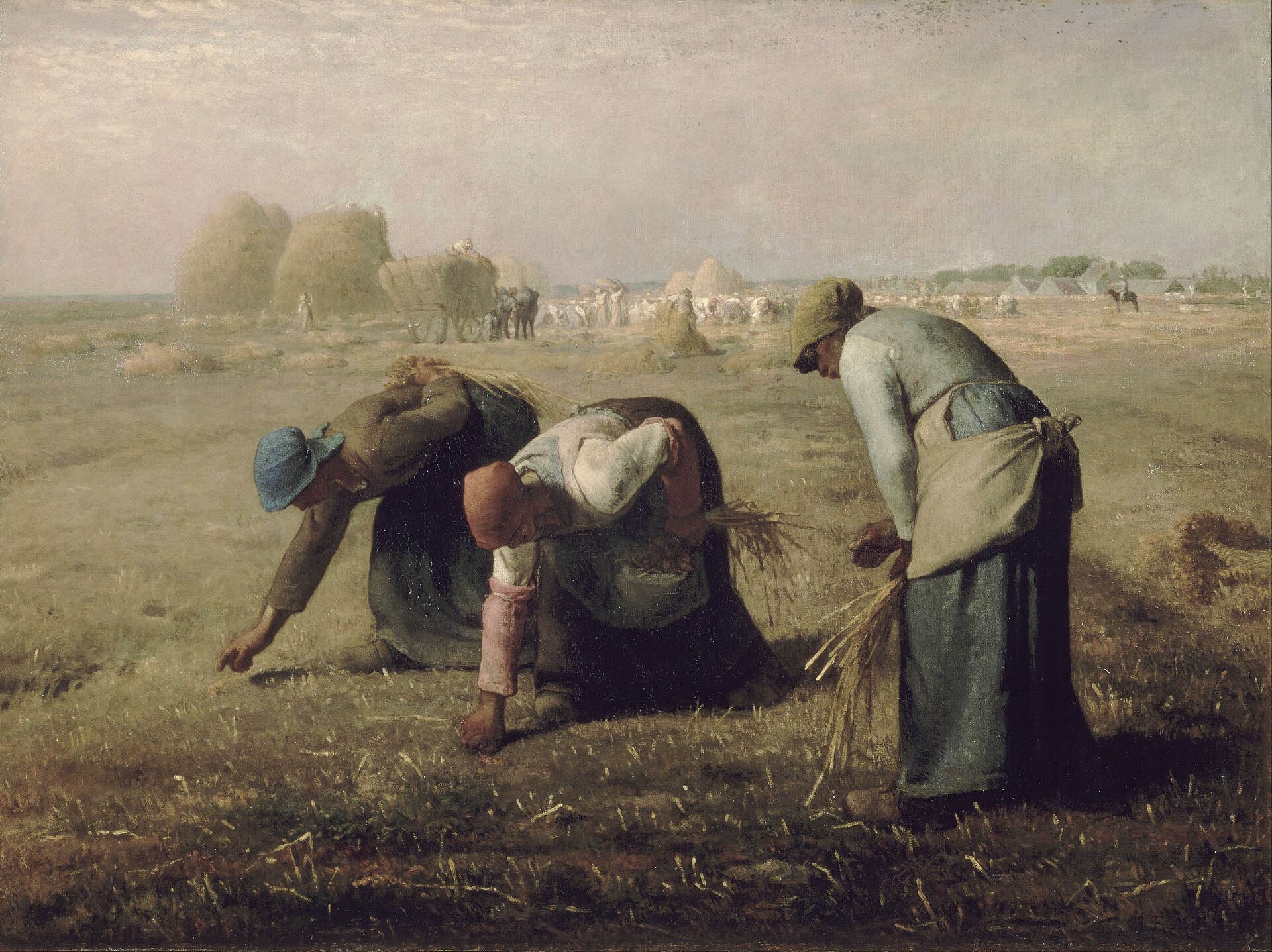
The painting
Des Glaneuses. Jean-François Millet, 1857. Wikimedia Commons. Public domain.