
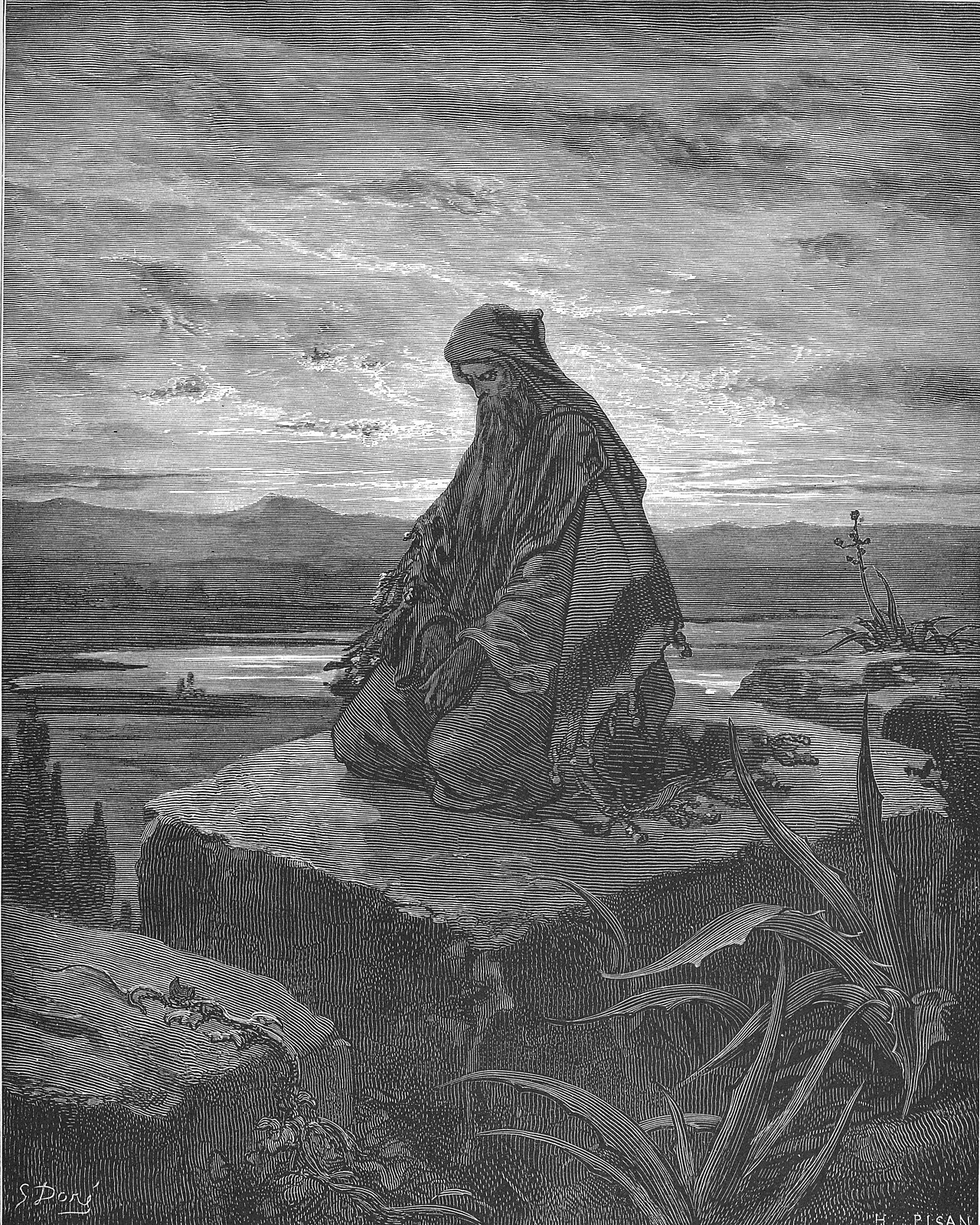
Isaiahchapter 62
12 verses · Isaiah · 8th century BC · The Prophets
For as a young man marries a young woman, so your sons will marry you; and as a bridegroom rejoices over his bride, so your God will rejoice over you.
Introduction
Isaiah, The Prophets, Isaiah Overview.
Isaiah wrote this for a city that its neighbours had given insulting names. Conquerors in his day renamed the cities they took, and the new name said who owned the place. In this chapter the LORD gives Jerusalem new names Himself. It is poetry, and much of it is the prophet refusing to be silent. Listen for the watchmen posted on the walls and what they are told to do. Listen also for the road crews at the end and the name that closes the chapter. It answers the fear of being forgotten.
Context
- Who
- A people whose city had been given insulting names by everyone around it
- What
- A promise that the LORD will vindicate Jerusalem and give her new names that show His delight in her.
- Where
- Jerusalem's walls with watchmen posted, and the roads leading into the city.
- When
- Spoken about 700 to 690 BC on the site's reading, looking to the city's final restoration.
- Why
- To assure a shamed people that the LORD would rejoice over them and never again leave them forsaken.
Historical context
Renaming was what conquerors did. An empire took a city and gave it the victor's name, and the new name announced who owned it. Here God renames Jerusalem himself, and the two names are personal rather than imperial: Hephzibah, meaning my delight is in her, and Beulah, meaning married. Hephzibah was also the name of Hezekiah's own queen, so the word was in living use as a woman's name in Judah.
Show the rest of the historical context, 3 more paragraphs
The watchmen are posted for a job that has no end. I have set watchmen on your walls who shall never hold their peace day or night, and then they are told to give God no rest until he establishes Jerusalem and makes her a praise in the earth. A watchman's whole function was to call out continuously through his shift; here the shift never ends and the calling is prayer.
The road work in the last verses is manual labor, described in order: go through, go through the gates, prepare the way for the people, build up the highway, take out the stones, lift up a banner for the peoples. Clearing stones out of a track was the actual first task in making a road passable for carts, and a banner raised on a pole was how you told travelers from a distance where to head.
The promise about the harvest addresses the single most reliable misery of that world. Raiding parties came at harvest, because that is when there was something to take, and a farmer could lose a year's work in a morning. God swears that he will no longer give your grain to be food for your enemies, and the sons of the foreigner will not drink your new wine for which you have labored, but those who harvest it will eat it and praise the LORD, and those who gather it will drink it in the courts of my sanctuary.
Significance
The names the city had been carrying are quoted so the new ones land: you shall no longer be termed Forsaken, nor your land termed Desolate. Those were not just moods. They were what the neighbors called the place.
Show the rest of the significance, 1 more paragraph
And the last new name is the one a returning people needed most: you shall be called Sought Out, a City Not Forsaken. Somebody came looking for them.
This chapter in Jewish lifeWhat this chapter is in Jewish life and reading.
What is done
The site's own table in src/lib/hebraic/readings.ts sets this chapter in one prophetic reading of the annual cycle. It is read as the Haftarah of Nitzavim, Isaiah 61:10 to 63:9, in both rites, on the Sabbath of the portion Deuteronomy 29:9 to 30:20. A congregation keeping that cycle hears the verses of each reference read aloud after the Torah portion of its Sabbath.
The corpus joins the chapter to the weeks of the Torah portions through the works arranged by portion. Under the fifth verse it carries Midrash Tanchuma, Beshalach 28:5. Under the eleventh verse it carries Midrash Tanchuma Buber, Achrei Mot 18:1 and Midrash Tanchuma, Achrei Mot 12:1. Under the twelfth verse it carries Midrash Tanchuma Buber, Tazria 16:2 and Midrash Tanchuma, Ki Teitzei 3:1. Under the eighteenth verse it carries Midrash Tanchuma, Shemot 3:2.
How it is read
Two commentators on this chapter carry English in the corpus. Rashi is quoted from The Judaica Press complete Tanach with Rashi, translated by A. J. Rosenberg, which Sefaria reports as CC-BY, and every quotation of it is held to fifty words or fewer because the translation is modern. Ibn Ezra is quoted from the version Sefaria titles Commentary of Ibn Ezra on Isaiah - trans. by M. Friedlander, 1873, which it reports as Public Domain.
The two commentators agree on who speaks in the first verse and say so differently. Rashi hears God: "For the sake of Zion I will do, and I will not be silent concerning what they did to her". Ibn Ezra proves it from the fourth verse, which shows the words are spoken by the Lord, so that the not resting must be taken figuratively (Rashi on Isaiah 62:1:1; Ibn Ezra on Isaiah 62:4:1). The crown in the hand of the Lord in the third verse Ibn Ezra explains from custom: "In some countries people wear crowns on their hands" (Ibn Ezra on Isaiah 62:3:1).
The marriage of the fifth verse is read as a figure by both. Ibn Ezra calls the sons marrying their mother "a figurative expression for the kingdom will be restored to thee". Rashi follows Jonathan, that Zion's children shall dwell in her (Ibn Ezra on Isaiah 62:5:1; Rashi on Isaiah 62:5:1).
The watchmen on the walls of the sixth verse carry the longest note. Rashi reports the Rabbis reading them as the angels who remind the Lord of the ruin so that He will build it, as found in Tractate Menahoth 87a. He reports Jonathan beside them, who renders the walls as the early forefathers who protect Israel like a wall (Rashi on Isaiah 62:6:1). The watchmen appointed, he says in a second note, write a book of remembrance so that Israel's merit is not forgotten (Rashi on Isaiah 62:6:2).
The corpus carries five further notes on this chapter without an English text, each marked linked because Sefaria holds no English version of the ref. They stand cited and unquoted at Radak on Isaiah 62:3:1, 62:7:1, 62:8:1 and 62:12:1 and Metzudat David on Isaiah 62:7:1.
What the rabbis say
The corpus carries forty rabbinic locators on this chapter and the text of none, so each is cited and linked here rather than quoted. On the first verse it holds Aggadat Bereshit 68:2, Midrash Aggadah, Genesis 15:17:4, Midrash Lekach Tov, Exodus 3:3:2 and Midrash Tehillim 137:1. On the second verse it holds Midrash Tannaim on Deuteronomy 32:1:2, Otzar Midrashim, Midrash Shelosha v'Arba'ah 3:8, Pesikta DeRav Kahana 22:5 and Sifrei Devarim 306:2. On the third verse it holds Jerusalem Talmud Shabbat 6:4:4, Pesikta DeRav Kahana 17:8, Shir HaShirim Rabbah 4:12:2 and Shir HaShirim Rabbah 8:6:3.
On the fourth verse it holds Introductions to Amoraic Literature, Part II (Notes and Interpretations for Chapters of the Talmud), Baba Batra, Chapter III 38. It holds Midrash Sekhel Tov, Bereshit 34:3:3 and Midrash Tehillim 22:18 there as well. On the fifth verse it holds Devarim Rabbah 2:37, Ein Yaakov (Glick Edition), Sanhedrin 11:54, Mekhilta DeRabbi Shimon Ben Yochai 15:12 and Midrash Tanchuma, Beshalach 28:5. On the sixth verse it holds Ein Yaakov (Glick Edition), Menachot 9:3, Ein Yaakov, Menakhot 9:5, Menachot 87a:18 and Midrash Tehillim 48:3. On the eighth verse it holds Berakhot 6a:17, Berakhot 6a:18 and Eikhah Rabbah 1:37.
On the ninth verse it holds Midrash Lekach Tov, Deuteronomy 11:14:1, Otzar Midrashim, The Order of Arakim 1:10 and Yalkut Shimoni on Torah 864:2. On the tenth verse it holds Bamidbar Rabbah 15:16, Eikhah Rabbah 1:23 and Mekhilta DeRabbi Yishmael, Tractate Shirah 9:3. On the eleventh verse it holds Devarim Rabbah 1:23, Midrash Tanchuma Buber, Achrei Mot 18:1 and Midrash Tanchuma, Achrei Mot 12:1. On the twelfth verse it holds Midrash Aggadah, Leviticus 13:2:11, Midrash Tanchuma Buber, Tazria 16:2 and Midrash Tanchuma, Ki Teitzei 3:1. On the eighteenth verse it holds Midrash Tanchuma, Shemot 3:2.
On the twenty-fourth verse it holds Yalkut Shimoni on Torah 169:6. What each of them teaches is a saying of the rabbis, and is reported as theirs wherever this site quotes one. The quotations wait on a fetch that carries the text.
Sources: Rashi, Rashi on Isaiah 62:1:1 to 62:11:2, The Judaica Press complete Tanach with Rashi, translated by A. J. Rosenberg, reported CC-BY; Ibn Ezra, Ibn Ezra on Isaiah 62:2:1 to 62:12:1, Commentary of Ibn Ezra on Isaiah - trans. by M. Friedlander, 1873, reported Public Domain; Radak, Radak on Isaiah 62:3:1, 62:7:1, 62:8:1 and 62:12:1, cited by ref because the corpus carries no English text; Metzudat David, Metzudat David on Isaiah 62:7:1, cited by ref because the corpus carries no English text; The Sefaria corpus, scripts/data/sources/sefaria/isaiah/62.json, the 40 Talmud and Midrash locators of this chapter; The site's own files, src/lib/hebraic/readings.ts, the Haftarah entries for Nitzavim (Isaiah 61:10 to 63:9).
The heads below are this chapter's scenes. The numbered points under each are its verses.
Thou Shalt Be Called Hephzibah, and Thy Land Beulah
Isaiah 62:1-2
For Zion’s sake I will not keep silent: The speaker vows, “For Zion’s sake I will not keep silent, and for Jerusalem’s sake I will not keep still”. The doubled vow sounds like a watchman who will not leave his post. She receives a name she did not choose: “You will be called by a new name”.
Isaiah 62:1
“For Zion’s sake - (See the notes at Isa 1:8). On account of Zion; that is, on account of the people of God. I will not hold my peace - There have been very various opinions in regard to the person referred to here by the word ‘I.’ Calvin and Gesenius suppose that the speaker here is the prophet, and that the sense is, he would not intermit his labors and prayers until Zion should be restored, and its glory spread through all the earth.”
1 more voice on this verseWhat preachers and commentators have said about this verse, in their own words.
Isaiah 62:1
“Righteousness - With reference to the Babylonians, understand it of the righteousness of God, who hath promised his people deliverance, and he must be righteous, and so understand salvation before; or rather, the vindicating of his people's cause in the eyes of the nations by the ruin of the Babylonians; he will shew that his people have a righteous cause.”
John Wesley · Explanatory Notes upon the Old Testament (1765)evangelical
You will be called by a new name: Henry quotes the maxim that honour takes its worth from the one who gives it, so a name spoken by the LORD outranks every title. Barnes points ahead to verse 4, where the new names are given. Aquinas reads your righteousness as your Just One, Christ.
ConnectionsRevelation 2:17
Isaiah 62:3-5
You will be a crown of glory in the hand of the LORD: Zion becomes “a crown of glory in the hand of the LORD”, held by God Himself. Two names are withdrawn, “Forsaken” and “Desolate”, and two are given, Hephzibah, my delight is in her, and Beulah, married. The figure closes on a wedding: “as a bridegroom rejoices over his bride”.
Isaiah 62:3
"You will be a crown of beauty in the hand of the Lord, and a royal diadem in the hand of your God." For each holy soul, and the Church as a whole, that is, the communities of the saints, must be compared to a crown composed of many flowers, or to a royal diadem, shining with Indian stones, and having manifold excellence: for the heroic deeds of the saints are very many, and the manner of their boasts is not one, but many and various.
Cyril of Alexandria · written before 444 · Commentary on Isaiah 5:5.62:3-5patristic
2 more voices on this verse
Isaiah 62:3
“Lord--As a crown is worn on the head, not "in the hand," hand must here be figurative for "under the Lord's protection" (compare De 33:3). "All His saints are in thy hand." His people are in His hand at the same time that they are "a crown of glory" to Him (Re 6:2; 19:12); reciprocally, He is "a crown of glory and a diadem of beauty" to them (Isa 28:5; compare Mal 3:17).”
Jamieson, Fausset & Brown · Commentary Critical and Explanatory on the Whole Bible (1871)reformed
Isaiah 62:3
“Thou shalt also be a crown of glory - On the application of the word ‘crown’ to a place, see the notes at Isa 28:1, where it is applied to Samaria.”
you will be called Hephzibah: Jamieson, Fausset & Brown note that Hephzibah was the name of Hezekiah's wife in 2 Kings 21:1. Clarke explains Beulah from the prophets' habit of picturing a desolate land as a widow and a peopled land as a bride with husband. Ishodad of Merv sets the widowhood in the captivity.
Isaiah 62:4
“Thy land Beulah - בעולה beulah, married. In the prophets, a desolate land is represented under the notion of a widow; an inhabited land, under that of a married woman, who has both a husband and children.”
Adam Clarke · Commentary on the Bible (1810-1826)evangelical
so your sons will marry you: Jamieson, Fausset & Brown change the Hebrew vowel points to read your builder for your sons, which makes God the bridegroom who marries Zion. Ephrem keeps sons and takes them as the apostles, priests and righteous who head the church. Barnes cites an eastern custom of youths marrying only virgins.
Isaiah 62:5
“For as a young man marrieth a virgin - Roberts remarks on this, ‘In general no youth marries a widow. Such a thing I scarcely ever heard of (in India), nor will it ever be except under some very extraordinary circumstances, as in the case of a queen, princess, or great heiress. Even widowers also, if possible, always marry virgins.’ The idea here is, that Yahweh would have delight in his people, which would be properly represented by the affection which a young man has for his bride.”
Watchmen Who Never Hold Their Peace: Prepare the Highway
Isaiah 62:6-7
On your walls, O Jerusalem, I have posted watchmen: “On your walls, O Jerusalem, I have posted watchmen; they will never be silent day or night”, and their work is prayer. Those who call on the LORD must “give Him any rest until He establishes Jerusalem”. God appoints the prayer that asks for what He has already promised.
Isaiah 62:6
IN the opening verses of this chapter our Lord declares that He will not rest till His purpose of Grace is accomplished. "For Zion's sake will I not hold My peace, and for Jerusalem's sake I will not rest." His soul is set upon the perfection of His Church. There is never a moment when the heart of Christ ceases to beat high with desire for the salvation of His redeemed. From the dreadful work of making Atonement, He stayed not His hand, but set His face like a flint towards it, till He could say, "It is finished."
until He establishes Jerusalem: Barnes and Jamieson, Fausset & Brown give the Hebrew for rest as domiy, silence, so the watchmen neither keep silent nor let God rest. Eusebius reports a Greek version that reads makes Jerusalem sing on the earth. Henry makes holiness and love the church's praise on the earth.
Isaiah 62:7
“And give him no rest - Margin, ‘Silence.’ In Hebrew the same word (דמי dŏmiy) as in Isa 62:6. The idea is, ‘Keep not silence yourselves, nor let him rest in silence. Pray without ceasing; and do not intermit your efforts until the desires of your hearts shall be granted, and Zion shall be established, and the world saved.’ Till he establish - Until he shall establish Jerusalem, and restore it to its former rank and privileges.”
Isaiah 62:8-9
The LORD has sworn by His right hand: “The LORD has sworn by His right hand” that the harvest will no longer go to invaders. This undoes the curse of Deuteronomy 28:33, where a foreign people eats the fruit of the land. Those who gather will “praise the LORD”, worship and harvest joined in one scene.
Isaiah 62:8
“The Lord hath sworn by his right hand - An oath was taken in various forms among the ancients. It was usually done by lifting up the hand toward beaten and appealing to God. As God could swear by no greater Heb 6:13, he is represented as swearing by himself (see the notes at Isa 45:23). Here he is represented as swearing by his right hand and by his arm - the strong instrument by which he would accomplish his purposes to defend and save his people.”
1 more voice on this verse
Isaiah 62:8
“The wine which they had laboured for, and which in their affliction they needed for the relief of those among them that were of a heavy heart, strangers drank it, to gratify their lusts with; this sore judgment was threatened for their sins, Lev. xxvi.”
Matthew Henry · Commentary on the Whole Bible (1707-1721)puritan
Clarke ties the verse to the law of Moses, which had the tithe of grain and wine eaten before the LORD in Deuteronomy 12:17-18. Clarke cites Leviticus 19:23-25, where the fourth-year fruit of a young tree was holy, given for praise. Barnes sees each worker secure in his own labour.
Isaiah 62:9
“But they that have gathered it shall eat it - There shall be a state of security, so that every man may enjoy the avails of his own labor. Nothing is a more certain indication of liberty and prosperity than this - that every man may securely enjoy the avails of his own labor. Nothing more certainly marks the advance of civilization, and nothing so much tends to encourage industry and to promote prosperity.”
Isaiah 62:10-11
Go out, go out through the gates: The chapter turns outward, “build up the highway; clear away the stones”, the road language of 40:3. The call to “raise a banner for the nations” makes the return public. Verse 11 carries the news “to the ends of the earth” that her Savior comes with His reward.
Isaiah 62:10
"And salvation, along the way of his steps." Note the exact words, "his steps," where there are no rocks, where there are no thorns or thistles, where the path is even, where he may walk, where he cannot stumble. Let us, therefore, make way for the Lord in our heart, that way for which John [the Baptist] was giving his life's effort.… Although formerly we faced obstacles of thorns and thistles, although we had stones, he declares to us in Isaiah, "clear the highway of stones."
Jerome · written before 420 · Homilies on the Psalms 17 (Psalm 85)patristic
2 more voices on this verse
Isaiah 62:10
“Of the people “For the people” - Before the word העם haam, the people, two MSS. insert יהוה Yehovah; one MS. adds the same word after; and eight MSS., three ancient, instead of העם haam, have יהוה Yehovah, and so likewise one edition. But though it makes a good sense either way, I believe it to be an interpolation, as the ancient Versions do not favor it. The Septuagint indeed read עמי ammi, my people. - L.”
Adam Clarke · Commentary on the Bible (1810-1826)evangelical
Isaiah 62:10
“Thus John Baptist was sent to prepare the way of the Lord, Matt. iii. And, before Christ by his graces and comforts comes to any for salvation, preparation is made for him by repentance, which is called the preparation of the gospel of peace, Eph. vi.”
Matthew Henry · Commentary on the Whole Bible (1707-1721)puritan
See, your Savior comes!: Barnes and Clarke note that the Hebrew word means salvation, and that the Vulgate and the Syriac render it Savior, as the Berean does. Clarke pictures the reward carried in His hand, as at Isaiah 40:10. Gill hears the gospel proclaimed to the ends of the earth in Romans 10:18.
Isaiah 62:11
“Behold the Lord hath proclaimed - Proclamation is made to all nations that Yahweh is about to come and rescue his people. Say ye to the daughter of Zion - To Jerusalem (see the notes at Isa 1:8). Thy salvation cometh - Lowth renders this, ‘Lo!, thy Saviour cometh.’ So the Vulgate, the Septuagint, the Chaldee, and the Syriac. The Hebrew word properly means salvation, but the reference is to God as the Deliverer or Saviour.”
1 more voice on this verse
Isaiah 62:11
“This forecasts the coming of the Savior and our redemption by his coming. It also foretells the granting of riches to those who believe in him.… Concerning that which is new, that is, the church, it may be fittingly said that it is the daughter of Zion.… For whom does he order to proclaim good news to Zion? Those holy spiritual guides, of course, who took on the leadership role in the church and whose job it was to open the gates and to remove the stones from their midst. And what were they to announce?”
Cyril of Alexandria · written before 444 · Commentary on Isaiah 5:5.62:11-12patristic
And they will be called the Holy People: The chapter ends with new names in place of the old reproach, “the Holy People, the Redeemed of The LORD”. The city is called “Sought Out, A City Not Forsaken”, reversing the Forsaken, so the naming that opened the chapter closes it. Sought Out pictures God going after Zion.
Isaiah 62:12
“They shall call them - These characteristics seem to be put in their inverted order. - 1. God will not forsake them. 2. They shall be sought out. 3. They shall be redeemed. And, 4. Be in consequence a holy people. 1. When God calls, it is a proof that he has not forsaken. 2. When he seeks, it is a proof he is waiting to be gracious. 3. When the atonement is exhibited, all things are then ready.”
Adam Clarke · Commentary on the Bible (1810-1826)evangelical
1 more voice on this verse
Isaiah 62:12
“THE first meaning of our text is very clear. Here is a prophecy, because Jerusalem, having been despoiled of her beauty by her enemies, was for a long time forsaken and worthy to be called, "A city which no man seeks after," so, in a brighter day, her glory shall return, she shall be an attraction to all lands and the joy of the whole earth. Multitudes of willing pilgrims shall seek her out that they may behold her beauty.”
Keep studying
Studies5
Sources for this chapter
The summary
Jamieson, Fausset & Brown, Commentary Critical and Explanatory; John Calvin, Commentaries; John Wesley, Notes on the Old Testament and Matthew Henry, Complete Commentary.
The exposition
Adam Clarke, Commentary on the Bible; Albert Barnes; Ephrem the Syrian, COMMENTARY ON ISAIAH 62:5; Eusebius of Caesarea, COMMENTARY ON ISAIAH 2:52; Franz Delitzsch, Biblical Commentary on the Prophecies of Isaiah; Ishodad of Merv, COMMENTARY ON ISAIAH 62:4; Jamieson, Fausset & Brown, Commentary Critical and Explanatory on the Whole Bible; John Gill; John Wesley, Explanatory Notes upon the Old Testament; Matthew Henry, Commentary on the Whole Bible and Thomas Aquinas, Commentary on Isaiah.