
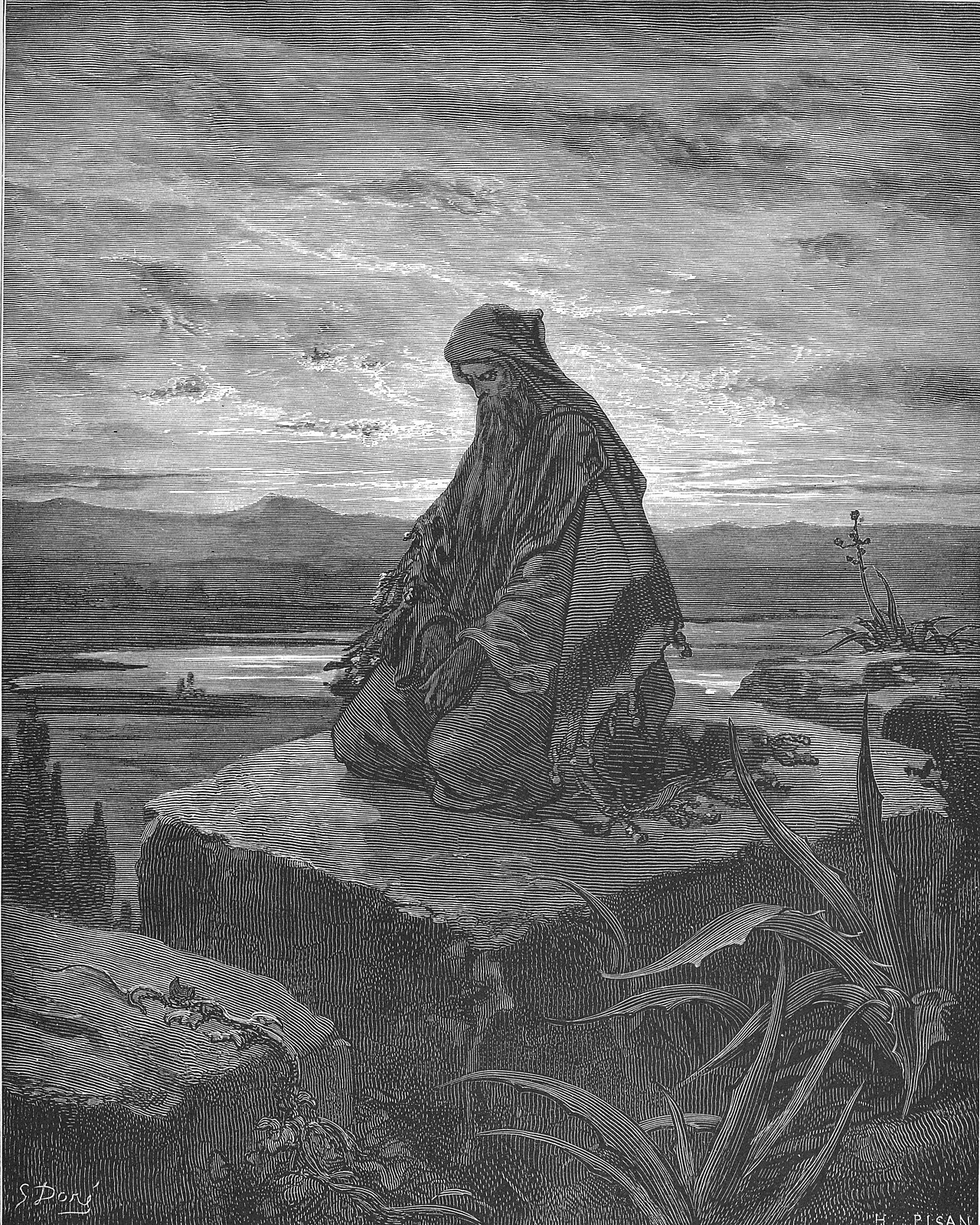
Isaiahchapter 58
14 verses · Isaiah · 8th century BC · The Prophets
Isn’t this the fast that I have chosen: to break the chains of wickedness, to untie the cords of the yoke, to set the oppressed free and tear off every yoke?
Introduction
Isaiah, The Prophets, Isaiah Overview.
Isaiah speaks here to devout people who could not understand why God ignored their religion. They fasted in public, they bowed low and they sat in sackcloth and ashes. The chapter answers their complaint by looking at what they did on the fast day itself. It is prophetic speech, and it turns from a charge to a list of promises. Listen for the difference between the fast they chose and the fast God chooses. Listen too for how the chapter ends with the Sabbath and with a word about their own pleasure.
Context
- Who
- Devout people who could not understand why their religion produced nothing
- What
- A charge against fasting that goes with oppression, followed by the fast the LORD wants and the promises that come with it.
- Where
- A town in Judah on a public fast day, with its fields and its hired workers.
- When
- Spoken about 700 to 690 BC on the site's reading, when public fast days were kept alongside the Day of Atonement.
- Why
- To show that devotion to God cannot stand beside cruelty to workers, debtors and the poor.
Historical context
Fasting had a standard physical vocabulary. You bowed your head, the text says like a bulrush, the reed that nods over on its stalk, put on sackcloth, and spread ashes under you to sit or lie on. Israel's law commanded exactly one fast a year, on the Day of Atonement, but by this period other fast days had been added, especially days of mourning for national disasters, and they were observed publicly and visibly.
Show the rest of the historical context, 4 more paragraphs
The complaint quoted from the people is genuine confusion: why have we fasted, and you have not seen? Why have we afflicted our souls, and you take no notice? They were not being sarcastic. They thought the transaction should work.
God's first answer is about what happened on the fast day itself. In the day of your fast you find pleasure and exact all your labors, a landowner performing his devotions while his hired workers and debt-servants kept working. And the day ended in quarrelling and fistfights.
The fast that is chosen is described as a list of physical actions with legal weight. Loose the bonds of wickedness and undo the heavy burdens, the vocabulary of debt bondage, where a man who could not pay was worked by his creditor. Let the oppressed go free and break every yoke. Share your bread with the hungry, bring the poor who are cast out into your house, cover the naked, and do not hide yourself from your own flesh, that is, from your own relatives.
The reward images are all restoration work. You shall be called the repairer of the breach, the restorer of paths to dwell in, a breach is the gap in a city wall after an assault, and repairing it was the first thing done after a siege lifted. And your light shall rise in obscurity, and your darkness be as the noonday; you shall be like a watered garden and a spring whose waters do not fail.
Significance
The chapter's whole argument is that the religion was working exactly as designed and the design was wrong. They sought God daily, delighted to know his ways, and asked him for just judgments. And they were squeezing their workers on the same afternoon.
Show the rest of the significance, 1 more paragraph
The Sabbath section at the end is put the same way: honoring it means not doing your own ways or finding your own pleasure or speaking your own words. A day that belongs to God has to actually be handed over.
This chapter in Jewish lifeWhat this chapter is in Jewish life and reading.
What is done
The site's own table in src/lib/hebraic/readings.ts, probed for this lane, printed no weekly portion and no Haftarah from this chapter, and no festival reading for the book. That table carries the Haftarah of each of the fifty-four weekly portions and the books read whole at the feasts, and it carries nothing for the special Sabbaths or the fast days. This card therefore names no public reading of the chapter and leaves that question to a source that holds those readings.
The corpus joins the chapter to the weeks of the Torah portions through the works arranged by portion. Under the sixth verse it carries Midrash Tanchuma Buber, Bereshit 28:1.
How it is read
Two commentators on this chapter carry English in the corpus. Rashi is quoted from The Judaica Press complete Tanach with Rashi, translated by A. J. Rosenberg, which Sefaria reports as CC-BY, and every quotation of it is held to fifty words or fewer because the translation is modern. Ibn Ezra is quoted from the version Sefaria titles Commentary of Ibn Ezra on Isaiah - trans. by M. Friedlander, 1873, which it reports as Public Domain.
Rashi opens the chapter with a distinction between two kinds of hearer. The transgressions of the first verse are those of the Torah scholars, "for an error in study is accounted as an intentional sin". The sins of the house of Jacob are those of the unlearned, whose wilful sins are accounted inadvertent (Rashi on Isaiah 58:1:1 and 58:1:2). The people who seek God daily he reads as beguiling Him with their mouth, asking instruction of the wise as if they meant to keep it (Rashi on Isaiah 58:2:1 and 58:2:2).
The fast of the third verse is where both commentators press. Ibn Ezra reads the reply to the people's complaint as the fast day itself: "On the very day of the fast every one that has a dispute with his neighbour proceeds with his lawsuit". Rashi reads it as exacting payment from debtors on the day of the fast (Ibn Ezra on Isaiah 58:3:1; Rashi on Isaiah 58:3:1). The bowed head of the fifth verse he compares to a fishhook, and asks whether that is what God requires (Rashi on Isaiah 58:5:1).
Rashi reads the own flesh of the seventh verse as a kinsman (Rashi on Isaiah 58:7:2). The soul drawn out to the hungry in the tenth verse is comfort given "with consolations of good words" (Rashi on Isaiah 58:10:1). The restorer of paths in the twelfth verse he takes from Jonathan as the restorer of the wicked to the Torah (Rashi on Isaiah 58:12:1). On the Sabbath of the thirteenth verse Ibn Ezra gives two ways to join the condition to the promises before it and calls both admissible (Ibn Ezra on Isaiah 58:13:1). The heritage of Jacob of the last verse Rashi reads as an inheritance without boundaries, and he says Jacob kept the Sabbath, from Genesis 33:18 (Rashi on Isaiah 58:14:1).
What the rabbis say
The corpus carries forty rabbinic locators on this chapter and the text of none, so each is cited and linked here rather than quoted. On the first verse it holds Bava Metzia 33b:2, Ein Yaakov (Glick Edition), Bava Metzia 2:7, Ein Yaakov, Bava Metzia 2:27 and Midrash Lekach Tov, Exodus 19:3:5. On the second verse it holds Chagigah 5b:22, Ein Yaakov (Glick Edition), Khagigah 1:16, Ein Yaakov, Khagigah 1:10 and Jerusalem Talmud Rosh Hashanah 4:8:3. On the third verse it holds Midrash Aggadah, Deuteronomy 5:15:2 and Midrash Aggadah, Numbers 33:1:2. On the fourth verse it holds Vayikra Rabbah 32:4 and Yalkut Shimoni on Torah 167:6.
On the fifth verse it holds Jerusalem Talmud Shabbat 5:4:5, Jerusalem Talmud Taanit 2:1:11, Kiddushin 62b:7 and Midrash Sekhel Tov, Shemot 16:29:92. On the sixth verse it holds Midrash Tanchuma Buber, Bereshit 28:1. On the seventh verse it holds Avot DeRabbi Natan, Recension B 14:3, Bava Batra 10a:5 and Bava Batra 9a:13. On the eighth verse it holds Avodah Zarah 5a:4, Avot DeRabbi Natan, Recension B 14:7 and Bamidbar Rabbah 11:7. On the ninth verse it holds Ein Yaakov (Glick Edition), Yevamot 6:7, Ein Yaakov, Yevamot 6:10 and Midrash Aggadah, Exodus 3:3:3.
On the tenth verse it holds Bava Batra 9b:9, Ein Yaakov (Glick Edition), Bava Batra 1:15 and Mekhilta DeRabbi Yishmael, Tractate Shirah 1:1. On the eleventh verse it holds Pesikta DeRav Kahana 17:5, Shir HaShirim Rabbah 1:3:3 and Tanna DeBei Eliyahu Rabbah 27:2. On the twelfth verse it holds Introductions to Amoraic Literature, Part II (Notes and Interpretations for Chapters of the Talmud), Baba Batra, Chapter I 31 and Vayikra Rabbah 34:16. On the thirteenth verse it holds Aggadat Bereshit 74:1, Bava Metzia 54a:14 and Beitzah 34b:3.
On the fourteenth verse it holds Mekhilta DeRabbi Yishmael, Tractate Pischa 12:16, Midrash Lekach Tov, Genesis 28:14:2 and Midrash Lekach Tov, Genesis 28:15:5. What each of them teaches is a saying of the rabbis, and is reported as theirs wherever this site quotes one. The quotations wait on a fetch that carries the text.
Sources: Rashi, Rashi on Isaiah 58:1:1 to 58:14:1, The Judaica Press complete Tanach with Rashi, translated by A. J. Rosenberg, reported CC-BY; Ibn Ezra, Ibn Ezra on Isaiah 58:3:1 to 58:13:1, Commentary of Ibn Ezra on Isaiah - trans. by M. Friedlander, 1873, reported Public Domain; The Sefaria corpus, scripts/data/sources/sefaria/isaiah/58.json, the 40 Talmud and Midrash locators of this chapter; The site's own files, src/lib/hebraic/readings.ts, printing no portion and no Haftarah for this chapter and no festival reading for this book.
The heads below are this chapter's scenes. The numbered points under each are its verses.
Is This the Fast That I Have Chosen?
Isaiah 58:1-2
The command to “Raise your voice like a ram’s horn” opens the chapter on fasting as a charge against “the house of Jacob”. Verse 2 describes religion faultless to the eye: “they seek Me and delight to know My ways”. They act “like a nation that does what is right”.
Isaiah 58:1
“Cry aloud - Margin, ‘With the throat;’ that is, says Gesenius, with open throat, with full voice coming from the throat and breast; while one who speaks low uses only the lips and tongue 1Sa 1:13. The Chaldee here introduces the word prophet, ‘O prophet, cry aloud.’ The Septuagint renders it, ‘Cry with strength.’ (ἐν ἰσχύΐ en ischui). Spare not - That is, do not spare, or restrain the voice. Let it be full, loud, and strong. Lift up thy voice like a trumpet - Speak loud and distinct, so that the language of reproof may be heard.”
They ask Me for righteous judgments: Barnes takes day after day as the daily sacrifice at the temple, a worship the people kept without a break. Jamieson, Fausset & Brown hear the request for righteous judgments as a demand that God judge the wicked, and set it beside Malachi 2:17. Verse 3 voices their grievance aloud.
Isaiah 58:2
“Yet they seek me daily - The whole description here is appropriate to the character of formalists and hypocrites; and the idea is, that public worship by sacrifice was celebrated daily in the temple, and was not intermitted. It is not improbable also that they kept up the regular daily service in their dwellings. And delight to know my ways - Probably this means, they profess to delight to know the ways of God; that is, his commands, truths, and requirements.”
1 more voice on this verse
Isaiah 58:2
“So JEROME, "In the confidence, as it were, of a good conscience, they demand a just judgment, in the language of the saints: Judge me, O Lord, for I have walked in mine integrity." So in Mal 2:17, they affect to be scandalized at the impunity of the wicked, and impugn God's justice [HORSLEY].”
Jamieson, Fausset & Brown · Commentary Critical and Explanatory on the Whole Bible (1871)reformed
Isaiah 58:3-5
The people ask why God has not seen their fasting, keeping the ritual and expecting the ritual to move God. The answer exposes the fast: “you oppress all your workers”, and they fast “with contention and strife”. Verse 5 asks whether bowing “his head like a reed” is the fast.
Isaiah 58:3
The Word blamed the children of Israel on account of such a fast as this, exhorting them by Isaiah the prophet and saying, "This is not the fast or the day that I have chosen, that a person should humble his soul."
Athanasius of Alexandria · written before 373 · Festal Letters 1:4patristic
1 more voice on this verse
Isaiah 58:3
“Wherefore have we fasted - They had fasted much, evidently with the expectation of delivering themselves from impending calamities, and securing the divine favor. They are here introduced as saying that they had been disappointed. God had not interposed as they had expected. Chagrined and mortified, they now complain that he had not noticed their very conscientious and faithful regard for the duties of religion. And thou seest not? - All had been in vain. Calamities still impended; judgments threatened; and there were no tokens of the divine approbation.”
You cannot fast as you do today: Henry recalls the fast Jezebel proclaimed in 1 Kings 21, where Naboth was falsely accused on a day of humbling. Jamieson, Fausset & Brown take on high as heaven itself, and name strife as the aim of such a fast. Clarke follows the Septuagint, where the fist strikes the poor.
Isaiah 58:4
“Ye fast for strife and debate - How often is this the case! A whole nation are called to fast to implore God’s blessing on wars carried on for the purposes of wrath and ambition. To smite with the fist of wickedness: ye shall not fast as ye do this day “To smite with the fist the poor. Wherefore fast ye unto me in this manner” - I follow the version of the Septuagint, which gives a much better sense than the present reading of the Hebrew.”
Adam Clarke · Commentary on the Bible (1810-1826)evangelical
to bow his head like a reed: The words deny himself echo the Day of Atonement in Leviticus 16, which Henry cites, where Israel was ordered to afflict their souls. Barnes locates the people's mistake in a belief that going without food earned merit with God. Jamieson, Fausset & Brown set the bowed head beside Matthew 6:17-18.
Isaiah 58:5
“Is it such a fast that I have chosen? - Is this such a mode of fasting as I have appointed and as I approve? A day for a man to afflict his soul? - Margin, ‘To afflict his soul for a day.’ The reading in the text is the more correct; and the idea is, that the pain and inconvenience experienced by the abstinence from food was not the end in view in fasting. This seems to have been the mistake which they made, that they supposed there was something meritorious in the very pain incurred by such abstinence.”
Loose the Bands of Wickedness and Be a Repairer of the Breach
Isaiah 58:6-7
Isn’t this the fast that I have chosen: “Isn’t this the fast that I have chosen” answers verse 5 with justice: “to break the chains of wickedness”. Verse 7 makes it concrete: “to share your bread with the hungry”. Henry reads verses 6 and 7 as a matched set, freedom for the oppressed and bread for the hungry.
Isaiah 58:6
“Let the oppressed go free - How can any nation pretend to fast or worship God at all, or dare to profess that they believe in the existence of such a Being, while they carry on the slave trade, and traffic in the souls, blood, and bodies, of men! O ye most flagitious of knaves, and worst of hypocrites, cast off at once the mask of religion; and deepen not your endless perdition by professing the faith of our Lord Jesus Christ, while ye continue in this traffic!”
Adam Clarke · Commentary on the Bible (1810-1826)evangelical
share your bread with the hungry: Barnes notes that the Hebrew verb behind share, paras, means to divide out portions. For Clarke, the food a fast saves belongs to the poor. Jamieson, Fausset & Brown read your own flesh and blood as kin, with Genesis 29:14 in view, and Wesley widens it to every human being.
Isaiah 58:7
“Is it not to deal thy bread to the hungry? - The word renderd ‘deal’ (פרס pâras), means to divide, to distribute. The idea is, that we are to apportion among the poor that which will be needful for their support, as a father does to his children. This is everywhere enjoined in the Bible, and was especially regarded among the Orientals as an indispensable duty of religion.”
1 more voice on this verse
Isaiah 58:7
“To thy house - That thou be hospitable, and make thy house a shelter to them that have none of their own left. Hide not - That seek no occasion to excuse thyself. Thy own flesh - Some confine this to our own kindred; but we can look on no man, but there we contemplate our own flesh, and therefore it is barbarous, not only to tear, but not to love and succor him.”
John Wesley · Explanatory Notes upon the Old Testament (1765)evangelical
Isaiah 58:8-9
Then your light will break forth like the dawn: “Then your light will break forth like the dawn” ties justice to a promise. “Your righteousness will go before you, and the glory of the LORD will be your rear guard”, the cloud behind at Exodus 14:19. Verse 9 promises an answer, “He will say, ‘Here I am.’”.
Isaiah 58:8
“And thine health shall spring forth speedily “And thy wounds shall speedily be healed over” - Et cicatrix vulneris tui cito obducetur “And the scar of thy wounds shall be speedily removed.” Aquila’s Version, as reported by Jerome, with which agrees that of the Chaldee. The glory “And the glory” - Sixteen MSS. (five ancient) of Dr. Kennicott’s, and the Septuagint, Syriac, and Vulgate add the conjunction ו vau, וכבוד vechabod.”
Adam Clarke · Commentary on the Bible (1810-1826)evangelical
1 more voice on this verse
Isaiah 58:8
“Let them look which way they will, behind them or before them; let them look backward or forward; they see themselves safe, and find themselves easy and quiet from the fear of evil. And observe what it is that is their defence; it is their righteousness, and the glory of the Lord, that is, as some suppose, Christ; for it is by him that we are justified, and God is glorified.”
Matthew Henry · Commentary on the Whole Bible (1707-1721)puritan
you will cry out, and He will say: Jerome records that the Septuagint adds while you are still speaking to God's reply, and Chrysostom draws a God quicker to answer than any father. Jamieson, Fausset & Brown read the pointing of the finger as scorn aimed at simple godly people. Henry sees it aimed at the poor.
Isaiah 58:9
“Let not the finger be put forth to point at those that are poor and in misery, and so to expose them to contempt; such expressions of contumely as are provoking, and the products of ill-nature, ought to be banished from all societies. And let them not speak vanity, flattery or fraud, to one another, but let all conversation be governed by sincerity.”
Matthew Henry · Commentary on the Whole Bible (1707-1721)puritan
1 more voice on this verse
Isaiah 58:9
“Then shalt thou call - The sense is, that if we go before God renouncing all our sins, and desirous of doing our duty, then we have a right to expect that he will hear us. But if we go indulging still in sin; if we are false and hollow and hypocritical in our worship; or if, while we keep up the regular forms of devotion, we are nevertheless guilty of oppression, cruelty, and dishonesty, we have no right to expect that he will hear us (see the notes at Isa 1:15).”
Isaiah 58:10-12
and if you give yourself to the hungry: The standard comes, “if you give yourself to the hungry and satisfy the afflicted soul”, and then the promise: “your night will be like noonday”. “The LORD will always guide you”, and the people will be “like a spring whose waters never fail”, a picture from the desert road.
Isaiah 58:10
“And if thou draw out thy soul to the hungry “If thou bring forth thy bread to the hungry” - “To draw out thy soul to the hungry,” as our translators rightly enough express the present Hebrew text, is an obscure phrase, and without example in any other place. But instead of נפשך naphshecha, thy soul, eight MSS. (three ancient) of Kennicott’s and three of De Rossi’s read לחמך lachmecha, thy bread; and so the Syriac renders it.”
Adam Clarke · Commentary on the Bible (1810-1826)evangelical
like a spring whose waters never fail: Barnes gives the Hebrew behind sun-scorched land as tsachetsachoth, places parched under a burning sun. Jamieson, Fausset & Brown note that the Hebrew for fail means to deceive, and recall the streams of Job 6:15-17 that cheat the caravans. Clarke reports that the ancient versions struggled with strengthen your frame.
Isaiah 58:11
“And the Lord shall guide thee continually - Yahweh will go before you and will lead you always. And satisfy thy soul in drought - (See the notes at Isa 41:17-18). The word rendered ‘drought’ (Margin, ‘droughts;’ Hebrew, צחצחות tsachetsâchôth) means “dry places” - places exposed to the intense heat of a burning sun and parched up for the want of moisture. The idea is, that God would provide for them as if in such places copious rains were to fall, or refreshing fountains to burst forth.”
1 more voice on this verse
Isaiah 58:11
"Give thee the free use of thy bones" [JEROME], or, "of thy strength" [HORSLEY]. watered garden--an Oriental picture of happiness. fail not--Hebrew, "deceive not"; as streams that disappoint the caravan which had expected to find water, as formerly, but find it dried up (Job 6:15-17).
Jamieson, Fausset & Brown · Commentary Critical and Explanatory on the Whole Bible (1871)reformed
you will restore the age-old foundations: Barnes notes that age-old stands for the Hebrew dor-vador, generation and generation, and that the ancient ruins picture the land laid waste in the exile. Henry sees it fulfilled when the people came home and rebuilt the cities. Wesley takes the breach as the walls torn down in judgment.
Isaiah 58:12
“The restorer of paths to dwell in “The restorer of paths to be frequented by inhabitants” - To this purpose it is rendered by the Syriac, Symmachus, and Theodotion.”
Adam Clarke · Commentary on the Bible (1810-1826)evangelical
1 more voice on this verse
Isaiah 58:12
“This was fulfilled when the captives, after their return, repaired the cities of Judah, and dwelt in them, and many of those in Israel too, which had lain waste ever since the carrying away of the ten tribes.”
Matthew Henry · Commentary on the Whole Bible (1707-1721)puritan
Call the Sabbath a Delight
Isaiah 58:13-14
If you turn your foot from breaking the Sabbath: The Sabbath asks what the fast asked, self-interest set aside: “If you turn your foot from breaking the Sabbath”. The command is also positive, to “call the Sabbath a delight”. “I will make you ride on the heights of the land” uses the blessing on Jacob at Deuteronomy 32:13.
Isaiah 58:13
“We must call it holy, separated from common use and devoted to God and to his service, must call it the holy of the Lord, the day which he has sanctified to himself. Even in Old-Testament times the sabbath was called the Lord's day, and therefore it is fitly called so still, and for a further reason, because it is the Lord Christ's day, Rev. i.”
Matthew Henry · Commentary on the Whole Bible (1707-1721)puritan
Jamieson, Fausset & Brown read ride on the heights as a conqueror, and as the LORD's promise to bring the people home to Judea. Wesley ties Jacob's heritage to the land the LORD promised him in Genesis 35:12. Henry reads that land as a type of heaven.
Isaiah 58:14
“In the Lord - In his goodness and faithfulness to thee, and in the assurance of his love and favour. To ride - Thou shalt be above the reach of danger. Feed thee - Thou shalt enjoy the good of the land of Canaan, which God promised as an heritage to Jacob, and his seed, Gen. xxxv, 12.”
John Wesley · Explanatory Notes upon the Old Testament (1765)evangelical
1 more voice on this verse
Isaiah 58:14
“We shall have the profit of it: I will feed thee with the heritage of Jacob thy father, that is, with all the blessings of the covenant and all the precious products of Canaan (which was a type of heaven), for these were the heritage of Jacob.”
Matthew Henry · Commentary on the Whole Bible (1707-1721)puritan
Keep studying
Studies5
People and groups1
Sources for this chapter
The summary
Jamieson, Fausset & Brown, Commentary Critical and Explanatory; John Calvin, Commentaries; John Wesley, Notes on the Old Testament and Matthew Henry, Complete Commentary.
The exposition
Adam Clarke, Commentary on the Bible; Albert Barnes; Franz Delitzsch, Biblical Commentary on the Prophecies of Isaiah; Jamieson, Fausset & Brown, Commentary Critical and Explanatory on the Whole Bible; Jerome, Commentary on Isaiah; John Chrysostom, HOMILIES ON THE GOSPEL OF MATTHEW 54:8; John Gill, Exposition of the Old Testament; John Wesley, Explanatory Notes upon the Old Testament and Matthew Henry, Commentary on the Whole Bible.