
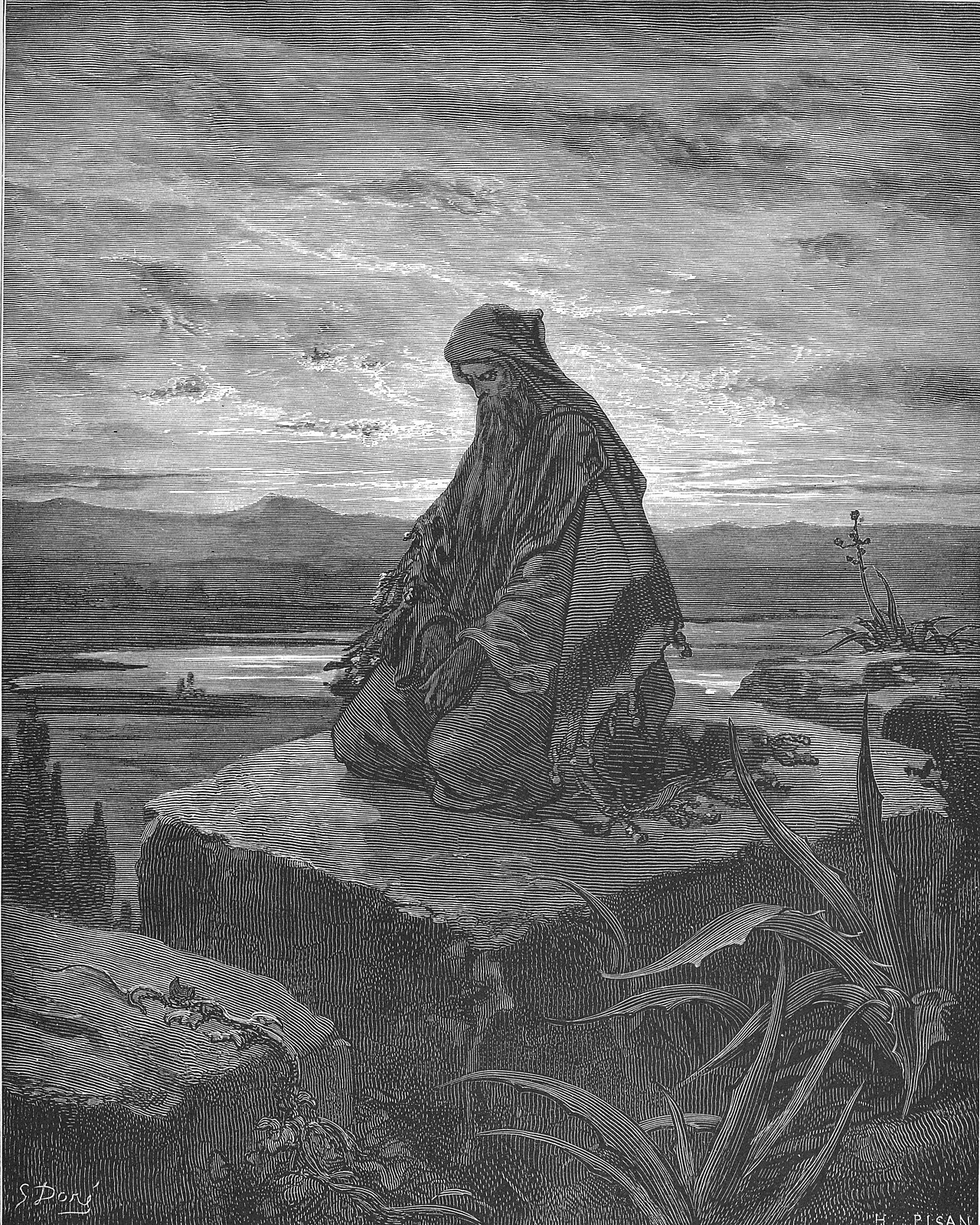
Isaiahchapter 33
24 verses · Isaiah · 8th century BC · The Prophets
The sinners in Zion are afraid; trembling grips the ungodly: “Who of us can dwell with a consuming fire? Who of us can dwell with everlasting flames?”
Introduction
Isaiah, The Prophets, Isaiah Overview.
Isaiah speaks this chapter when Judah had paid Assyria to leave and the army came on anyway. It is the last of the six woes in this part of the book, and it moves quickly between prayer, lament and promise. Its first hearers had seen their best farmland stripped and their roads emptied. Listen for the question asked inside the city about who can dwell with a consuming fire, and for the answer given in terms of conduct. The chapter ends with Jerusalem kept safe by the LORD as its King.
Context
- Who
- A city that had paid for peace and been invaded anyway
- What
- A woe on the treacherous destroyer, a prayer of the people, and a promise that the LORD will be Judge, Lawgiver and King in a secure Jerusalem.
- Where
- Jerusalem and the emptied roads and fields of the land around it.
- When
- 701 BC, during Sennacherib's invasion of Judah.
- Why
- To assure a city betrayed by its enemy that God would rise to act, and to show who can live in His presence.
Historical context
The opening line describes something that actually happened. Hezekiah had submitted and paid an enormous indemnity, the Bible records three hundred talents of silver and thirty of gold, and Sennacherib's own prism account gives figures in the same range, and the Assyrians came on anyway. So the woe is aimed at the destroyer who was not destroyed and the traitor who was not betrayed. Isaiah says he has broken the covenant, he despises the cities, he regards no man.
Show the rest of the historical context, 3 more paragraphs
The roads tell the story of the countryside. The highways lie waste, the traveler has stopped, the land mourns, Lebanon is ashamed and withers, Sharon is like a desert, and Bashan and Carmel shake off their leaves. Those were the four most fertile regions anyone could name.
The taunt in the middle names Assyrian officials by their jobs. Where is the scribe? Where is the one who weighed out the tribute? Where is the one who counted the towers? Every conquered city was visited by a team like that: a scribe recording what was owed, a weigher checking the silver, and a surveyor tallying the defenses for the report home. Isaiah says a day is coming when you will look for those men and not find them.
The closing picture of Zion answers the whole book's anxiety about walls. She is called the city of our appointed feasts, a quiet home, a tent that is never taken down, whose stakes are never pulled up and whose ropes never break. And then the strangest line: the LORD will be to us a place of broad rivers and streams, where no galley with oars goes and no mighty ship passes. Jerusalem has no river. Great cities, Nineveh, Babylon, Memphis, Tyre, all had water access, and water access is how a navy arrives. Jerusalem gets the benefit of a river with none of its danger.
Significance
The question the chapter puts to the people inside the walls is uncomfortable: who among us can live with a consuming fire? The answer is not a fortification report. It is a character list, the one who walks righteously, speaks uprightly, refuses profit from extortion, shakes bribes out of his hands, and shuts his eyes from looking on evil.
Show the rest of the significance, 1 more paragraph
And for a people counting soldiers, the promise is that the inhabitant will not say, I am sick, because the people who live there will be forgiven their iniquity. That is the defense being offered.
This chapter in Jewish lifeWhat this chapter is in Jewish life and reading.
What is done
No part of this chapter is read aloud in the synagogue. The site's own table in src/lib/hebraic/readings.ts printed parashot 0 and haftarah uses 0 for Isaiah 33, and no festival reading for the book. The table records Isaiah only as a source of Haftarot, and none of the Haftarot it records reaches this chapter.
The chapter is met instead in the study of the weekly portions, and the corpus names the doors. Under the first verse it carries Midrash Tanchuma, Mishpatim 12:4. Each of those locators is named for the Torah portion whose study it belongs to.
How it is read
Rashi is quoted here from The Judaica Press complete Tanach with Rashi, translated by A. J. Rosenberg, which Sefaria reports as CC-BY. The corpus carries no English for any other commentator on this chapter. The chapter opens on the spoiler who has never been spoiled, and Rashi reads it as a promise that the reckoning will come. The remnant of God's people will gather the spoiler's booty like locusts gathering grain (Rashi on Isaiah 33:1:1 and 33:4:1).
The sixth verse draws the longest note, and it reads a line about faith as a line about practice. The faith of your times is faithfulness to the Creator in the seasons He set. Rashi lists them: "for terumoth and tithes at the time of their separation, for gleanings, forgotten sheaves, and the corner of the field" (Rashi on Isaiah 33:6:1). He adds the release years and the jubilee years, and then a second reading, the faith Israel kept in God through hard times (Rashi on Isaiah 33:6:1).
The sinners in Zion who are afraid at the fourteenth verse are afraid of finding no way to repent (Rashi on Isaiah 33:14:1). The one who walks righteously will not seek bread, since it will be supplied from heaven (Rashi on Isaiah 33:15:1 and 33:16:1). The King in His beauty of the seventeenth verse is God, and Rashi's note says it is absent from many editions (Rashi on Isaiah 33:17:1). The rivers of the twenty-first verse he reads through Ezekiel 47 and Joel 4:18, the stream from the house of the Lord that grows as it runs (Rashi on Isaiah 33:21:1). At the twenty-third verse the manuscripts name the sinful city Rome (Rashi on Isaiah 33:23:1).
What the rabbis say
The corpus carries forty rabbinic locators on this chapter and the text of none, so each is cited by ref here and none is quoted or paraphrased. On the first verse it holds Aggadat Bereshit 64:1 and Midrash Tanchuma, Mishpatim 12:4. On the second verse it holds Bamidbar Rabbah 11:6 and Bereshit Rabbah 98:14. On the third verse it holds Aggadat Bereshit 8:3 and Ein Yaakov (Glick Edition), Sanhedrin 11:34. On the fourth verse it holds Ein Yaakov (Glick Edition), Sanhedrin 11:29 and Ein Yaakov, Sanhedrin 11:27. On the sixth verse it holds Bamidbar Rabbah 18:21 and Berakhot 33b:24.
On the seventh verse it holds Aggadat Bereshit 31:1 and Bereshit Rabbah 56:5. On the eighth verse it holds Bereshit Rabbah 56:8 and Eikhah Rabbah, Petichta 24. On the ninth verse it holds Midrash Tehillim 114:3 and Pirkei DeRabbi Eliezer 30:12. On the tenth verse it holds Shir HaShirim Rabbah 4:8:1. On the eleventh verse it holds Bereshit Rabbah 26:6 and Bereshit Rabbah 6:6.
On the twelfth verse it holds Aggadat Bereshit 20:4 and Bamidbar Rabbah 19:32. On the thirteenth verse it holds Bereshit Rabbah 48:6 and Sifrei Bamidbar 136:1. On the fourteenth verse it holds Avot DeRabbi Natan, Recension B 43:22 and Berakhot 60a:17. On the fifteenth verse it holds Bava Batra 57b:7 and Bereshit Rabbah 43:2. On the sixteenth verse it holds Bava Batra 10b:4 and Ein Yaakov (Glick Edition), Bava Batra 1:20.
On the seventeenth verse it holds Ein Yaakov, Taanit 2:6 and Jerusalem Talmud Sanhedrin 2:6:12. On the eighteenth verse it holds Aggadat Bereshit 36:1 and Chagigah 15b:12. On the twentieth verse it holds Mekhilta DeRabbi Shimon Ben Yochai 15:2 and Mekhilta DeRabbi Yishmael, Tractate Shirah 3:12. On the twenty-first verse it holds Bamidbar Rabbah 19:26 and Ein Yaakov, Rosh Hashanah 2:3. On the twenty-second verse it holds Devarim Rabbah 5:11.
On the twenty-third verse it holds Bekhorot 39a:7. On the twenty-fourth verse it holds Ein Yaakov (Glick Edition), Ketubot 13:13. What each of them teaches is a saying of the rabbis, and it is reported as theirs wherever this site quotes one. The quotations wait on a fetch that carries the text.
Sources: Rashi, Rashi on Isaiah 33:1:1 to 33:24:1, The Judaica Press complete Tanach with Rashi, translated by A. J. Rosenberg, reported CC-BY; The Sefaria corpus, scripts/data/sources/sefaria/isaiah/33.json, the 40 Talmud and Midrash locators of this chapter; The site's own files, src/lib/hebraic/readings.ts, printing no portion, no Haftarah and no festival reading for this chapter, and src/data/bible/chapter-verse-counts.json for the verse count.
The heads below are this chapter's scenes. The numbered points under each are its verses.
Woe to the Spoiler Who Has Not Yet Been Spoiled
O destroyer never destroyed: The woe turns the aggressor’s own conduct back on him, and warns that "When you have finished destroying, you will be destroyed". The older commentators read the address as fitting Sennacherib and Assyria. Matthew Henry and John Gill both noted that the verse states a rule and names no man.
Isaiah 33:1
“Woe to thee that spoilest, and thou wast not spoiled,.... Which some understand of Nebuchadnezzar; others of Sennacherib, which is more probable; it seems best to interpret it of the Romish antichrist. Kimchi thinks that, if it respects the times of Hezekiah, Sennacherib is meant; but if the times of the Messiah, then the king of nations that shall be in those days; and he adds, this is the kingdom of Persia, in the vision of Daniel.”
2 more voices on this verseWhat preachers and commentators have said about this verse, in their own words.
Isaiah 33:1
“Wo to thee that spoilest - This description accords entirely with Sennacherib and his army, who had plundered the cities and countries which they had invaded, and who were about to advance to Jerusalem for the same purpose (compare Isa 29:7-8; Isa 37:11). And thou wast not spoiled - That is, thou hadst not been plundered by the Jews against whom thou art coming. It was because the war was so unprovoked and unjust, that God would bring so signal vengeance on them. And dealest treacherously - (See the note at Isa 21:2).”
Isaiah 33:1
“Bloody and deceitful men are the worst of men. The aggravation of this sin. He spoiled those that had never done him any injury and that he had no pretence to quarrel with, and dealt treacherously with those that had always dealt faithfully with him.”
Matthew Henry · Commentary on the Whole Bible (1707-1721)puritan
Isaiah 33:2-4
O LORD, be gracious to us!: Against the destroyer the prophet sets a prayer, "O LORD, be gracious to us". The answer comes as a rout, for "The peoples flee the thunder of Your voice; the nations scatter when You rise". Albert Barnes noted that the chapter moves from woe to prayer to victory.
Isaiah 33:2
“Be thou their arm every morning “Be thou our strength every morning” - For זרעם zeroam, their arm, the Syriac, Chaldee, and Vulgate read זרענו zeroenu, our arm, in the first person of the pronoun, not the third: the edition of Felix Pratensis has זרעתינו zerootheynu in the margin.”
Adam Clarke · Commentary on the Bible (1810-1826)evangelical
1 more voice on this verse
Isaiah 33:2
“O Lord - The prophet contemplating the judgment which was now coming upon God's people, directs his prayer to God for them. Their arm - Our arm or strength. The change of persons is frequent in prophetical writings.”
John Wesley · Explanatory Notes upon the Old Testament (1765)evangelical
the nations scatter when You rise: The army that marched on Zion was gathered from many nations, and Matthew Henry read the peoples here as those nations fleeing in every direction. He set the verse beside Psalm 68, where God rises and His enemies scatter. The prayer of verse 2 is answered at once.
Isaiah 33:3
“When God did thus lift up himself the several nations, or clans, of which the army was composed, were scattered. It was time to stir when such an unprecedented plague broke out among them. When God arises his enemies are scattered, Ps. lxviii.”
Matthew Henry · Commentary on the Whole Bible (1707-1721)puritan
1 more voice on this verse
Isaiah 33:3
“At the noise of the tumult - Lowth supposes that this is addressed by the prophet in the name of God, or rather by God himself to the Assyrian, and that it means that notwithstanding the terror which he had caused the invaded countries, he would himself fall and become an easy prey to those whom he intended to subdue.”
Your spoil, O nations, is gathered: The spoil the nations took is left behind when they flee. Barnes pictured the people of Jerusalem gathering it as a swarm of locusts sweeps over a field. The Hebrew verb for gathered is the word used of a harvest.
Isaiah 33:4
“And your spoil - The booty that the Assyrian army bad gathered in their march toward Jerusalem, and which would now be left by them to be collected by the Jews. Shall be gathered like the gathering of the caterpillar - The grammatical construction here is such that this may admit of two interpretations. It may either mean, as the caterpillar or the locust is gathered; or it may mean, as the caterpillar gathers its spoil.”
2 more voices on this verse
Isaiah 33:4
“Thus the wealth of the sinner is laid up for the just and Israel is enriched with the spoil of the Egyptians. Some make the Assyrians to be the caterpillars and locusts, which, when they are killed, are gathered together in heaps, as the frogs of Egypt, and are run upon, and trodden to dirt.”
Matthew Henry · Commentary on the Whole Bible (1707-1721)puritan
Isaiah 33:4
“The invaders' "spoil" shall be left behind by them in their flight, and the Jews shall gather it. caterpillar--rather, "the wingless locust"; as it gathers; the Hebrew word for "gathers" is properly used of the gathering of the fruits of harvest (Isa 32:10). running to and fro--namely, in gathering harvest fruits. he--rather, "they." them--rather, "it," that is, the prey.”
Jamieson, Fausset & Brown · Commentary Critical and Explanatory on the Whole Bible (1871)reformed
Isaiah 33:5-6
The LORD is exalted: d, for He dwells on high", and "He has filled Zion with justice and righteousness". He will be "the sure foundation for your times", and "The fear of the LORD is Zion’s treasure". John Gill set that treasure against the silver and gold Assyria came to plunder.
Isaiah 33:5
“The Lord is exalted - (compare Psa 97:9). The prophet here introduces a chorus of the Jews, celebrating the praises of God for delivering them from the Assyrian. He hath filled Zion with judgment - That is, the effect of his destroying his enemies will be to fill Jerusalem with reverence for his name. The deliverance would be so signal, and the manifestation of the divine mercy so great, that the effect would be that the nation would turn to God, and acknowledge his gracious interposition (see Isa 30:22-26, Isa 30:29; Isa 31:6; Isa 32:15-18).”
1 more voice on this verse
Isaiah 33:5
“It is his honour thus to abase proud men, and hide them in the dust, together; thus he magnifies his own name, and his people give him the glory of it, as Israel when the Egyptians were drowned, Exod. xv.”
Matthew Henry · Commentary on the Whole Bible (1707-1721)puritan
a storehouse of salvation, wisdom, and knowledge: Matthew Henry read the sure foundation as two gifts from the LORD: stable times at home and salvation from enemies abroad. Zion's treasure is reverence for the LORD. A people's treasure shows what it most desires.
Isaiah 33:6
“But, since there are many kinds of treasures and different grounds for joy, each one's treasure corresponds to the movement of their desire. If it is an appetite for earthly things, it makes those who share in it not happy but wretched. Those who "savor the things above, not what is on earth," and are not eager for what perishes but for what is eternal, have hidden, incorruptible resources, in that about which the prophet says, "In your treasure is our salvation. There wisdom and knowledge and holiness are from the Lord.”
Leo the Great · written before 461 · SERMON 92:3patristic
1 more voice on this verse
Isaiah 33:6
His treasure “Thy treasure” - Ὁ θησαυρος σου, Sym. He had in his copy אצרך otsarcha, “thy treasure, “not אצרו otsaro, “his treasure.”
Adam Clarke · Commentary on the Bible (1810-1826)evangelical
The Highways Lie Waste and the Land Mourns
Isaiah 33:7-9
their valiant ones cry aloud in the streets: Judah’s own collapse follows: "their valiant ones cry aloud in the streets", and "The highways are deserted". "The treaty has been broken", and "The land mourns and languishes", from Lebanon to Sharon, Bashan and Carmel. Franz Delitzsch noted that the four names mark the length of the land.
Isaiah 33:7
“From the vision of future glory Isaiah returns to the disastrous present; the grief of "the valiant ones" (parallel to, and identical with, "the ambassadors of peace"), men of rank, sent with presents to sue for peace, but standing "without" the enemy's camp, their suit being rejected (2Ki 18:14, 18, 37).”
Jamieson, Fausset & Brown · Commentary Critical and Explanatory on the Whole Bible (1871)reformed
2 more voices on this verse
Isaiah 33:7
“Behold - That the mercy promised might be duly magnified, he makes a lively representation of their great danger and distress. The ambassadors - Whom he shall send to beg peace of the Assyrian.”
John Wesley · Explanatory Notes upon the Old Testament (1765)evangelical
Isaiah 33:7
“He makes himself master of them so easily (though they are called fenced cities ), and meets with so little resistance, that he despises them, and has no relentings when he puts all to the sword; for he regards no man, has no pity or concern, no, not for those that he is under particular obligations to.”
Matthew Henry · Commentary on the Whole Bible (1707-1721)puritan
The treaty has been broken: Hezekiah had paid Sennacherib to withdraw, and John Wesley read the broken treaty as that bargain betrayed, citing 2 Kings 18:14 and 17. The empty roads show how far the invasion had reached. The envoys of verse 7 weep over both.
Isaiah 33:8
“The highways lie waste - This verse contains a description of the desolations that had been caused by the invasion of Sennacherib. Some have understood it as containing the account which the ambassadors sent by Hezekiah gave of the effects of the invasion. Thus Grotius interprets it. But it is probably a description made by the prophet himself, and is designed to state one cause why the messengers that had been sent out wept bitterly. They had not only failed of inducing Sennacherib to abandon his purpose of attacking Jerusalem, but they had witnessed the effects of his invasion already.”
1 more voice on this verse
Isaiah 33:8
“The covenant - Sennacherib broke his faith, given to Hezekiah, of departing for a sum of money, 2 Kings xviii, 14, 17. Cities - The defensed cities of Judah, which he contemned, and easily took.”
John Wesley · Explanatory Notes upon the Old Testament (1765)evangelical
Lebanon is ashamed and decayed: Barnes read the land that mourns as the country the destroyer of verse 1 had marched through. Lebanon is ashamed like a person stripped of ornaments, its cedars cut down. Sharon, Bashan and Carmel languish with it.
Isaiah 33:9
“The earth mourneth - The land through which he has passed. For the sense of this phrase, see the note at Isa 24:4. Lebanon is ashamed and hewn down - For the situation of Lebanon, see the note at Isa 10:34. Lebanon was distinguished for its ornaments of beautiful cedars. Here iris represented as being stript of these ornaments, and as covered with shame on that account.”
Isaiah 33:10-12
The LORD answers the ruin with His own rising: "Now I will arise". He tells the enemy, "You conceive chaff; you give birth to stubble". Matthew Henry read "The peoples will be burned to ashes, like thorns cut down and set ablaze" as swift and total destruction.
Isaiah 33:10
“Now - This verse commences another transition. In the previous verses, the desolation of the land had been described, and the hopelessness of obtaining any terms of favor from Sennacherib, or of binding him to any compact, bad been stated. In this state of things, when inevitable ruin seemed to be coming upon the nation, God said that he would interpose. Will I rise - To vengeance; or to punish the invading host. The emphasis in this passage should be placed on ‘I,’ indicating that Yahweh would himself do what could not be effected by people.”
You conceive chaff: The LORD now speaks to the Assyrians. Barnes read the birth figure as plans that come to nothing, for chaff and stubble are the worthless leavings of the harvest. Isaiah used a like picture at 26:18.
Isaiah 33:11
“Ye shall conceive chaff - An address of God to the Assyrians. The figure is one that denotes that their counsels would be in vain. Chaff and stubble are used in the Scriptures, in contrast with grain, to denote anything which is not solid, nutritious, or substantial; then anything which is frivolous, useless, vain. A similar image occurs in Isa 26:18 (see the note on that place; compare Isa 59:4).”
1 more voice on this verse
Isaiah 33:11
“When the sinners in Zion saw what dreadful execution the wrath of God made they were in a great fright, being conscious to themselves that they had provoked this God by their secretly worshipping other gods; and therefore they cry out, Who among us shall dwell with this devouring fire, before which so vast an army is as thorns?”
Matthew Henry · Commentary on the Whole Bible (1707-1721)puritan
like thorns cut down and set ablaze: Thorns cut down long before are dry and burn in moments. Barnes read the peoples here as the army of the destroyer, consumed by fire suddenly and entirely. The sinners in Zion ask in verse 14 who can dwell with such a consuming fire.
Isaiah 33:12
“And the people - In the army of Sennacherib. As the burnings of lime - As if placed in a burning lime-kiln, where they must certainly be destroyed (see Isa 30:33; compare Amo 2:1). As thorns cut up - As thorns, or small brushwood, that has been long cut up and perfectly dried are speedily consumed, so shall it be with the Assyrian army. This is an image like many that are employed, denoting that the destruction of the army of the Assyrians would be sudden and entire.”
1 more voice on this verse
Isaiah 33:12
“Note, God's judgments upon the enemies of Zion should strike a terror upon the sinners in Zion, nay, David himself trembles at them, Ps. cxix. God himself is this devouring fire, Heb. xii. Who is able to stand before him?”
Matthew Henry · Commentary on the Whole Bible (1707-1721)puritan
Who Among Us Shall Dwell with Devouring Fire?
Isaiah 33:13-14
hear what I have done: The call goes to "You who are far off" and "you who are near". Fear rises in Jerusalem: "The sinners in Zion are afraid", asking who "can dwell with a consuming fire". Albert Barnes noted that the question is left open here and answered in the verses that follow.
Isaiah 33:13
“Hear, ye that are far off - This is an address of Yahweh, indicating that the destruction of the Assyrian army would be so signal that it would be known to distant nations, and would constitute an admonition to them. Ye that are near - Ye Jews; or the nations immediately adjacent to Judea. The phrase ‘far and near,’ is equivalent to all.”
The sinners in Zion are afraid: The fire that fell on Assyria now frightens those inside Jerusalem. Matthew Henry observed that a place in Zion gave its sinners no cover and only added to their guilt. Their question is answered in verses 15 and 16.
Isaiah 33:14
“The sinners in Zion are afraid - Zion has been generally considered as a type of the Church of God. Now all the members of God’s Church should be holy, and given to good works; sinners in Zion, therefore, are portentous beings! but, alas! where are they not? The Targum on this verse is worthy of notice: “The sinners in Zion are broken down; fear hath seized the ungodly, who are suffering for their ways. They say, Who among us shall dwell in Zion, where the splendor of the Divine Majesty is like a consuming fire?”
Adam Clarke · Commentary on the Bible (1810-1826)evangelical
2 more voices on this verse
Isaiah 33:14
“Sinners in Zion will have a great deal to answer for above other sinners; and their place in Zion will be so far from being their security that it will aggravate both their sin and their punishment. Now those sinners in Zion, though always subject to secret frights and terrors, were struck with a more than ordinary consternation from the convictions of their own consciences.”
Matthew Henry · Commentary on the Whole Bible (1707-1721)puritan
Isaiah 33:14
“The sinners - This is spoken of the Jews. The prophet having foretold the deliverance of God's people, and the destruction of their enemies, gives a lively representation of the unbelieving condition, in which the Jews were, before their deliverance came.”
John Wesley · Explanatory Notes upon the Old Testament (1765)evangelical
Isaiah 33:15-16
He who walks righteously and speaks with sincerity: The answer is a portrait the older commentators set beside Psalm 15: "He who walks righteously and speaks with sincerity, who refuses gain from extortion". To him is promised that "he will dwell on the heights", and "his food will be provided and his water assured".
Isaiah 33:15
“He that walketh righteously - In this and the following verses the prophet presents, in contrast, the confidence and the security of the righteous. He first, in this verse, describes the characteristics of the righteous, and in the following verses their confidence in God, and their security and safety. The first characteristic of the righteous man is that he walks righteously; that is, he lives righteously; he does right. And speaketh uprightly - The second characteristic - his words are well-ordered. lie is not false, perfidious, slanderous, or obscene in his words.”
2 more voices on this verse
Isaiah 33:15
“In the whole course of his conversation he acts by rules of equity, and makes conscience of rendering to all their due, to God his due, as well as to men theirs. His walk is righteousness itself; he would not for a world wilfully do an unjust thing. (2.) He speaks uprightly, uprightnesses (so the word is); he speaks what is true and right, and with an honest intention.”
Matthew Henry · Commentary on the Whole Bible (1707-1721)puritan
Isaiah 33:15
“There are some who indeed do not receive rewards of money from ordination, yet bestow sacred orders for human favor, and from that very generosity seek only the recompense of praise. These certainly do not bestow freely what was freely received, because from the service of holiness they have rendered, they seek the coin of favor. Hence the prophet spoke well when describing the just man, saying: Who shakes his hands free from every gift.”
Gregory the Dialogist · written before 604 · 40 Homilies on the Gospels, Homily IVpatristic
he will dwell on the heights: Heights were the safest places to live, out of an attacker's reach. Matthew Henry read the promise of food and water against the siege, when supplies were cut off and water was measured out. The righteous man lacks nothing.
Isaiah 33:16
By the name of bread the teaching of perfection is shown, as Paul attests, who, rousing the weak to conversion, says: "I gave you milk to drink, not solid food. For you were not yet able, nor are you yet able." For if milk belongs to little ones, bread belongs to none but the perfect. Whence also it is said of the strength of the perfect man: "He shall dwell on high, the fortifications of rocks shall be his loftiness, bread has been given to him."
Gregory the Dialogist · written before 604 · Commentary on 1 Kings, Book 6, Chapter 3patristic
1 more voice on this verse
Isaiah 33:16
“God, the rock of ages, will be his high tower. (2.) He shall be supplied; he shall want nothing that is necessary for him: Bread shall be given him, even when the siege is straitest and provisions are cut off; and his waters shall be sure, that is, he shall be sure of the continuance of them, so that he shall not drink his water by measure and with astonishment.”
Matthew Henry · Commentary on the Whole Bible (1707-1721)puritan
Thine Eyes Shall See the King in His Beauty
Isaiah 33:17-19
see the King in His beauty: The righteous are promised, "Your eyes will see the King in His beauty". The mind will "ponder the former terror", and "You will no longer see the insolent, a people whose speech is unintelligible". John Gill read the whole passage as the siege just survived, reversed point for point.
Isaiah 33:17
“Thine eyes - The eyes of the righteous, described in Isa 33:15. Shall see the king in his beauty - Some understand this of the Assyrian king. Thus Kimchi understands it, and supposes it means that they shall see him at the walls of Jerusalem; that is, shall see him destroyed. Vitringa supposes it means Yahweh himself as the king of his people, and that they should see him in his glory. Others suppose it relates to the Messiah. But the immediate connection requires us to understand it of Hezekiah (compare the note at Isa 32:1-2).”
1 more voice on this verse
Isaiah 33:17
“The king - First Hezekiah, and then Christ, triumphing over all enemies, and ruling his own people with righteousness. Very far - Thou shalt not be shut up in Jerusalem, but shalt have free liberty to go abroad with honour and safety.”
John Wesley · Explanatory Notes upon the Old Testament (1765)evangelical
Your mind will ponder the former terror: The three figures belong to the former terror of the siege. Adam Clarke took the one who tallies as the scribe who counted for tribute, and the one who weighs as the man who collected it. Now the mind ponders only where they went.
Isaiah 33:18
“Thine heart - This is a thankful acknowledgment of deliverance from their former terrors and miseries. Where - These words they spoke in the time of their distress.”
John Wesley · Explanatory Notes upon the Old Testament (1765)evangelical
1 more voice on this verse
Isaiah 33:18
“Where is the scribe? - The person appointed by the king of Assyria to estimate their number and property in reference to their being heavily taxed. Where is the receiver? - Or he who was to have collected this tribute.”
Adam Clarke · Commentary on the Bible (1810-1826)evangelical
a people whose speech is unintelligible: The insolent people who came up to the walls of Jerusalem will no longer be seen. John Wesley took their unintelligible speech as the mark of a foreign nation, a people whose language Zion could not understand. The terror of their stammering speech ends.
Isaiah 33:19
“Second, those who are eminent in eloquence, but not in wisdom: the people of profound speech: behold I will bring upon you a nation whose language you shall not know (Jer 5:15).”
Thomas Aquinas · written before 1274 · Commentary on Isaiahpatristic
1 more voice on this verse
Isaiah 33:19
“A fierce - That fierce and warlike people, whom thou hast seen with terror, near the walls of Jerusalem, thou shalt see no more. A people - A foreign nation, whose language is unknown to thee.”
John Wesley · Explanatory Notes upon the Old Testament (1765)evangelical
Isaiah 33:20-21
Jerusalem, a peaceful pasture: Zion is seen as "a peaceful pasture, a tent that does not wander". Where other cities relied on rivers, "the Majestic One, our LORD, will be for us a place of rivers and wide canals". Franz Delitzsch observed, as older writers had, that Jerusalem had no navigable river.
Isaiah 33:20
“Look upon Zion “Thou shalt see Zion” - For חזה chazeh, “see,” read תחזה techezeh, “thou shalt see,” with the Chaldee. - Houbigant. At the end of this verse we find in the Masoretic Bibles this note, חצי הספר chatsi hassepher, “the middle of the book;” that is the middle of the book of Isaiah.”
Adam Clarke · Commentary on the Bible (1810-1826)evangelical
3 more voices on this verse
Isaiah 33:20
“Look upon - Contemplate Zion's glorious and peculiar privileges. Solemnities - This was the chief part of Zion's glory, that God was solemnly worshipped, and the solemn assemblies and feasts kept in her. Quiet - This was but imperfectly fulfilled in the literal Zion; but clearly and fully in the mystical Zion, the church of God, in the times of the gospel.”
John Wesley · Explanatory Notes upon the Old Testament (1765)evangelical
Isaiah 33:20
“God's church on earth is a tabernacle, which, though it may be shifted from one place to another, shall not be taken down while the world stands; for in every age Christ will have a seed to serve him. The promises of the covenant are its stakes, which shall never be removed, and the ordinances and institutions of the gospel are its cords, which shall never be broken.”
Matthew Henry · Commentary on the Whole Bible (1707-1721)puritan
Isaiah 33:20
“The saints, who sojourned once in tabernacles as pilgrims, shall have a "building of God--eternal in the heavens" (2Co 5:1; Heb 11:9, 10; compare Isa 54:2). stakes--driven into the ground; to these the "cords" were fastened. Christ's Church shall never fall (Mt 16:18).”
Jamieson, Fausset & Brown · Commentary Critical and Explanatory on the Whole Bible (1871)reformed
a place of rivers and wide canals: Jerusalem had no river of its own. Jamieson, Fausset & Brown read the LORD as her river, giving all its protection while no warship could use it to attack her. The majestic vessel carries the same Hebrew word as the Majestic One.
Isaiah 33:21
“Jerusalem had not the advantage of a river; Jehovah will be as one to it, affording all the advantages, without any of the disadvantages of one. galley with oars--war vessels of a long shape, and propelled by oars; merchant vessels were broader and carried sail. gallant--same Hebrew word as for "glorious," previously; "mighty" will suit both places; a ship of war is meant.”
Jamieson, Fausset & Brown · Commentary Critical and Explanatory on the Whole Bible (1871)reformed
3 more voices on this verse
Isaiah 33:21
“For the plainly spoken words of these interpreting have made the sentences of the ancient Fathers henceforth clear to us. Hence the Prophet Isaiah viewing the words plain by the interpretation of Holy Church, not obscured by the darkness of allegories, exclaimed, saying, "The place of rivers, the broadest and open streams." For the sayings of the Old Testament were as narrow and close streams, which bound up the sentences of their lore in the darkest gathering together.”
Gregory the Dialogist · written before 604 · Morals on the Book of Job, Book 18patristic
Isaiah 33:21
“This the principal ground of their confidence: "He that is himself the glorious Lord will display his glory for us and be a glory to us, such as shall eclipse the rival-glory of the enemy." God, in being a gracious Lord, is a glorious Lord; for his goodness is his glory.”
Matthew Henry · Commentary on the Whole Bible (1707-1721)puritan
Isaiah 33:21
“But there - In Jersalem; or in his church, of which Jerusalem was the emblem. The glorious Lord - Lowth renders it, ‘The glorious name of Yahweh,’ שׁם shâm to be a noun, as if it were pointed שׁם shēm. So the Syriac and the Septuagint read it. The word ‘glorious’ (אדיר 'adiyr) means magnificent; denoting that Yahweh would manifest himself there as magnificent or great in the destruction of his enemies, and in the protection of his people.”
the LORD is our Judge: The chapter’s confession gathers three offices into one LORD: "the LORD is our Judge, the LORD is our lawgiver, the LORD is our King". Matthew Henry noted that the verse gives these offices to one person, where Israel’s history had judges, a lawgiver in Moses, and kings.
Isaiah 33:22
“And he assigns the cause: for the Lord is our judge, judging us by our adversaries: behold your king comes to you, meek (Zech 9:9).”
Thomas Aquinas · written before 1274 · Commentary on Isaiahpatristic
1 more voice on this verse
Isaiah 33:22
“For the Lord is our judge - Yahweh will be to us nothing but a source of happiness, truth, and prosperity. His presence will be to us only a blessing, and a means of success and joy. The repetition of the name Yahweh three times is common in the Scriptures.”
Isaiah 33:23-24
Your ropes are slack: The enemy’s ship lies helpless, for "Your ropes are slack". The chapter closes with a promise past military relief: "The people who dwell there will be forgiven of iniquity". John Gill noted that healing and forgiveness are named together in the closing verse.
Isaiah 33:23
“Thy tacklings - This is evidently an address to Sennacherib. The mention of the war-galley and the ship seems to have suggested the application of the figure to the enemies of the Jews, and particularly to Sennacherib. The prophet, therefore, compares the Assyrian to a ship that was rendered unserviceable; whose sails were unfastened, and whose mast could not be made firm, and which was therefore at the mercy of winds and waves.”
2 more voices on this verse
Isaiah 33:23
“Tacklings - He directs his speech to the Assyrians; and having designed their army under the notion of a gallant ship, ver. 21, he here represents their undone condition, by the metaphor of a ship, tossed in a tempestuous sea, having her cables broke, and all her tacklings loose, so that she could have no benefit of her masts and sails; and therefore is quickly swallowed up.”
John Wesley · Explanatory Notes upon the Old Testament (1765)evangelical
Isaiah 33:23
“Hezekiah had given Sennacherib three hundred talents of silver, and thirty of gold (2Ki 18:14-16), and had stripped the temple of its gold to give it to him; this treasure was probably part of the prey found in the foe's camp.”
Jamieson, Fausset & Brown · Commentary Critical and Explanatory on the Whole Bible (1871)reformed
will be forgiven of iniquity: The resident of Zion who is sick and the people forgiven of iniquity stand in one verse. Matthew Henry called sin the sickness of the soul, so when God forgives iniquity He heals the deeper sickness too. The chapter ends with Zion forgiven.
Isaiah 33:24
“The inhabitant - Of Jerusalem. Sick - Shall have no cause to complain of any sickness or calamity. Forgiven - They shall not only receive from me a glorious temporal deliverance; but, which is infinitely better, the pardon of all their sins, and all those spiritual and everlasting blessings, which attend upon that mercy.”
John Wesley · Explanatory Notes upon the Old Testament (1765)evangelical
1 more voice on this verse
Isaiah 33:24
“Sin is the sickness of the soul. When God pardons the sin he heals the disease; and, when the diseases of sin are healed by pardoning mercy, the sting of bodily sickness is taken out and the cause of it removed; so that either the inhabitant shall not be sick or at least shall not say, I am sick.”
Matthew Henry · Commentary on the Whole Bible (1707-1721)puritan
Keep studying
Sources for this chapter
The summary
Jamieson, Fausset & Brown, Commentary Critical and Explanatory; John Calvin, Commentaries; John Wesley, Notes on the Old Testament and Matthew Henry, Complete Commentary.
The exposition
Adam Clarke, Commentary on the Bible; Albert Barnes; Franz Delitzsch, Biblical Commentary on the Prophecies of Isaiah; Jamieson, Fausset & Brown, Commentary Critical and Explanatory on the Whole Bible; John Gill, Exposition of the Old Testament; John Wesley, Explanatory Notes upon the Old Testament; Leo the Great, SERMON 92:3 and Matthew Henry, Commentary on the Whole Bible.