
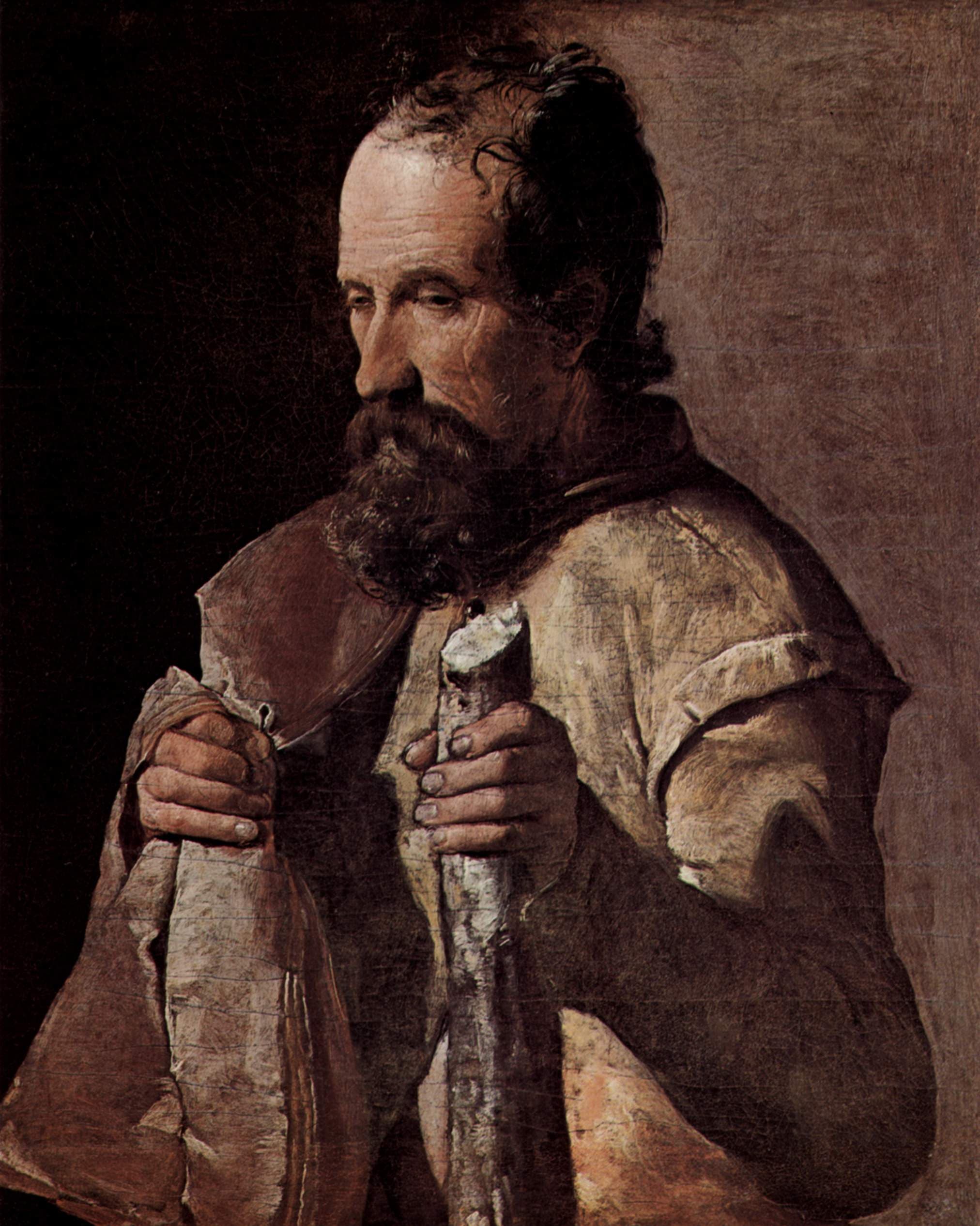
James 1:5 to 8 · Passage · Wisdom
If Any of You Lacks Wisdom
In the opening paragraph of his letter James promises wisdom from God to readers under testing and warns against a divided mind.
A believer in the middle of a trial may not know what to do, and James tells him whom to ask.
Now if any of you lacks wisdom, he should ask God, who gives generously to all without finding fault, and it will be given to him.
- The passage
- James 1:2 to 8, James 3:13 to 18
- Book
- James
- Hold in memory
- James 1:5, James 3:17
Summary
The promise follows directly on the call to let perseverance finish its work (James 1:4), and it carries a warning against the man who doubts. The letter returns to wisdom in James 3:13 to 18. There James measures wisdom by conduct and sets the wisdom from above against an earthly kind, marked by bitter jealousy and selfish ambition, that brings disorder.
- The lack of James 1:5 answers the end of James 1:4, since lacking and lacks render one Greek verb, leipo (G3007).
- James describes God's giving with the adverb haplos, rendered generously, a word found nowhere else in the New Testament (James 1:5).
- The man who doubts is dipsychos, double-minded, a word the New Testament uses only in James 1:8 and James 4:8.
- James names the wisdom from above by seven marks, beginning with pure and ending with sincere (James 3:17).
Wisdom for Those Under Trial
The promise of wisdom stands inside the opening call to endure testing.
If Any of You Lacks Wisdom studies the promise of James 1:5 to 8 and the test of wisdom in James 3:13 to 18. It belongs to the value of wisdom, because it tells a believer where wisdom comes from and how it is received.
The question the passage answers is how a believer who lacks wisdom gets it, and how anyone can tell the true kind from the false. It reads the promise in its setting of trials and teaches the Greek words of the gift and the warning. It sets the two passages of the letter side by side and gives the church's readings of the wisdom asked for and of the doubter.
Consider it pure joy, my brothers, when you encounter trials of many kinds, because you know that the testing of your faith develops perseverance. Allow perseverance to finish its work, so that you may be mature and complete, not lacking anything.The promise follows these verses, so they show the situation of the reader James has in mind.
The writer names himself "James, a servant of God and of the Lord Jesus Christ" (James 1:1). Tradition gives the letter to James the brother of the Lord, the leader of the church in Jerusalem.
Two Passages of One Letter
The first group runs from trial to promise to warning, and the second from the test to the harvest of peace.
James promises wisdom to the tested in his first chapter and tests the wisdom people claim in his third by its fruit in conduct.
| Role | The Berean words | Greek word |
|---|---|---|
| James 1:2 to 8 | ||
| Trial | "trials of many kinds" | peirasmois (G3986) |
| Work | "the testing of your faith" | dokimion (G1383) |
| Goal | "not lacking anything" | leipomenoi (G3007) |
| The promise of wisdom to anyone who lacks it | "if any of you lacks wisdom" | leipetai (G3007) |
| Faith and the doubter | "blown and tossed by the wind" | anemizomeno (G416) |
| Warning | "should not expect to receive anything" | lempsetai (G2983) |
| Verdict | "unstable in all his ways" | dipsychos (G1374) |
| James 3:13 to 18 | ||
| Test | "Let him show it" | sophos (G4680) |
| Root of the false | "bitter jealousy and selfish ambition" | zelon (G2205) |
| Source of the false | "earthly, unspiritual, demonic" | epigeios (G1919) |
| Fruit of the false | "disorder and every evil practice" | akatastasia (G181) |
| Marks of the true | "first of all pure" | hagne (G53) |
| Harvest | "Peacemakers who sow in peace" | karpos (G2590) |
Warning, Verdict, James 3:13 to 18, Test, Root of the false, Source of the false, Fruit of the false, Marks of the true and 1 more
The Condition and the Wave
James sets one condition on the promise and draws the man who breaks it as a wave driven by the wind.
But he must ask in faith, without doubting, because he who doubts is like a wave of the sea, blown and tossed by the wind. That man should not expect to receive anything from the Lord. He is a double-minded man, unstable in all his ways.The three verses give the doubter a picture, a warning and a name, in that order.
The participle for doubting, diakrinomenos (G1252), stands twice in James 1:6, once in the condition and once in the picture of the wave.
James uses dipsychos again when he calls sinners to draw near to God: "purify your hearts, you double-minded" (James 4:8).
Generously and Without Finding Fault
Two words of James 1:5 describe how God gives.
Perseverance works so that the reader may be complete, leipomenoi, lacking nothing, and the next sentence begins, if anyone leipetai, lacks wisdom (James 1:4 to 5). James uses the verb a third time of a brother or sister "without clothes and daily food" (James 2:15).
In the Greek order of the verse the adverb haplos (G574) follows pasin, to all, so God gives to all and gives without holding back.
The second phrase is me oneidizontos, without finding fault. Its verb is oneidizo (G3679), which the New Testament uses eight times, so God gives without reproaching the one who comes to Him lacking.
The noun sophia (G4678) appears in the letter only in James 1:5 and in James 3:13 to 17, so the two passages carry the whole of James's teaching on wisdom.
Wisdom Known by Its Fruit
James returns to wisdom in his third chapter and asks the wise to prove it by the way they live.
Who is wise and understanding among you? Let him show it by his good conduct, by deeds done in the humility that comes from wisdom.The verse answers anyone who claims to be wise with a demand for good conduct.
The Greek of the last phrase is en prauteti sophias (G4236, G4678), in the humility of wisdom, so humility is the form that wisdom takes in action.
But if you harbor bitter jealousy and selfish ambition in your hearts, do not boast in it or deny the truth. Such wisdom does not come from above, but is earthly, unspiritual, demonic. For where jealousy and selfish ambition exist, there will be disorder and every evil practice.James names the false wisdom by its roots and its results, so that cleverness joined to rivalry is never taken for the gift of God.
The false wisdom of James 3:16 is traced to its last result in an eighteenth-century commentary.
“One sin begets another, and it cannot be imagined how much mischief is produced: there is every evil work. And is such wisdom as produces these effects to be gloried in? This cannot be without giving the lie to Christianity, and pretending that this wisdom is what it is not.”
Matthew Henry · Commentary on the Whole Bible · on James 3:16Puritan
But the wisdom from above is first of all pure, then peace-loving, gentle, accommodating, full of mercy and good fruit, impartial, and sincere. Peacemakers who sow in peace reap the fruit of righteousness.James ends the comparison with the peacemaker, so the true kind is known in the way it treats other people.
In Greek the marks are hagne, eirenike, epieikes, eupeithes, meste eleous kai karpon agathon, adiakritos and anypokritos. Bonaventure, in his Collations on the Seven Gifts, joined them to the seven pillars of the house of wisdom in Proverbs 9:1, a medieval reading of the verse that James does not make.
The Old Testament's great example of asking for wisdom is Solomon at Gibeon, who asked for a heart to judge the people and received it.
Matthew Henry, James 3:17 to 18
How the Church Read the Promise
Two treatises of the fifth century draw on the promise for the doctrine of grace.
died 430 · Augustine of Hippo
The first treatise sets the promise beside the command of Jesus, "Ask, and it will be given to you" (Matthew 7:7).
Read the page on Augustine of Hippo
“Why, then, does he not listen to the Spirit of his Father, speaking through Christ's apostle, or even Christ Himself, who says in His gospel, ‘Seek and ye shall find;’ and who also says to us, speaking by His apostle: ‘If any one of you lack wisdom, let him ask of God, that giveth to all men liberally, and upbraideth not, and it shall be given to him. Let him, however, ask in faith, nothing wavering?’ This is the faith by which the just man lives; this is the faith whereby he believes on Him who justifies the ungodly; this is the faith through which boasting is excluded, either by the retreat of that with which we become self-inflated, or by the rising of that with which we glory in the Lord. This, again, is the faith by which we procure that largess of the Spirit, of which it is said: ‘We indeed through the Spirit wait for the hope of righteousness by faith.’”
Augustine of Hippo · On the Spirit and the Letter 56 · on James 1:5Patristic
died 430 · Augustine of Hippo
The second draws from the order of James 1:5 to 6 that faith comes before the gift of wisdom and is itself from God.
“Because, although wisdom is obtained from faith, even as James himself, when he had said, ‘If any of you lack wisdom, let him ask of God, who giveth to all liberally and upbraideth not, and it shall be given,’ immediately added, ‘But let him ask in faith, nothing wavering:’ it is not, nevertheless, because faith is given before it is asked for by him to whom it is given, that it must therefore be said not to be the gift of God, but to be of ourselves, because it is given to us without our asking for it! For the apostle very plainly says, ‘Peace be to the brethren, and love with faith from God the Father and the Lord Jesus Christ.’ From whom, therefore, are peace and love, from Him also is faith; wherefore, from Him we ask not only that it may be increased to those that possess it, but also that it may be given to those that possess it not.”
Augustine of Hippo · On the Gift of Perseverance 44 · on James 1:5Patristic
Questions Readers Ask
Commentators differ on what wisdom James promises and on what the faith of the asker must hold.
The first question concerns the kind of gift James has in view.
Wisdom to bear trials wellAlbert Barnes
Albert Barnes, in his Notes, Explanatory and Practical, wrote, "Probably this refers particularly to the kind of wisdom which they would need in their trials, to enable them to bear them in a proper manner".
The objection: the promise is open to "any of you" and names no single need, as Barnes himself allowed when he applied it "to the need of wisdom in all respects".
Wisdom as true religion, the knowledge of GodAdam Clarke
Adam Clarke, in his Commentary on the Bible, held that in Scripture wisdom "signifies the same as true religion, the thorough practical knowledge of God, of one’s self, and of a Savior."
The objection: the verses before the promise are about trials and perseverance (James 1:2 to 4), which points to wisdom for testing first.
Wisdom as grace itselfAugustine of Hippo
This reading joins the promise to the wisdom from above of James 3:17.
“Remember what the Scriptures say: ‘If any of you lack wisdom, let him ask of God, who giveth to all men liberally, and upbraideth not; and it shall be given to him.’ Wisdom itself cometh down from above, as the Apostle James himself tells us.… What blessing, then, will that man not have who has prayed for this wisdom and obtained it of the Lord? And from this you may understand what grace is; because if this wisdom were of ourselves, it would not be from above; nor would it be an object to be asked for of the God who created us.”
Augustine of Hippo · On Grace and Free Will 24 · on James 1:5Patristic
The objection: James joins the gift to the believer's own asking in faith (James 1:6), which the reading of grace alone must also explain.
The second question is what asking in faith requires of the one who asks (James 1:6).
Belief that God is able and faithful to His wordMatthew Henry
Henry joins the condition of James 1:6 to the promise of the verse before it.
“The promise above is very sure, taking this proviso along with us; wisdom shall be given to those who ask it of God, provided they believe that God is able to make the simple wise, and is faithful to make good his word to those who apply to him.”
Matthew Henry · Commentary on the Whole Bible · on James 1:6Puritan
The objection: James 1:8 calls the doubter double-minded, a word about the state of the man's own mind, while Henry's proviso speaks of what he believes about God.
A whole-hearted turning to the Lord, without hesitating over past sinsShepherd of Hermas
The Mandate speaks to a believer who fears that his sins bar him from asking.
“Put away doubting from you and do not hesitate to ask of the Lord, saying to yourself, ‘How can I ask of the Lord and receive from Him, seeing I have sinned so much against Him?’ Do not thus reason with yourself, but with all your heart turn to the Lord and ask of Him without doubting, and you will know the multitude of His tender mercies; that He will never leave you, but fulfil the request of your soul. For He is not like men, who remember evils done against them; but He Himself remembers not evils, and has compassion on His own creature. ... For those who doubt regarding God are double-souled, and obtain not one of their requests. But those who are perfect in faith ask everything, trusting in the Lord; and they obtain, because they ask nothing doubting, and not being double-souled. For every double-souled man, even if he repent, will with difficulty be saved.”
Shepherd of Hermas · Shepherd of Hermas, Commandment 9 · on James 1:8Patristic
The objection: James 1:7 says the doubter will receive nothing from the Lord, which is sterner than a word of comfort to the hesitant.
Every Good Gift
The letter traces every good thing a believer receives to the Father.
Every good and perfect gift is from above, coming down from the Father of the heavenly lights, with whom there is no change or shifting shadow.The verse names the source of the wisdom James promised, since wisdom too comes from above (James 3:17).
The promise asks a tested believer to admit his lack, to ask the God who gives freely, and to show what he receives in peaceable conduct.
Sources
Scripture is the Berean Standard Bible.
- STEP Bible, Translators Amalgamated Greek New Testament, the tagged Greek text (Tyndale House, Cambridge), CC BY 4.0.
- STEP Bible TBESG lexicon of Extended Strongs for Greek (Tyndale House, Cambridge), CC BY 4.0, based on Abbott-Smith (1922)
- Matthew Henry, Commentary on the Whole Bible (1710), on James 1:6 and 3:16.
- Albert Barnes, Notes, Explanatory and Practical, on the Old and New Testaments (1832 to 1869), on James 1:5.
- Adam Clarke, Commentary on the Bible, on James 1:5.
- Augustine of Hippo, On the Spirit and the Letter 56, On Grace and Free Will 24 and On the Gift of Perseverance 44, tr. Peter Holmes and Robert Ernest Wallis, rev. Benjamin B. Warfield, Nicene and Post-Nicene Fathers, first series, vol. 5.
- The Shepherd of Hermas, Mandate (Commandment) 9, tr. F. Crombie, Ante-Nicene Fathers, vol. 2.
- Bonaventure, Collations on the Seven Gifts of the Holy Spirit, Collation 9 (a modern translation, cited only)
Keep Studying
Studies9
People and groups4
Symbols1
Doctrines1