
Proverbs 2:6 · Subject · Wisdom
Wisdom and Knowledge
Scripture pairs wisdom with knowledge from Bezalel's craft in Exodus to the letters of Paul.
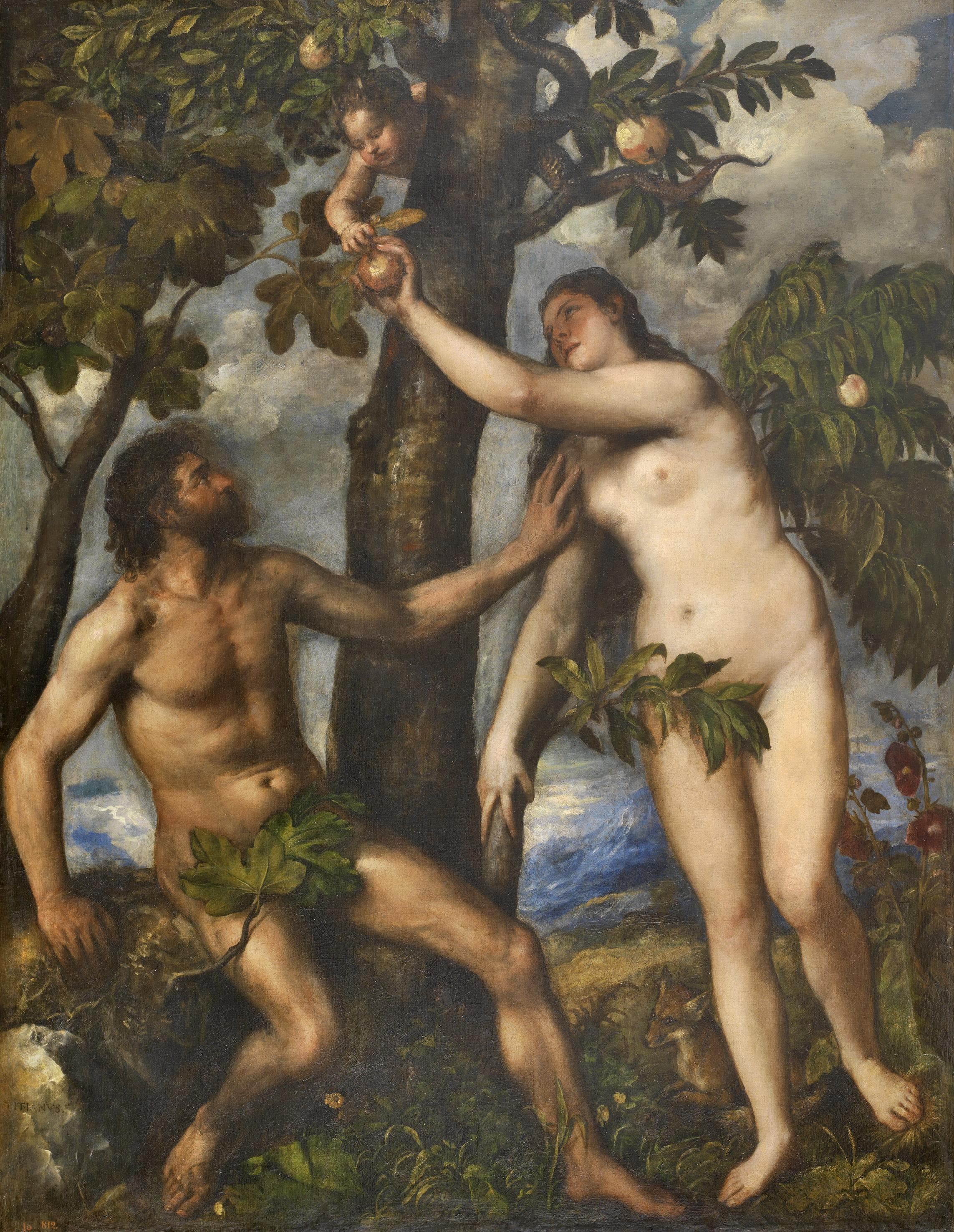
The woman in Eden took the fruit because she saw that the tree “was desirable for obtaining wisdom” (Genesis 3:6).
For the LORD gives wisdom; from His mouth come knowledge and understanding.
- Books
- Proverbs, Colossians
- Hold in memory
- Proverbs 2:6, 1 Corinthians 8:1
Summary
Where a verse names wisdom and knowledge together, the two do one work in one life. Proverbs gives both one beginning, the fear of the LORD, and one giver, the LORD Himself. Augustine gave wisdom to contemplation and knowledge to action, and Wesley gave wisdom the end and knowledge the sight of it.
- In Proverbs 24:3 to 4 wisdom builds the house, understanding establishes it and knowledge fills its rooms.
- Paul sets love above knowledge, since knowledge alone puffs up.
- Colossians 2:3 places all the treasures of wisdom and knowledge in Christ.
Wisdom Beside Knowledge
Scripture's words for wisdom and knowledge often stand in one verse.
Wisdom and Knowledge sets the Bible's words for wisdom beside its words for knowledge and understanding wherever a verse names them together. Wisdom is a value Scripture asks of every believer, and knowledge of God and His ways is the ground it stands on.
The question this study answers is what each word does when the text puts them side by side, and whether Scripture treats them as three faculties or as one life. It gives six verses that pair the words, what Proverbs says of each, the knowledge that harms and the learning God gives, the distinction Augustine drew, and the treasures hidden in Christ.
for gaining wisdom and discipline, for comprehending words of insight, and for receiving instruction in wise living and in righteousness, justice, and equity. To impart prudence to the simple and knowledge and discretion to the young, let the wise listen and gain instruction, and the discerning acquire wise counselThe preface of Proverbs lists the book's gifts in pairs, wisdom with discipline and knowledge with discretion, before it names any one alone.
A mocker seeks wisdom and finds none, but knowledge comes easily to the discerning.Proverbs makes the reader's own heart decide whether wisdom is found, since knowledge comes to the discerning and the mocker finds none.
Six Verses That Pair the Words
Three sayings of Proverbs stand with one verse of Exodus and two of Paul's letters.
Six verses set wisdom and knowledge, or wisdom and understanding, side by side.
| Verse | The Berean words | The words tagged |
|---|---|---|
| Exodus 31:3 | “And I have filled him with the Spirit of God, with skill, ability, and knowledge in all kinds of craftsmanship” | chokmah (H2451), rendered skill; tevunah (H8394); da'at (H1847) |
| Proverbs 1:7 | “The fear of the LORD is the beginning of knowledge, but fools despise wisdom and discipline.” | da'at (H1847), knowledge; chokmah (H2451), wisdom |
| Proverbs 9:10 | “The fear of the LORD is the beginning of wisdom, and knowledge of the Holy One is understanding.” | chokmah (H2451); da'at (H1847); binah (H998) |
| Proverbs 24:3 to 4 | “By wisdom a house is built and by understanding it is established; through knowledge its rooms are filled with every precious and beautiful treasure.” | chokmah (H2451); tevunah (H8394); da'at (H1847) |
| Romans 11:33 | “O, the depth of the riches of the wisdom and knowledge of God!” | sophia (G4678); gnosis (G1108) |
| Colossians 2:3 | “in whom are hidden all the treasures of wisdom and knowledge.” | sophia (G4678); gnosis (G1108) |
The Preface Read in the Church
Hippolytus of Rome, in the third century, read Proverbs 1:2 as the start of all instruction.
The preface is read as the way into the mysteries of the Word, from which instruction follows.
“‘To know wisdom and instruction.’ He who knows the wisdom of God, receives from Him also instruction, and learns by it the mysteries of the Word; and they who know the true heavenly wisdom will easily understand the words of these mysteries. Wherefore he says: ‘To understand the difficulties of words; ‘ for things spoken in strange language by the Holy Spirit become intelligible to those who have their hearts right with God.”
Hippolytus of Rome · Hippolytus Exegetical Fragments · on Proverbs 1:2Patristic
Knowledge That Puffs Up
Paul wrote to Corinth about food offered to idols, and Hosea brought a charge against Israel's priests.
Now about food sacrificed to idols: We know that we all have knowledge. Knowledge puffs up, but love builds up. The one who thinks he knows something does not yet know as he ought to know.Paul answers the Corinthians' boast of knowledge with love, and the next verse shows that the boaster's knowledge is not yet what it ought to be.
If I have the gift of prophecy and can fathom all mysteries and all knowledge, and if I have absolute faith so as to move mountains, but have not love, I am nothing.Paul counts all knowledge as nothing in the one who lacks love, so love sets the worth of what is known.
The lack of knowledge does harm as well. Hosea brought the LORD's charge against Israel's priests: “My people are destroyed for lack of knowledge” (Hosea 4:6).
Paul also names “the message of wisdom” and “the message of knowledge” among the gifts of the Spirit (1 Corinthians 12:8), and what those two gifts are has its own study.
Learning Given by God
Daniel and Moses were taught the learning of Babylon and Egypt, and Scripture names it without blame.
To these four young men God gave knowledge and understanding in every kind of literature and wisdom. And Daniel had insight into all kinds of visions and dreams.The tagged Hebrew has four words of mind in one verse, madda', sakal, chokmah and bin, and God is the giver of all four.
Stephen told the council that “Moses was educated in all the wisdom of the Egyptians and was powerful in speech and action” (Acts 7:22). Augustine took that verse as his warrant for claiming what the philosophers had said truly. How far human learning serves the gospel is one of the questions on which readers of wisdom disagree.
Knowledge and Grief
Ecclesiastes says that more wisdom and more knowledge bring more sorrow.
For with much wisdom comes much sorrow, and as knowledge grows, grief increases.The Teacher counts the cost of his search, and the tagged Hebrew pairs chokmah with frustration and da'at with pain.
The verse closes the Teacher's account of his search, in which he “set my mind to know wisdom and madness and folly” and learned that it too “is a pursuit of the wind” (Ecclesiastes 1:17).
Contemplation and Action
A bishop of the fifth century and a preacher of the eighteenth drew lines between the two words.
Augustine wrote in On the Trinity (book 12, chapter 14, translated by A. W. Haddan, 1887) that “wisdom belongs to contemplation, knowledge to action”. He built the distinction on Job 28:28 as his Greek Bible read it, where piety stands in place of the fear of the Lord.
And He said to man, ‘Behold, the fear of the Lord, that is wisdom, and to turn away from evil is understanding.’”The Berean text of the verse Augustine read in Greek joins wisdom to the fear of the Lord and understanding to turning from evil.
In the same chapter he wrote that knowledge “also has its own good measure” when love of eternal things conquers what in it “puffs up”.
John Wesley drew the line another way on Romans 11:33, in his Explanatory Notes upon the New Testament (1755): “Wisdom directs all things to the best end; knowledge sees that end.”
Augustine's scheme is one reading of how the words differ, and the pairings of Proverbs are looser than his scheme.
The same verse of Romans is read as God's knowing and God's fitting of means to ends.
“The ‘knowledge,’ then, points probably to the vast sweep of divine comprehension herein displayed; the ‘wisdom’ to that fitness to accomplish the ends intended, which is stamped on all this procedure.”
Jamieson, Fausset & Brown · Commentary Critical and Explanatory on the Whole Bible · on Romans 11:33Reformed
Voices on Wisdom and Knowledge
Albert Barnes and Matthew Henry wrote on the God who gives wisdom and the Christ in whom it is hidden.
1662 to 1714 · Matthew Henry
The treasures of Colossians 2:3 are read as hidden in Christ for His people.
Read the page on Matthew Henry
“Observe, The treasures of wisdom are hidden not from us, but for us, in Christ. Those who would be wise and knowing must make application to Christ. We must spend upon the stock which is laid up for us in him, and draw from the treasures which are hidden in him.”
Matthew Henry · Commentary on the Whole Bible · on Colossians 2:3Puritan
1798 to 1870 · Albert Barnes
Wisdom is read as a gift that comes from God's goodness.
Read the page on Albert Barnes
“People do not gain wisdom by any efforts of their own, but God gives it according to the laws of His own goodness.”
Albert Barnes · Notes, Explanatory and Practical, on the Old and New Testaments (1832-1869) · on Proverbs 2:6Evangelical
All the Treasures in Christ
Paul writes to Colossae of the mystery of God and of the philosophy that rivals it.
Paul wrote to a church tempted by teachers of a hidden knowledge, and he answered that the mystery of God is a person.
that they may be encouraged in heart, knit together in love, and filled with the full riches of complete understanding, so that they may know the mystery of God, namely Christ,Paul joins understanding, love and the knowledge of God's mystery, and he names that mystery as Christ.
See to it that no one takes you captive through philosophy and empty deception, which are based on human tradition and the spiritual forces of the world rather than on Christ.The warning that follows sets the philosophy of human tradition against Christ, in whom the treasures already lie.
Sources
Scripture is the Berean Standard Bible.
- STEP Bible, Translators Amalgamated Hebrew Old Testament and Greek New Testament, the tagged texts (Tyndale House, Cambridge), CC BY 4.0.
- STEP Bible TBESH and TBESG glosses (Tyndale House, Cambridge, CC BY 4.0), with the Strong's definitions (1890) the rows carry.
- Augustine of Hippo, On the Trinity, book 12, chapter 14, sections 21 and 22, translated by Arthur West Haddan, NPNF 1.3 (1887)
- Augustine of Hippo, On Christian Doctrine, book 2, chapter 40, section 60, translated by James Shaw, NPNF 1.2 (1887)
- John Wesley, Explanatory Notes upon the New Testament (1755), on Romans 11:33.
- Robert Jamieson, A. R. Fausset and David Brown, Commentary Critical and Explanatory on the Whole Bible (1871), on Romans 11:33.
- Hippolytus of Rome, Exegetical Fragments, on Proverbs 1:2 (Ante-Nicene Fathers, volume 5)
- Albert Barnes, Notes, Explanatory and Practical, on the Old and New Testaments (1832 to 1869), on Proverbs 2:6.
- Matthew Henry, Commentary on the Whole Bible (1710), on Colossians 2:3.
Keep Studying
Read it3
In this value4
People and groups12