
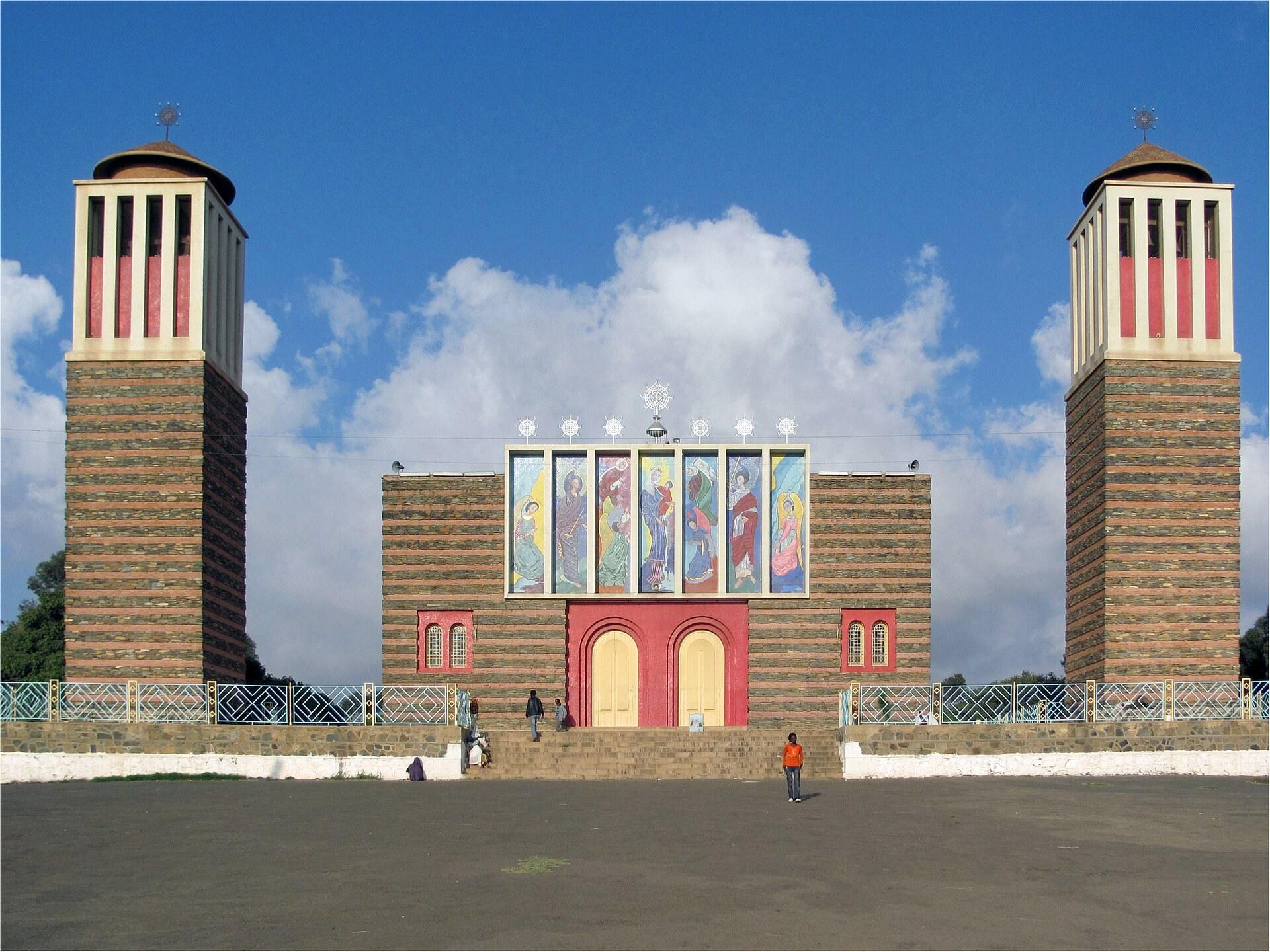
Since 2002 · Subject · The Persecuted Church Today
Eritrea
Four religious bodies are registered in Eritrea, and members of every other church are detained when found at worship.
Eritrea's government appointed the patriarch of its largest church and kept the patriarch the church had chosen under house arrest.
But Peter and the other apostles replied, “We must obey God rather than men.
- Books
- Acts, Philippians
- Hold in memory
- Acts 5:29, Acts 16:25
Summary
In Eritrea the state decides which faiths may meet to worship. It holds members of the rest in jail.
- Only four are allowed: the Orthodox Church, Sunni Islam, the Catholic Church and the Lutheran Church.
- All the rest had their places of worship shut.
- The United States has named it a Country of Particular Concern since 2004.
The Verses for Eritrea's Prisoners
Three passages from Acts and Philippians speak to believers whose worship is banned and who are held for it.
When worship is forbidden
About midnight Paul and Silas were praying and singing hymns to God, and the other prisoners were listening to them.
Paul and Silas turned a cell at Philippi into a place of worship.
Acts 16:25BSB
What chains can do
Now I want you to know, brothers, that my circumstances have actually served to advance the gospel. As a result, it has become clear throughout the whole palace guard and to everyone else that I am in chains for Christ. And most of the brothers, confident in the Lord by my chains, now dare more greatly to speak the word without fear.
Paul counts his imprisonment as gain for the gospel.
Philippians 1:12 to 14
The Record Since 1994
The dated steps come from three records of the United States government.
Eritrea moved from the Jehovah's Witnesses in 1994 to every minority church in 2002 and its own patriarch by 2006.
- 1994The Jehovah's Witnesses become the first group punishedGhebre-Ab's testimony to Congress
- April 2002A decree closes every minority Christian denominationGhebre-Ab's testimony to Congress
- 2004The United States names Eritrea a Country of Particular ConcernIRF report, Eritrea chapter; CRS IF10466
- November 2004Leading clergy of the Eritrean Orthodox Church are imprisonedGhebre-Ab's testimony to Congress
- 2006Patriarch Abune Antonios is arrested and held under house arrestIRF report, Eritrea chapter
A timeline of dated steps, each row naming the record that fixes it.
The parent page sets out how each reporting body counts and why its figures cannot be added together.
Four Bodies and the Rest
The four registered bodies worship under the government's hand. Every other church worships in homes or rented rooms at the risk of arrest.
Eritrea's churches fall into the four bodies the government registers and those it closed.
| Body | Standing in 2012 |
|---|---|
| Eritrean Orthodox Church | Registered |
| Sunni Islam | Registered |
| Roman Catholic Church | Registered |
| Evangelical Lutheran Church of Eritrea | Registered |
| Pentecostal and other Protestant churches, Seventh-day Adventists | Unregistered; places of worship closed |
| Jehovah's Witnesses | Unregistered; singled out for refusing to bear arms |
The State Department reported for 2012 that the government continued to detain members of unregistered groups. Some detainees were released after they promised to give up their faith.
Released religious prisoners reported harsh detention, including solitary confinement. Human Rights Watch counted 56 Jehovah's Witnesses in prison in December of that year, three of them held since 1994.
Father Habtu Ghebre-Ab, a priest of the Eritrean Orthodox Church, spoke to the House subcommittee in 2016. He said that between 2,000 and 3,000 people were then estimated to be in prison for their faith. He gave the figure as an estimate and named no counting body.
The Patriarch Under Arrest
The government reached into the largest and oldest church in the country and replaced its head.
Abune Antonios was patriarch of the Eritrean Orthodox Church, appointed by the church's leadership in Cairo. The State Department reports that he was arrested in 2006 for protesting government interference in church affairs. In 2012 he remained under house arrest in poor health.
The ruling party, the Popular Front for Democracy and Justice, appointed the patriarch who followed him. Relations with the Coptic hierarchy in Cairo stayed strained over that appointment, the same report says.
Helen Berhane told her own story of faith and persecution in Eritrea in Song of the Nightingale. It was published at Bartlesville in 2009 and by Authentic Media in 2010.
In Their Own Words
Matthew Henry (1662 to 1714)
Commentary on the Whole Bible
Matthew Henry said the enemy's chains made the preachers bolder.
“They were more fully satisfied and persuaded by what they saw. Observe the power of divine grace; that which was intended by the enemy to discourage the preachers of the gospel was overruled for their encouragement. And are much more bold to speak the word without fear; they see the worst of it, and therefore are not afraid to venture.”
on Philippians 1:14Puritan
About this saying1 paragraph
Henry wrote this on Philippians 1:14 early in the eighteenth century.
Adam Clarke (1762 to 1832)
Commentary on the Bible, on Acts 5:29
Adam Clarke said the apostles held their commission from God.
“We have received our commission from God; we dare not lay it down at the desire or command of men.”
Methodist
About this saying1 paragraph
Clarke wrote this on Acts 5:29 in his Commentary on the Bible, early in the nineteenth century.
Felix of Thibiuca
The Acts of Felix, in Arthur James Mason, The Persecution of Diocletian, page 173
Felix of Thibiuca would rather burn than hand over the Scriptures.
“for me to be burned myself than for the Divine Scriptures, for it is better to obey God than men.”
Martyr
About this saying1 paragraph
Felix, bishop of Thibiuca in Africa, gave this answer about the Divine Scriptures in 303, in Mason's retelling of 1876.
Who Holds the Patriarchate
The church inside Eritrea and the Orthodox in the diaspora disagree over who is the church's lawful head.
Inside Eritrea the registered church follows the patriarch installed after Antonios.
Father Habtu Ghebre-Ab spoke for the Canonical Eritrean Orthodox Church in Diaspora, which held to the imprisoned patriarch. He told the hearing that Antonios had been deposed against the law and imprisoned.
Books to Read Next
Eritrea: A Neglected Regional Threat
House Subcommittee on Africa, Global Health, Global Human Rights, and International Organizations · 2016
A priest's statement on how the churches were closed is printed in the record.
Free at the Internet ArchiveInternational Religious Freedom Report for 2012: Eritrea
United States Department of State · 2013
The State Department's chapter sets out the four registered bodies, the detentions and the patriarch's house arrest.
Free at the Internet ArchiveSong of the Nightingale
Helen Berhane · 2009
Living Sacrifice Book Company published this first-hand account.
In print: find it wherever books are sold.
What Eritrea Asks of the Church
Eritrea's believers have kept worshipping after their churches were closed and their patriarch was confined. Hebrews 13:3 asks the church to remember those in prison as if it were bound with them.
Sources
Scripture is the Berean Standard Bible.
- The Holy Bible, Berean Standard Bible (read 2026)
- United States Department of State, Bureau of Democracy, Human Rights and Labor, International Religious Freedom Report for 2012, Eritrea.
- Eritrea: A Neglected Regional Threat, hearing of the House Subcommittee on Africa, Global Health, Global Human Rights, and International Organizations, 14 September 2016, Serial No. 114-237 (Government Publishing Office, 2016), the statement of Father Habtu Ghebre-Ab, page 22.
- Lauren Ploch Blanchard and Tomas F. Husted, Eritrea, Congressional Research Service In Focus IF10466, version 7, updated 28 February 2019.
- Michael A. Weber, Global Human Rights: International Religious Freedom Policy, Congressional Research Service In Focus IF10803, version 28, updated 3 June 2026, Table 1.
- Helen Berhane, Song of the Nightingale: A True Story about Faith and Persecution in Eritrea (Bartlesville, OK: Living Sacrifice Book Company, 2009); Authentic Media edition, 2010.
- The church history plan's row 287, with Antonios's death on 9 February 2022, the World Watch List 2026 rank and the containers (not opened from the cloud)
Keep Studying
People and groups5
Subjects21
Go further2
Church history2
Trials of life1