
What can be known in 2026 · Subject · The Persecuted Church Today
Yemen and Afghanistan
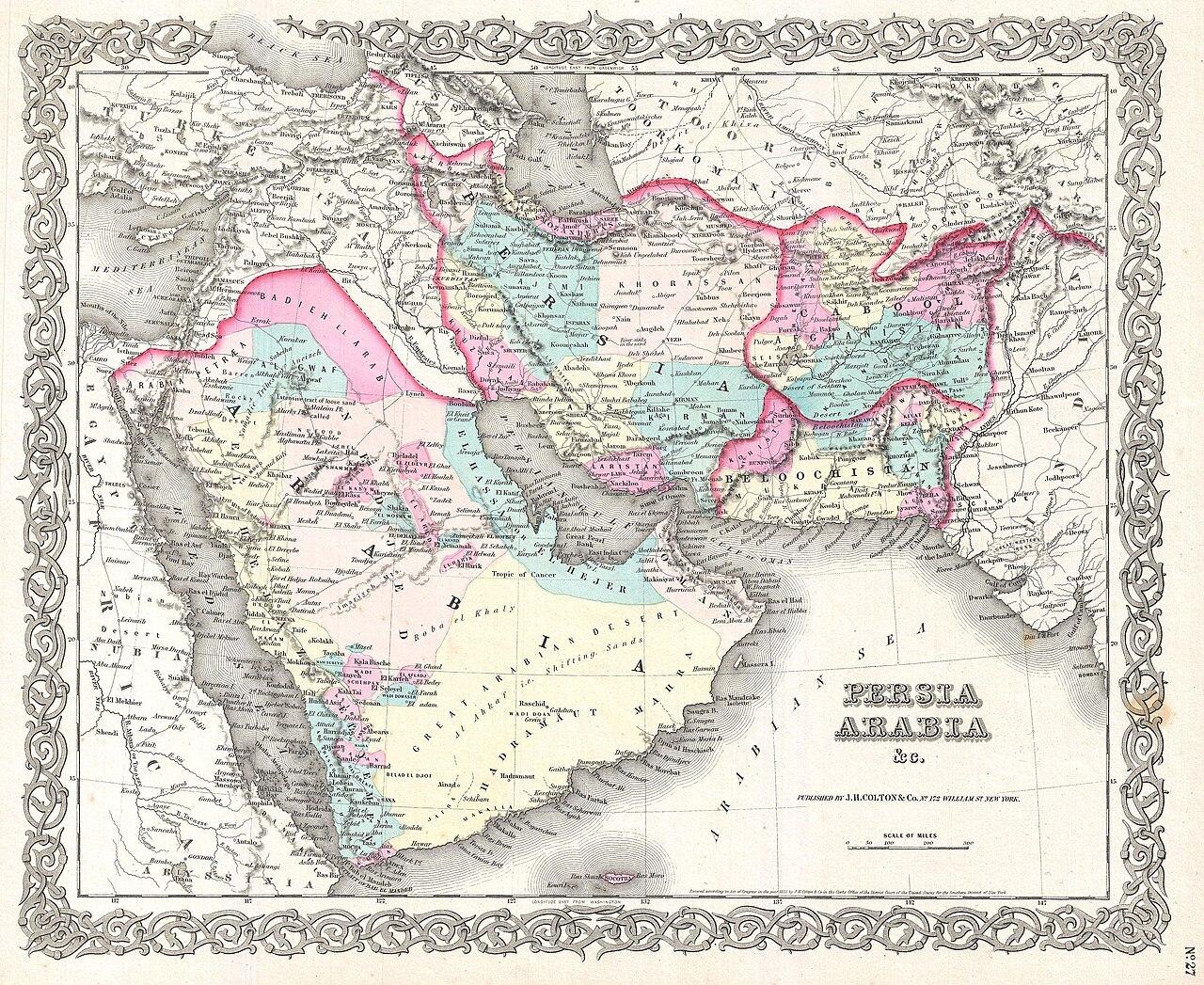
The reporting bodies can say little about the church in these two countries. The page gives what the Congressional Research Service does say, and the history of Christian witness on the Arabian coast in the nineteenth century.
In both countries the believers live in hiding, so the honest record is short. The American reports name the rulers of each country and how Washington lists them, and they say little more.
But when you pray, go into your inner room, shut your door, and pray to your Father, who is unseen. And your Father, who sees what is done in secret, will reward you.
- Books
- Matthew, Hebrews
- Hold in memory
- Matthew 6:6
Summary
The United States lists the rulers of Yemen and Afghanistan for grave violations of religious freedom. The believers of both lands keep out of sight. The American reports give no count of Christians in either one. Any detail about a believer could put a life at risk. The page sets out what the reports state and leaves the rest unsaid.
- In Yemen the Houthi movement rules the capital and most of the people.
- The Taliban now rule Afghanistan.
- An American commission wants Afghanistan put on the list of the worst.
- A Cambridge scholar opened a mission near Aden and died there two years later.
What Is Known and What Is Not
Four plain questions, set against what the opened American reports say for each country.
The American reports name who rules each country and how it is listed, and they give no count of believers for either.
| Question | Yemen | Afghanistan |
|---|---|---|
| Who holds the capital | The Houthis (CRS, May 2026) | The Taliban (CRS, 2021) |
| Whether the United States listed the rulers in 2023 | Yes, the Houthis | Yes, the Taliban |
| What USCIRF asked in 2026 | Not in the opened text | Add the country to the worst list |
| A count of Christians | None in the opened reports | None in the opened reports |
The parent page sets out who counts the persecuted church and by what rule each body counts.
The Record on Yemen and Afghanistan
The research service gives the rulers, the people and the faith of each country.
The Congressional Research Service wrote in May 2026 that the Houthi movement, also called Ansar Allah, and its de facto government control Sana'a and much of western Yemen. Most Yemenis live in that part of the country.
The same report gives Yemen about 41.7 million people by a United Nations estimate of 2025, and Muslims at 99.1 percent by an American estimate of 2020.
In December 2023 the State Department named the Houthis and the Taliban among the entities of particular concern. These are the groups it finds guilty of severe violations of religious freedom.
A report of November 2021 on the Taliban recorded that in 2001 they reportedly ordered non-Muslim minorities to wear distinctive marks on their clothing. It adds that most of the country's remaining Hindus and Sikhs sought to leave after 2021.
In March 2026 the United States Commission on International Religious Freedom recommended that Afghanistan be named a Country of Particular Concern.
The site prints no detail about any believer in either country. A name, a town or a meeting place printed here could be used to find them.
The Mission at Shaikh Othman
Keith-Falconer's letters and his doctor's diary tell the story of the mission.
Ion Keith-Falconer was the Lord Almoner's professor of Arabic at Cambridge. Robert Sinker's memorial of him calls him a missionary to the Mohammedans of Southern Arabia.
In a letter from Aden of 16 December 1885 he wrote that the right place for his mission was Shaikh Othman. The town lies ten miles from Aden. There he hoped to build a school, an orphanage and a medical mission and give them to the Free Church of Scotland.
Fever came back on him in May 1887. Dr. Cowen's diary, printed by Sinker, records that he was found dead on the morning of 11 May, as if he had died in his sleep.
Samuel Zwemer, writing in 1900, found no missionary anywhere in Yemen outside Shaikh Othman and Aden.
In Their Own Words
Jerome (died 420)
ON LAZARUS AND DIVES 86
Jerome said the prophets wandered in caves as poor men.
“Moses and the prophets went about in goatskins, wandering in their caves and in holes in the ground. They were poor men just like Lazarus, and they suffered calamities and endured hunger.”
on Hebrews 11:37 to 38Patristic
About this saying1 paragraph
Jerome, who died in 420, wrote this in a homily on Lazarus and the rich man, with Hebrews 11:38 in view.
Matthew Henry (1662 to 1714)
Commentary on the Whole Bible
Matthew Henry said it is the cause that makes the martyr.
“There is very little comfort in sufferings when we bring them upon ourselves by our own sin and folly. It is not the suffering, but the cause, that makes the martyr.”
on 1 Peter 4:16Puritan
About this saying1 paragraph
In the early eighteenth century Henry wrote this on 1 Peter 4:16, a verse about suffering as a Christian.
Ion Keith-Falconer (1856 to 1887)
Letter to General Haig, Aden, 16 December 1885, in Robert Sinker, Memorials of the Hon. Ion Keith-Falconer, page 159
Keith-Falconer read the Gospels aloud in the streets near Aden.
“As yet I can only walk about the town picking up all the Arabic I can and reading aloud from the Gospels. I have made some acquaintances, and find that whenever I go to see one of them his friends and neighbours collect round the door or come inside, so that I have a congregation at once, though rather a noisy one.”
Free Church of Scotland
About this saying1 paragraph
He described his first months of street preaching near Aden in these words, late in 1885.
Books to Read Next
Memorials of the Hon. Ion Keith-Falconer
Robert Sinker · 1888
Sinker prints Keith-Falconer's letters from Aden and the diary of his last illness.
Free scan of the sixth edition, 1890Yemen: In Brief
Congressional Research Service · 2026
A short account for Congress of the war in Yemen and of who governs its regions.
Read the Yemen report freeTaliban Government in Afghanistan: Background and Issues for Congress
Congressional Research Service · 2021
The report of the Taliban's first months in power has a section on religious minorities.
Read the Afghanistan report freeSources
Scripture is the Berean Standard Bible.
- The Holy Bible, Berean Standard Bible (read 2026)
- Congressional Research Service, Taliban Government in Afghanistan: Background and Issues for Congress, R46955, version 3, 2 November 2021, pages 22 to 23.
- Michael A. Weber, Global Human Rights: International Religious Freedom Policy, Congressional Research Service IF10803, version 28, updated 3 June 2026, page 2.
- Robert Sinker, Memorials of the Hon. Ion Keith-Falconer, sixth edition (Cambridge: Deighton, Bell and Co., 1890), the title page and pages 158 to 159 and 224 to 227.
- Samuel M. Zwemer, Arabia: the Cradle of Islam (New York: Fleming H. Revell, 1900), page 382.
Keep Studying
Subjects22
Go further1
Church history2
Trials of life1