
2003 to 2026 · Subject · The Persecuted Church Today
Iraq and Syria
A country page on the old churches of Mesopotamia and Damascus and on the losses their people have borne in this century.
An Associated Press report of 2021 gave an estimate of around 1.4 million Christians in Iraq before the war of 2003, and fewer than 300,000 after the Islamic State.
You sympathized with those in prison and joyfully accepted the confiscation of your property, knowing that you yourselves had a better and permanent possession.
- Books
- Hebrews, Acts
- Hold in memory
- Hebrews 10:34
Summary
Iraq and Syria hold some of the oldest churches on earth. After American troops came in, militants began to attack Iraq's Christians. In 2014 militants drove them from the Nineveh plains. In Syria a church was bombed. Minorities there have faced violence in the country's transition.
- The United States later called what was done to them genocide.
- Pope Francis went to Iraq to ask its Christians to stay.
- An American panel on religious freedom wants Syria put on the list of the worst.
The Verses for the Church in Iraq and Syria
The texts set the churches' first days beside the words of Jesus and the apostles on loss and death for His name.
Mesopotamia is named among the lands whose people heard the apostles at Pentecost, and the Lord sent Ananias of Damascus to the house where Saul was praying. Jesus told His disciples that some who killed them would think they served God. Peter and Hebrews tell believers how to bear loss and suffering for the name of Christ.
The churches' first days
Parthians, Medes, and Elamites; residents of Mesopotamia, Judea and Cappadocia, Pontus and Asia,
Iraq's Christians trace their faith to the first years of the church, and Mesopotamia stands in Luke's list.
Acts 2:9BSB
In Damascus there was a disciple named Ananias. The Lord spoke to him in a vision, “Ananias!” “Here I am, Lord,” he answered. “Get up!” the Lord told him. “Go to the house of Judas on Straight Street and ask for a man from Tarsus named Saul, for he is praying.
Damascus had believers before Paul came, and the Lord sent one of them to him.
Losing home and life
They will put you out of the synagogues. In fact, a time is coming when anyone who kills you will think he is offering a service to God.
Jesus warned that some would kill His disciples in the name of God.
John 16:2BSB
But if you suffer as a Christian, do not be ashamed, but glorify God that you bear that name.
A believer who suffers for Christ in Mosul or Damascus stands where Peter's first readers stood.
1 Peter 4:16BSB
John 16:2, 1 Peter 4:16
The Years of Loss, 2003 to 2026
The dated steps run from the war in Iraq to the commission's request on Syria.
Over about twenty years Iraq lost most of its Christians.
- War topples Saddam Hussein; attacks on Christians begin2003Associated Press, 5 March 2021
- The Islamic State takes the Nineveh plains2014Associated Press, 5 March 2021
- Pope Francis visits Iraq's ChristiansMarch 2021Associated Press, 5 March 2021
- ISIS named an entity of particular concernDecember 2023Congressional Research Service, 2026
- USCIRF asks that Syria be added to the listMarch 2026Congressional Research Service, 2026
A timeline of dated steps, each row naming the record that fixes it.
The parent page sets out who counts the persecuted church and by what rule each body counts.
What Happened in Iraq
A news report from the pope's visit gives the figures and the names of the churches.
The Associated Press reported in March 2021 that Iraq's Christians belong to several churches. The Chaldean Catholic Church is the largest, beside the Syriac Catholics, the Assyrians and several Orthodox churches.
The report says their numbers began to fall in the turmoil after 2003, when Sunni militants often targeted Christians.
In 2014 the Islamic State swept through northern Iraq and the towns of the Nineveh plains. Residents fled to the Kurdish region or further.
Few returned, the report says, and many who did found their homes and churches destroyed. At Qaraqosh the militants had used the church as a firing range.
The Finding of 2016 and Syria Since
An American finding of 2016, a bombing in Damascus in 2025 and a report of 2026 carry the record from Iraq into Syria.
On 17 March 2016 Secretary of State John Kerry determined that the Islamic State was committing genocide in Iraq and Syria. He found that it targeted Christians and other religious minorities.
A radio report of that day said it was only the second time an American administration had declared genocide in an ongoing conflict, after Darfur in 2004. It added that the House had passed a unanimous resolution that week.
The same report said the finding did not oblige the United States to take further action. It added that any criminal charges would need an independent international investigation.
The site reports the word as the American government used it, with its date and its source.
In Syria, Democracy Now! reported on 23 June 2025 that a suicide bomb had killed 22 people at an Orthodox church in Damascus.
The Congressional Research Service reported in June 2026 that violence between government forces and minority communities had marred Syria's transition.
In Their Own Words
Polycarp of Smyrna (died 155)
Epistle to the Philippians 8
Polycarp asked believers who suffer for Christ's name to glorify Him.
“Let us then continually persevere in our hope, and the earnest of our righteousness, which is Jesus Christ, ‘who bore our sins in His own body on the tree,’ ‘who did no sin, neither was guile found in His mouth,’ but endured all things for us, that we might live in Him. Let us then be imitators of His patience; and if we suffer for His name's sake, let us glorify Him. For He has set us this example in Himself, and we have believed that such is the case.”
on 1 Peter 4:16Patristic
About this saying1 paragraph
Polycarp of Smyrna, who died in 155, wrote this in his letter to the church at Philippi.
John Calvin (1509 to 1564)
Commentaries
John Calvin said believers must bear the reproach of the cross boldly.
“His statement amounts to this, that we ought not to be dismayed by the perverse judgments of men, but ought to endure boldly the reproach of the cross of Christ, satisfied with this single consideration, that our cause which men unjustly and wickedly condemn, is approved by God.”
on John 16:2Reformed
About this saying1 paragraph
Calvin, who died in 1564, wrote this on John 16:2 in his commentary on the Gospel of John.
George Percy Badger (1815 to 1888)
The Nestorians and their Rituals, volume I, page 201
George Percy Badger called the old church plate a triumph of the cross.
“The sight of these sacred utensils filled me with mingled emotions: their very existence and continued use was a triumph of the cross over the persecutions which its followers here have endured for ages”
Anglican
About this saying1 paragraph
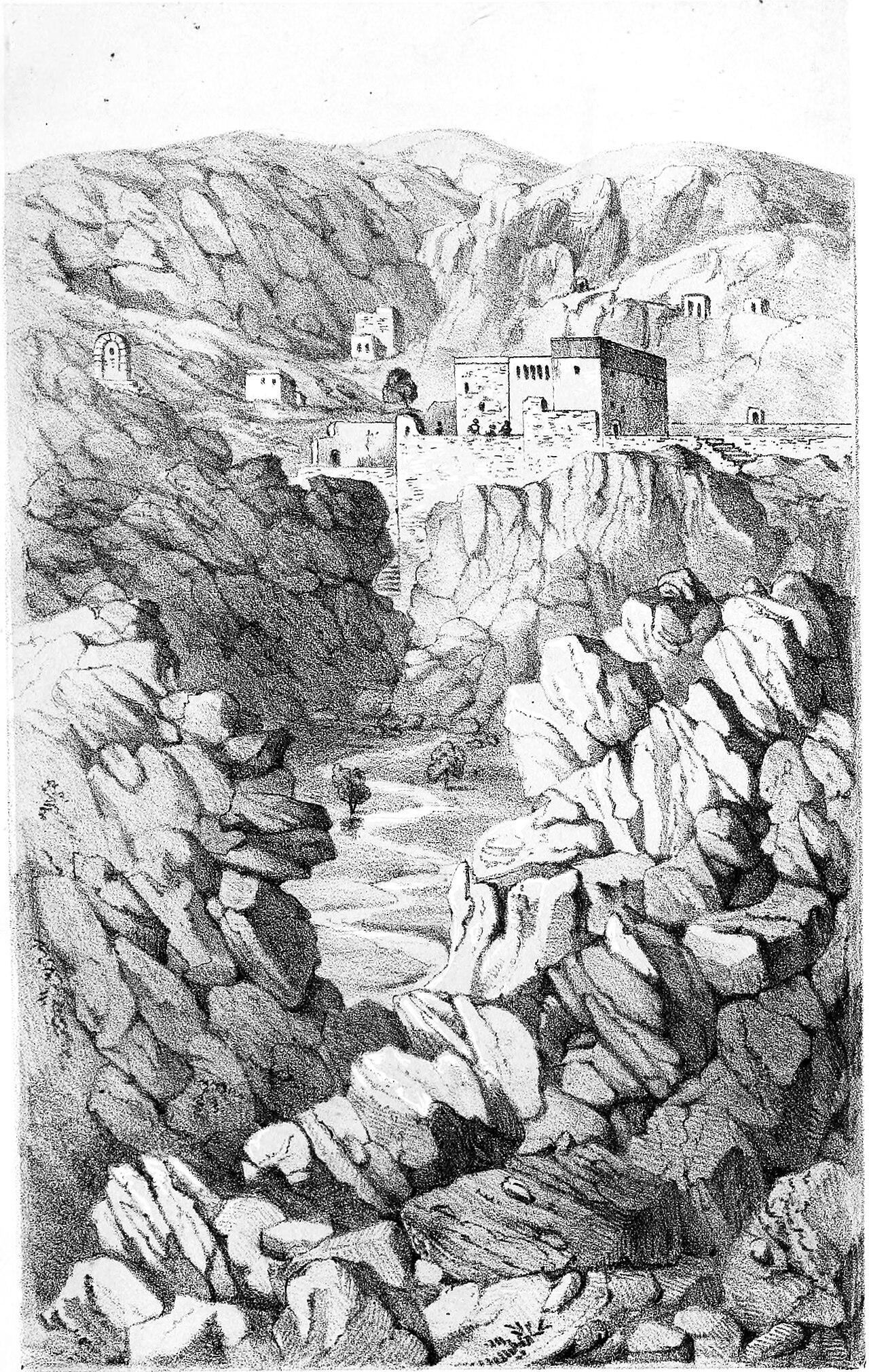
Badger, a chaplain of the East India Company, saw the old church plate of a village of the Supna valley on his mission of 1842 to 1844 to Mesopotamia and Coordistan.
Books to Read Next
The Nestorians and their Rituals
George Percy Badger · 1852
Badger describes the churches of Mosul and the mountains as he found them in the 1840s.
Read volume I free at the Internet Archive.Syria and U.S. Policy
Congressional Research Service · 2026
Two pages for Congress set out the new Syria and American policy toward it.
Read the report free at the Internet Archive.What Iraq and Syria Ask of the Church
Iraq's Christians have lived there since nearly the time of Christ, the Associated Press wrote, and today they are a small part of what they were. Hebrews 10:34 speaks of believers who took the loss of their property knowing they had a better and permanent possession.
Sources
Scripture is the Berean Standard Bible.
- The Holy Bible, Berean Standard Bible (read 2026)
- Nicole Winfield and Samya Kullab, Pope urges Iraq to embrace its Christians on historic visit, Associated Press, 5 March 2021.
- Kerry: Islamic State group is committing genocide, radio report, 17 March 2016; with the State Department's video, Secretary Kerry: Daesh Responsible for Genocide, Crimes Against Humanity, 17 March 2016.
- Democracy Now!, programme of 23 June 2025, its headlines.
- Congressional Research Service, Syria and U.S. Policy, IF11930, version 11, updated 11 June 2026, pages 1 to 2.
- Michael A. Weber, Global Human Rights: International Religious Freedom Policy, Congressional Research Service IF10803, version 28, updated 3 June 2026, page 2.
- George Percy Badger, The Nestorians and their Rituals, volume I (London: Joseph Masters, 1852), page 201 and the title page.
Keep Studying
Read it4
People and groups1
Subjects22
Church history2
Trials of life1