
1960 to 2024 · Subject · The Persecuted Church Today
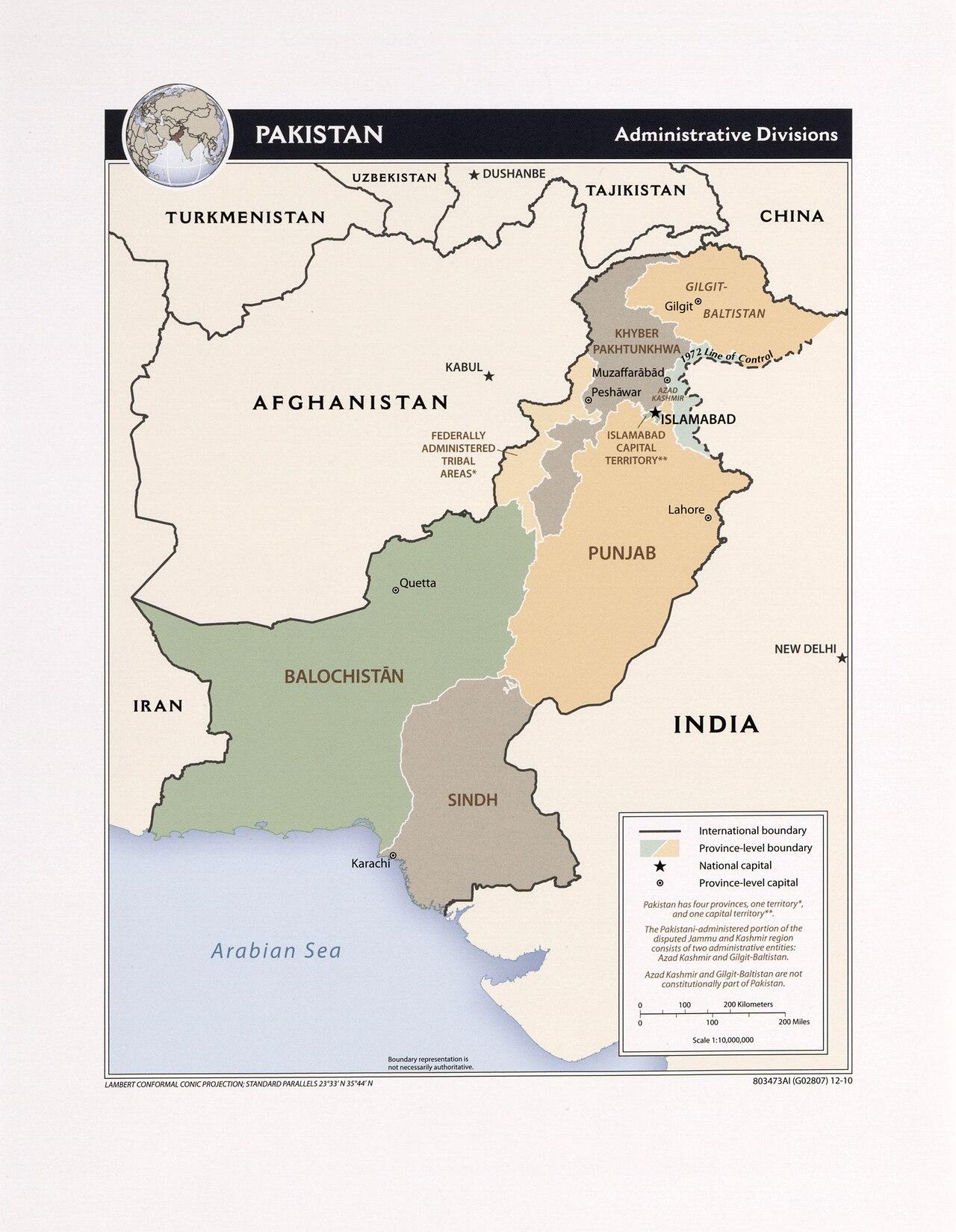
The Persecuted Church in Pakistan
Christians in Pakistan live under laws against insult to Islam and have suffered mob violence and the bombing of churches.
Two officials who called for reform of Pakistan's blasphemy laws, one of them a Christian, were shot dead eight weeks apart.
But beware of men; for they will hand you over to their councils and flog you in their synagogues. On My account, you will be brought before governors and kings as witnesses to them and to the Gentiles. But when they hand you over, do not worry about how to respond or what to say. In that hour you will be given what to say. For it will not be you speaking, but the Spirit of your Father speaking through you.
- Books
- Matthew, Revelation
- Hold in memory
- Revelation 2:10
Summary
About 96 percent of Pakistan's people are Muslim. Christians are one of the small minorities, with Hindus, Ahmadis and Shia Muslims. The blasphemy laws are popular, and they have been used against these groups. Charges under the laws have led mobs to kill people. Yet most guilty verdicts are overturned on appeal.
- The blasphemy laws date from British rule and gained their force in the 1980s.
- A governor and a Christian cabinet minister, both critics of the laws, were killed.
- Two suicide bombings of churches in Lahore killed 15 people in March 2015.
- The United States has listed Pakistan since 2018 but set no penalty.
The Verses for Those Handed Over
Jesus and the risen Christ prepared believers for arrest, trial and prison.
What Christ told a suffering church
Do not fear what you are about to suffer. Look, the devil is about to throw some of you into prison to test you, and you will suffer tribulation for ten days. Be faithful even unto death, and I will give you the crown of life.
Smyrna was one of the seven churches of the province of Asia to which the risen Christ sent a letter.
The Dated Events
Seven dated events from 1960 to 2024, each fixed by the record that reports it.
Pakistan's Christians have met the blasphemy laws in the courts and violence in the streets from the 1980s to the present.
- Esther John1960Westminster Abbey's account, on MannaFest's Esther John page
- Zia's ruleThe 1980sCRS R41307, January 2011, page 72
- A death sentenceLate 2010CRS R41307, January 2011, page 72
- Taseer4 January 2011CRS R41307, January 2011, page 15
- Bhatti2 March 2011CRS R41832, May 2012, page 7
- LahoreMarch 2015CRS R44034, May 2015
- The finding of 20232023CRS IF12215, May 2024, page 1
A timeline of dated events, each row naming the record that fixes it.
The parent page sets these events beside the counts of every reporting body.
The Blasphemy Laws
What the laws protect, where they came from and how they are used, as American government reports set it out.
Pakistan's blasphemy laws guard Islamic holy persons, beliefs, customs and objects from insult. A report for Congress found them widely liked by the public.
The laws grew from colonial laws of the 1800s and came to the fore under General Zia in the 1980s. By the same report they had never led to an official execution, and most convictions were overturned on appeal.
Human rights groups call the laws biased and arbitrary. They are often used in personal quarrels on little evidence, and accusations have led to lynchings.
The State Department's report for 2022 also notes attempts to kidnap young women of other faiths, most of all Hindus and Christians. It notes attempts to convert and marry them by force.
The Reformers Killed in 2011
A death sentence drew calls for change, and the government backed away from them after the killings.
In late 2010 a Christian woman was sentenced to death for what many thought a minor offence. President Zardari vowed to review the case himself, and a bill to amend the law was introduced that November.
On 4 January 2011 Salman Taseer, the governor of Punjab and a critic of the laws, was shot 26 times by one of his own security team. Other guards looked on.
On 2 March that year gunmen ambushed the car of Shahbaz Bhatti, the Minister for Minorities and the only Christian in the federal cabinet, and shot him dead. He had long campaigned for tolerance toward Pakistan's minorities and had called for reform of the laws.
The government then backed away from reform, and the one other national leader who sought it withdrew her bill, the American report of May 2012 says.
In Their Own Words
Human Rights Commission of Pakistan
Report of 2024, as quoted in CRS IF12215, Pakistan: Human Rights Assessments, version 9, page 1
The Human Rights Commission of Pakistan said in 2024 that violence in the name of religion had become the status quo.
“Violence in the name of religion has increasingly become the status quo in Pakistan.”
A Pakistani nongovernmental body
About this saying1 paragraph
The commission, a Pakistani body free of the government, wrote this in 2024, and a report to Congress that May carries it.
United States Commission on International Religious Freedom
Annual Report, the recommendation on Pakistan, as quoted in CRS IF12215, Pakistan: Human Rights Assessments, version 9, page 1
The American commission has asked every year since 2002 that Pakistan be named for its abuses.
“for engaging in and tolerating systematic, ongoing, and egregious violations of freedom of religion or belief.”
A commission of the United States government
About this saying1 paragraph
The commission's recommendation, repeated each year since 2002, is quoted by the Congressional Research Service in May 2024.
Asif Ali Zardari
An English-language op-ed on the assassinations of Taseer and Bhatti (2011), as quoted in CRS R41832, Pakistan-U.S. Relations, version 18, page 7
President Zardari wrote after the two killings that a small minority was tearing down the ideals Pakistan was founded on.
“A small but increasingly belligerent minority is intent on undoing the very principles of tolerance upon which [Pakistan] was founded.”
Pakistan Peoples Party
About this saying1 paragraph
Zardari wrote this in an English-language article in 2011, after both killings.
How the Laws Are Read
The laws' supporters hold them a protection of the sacred, and their critics hold them a weapon against minorities.
The laws' supporters hold that they protect what Islam holds holy from insult. When reform was proposed in 2010, religious leaders brought thousands into the streets, as many as 50,000 in Karachi. A federal minister said the government would not consider repeal.
The American commission condemned the growing use of the law in 2023 and its unfair use against minority faiths. The State Department has named Pakistan a Country of Particular Concern since 2018 and has waived the sanctions that would follow.
Books to Read Next
Pakistan: Key Current Issues and Developments
Congressional Research Service · 2011
The report sets out the blasphemy laws and the killing of Governor Taseer as they then stood.
Read it free at the Internet ArchivePakistan: Human Rights Assessments
Congressional Research Service · 2024
The report gathers what American, United Nations and Pakistani bodies found on freedom of faith in 2023.
Read it free at the Internet ArchiveWhat Pakistan's Church Carries
Pakistan's Christians still live under the law that Taseer and Bhatti asked to reform. Christ promised the church at Smyrna the crown of life for faithfulness to the point of death.
Sources
Scripture is the Berean Standard Bible.
- The Holy Bible, Berean Standard Bible (read 2026)
- Congressional Research Service, Pakistan: Key Current Issues and Developments, R41307, version 10, 13 January 2011.
- Congressional Research Service, Pakistan-U.S. Relations, R41832, version 18, 24 May 2012.
- Congressional Research Service, Pakistan-U.S. Relations: Issues for the 114th Congress, R44034, version 4, 14 May 2015.
- Congressional Research Service, Pakistan: Human Rights Assessments, IF12215, version 9, 8 May 2024.
- Michael A. Weber, Global Human Rights: International Religious Freedom Policy, Congressional Research Service IF10803, version 28, 3 June 2026.
Keep Studying
People and groups1
Subjects22
Church history2
Trials of life1