
1 Samuel 21:10
in 1 Samuel 21That day David fled from Saul and went to Achish king of Gath.
BSB
The same verse in ASV and KJV ▾
ASV
And David arose, and fled that day for fear of Saul, and went to Achish the king of Gath.
KJV
And David arose, and fled that day for fear of Saul, and went to Achish the king of Gath.
⋯
This verse in 1 Samuel 21
Commentary
9 notes on this verseWent to Achish the king of Gath - This was the worst place to which he could have gone: it was the very city of Goliath, whom he had slain, and whose sword he now wore; and he soon found, from the conversation of the servants of Achish, that his life was in the most imminent danger in this place.
This site's exposition
fled that day for fear of Saul
on 1 Samuel 21:10-12
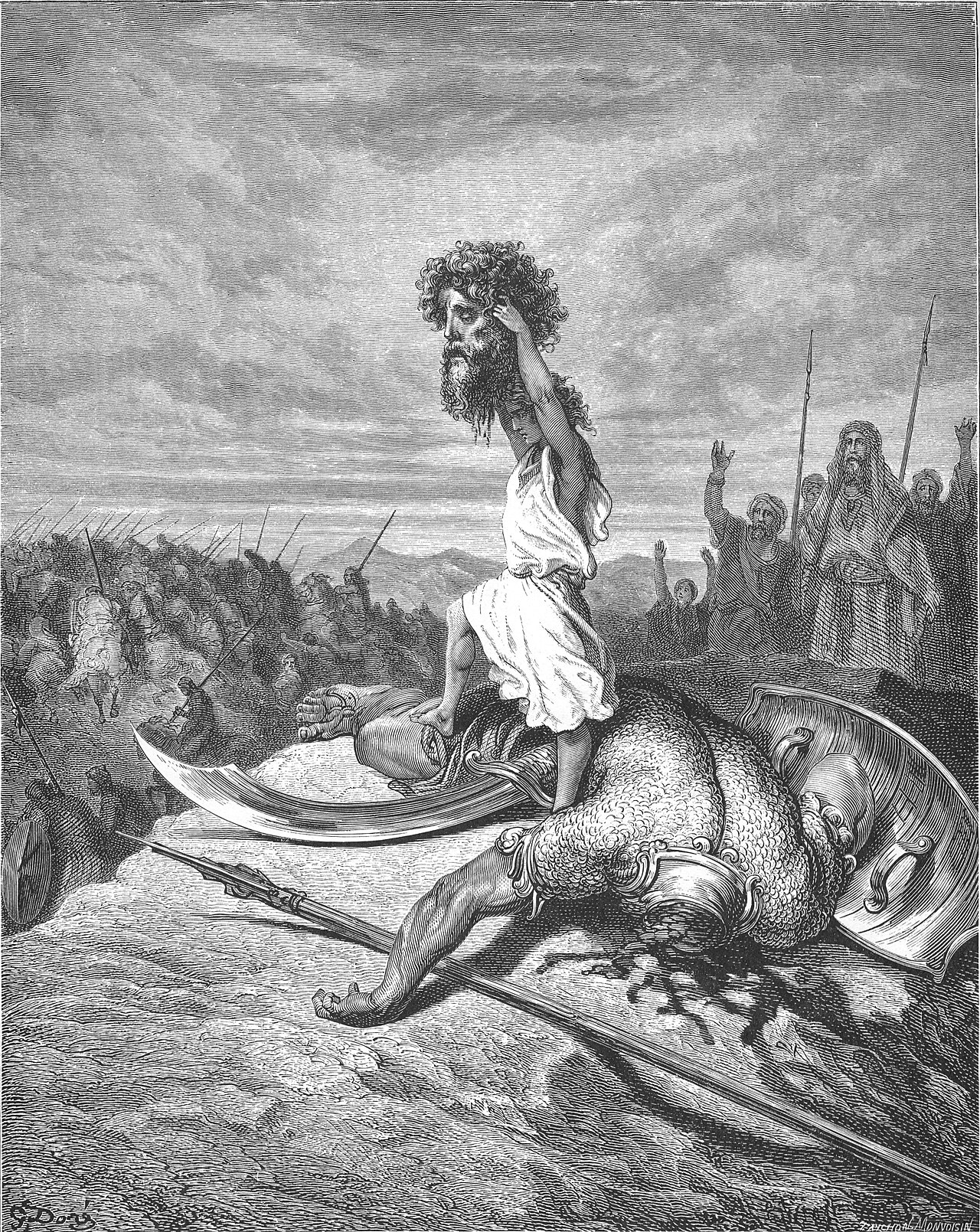
David flees to Achish king of Gath, Goliath's own city, still carrying the sword he took from its champion. The servants of Achish greet him with the song Israel sang after that victory, Saul hath slain his thousands, and David his ten thousands, the same words that first turned Saul against him at 18:7. David lays the words up in his heart and grows sore afraid of the king whose champion he killed. Two psalm titles set their psalms in this scene, Psalm 34 and Psalm 56, though this database stores the Psalms without their Hebrew titles and the link cannot be shown from the floor by query.
The record, by era
The Church Fathers1 voice
A commentator
Clement of RomeClement's First Letter to the Corinthians, Chapters 3-4 · Written before 99.
proposed
Every kind of honour and happiness was bestowed upon you, and then was fulfilled that which is written, "My beloved ate and drank, and was enlarged and became fat, and kicked." [Deuteronomy 32:15] Hence flowed emulation and envy, strife and sedition, persecution and disorder, war and captivity. So the worthless rose up against the honoured, those of no reputation against such as were renowned, the foolish against the wise, the young against those advanced in years.
The Puritans and the Awakening4 voices
The king elect is here an exile: anointed to the crown, and yet forced to run his country. So do God's providences sometimes run counter to his promises, for the trial of our faith, and the glorifying his name in accomplishing his counsels, notwithstanding the difficulties that lie in the way.
5 And David answered the priest, and said unto him, Of a truth women have been kept from us about these three days, since I came out, and the vessels of the young men are holy, and the bread is in a manner common, yea, though it were sanctified this day in the vessel.
quarantine:scripture (2026-07-29) — verbatim-scripture
And David arose and fled that day for fear of Saul,....
Israel's darling is necessitated to quit the land of Israel, and he that was the Philistine's great enemy (upon I know not what inducements) goes to seek for shelter among them.
2 more voices on this verse
The Nineteenth Century2 voices
A commentator
Jamieson, Fausset & Brown1802–1910
Commentary Critical and Explanatory on the Whole Bible (1871)
In this place his person must have been known, and to venture into that country, he their greatest enemy, and with the sword of Goliath in his hand, would seem to have been a perilous experiment; but, doubtless, the protection he received implies that he had been directed by the divine oracle. Achish was generous (1Sa 27:6).
A commentator
Albert Barnes1798–1870
Notes, Explanatory and Practical, on the Old and New Testaments (1832-1869)
proposed
Achish king of Gath - It appears from the title that Ps. 34 was composed on this occasion. (See the note there.) Nothing can give a more lively impression of the straits to which David was reduced than the fact of his going to the country of the Philistines.
The words behind it
12 Hebrew wordsEvery Hebrew word of this verse in the order it stands, with what it means and the door to its own study. The last column counts the times a word stands in the whole Bible: the rarer the word, the more the places it appears belong together.
| Hebrew | Sound | Meaning | Word study | In the Bible |
|---|---|---|---|---|
| וַיָּ֣קָם | vaiyakom | and he arose | H6965 → | 628 times |
| דָּוִ֔ד | david | David | H1732 → | 999 times |
| וַיִּבְרַ֥ח | vaiyivrach | and he fled | H1272 → | 63 times |
| בַּיּוֹם־ | baiyom- | on the day | H3117 → | 2304 times |
| הַה֖וּא | hahu' | <the> that | H1931 → | 1879 times |
| מִפְּנֵ֣י | mipenei | from before | H6440 → | 2123 times |
| שָׁא֑וּל | shaul | Saul | H7586 → | 402 times |
| וַיָּבֹ֕א | vaiyavo' | and he went | H935 → | 2568 times |
| אֶל־ | ʾel- | to | H413 → | 5510 times |
| אָכִ֖ישׁ | ʾakhish | Achish | H397 → | 21 times |
| מֶ֥לֶךְ | melekh | [the] king of | H4428 → | 2525 times |
| גַּֽת׃ | gat | Gath | H1661 → | 32 times |
וַיָּ֣קָםand he arose
vaiyakomH6965 →628 times
דָּוִ֔דDavid
davidH1732 →999 times
וַיִּבְרַ֥חand he fled
vaiyivrachH1272 →63 times
בַּיּוֹם־on the day
baiyom-H3117 →2304 times
הַה֖וּא<the> that
hahu'H1931 →1879 times
מִפְּנֵ֣יfrom before
mipeneiH6440 →2123 times
שָׁא֑וּלSaul
shaulH7586 →402 times
וַיָּבֹ֕אand he went
vaiyavo'H935 →2568 times
אֶל־to
ʾel-H413 →5510 times
אָכִ֖ישׁAchish
ʾakhishH397 →21 times
מֶ֥לֶךְ[the] king of
melekhH4428 →2525 times
גַּֽת׃Gath
gatH1661 →32 times
A shaded row is a word that stands 400 times or fewer in the Bible.
The walk
8 stopsEach card is a verse this one points to, and under it the verses that one points to in turn. Where several paths arrive at the same place, that place is listed first: the text keeps returning to it.
Through
1 Kings 19:3And Elijah was afraid and ran for his life. When he came to Beersheba in Judah, he left his servant there,
it leads to
- Genesis 21:31
So that place was called Beersheba, because it was there that the two of them swore an oath.
- Matthew 26:56
But this has all happened so that the writings of the prophets would be fulfilled.” Then all the disciples deserted Him and fled.
- Matthew 26:70–74
But he denied it before them all: “I do not know what you are talking about.”
- Genesis 21:31
Through
Jeremiah 26:21King Jehoiakim and all his mighty men and officials heard his words, and the king sought to put him to death. But when Uriah found out about it, he fled in fear and went…
it leads to
- Matthew 10:23
When they persecute you in one town, flee to the next. Truly I tell you, you will not reach all the towns of Israel before the Son of Man comes.
- 2 Chronicles 16:10
Asa was angry with the seer and became so enraged over this matter that he put the man in prison. And at the same time Asa oppressed some of the people.
- Matthew 14:5
Although Herod wanted to kill John, he was afraid of the people, because they regarded John as a prophet.
- Jeremiah 36:26
Instead, the king commanded Jerahmeel, a son of the king, as well as Seraiah son of Azriel and Shelemiah son of Abdeel, to seize Baruch the scribe and Jeremiah the prophet. But the LORD…
- Matthew 10:28
Do not be afraid of those who kill the body but cannot kill the soul. Instead, fear the One who can destroy both soul and body in hell.
- Matthew 10:23
Where this verse is studied
On this page
About 1 Samuel
Who and where
2 names in this verse with a page on the site.
- PersonUnited MonarchyDavidSecond king of united Israel, shepherd-turned-monarch, ancestor of the Messiah, and traditional author of many Psalms.
- PersonUnited monarchySaulIsrael's first king, head and shoulders above the people; began in humility, ended in rejection — sparing what God devoted, consul…
This page draws on Adam Clarke, Commentary on the Bible; Albert Barnes, Notes, Explanatory and Practical, on the Old and New Testaments (1832-1869); Clement of Rome, Clement's First Letter to the Corinthians, Chapters 3-4; Jamieson Fausset and Brown, Commentary Critical and Explanatory on the Whole Bible; Jamieson, Fausset & Brown, Commentary Critical and Explanatory on the Whole Bible; John Gill, Exposition of the Old Testament (1748-1763); John Wesley, Explanatory Notes upon the Old Testament and Matthew Henry, Commentary on the Whole Bible.